
Why Agricultural Water Reuse Needs a Disinfection Step, Not Just Filtration
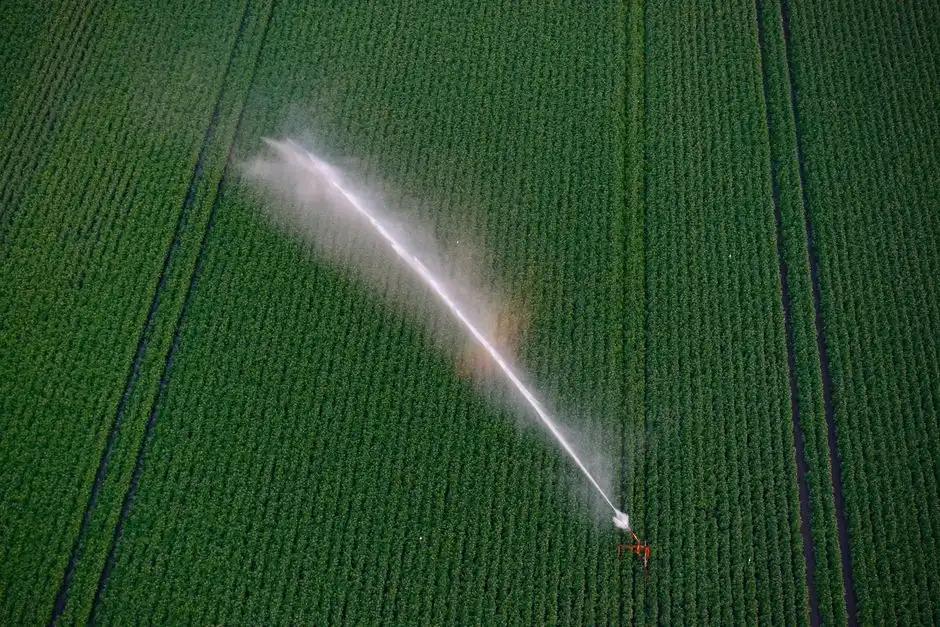
Agriculture is the largest global user of freshwater, accounting for 70% of withdrawals, with irrigation driving the majority of that demand (Ungureanu, Vlăduț & Voicu, 2020). The same review reports that roughly 15 million m³/day of untreated wastewater is used globally for crop irrigation and that about 10% of the world's population eats food grown with that water — a pathway that can transmit pathogens, heavy metals, and excess salts to humans and soil. Filtration removes particulates and some microbes, but it does not reliably inactivate chlorine-resistant protozoa or viruses; a defined disinfection step separates a reuse loop that protects a crop from one that quietly builds up risk across a season.
The US EPA frames agricultural water reuse as the practice of taking water generated on the farm or from a local wastewater treatment plant, treating it, and applying it to commercial or non-commercial food crops, livestock, or non-food crops such as pasture, fodder, fiber, vineyards, orchards, and silviculture (US EPA, "Reusing Water for Agricultural Activities Resources"). EPA also notes that states frequently set different treatment requirements for food crops versus non-food crops, and that on-farm reuse has the co-benefit of reducing off-farm nutrient runoff while providing a nutrient-rich water source for crop propagation. For this article, "agricultural reuse water" means treated effluent from an on-farm lagoon, greenhouse drain, dairy washwater, or agri-food processor that is reapplied to crops rather than discharged to surface water.
How UV-C Disinfection Works for Reuse Water
UV-C disinfection damages microbial DNA at wavelengths near 254 nm, neutralizing reproduction rather than chemically oxidizing the cell. Because no chemical is dosed, no regulated disinfection by-products form and no residual is carried into the soil or onto the crop. The trade-off is that UV leaves nothing in the water to protect downstream piping or storage from regrowth, so the reuse loop must be short, clean, and well-managed between the UV chamber and the irrigation emitter.
Three numbers govern every supplier quote: the target germicidal UV dose in mJ/cm², the peak reuse flow in m³/h, and the UV transmittance (UVT) of the water at 254 nm after pre-filtration. UVT is the percentage of UV light that passes through one centimetre of water, and it is the variable that most often trips up a low-cost design — a UV chamber sized for 85% UVT will be undersized on 65% UVT water, even at the same flow. Research on integrated disinfection of food-chain wastewater has shown that combined processes can deliver complete kill of pathogens such as Campylobacter and Salmonella in mixed populations under controlled conditions, supporting UV-C as a feasible primary barrier when paired with adequate upstream treatment (Adesope, Journal of the Arkansas Academy of Science, 2025). For an engineered skid, a compact low-pressure UV sterilizer for water treatment sized to the actual reuse loop is the typical hardware choice.
UV Dose Targets and Pre-Treatment Requirements for Farm Reuse
Suppliers and product catalogs commonly target a germicidal dose in the 30–40 mJ/cm² band for general bacterial control, stepping the dose up when the target organism is chlorine-resistant, such as Cryptosporidium or Giardia (HydropureWater verified product catalog, UV sterilizer listing). This distinction matters because the protozoa that survive standard chlorination are the organisms most often cited in produce-related outbreak investigations, necessitating a defined disinfection barrier rather than filtration alone.
The pathogens a buyer should expect to see named in any reuse spec are E. coli, total coliforms, Salmonella, Campylobacter, Cryptosporidium, Giardia, and coliphages. UV is effective against the bacterial and viral members of that list at modest doses and against Cryptosporidium and Giardia at higher doses; chlorination is the weak point on the two protozoa. Pre-treatment is non-negotiable: suspended solids and turbidity reduce UVT and undercut the dose that reaches the organism. Reuse trains that work in practice pair a biological step (MBR or conventional activated sludge — see the comparison at MBR vs conventional activated sludge for reuse projects) with an ultrafiltration pre-treatment for UV reuse trains or multimedia filtration, then UV.
The following parameter table allows a buyer to request comparable quotes.
| Parameter | What to specify in the RFQ | Why it matters |
|---|---|---|
| Target UV dose | mJ/cm² at the design UVT and peak flow, e.g. 30–40 for bacterial control, higher for Cryptosporidium/Giardia | Defines the actual germicidal performance, not just lamp wattage |
| Design flow | Peak instantaneous m³/h and average daily m³/day, with a 20–30% margin | UV is flow-rated; under-sizing fails dose validation |
| UVT assumption | UVT at 254 nm of the filtered reuse water, not the raw lagoon | Drives chamber size and lamp count; <70% UVT usually forces a larger unit |
| Pre-filtration spec | UF, multimedia, or screen with stated micron rating upstream of UV | Protects UVT and prevents lamp fouling |
| Lamp type | Low-pressure amalgam (standard) or medium-pressure (variable/high-flow) | Sets footprint, electrical load, and dose response |
| Chamber material | Stainless 304L/316L or HDPE, with internal finish rating | Drives capex and cleanability |
| Cleaning strategy | Automatic wiper, chemical cleaning, or both | Hardness, iron, or organic fouling otherwise erodes real-world dose |
UV vs Chlorine, Chlorine Dioxide, and Ozone for Reuse
The disinfection method is a critical choice for farm operations. UV is chemical-free, forms no DBPs, is effective against chlorine-resistant protozoa, and adds no residual — making it ideal when the reuse loop is short and pre-filtration is in place. Chlorine and chlorine dioxide leave a residual that protects downstream piping and storage, but they generate regulated by-products and can harm soil microbiomes and sensitive crops at sustained doses. A chlorine dioxide generator for residual protection is a sensible add-on if a long distribution loop demands a residual, but not a substitute for UV as a primary barrier. Ozone is a strong oxidizer effective against a wide pathogen range, but it off-gases and decays quickly, so it is rarely used as a standalone reuse disinfectant without secondary UV or chlorine for residual. Advanced oxidation and photo-electrochemical systems are research-grade, energy- and chemical-intensive, and currently justified mainly for food-industry reuse with the highest pathogen loads (Adesope, 2025).
The decision rule for an agricultural buyer with an existing biological or membrane train is straightforward: if the reuse water runs at low turbidity and there is no need for a long residual, UV is the most cost-effective primary disinfection.
| Disinfection option | Chemical-free | Residual for distribution | Effective vs Cryptosporidium/Giardia | DBP formation | Typical agricultural reuse role |
|---|---|---|---|---|---|
| UV-C | Yes | No | Yes, at elevated dose | None | Primary barrier on low-turbidity reuse water |
| Chlorine / ClO₂ | No | Yes | Poor on Cryptosporidium | Regulated by-products | Residual protection in long distribution loops |
| Ozone | No (oxidant gas) | No (short-lived) | Yes | Bromate risk in some waters | Rarely standalone; usually paired with UV or ClO₂ |
| AOP / photo-electrochemical | No | No | Yes | Variable | Food-industry reuse with hardest pathogen load |
Sizing and Spec Checklist for an Affordable UV Reuse System
Flow matching is the primary sizing requirement. Ask for both the peak instantaneous flow and the average daily volume, then build in a 20–30% safety margin for fouling and UVT variability across the season, as lagoon water quality fluctuates. Request the UVT at 254 nm of the filtered reuse water rather than the raw influent; UVT below 70% will force a larger chamber or medium-pressure lamps, and assuming 85% UVT on raw effluent is the most common reason an "affordable" system fails dose validation after installation. Select your lamp strategy explicitly: low-pressure amalgam lamps are the standard for farm reuse, while medium-pressure lamps suit high-flow or variable-quality water.
Specify a cleaning strategy to maintain performance. If the reuse water carries hardness, iron, or organic fouling potential, an automatic mechanical wiper or an online chemical cleaning circuit must be included; otherwise, dose drifts downward as lamp sleeves scale. Do not accept a quote without controls. The minimum auditable control package is a PLC with dose pacing tied to a calibrated UV intensity sensor, a lamp-hours counter, and a remote alarm; a unit with only a power switch and a status light cannot demonstrate compliance to a state inspector. For broader selection context across the full train, see the engineering specs and cost-optimized equipment selection for reuse projects and the process flow and selection logic for water purification trains reference pieces.
Total Cost of Ownership: Why 'Affordable' Depends on Operating Cost
Capex is driven by chamber size, lamp type, body material, and whether the unit is skid-mounted. Opex is driven by lamp replacement intervals, electrical consumption, cleaning chemicals, and the cost of upstream pre-filtration media or membrane replacement. The biggest hidden cost is inadequate pre-treatment: a cheap UV unit on turbid reuse water either fails dose validation at commissioning or forces the use of oversized lamps, wiping out the capex saving within the first year. Replacement membranes and filter elements, planned alongside the UV stage, are typically sourced as consumables — see RO and UF replacement elements for the consumable side of the same train.
The decision rule for a procurement board is that the most affordable system is the smallest validated unit on the cleanest reuse water, not the largest cheap unit on raw lagoon effluent. A buyer who fixes pre-filtration first spends less over a three-year horizon than a buyer who attempts to save on pre-filtration and over-specs UV to compensate.
Compliance and Documentation Buyers Should Require
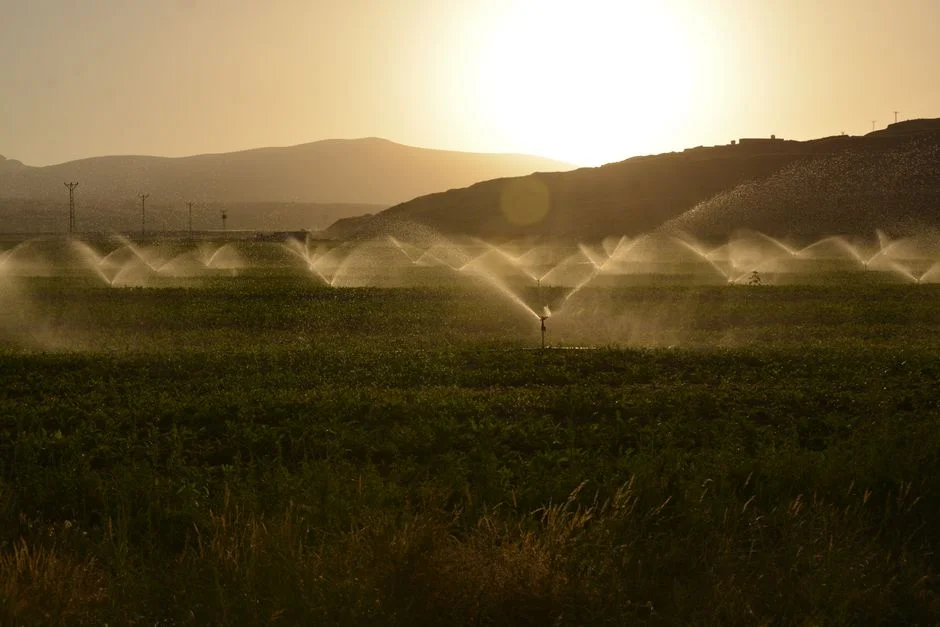
EPA recognizes agricultural water reuse as a legitimate practice, but state rules are the binding layer (US EPA, "Reusing Water for Agricultural Activities Resources"). Map the specific end-use — food crop, non-food crop, pasture, vineyard, orchard — to the state's treatment requirement, as the required log reduction and monitoring differ by category. Ask suppliers for third-party biodosimetry data at the design UVT and flow, rather than relying on manufacturer curves run at clean-water conditions. Configure dose pacing to a calibrated UV intensity sensor to ensure an auditable setup. Finally, ensure the system exports lamp hours, intensity trends, and cleaning events in a format the state inspector can read, rather than a CSV file that requires reassembly.
Frequently Asked Questions
What UV dose do I actually need for agricultural reuse water?
For general bacterial control, the common engineering target is 30–40 mJ/cm²; for chlorine-resistant organisms such as Cryptosporidium and Giardia, the dose is stepped up (HydropureWater verified product catalog, UV sterilizer listing). Confirm the specific log-reduction requirement with your state's reuse rule, as the dose flows from the required log reduction.
Is UV cheaper than chlorine for an agricultural reuse loop over three years?
UV avoids chemical purchase, storage, and regulated DBP management, which are the primary three-year opex items for chlorine or chlorine dioxide systems. The hardware—a compact low-pressure unit—is the lowest-cost chemical-free option available. A defensible comparison requires your actual peak flow, UVT, and electricity tariff, so request a three-year operating-cost breakdown from each shortlisted supplier.