What Mining and Metals Wastewater in Daphne Actually Looks Like
Daphne-area mining and metals operations produce three wastewater streams that behave very differently in a separator: tailing wash water with suspended mineral fines, acid mine drainage (AMD) neutralization effluent rich in dissolved metals and sulfate, and metal-finishing rinse water carrying oils, FOG, and metal hydroxide flocs. The first step in choosing between a dissolved air flotation (DAF) system and a gravity clarifier is to look at which fraction dominates your stream, because the technology that lifts floated flocs is not the technology that drops dense mineral slimes.
Streams carrying free oil, grease, and low-density metal hydroxide flocs respond to flotation because the air bubbles attach to low-density particles and lift them. Per Kemco Systems' commercial reference, DAF is proven for oils, greases, and suspended solids, and is a standard fit for metal finishing effluent. By contrast, streams dominated by dense mineral slimes, sand, or lime-softened slurries are settleable and lean toward gravity settling or a lamella-plate design such as the HydropureWater lamella clarifier.
Before shortlisting any equipment, run a quick stream-characterization checklist: peak and average TSS, FOG, pH range, dissolved metals, particle density, and temperature. The EPA's emerging technologies overview (EPA 832-R-12-011, March 2013) frames physical/chemical selection as a direct function of waste-stream characterization, and warns that stated vendor performance and cost data may not be independently verified, so this baseline has to come from your own jar tests rather than from brochures. For a parallel Daphne-area treatment comparison that frames the same selection logic, the DAF vs clarifier guide for Deane mining and metals plants walks through an equivalent decision path.
How a DAF System Works on Mining Effluent
A DAF system saturates a pressurized side-stream with air, then releases it at atmospheric pressure inside a flotation tank, generating 30-50 micron microbubbles that attach to conditioned flocs and float them to the surface, where paddle skimmers remove the floated layer (Clearwater/SigmaDAF USA, 2026). The microbubble size band is the key mechanism: bubbles in that 30-50 micron range attach readily to chemically conditioned flocs and to oil or grease droplets, which is why flotation outperforms simple settling on low-density, oily, or floc-rich streams.
DAF is chemistry-bound, not just hardware-bound. Clearwater/SigmaDAF USA (2026) states that DAF "should be paired with proper chemical coagulation and flocculation treatments to ensure optimal performance" because the floc size and surface charge have to be right before bubbles can attach. In a metals plant that typically means pH adjustment, a coagulant such as ferric chloride or lime, and a flocculant polymer matched to the metal hydroxide floc. Kemco Systems independently confirms the same sequence: coarse filtration, pH control, coagulation/flocculation, then DAF, with sludge dewatering downstream.
For capacity planning, the HydropureWater DAF system spans 4-300 m3/h across 13 standard models, in 304SS as standard with 316SS and polypropylene as corrosion-resistant options for chloride- or sulfate-rich mining streams. Clearwater/SigmaDAF USA (2026) describes a parallel compact DAF architecture: pre-assembled turnkey skids with chemistry dosing, flotation, and PLC control, with single-skid designs for flows at or below 66 GPM and modular two-skid builds above 66 GPM. Either platform keeps the field installation to a skid drop rather than a stick-built tank farm.
How a Gravity Clarifier Handles Metals Streams
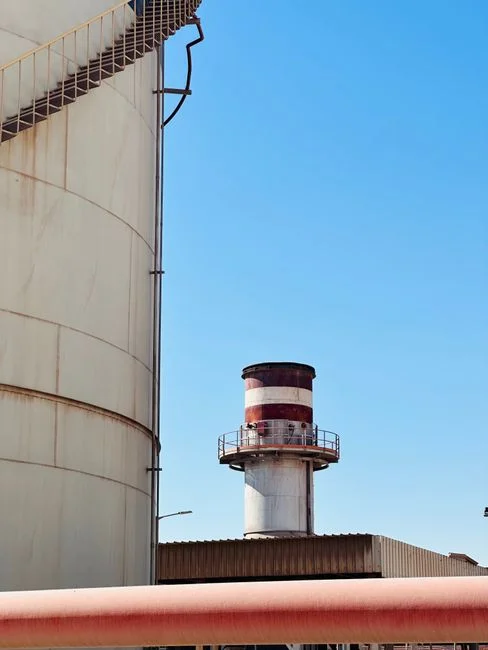
A conventional gravity clarifier relies on quiescent settling, so dense mineral slimes and lime-softened slurries drop to the sludge blanket under low hydraulic disturbance. A lamella-plate design improves on that footprint by combining flocculation, sludge recirculation, and inclined plates to deliver a high effective surface-loading rate. The HydropureWater high-efficiency sedimentation tank uses that inclined-plate arrangement to reach 20-40 m/h surface loading while reducing chemical use by up to 30% compared with conventional clarifiers (HydropureWater catalog).
Clarifiers handle large flows and dense mineral slimes with low-to-medium solids loads at lower energy than a DAF, but they need a much larger plan area per unit of flow. That footprint is a real constraint on a small Daphne site, but it is often acceptable when land is available and the stream is genuinely settleable. Lamella/inclined plate clarifiers are classed as "adaptive use" physical/chemical technologies in the EPA's emerging technologies assessment (EPA 832-R-12-011, March 2013), alongside DAF, ballasted sedimentation, and the Actiflo process, confirming both options are accepted industrial practice rather than experimental gear.
A clarifier downstream of a DAF is a common hybrid: the DAF captures the floated oil, FOG, and metal hydroxide floc fraction, and a lamella clarifier polishes residual settleables before discharge or reuse. For plants sending solids to a filter press, the HydropureWater plate and frame filter press receives the combined sludge stream for dewatering. A broader pretreatment view is laid out in the 2026 mining pretreatment compliance guide, which is built around the same kind of DAF-plus-clarifier train.
DAF vs Clarifier: Side-by-Side Comparison for Daphne Factories
The matrix below lets a procurement committee see every decision variable on one screen. The build-material and capacity-window values are taken directly from the HydropureWater catalog and Clearwater/SigmaDAF USA (2026); the chemical-dependency claim is from the HydropureWater catalog. Specific kWh/m3 figures are not in the research, so the energy-profile row flags that as an input the buyer must request from shortlisted vendors rather than a value the article can quote.
| Decision Variable | DAF System | Gravity / Lamella Clarifier |
|---|---|---|
| Best-fit stream | TSS, FOG, oils, low-density metal hydroxide flocs (Clearwater/SigmaDAF USA, 2026) | Dense mineral slimes, lime-softened slurries, high-flow low-solids streams (HydropureWater catalog) |
| Footprint per m3/h | Compact skid; small plan area | Larger plan area; vertical height via inclined plates (HydropureWater catalog) |
| Chemical dependency | Coagulant + flocculant dosing required for bubble attachment (Clearwater/SigmaDAF USA, 2026) | Up to 30% lower chemical use with lamella design (HydropureWater catalog) |
| Energy profile | Saturator pump and skimmer drives; specific kWh/m3 not provided in research | Largely passive; sludge rakes where fitted; specific kWh/m3 not provided in research |
| Standard build material | 304SS standard, 316SS and polypropylene options for chloride/sulfate streams (Clearwater/SigmaDAF USA, 2026) | Project-specific; confirm with vendor for chloride/sulfate exposure |
| Capacity window | 4-300 m3/h across 13 standard models (HydropureWater catalog) | Project-specific; size to 20-40 m/h surface loading target (HydropureWater catalog) |
| Hybrid use | Commonly placed upstream of a clarifier for polishing | Commonly placed downstream of a DAF for residual settleables |
The two technologies are not exclusive; for most Daphne metals plants the defensible answer is "DAF first, lamella clarifier second" when the stream carries both floated and settleable fractions. The matrix is the starting point for the chemistry, climate, and compliance filters in the next section.
Chemistry, Climate, and Compliance Factors Unique to Daphne
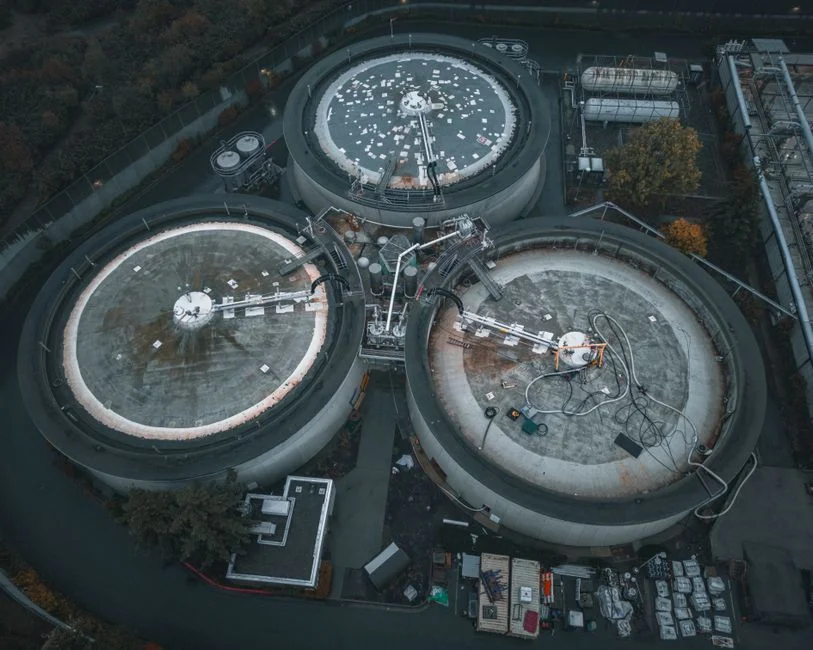
Gulf-Coast climate filters the comparison before dollars do. Hot, humid summers and hurricane-season peak flows raise hydraulic surges that a compact DAF can absorb on a small footprint, while a gravity clarifier typically needs upstream equalization to avoid sludge washout during a peak flow event. That is a qualitative site-engineering consideration, not a quoted number, and the right sizing for either unit should be confirmed against your plant's historical peak-flow record.
Discharge targets along the Mobile Bay watershed typically restrict TSS, total metals, and pH. Both DAF and lamella clarifiers can hit these when paired with proper pH adjustment and coagulant chemistry, but only if jar testing on the real stream backs the choice. Mining streams that mix sulfide oxidation products with lime treatment can release CO2 that disturbs DAF micro-bubbles; that is a real chemistry risk and one reason the EPA (EPA 832-R-12-011, March 2013) emphasizes waste-stream characterization before equipment selection.
Always request documented case studies from your vendor for metal-bearing streams similar to yours. The EPA's 2013 document explicitly notes that emerging-technology data is partly vendor-supplied and "could not be verified or supported by full scale case studies," so field-verified performance on a comparable ore body or rinse stream is a stronger procurement defense than any catalog curve. Where water reuse is part of the 2026 plan, the 2026 mine-site water reuse sizing guide covers the downstream capacity question.
Selecting the Right System in 2026: A Decision Framework
Step 1: Characterize the worst-case stream. Document peak flow, peak TSS, FOG, dissolved metals, pH, and temperature. The EPA (EPA 832-R-12-011, March 2013) frames physical/chemical technology selection as a direct function of waste-stream characterization, so this step is non-negotiable. Without a worst-case envelope, the comparison cannot be defended to a procurement committee.
Step 2: Run jar or pilot tests with both DAF and lamella chemistry on your real stream. Do not rely on vendor brochures alone, since the EPA (2013) notes that stated performance and cost data may not be independently verified. A two-week pilot on a side-stream will resolve the sulfide/CO2 risk and confirm whether flotation or settling wins on your specific ore chemistry.
Step 3: Match system capacity. The HydropureWater DAF system covers 4-300 m3/h in 13 standard sizes, and a lamella clarifier should be sized to a 20-40 m/h surface loading target (HydropureWater catalog). For a DAF-plus-clarifier hybrid, size the DAF to the floated load and the clarifier to the residual settleable load, not to the total flow.
Step 4: Build a total-cost checklist. Line items to request from shortlisted vendors: CAPEX, polymer and coagulant dose (kg/m3), energy (kWh/m3), sludge yield and dewatering cost on a HydropureWater plate and frame filter press, and annual maintenance. The research does not provide a benchmark kWh/m3 or $/m3 figure, so each line has to come from a vendor bid; reject any proposal that quotes only CAPEX.
Step 5: Confirm build material and skid integration. Chloride- and sulfate-rich mining streams push the build toward 316SS or polypropylene, both available on the HydropureWater DAF range (HydropureWater catalog) and confirmed as options by Clearwater/SigmaDAF USA (2026). Pair the DAF or clarifier with a HydropureWater automatic chemical dosing system so pH, coagulant, and flocculant setpoints are reproducible rather than operator-dependent.
Frequently Asked Questions
Should our Daphne metals plant lead with a DAF or a clarifier for the primary separator?
Lead with a DAF when the stream carries floated TSS, FOG, oils, or low-density metal hydroxide flocs; lead with a lamella clarifier when the stream is dominated by dense mineral slimes, lime-softened slurries, or very large flows with low solids and stable chemistry (Clearwater/SigmaDAF USA, 2026; HydropureWater catalog). A DAF-then-lamella hybrid is the most common configuration when both fractions are present.
How do we set a 2026 budget for a DAF or clarifier without getting burned by hidden costs?
The research does not provide a published price or delivery lead time for either technology, so the defensible move is to build a request-for-quote checklist: CAPEX, polymer and coagulant dose in kg/m3, energy in kWh/m3, sludge yield, dewatering cost, build material, and delivery weeks. Ask each shortlisted vendor to fill every line so bids are comparable, and reject any proposal that quotes only the equipment price.
What supplier-selection checks reduce compliance and delivery risk in 2026?
Confirm documented case studies on metal-bearing streams similar to yours, since the EPA (EPA 832-R-12-011, March 2013) notes that emerging-technology performance data is partly vendor-supplied and may not be independently verified. Ask for chloride and sulfate exposure on the build (304SS, 316SS, polypropylene), skid integration scope, and a written delivery week rather than a verbal one.
How do we size a DAF or lamella clarifier for a Daphne facility with hurricane-season peak flows?
Size the DAF against peak flow within the 4-300 m3/h HydropureWater window, and size the lamella clarifier to a 20-40 m/h surface loading target (HydropureWater catalog). For hurricane-season surges, confirm with your vendor that equalization upstream of the separator is included in the scope, and that the saturator pump and skimmer drives on the DAF are sized for the peak envelope rather than the daily average.