Why Aquaculture Sludge is Hard to Dewater
Aquaculture sludge is not generic municipal biosolids. It carries a specific mix of feed fines, uneaten pellets, fish excrement, biological flocs, and the oils that come with formulated feed — almost always at low feed solids concentration. S1 (Yimei, made-in-china.com product page) explicitly names this duty as the failure case for conventional machines, stating that the multi-plate screw press was developed to overcome the "frequent clogging, inefficacy with low-concentration sludge or oil sludge, high energy demands, and complex operations" seen on belt presses and centrifuges in this kind of feed. S4 (GN Separation) lists aquaculture as a standard application sector alongside municipal, food, starch, oil, pharmaceutical, chemical, paper and leather, confirming that established vendors treat it as a recognisable duty rather than a fringe case.
Two practical consequences follow. First, the combination of low concentration plus high water content means a thickener step is usually mandatory before mechanical dewatering — any vendor quoting a screw press for a raw fish-farm effluent should be asked how the upstream DAF or gravity thickener fits into the flow. Second, the recirculation imperative in RAS means washwater and polymer carry-over must be minimised. S4 specifies an operating pressure window of 0.1–0.2 MPa with "no high pressure flushing device required" — a fit for closed-loop farms where diluting the filtrate loop with flush water defeats the purpose of thickening in the first place.
How a Multi-Plate Screw Press Dewateres Sludge
The mechanism has three sequential zones along a single Archimedean screw shaft, and each zone has a distinct job. Polymer is dosed and mixed in the flocculation modulation box upstream — S4 (GN Separation) and S5 (Euroteck, 2025-04-21) both list this as a prerequisite chemical step before the sludge ever reaches the screw.
In the thickening zone, the screw-driven shaft rotates while the surrounding moving rings oscillate vertically; gravity drains water through the ring gaps into the filtrate tank, and feed concentration rises before any mechanical pressure is applied. In the dewatering zone, the sludge is propelled forward as the screw thread pitch diminishes, raising chamber pressure along the shaft; a back-pressure plate at the outlet provides an additional squeeze, producing a drier cake. S1 (Yimei) states that the back-pressure plate "bolstered" the diminishing-pitch effect to produce "substantially drier sludge cakes." In the self-cleaning zone, the continuous rotation of moving rings against fixed rings clears the gaps, preventing the clogging that S1, S5 attribute to belt presses and centrifuges on low-concentration and oily sludge.
Pressure is generated mechanically, not hydraulically: chamber pressure rises along the screw length, with GN's published operating window of 0.1–0.2 MPa (S4) — no external high-pressure pump is required. The flocculation chemistry is normally delivered by a PLC-controlled polymer dosing skid tuned to the aquaculture feed.
| Zone | Mechanism | Output | Source |
|---|---|---|---|
| Thickening | Screw rotation + vertically oscillating moving rings; gravity drainage through ring gaps | Concentrated sludge to filtrate tank | S1 (Yimei) |
| Dewatering | Diminishing screw pitch raises chamber pressure; back-pressure plate adds outlet squeeze | Drier cake | S1, S4 (GN) |
| Self-cleaning | Moving rings rotate against fixed rings to clear gap | Clog-free continuous operation | S1, S5 (Euroteck, 2025-04-21) |
| Flocculation (upstream) | Polymer dosed and mixed in modulation box to build flocs | Conditioned feed to screw | S4, S5 |
Screw Press vs Centrifuge vs Belt Press for Aquaculture
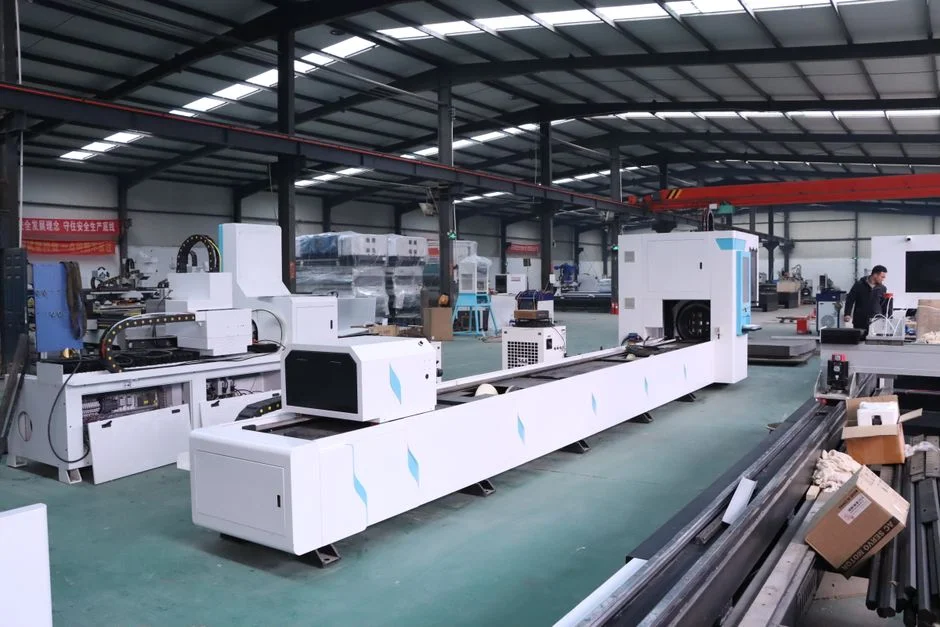
Each technology has a documented failure mode on aquaculture sludge, and those failure modes should drive the selection rather than the technology name on the data sheet. The belt press has the lowest capital cost, but S1 (Yimei) names frequent clogging on low-concentration and oily sludge as a documented drawback — directly relevant to feed-fines-rich fish-farm waste. The centrifuge can reach higher cake dryness, but S1 lists high energy demand as a key drawback; for a fish farm with a constrained power budget, the screw press is the lower-energy alternative. The multi-plate / multi-disc screw press is framed by S1 and S5 (Euroteck) as clogging-free, low energy, low washwater, and tolerant of variable feed solids — the design intent matches aquaculture duty. S5 explicitly compares the multi-disc screw press favourably to belt press and centrifuge on maintenance burden and energy consumption, which is useful third-party framing when the case has to be made to procurement. S4 (GN) adds that the screw press is "economic and environmental friendly" — procurement-friendly language when finance sign-off is the bottleneck.
Selection should therefore be feed-led: the aquaculture sludge profile (low concentration, feed fines, biological oil) tilts the decision toward the multi-plate / multi-disc design per S1. For a frame of reference on the broader head-to-head logic, the screw press vs filter press vs centrifuge comparison framework used in winery duty applies the same feed-led logic. The conventional alternative that the screw press most often replaces in older ETPs is the plate-and-frame filter press as the conventional alternative, which is a useful reference point when justifying the change internally.
| Technology | Aquaculture Strength | Aquaculture Weakness | Source |
|---|---|---|---|
| Belt press | Low capital cost | Frequent clogging on low-concentration and oily sludge | S1 (Yimei) |
| Centrifuge | High cake dryness potential | High energy demand | S1 |
| Multi-plate / multi-disc screw press | Clog-free, low energy, low washwater, tolerates variable feed solids | Lower peak cake dryness than a centrifuge in some feeds | S1, S5 (Euroteck, 2025-04-21), S4 (GN) |
Matching Screw Press Model to Farm Scale in 2026
A 2026 selection framework has to be tied to the actual farm configuration — RAS, flow-through, or pond — rather than to a generic kg/h rating. S5 (Euroteck, 2025-04-21) emphasises that the multi-disc screw press is not a one-size-fits-all product and offers a model range sized by plant capacity, so the first procurement question is whether the vendor can match the farm's kg-DS/day throughput, not just feed flow. S4 (GN) provides a published capacity table for absolute dry sludge at varying feed concentrations; that table is the basis for any vendor conversation, and shortlist vendors should be asked to repeat the calculation against your actual feed concentration rather than a nominal number.
For small RAS or hatchery duty, compact skid-mounted units with the four standard components — automatic control cabinet, flocculation modulation box, sludge thickening and dewatering device, filtrate tank, per S4 — keep civil works to a minimum and fit inside a containerised ETP. For pond-side or large flow-through farms where the farm has no permanent ETP building, S4 describes integrated mobile dewatering solutions as a vendor option worth requesting. A 2026 selection should also weigh automation level: S4 describes PLC-controlled flocculation dosing and continuous operation, which reduces operator labour in remote farm locations — a non-trivial factor for a single-shift farm team. Upstream, a upstream dissolved air flotation thickener is the usual partner to a screw press when raw feed concentration sits below the thickening zone's comfort range. For an adjacent duty case, the screw press buyer's guide for dairy wastewater and the screw press engineering guide for brewery wastewater both apply the same model-range logic to a different feed profile.
Sizing Checklist for an Aquaculture Screw Press RFQ
The fastest way to be undersold on a screw press is to walk into a vendor meeting without the right feed numbers. Hand the vendor three things first: feed flow (m³/h), feed TSS (mg/L or %), and target cake dryness (%) — S4's published capacity table is keyed to these three parameters, and any vendor who quotes a model without them is guessing. Second, confirm the operating pressure rating against S4's stated 0.1–0.2 MPa window, and ask whether the back-pressure plate is adjustable for feed variability, since aquaculture feed swings with feeding cycles. Third, specify the four-component scope per S4 — automatic control cabinet, flocculation modulation box, thickening and dewatering device, filtrate tank — to avoid split-supply ambiguity between the press body and the polymer dosing skid.
Fourth, request polymer consumption (kg active polymer per kg DS) and washwater consumption (m³/h) for your specific aquaculture feed; the screw press is marketed as low on both per S1, S4, S5, but ask for project-specific numbers rather than brochure values. Fifth, confirm whether the moving-ring self-cleaning mechanism is field-serviceable without full disassembly, since S1 and S5 frame this as a key uptime advantage, and the service interval should be in writing. Finally, request reference lists specifically for aquaculture or comparable food/animal-protein wastewater; S5 (Euroteck) and S1 (Yimei, exporting to aquaculture-intensive regions such as Vietnam, Thailand, Indonesia, the Philippines, and Malaysia) demonstrate that the supply base exists, but the buyer should still verify a project comparable to their own feed profile.
Frequently Asked Questions
What feed flow and TSS can a single multi-disc screw press handle?
S4 (GN Separation) publishes a capacity table expressed as kg of absolute dry sludge per hour at stated feed concentrations, and the table is the correct basis for sizing — not a generic m³/h feed flow. A buyer should request that any shortlist vendor repeat the calculation against the actual feed TSS and the kg-DS/day the farm actually generates, and should treat the nominal m³/h figure on a data sheet as a secondary check rather than the primary sizing input.
What questions separate a credible aquaculture screw press vendor from a generic sludge-dewatering reseller?
A credible vendor will quote against the four-component scope in S4 (control cabinet, flocculation modulation box, thickening and dewatering device, filtrate tank), confirm that the model range in S5 (Euroteck) can be matched to the farm's kg-DS/day, and provide an aquaculture or comparable food/animal-protein reference list. A reseller who can only quote a generic press body, cannot name a comparable project, and pushes polymer dosing as a separate scope is a flag to keep looking.
How much polymer and washwater does a screw press consume on aquaculture sludge?
S1 (Yimei), S4 (GN), and S5 (Euroteck, 2025-04-21) all market the multi-plate / multi-disc design as low on both polymer and washwater, and S4 specifically states that no high-pressure flushing device is required at the 0.1–0.2 MPa operating pressure. Buyers should request project-specific values for their own feed from any shortlist vendor, since the actual number depends on the feed TSS and the polymer being dosed; there is no generic aquaculture figure in the research.
What cake dryness can be expected, and how is the cake discharged?
S1 (Yimei) describes the dewatering zone with a back-pressure plate producing "substantially drier sludge cakes" than the thickening stage alone. The cake is discharged at the outlet end of the screw shaft under the back-pressure generated mechanically along the length of the unit, not by an external pump. For a specific dryness percentage on a given aquaculture feed, the buyer must request a bench or pilot test from the vendor, since the research does not quote a numeric dryness figure for aquaculture sludge.
Is a screw press adequate for meeting fish-farm discharge limits, or is a centrifuge required?
S1 (Yimei) states that the multi-plate screw press handles low-concentration sludge better than a centrifuge, and S5 (Euroteck, 2025-04-21) frames the centrifuge as a higher-energy alternative rather than a stricter-compliance one. For most fish-farm discharge routes the screw press is adequate when paired with an upstream thickener; a centrifuge only becomes the right call when cake dryness for off-site disposal is the binding constraint, and that decision should be made on a project-specific cake-handling cost basis rather than a general rule.