
Why Touba Changes the Design Basis for a Data Center
A data center sited in Touba, Senegal is a Sahelian, semi-arid project, not a generic arid-site template. IDE-Tech's industry benchmark puts a 100 MW facility's water demand at up to 2 million liters per day, an upper envelope for sizing a hyperscale campus but not the only relevant scale, because most Touba-built facilities will land in the 2–20 MW edge and mid-tier band (IDE-Tech, 2026). The chemistry and regulatory environment shift every later decision: water-stress is climate-defined, discharge is permit-defined, and the cooling loop is chemistry-defined. A defensible 2026 design basis for Touba is one that fixes the cooling-tower operating envelope first, then selects the blowdown train that can meet both Senegal's Code de l'Eau and the DREEC/ONAS discharge oversight on top of it.
The supplied research does not quantify Touba's local rainfall, pan evaporation, raw-water TDS, ONAS sewer acceptance limits, DREEC discharge parameters, or SENELEC grid carbon intensity. These are the site-confirmation inputs the design team must request from the local prefecture, ONAS, DREEC, and SENELEC before the basis-of-design report is frozen; they are not assumptions to fill in at the engineer's desk. What the research does confirm is the cooling-tower operating envelope the equipment must hold: TDS in the 500–1,500 mg/L range and suspended solids in the 10–25 mg/L range (Genesis Water Technologies, 2026). Any Touba train that cannot hold the loop inside that envelope is a rejected design, regardless of how much permeate it makes.
Two operating-cost drivers carry over from the FEMP and Genesis sources and are directly applicable in Touba. First, blowdown as a fraction of makeup equals 1/(CoC−1), the simple relationship that lets a designer project blowdown volume from cycles of concentration alone (Genesis Water Technologies, 2026). Second, real blowdown typically exceeds theoretical by 15–30% because of unmeasured leaks, drift, and emergency dumps, which means a 25% theoretical number routinely shows up as 28–32% on the monthly water meter (Genesis Water Technologies, 2026). Both numbers belong in the design basis; ignoring them is how projects lose their water balance to the field.
| Design-basis input | Value used in this blueprint | Source |
|---|---|---|
| 100 MW hyperscale water demand (upper envelope) | Up to 2 million L/day | IDE-Tech, 2026 |
| Cycles of concentration, common operating range | 2–4 CoC (6+ technically possible) | FEMP / energy.gov |
| CoC increase from 3 → 6: makeup reduction / blowdown reduction | 20% / 50% | FEMP / energy.gov |
| Blowdown / makeup ratio (1/(CoC−1)) | CoC 4 ≈ 25%, CoC 6 ≈ 20% | Genesis Water Technologies, 2026 |
| Real blowdown overshoot vs theoretical | 15–30% above theoretical | Genesis Water Technologies, 2026 |
| Cooling-tower TDS operating target | 500–1,500 mg/L | Genesis Water Technologies, 2026 |
| Cooling-tower suspended-solids spec | 10–25 mg/L | Genesis Water Technologies, 2026 |
The Two Streams a Touba Operator Must Treat
Cooling tower blowdown (CTBD) is the dominant waste stream by volume, and it is also the most technically constrained. As the cooling tower evaporates, dissolved salts stay behind in the recirculating loop, so the periodic purge — the blowdown — is a brackish concentrate of silica, calcium carbonate, and calcium sulfate (IDE-Tech, 2026). If a Touba designer sizes only the sanitary train and treats the cooling loop as a "utility stream," scaling and biological fouling will force unplanned shutdowns long before any discharge issue reaches the regulator. CTBD chemistry drives the design; sanitary flow is the smaller, easier train.
Sanitary wastewater from offices, cafeterias, humidification, and staff facilities is comparatively low-flow but still needs a packaged biological treatment unit sized to the actual occupant count, not to the IT load. A buried packaged plant such as the WSZ underground integrated sewage treatment unit covers the 1–80 m³/h envelope most Touba facilities will fall into, and it discharges an effluent that can be polished for landscape irrigation, toilet flushing, or humidification makeup where climate makes cooling-tower makeup impractical. The point of separating the two streams is to keep each one inside its own correct envelope: blowdown gets the chemistry-aware train, sanitary gets the biological train, and neither is over- or under-specified.
The 100 MW / 2 million L/day benchmark (IDE-Tech, 2026) sizes blowdown potential at the upper end; a 10 MW Touba facility sits an order of magnitude lower, but the same ratios apply, which is why a small site can use the same mass-balance method to defend its numbers to ONAS, DREEC, and the local prefecture. The two streams also share a single reuse philosophy: CTBD permeate becomes cooling-tower makeup; sanitary effluent, after polishing, feeds non-potable reuse where the cooling loop is already saturated.
Building a Touba-Specific Cooling Water Balance
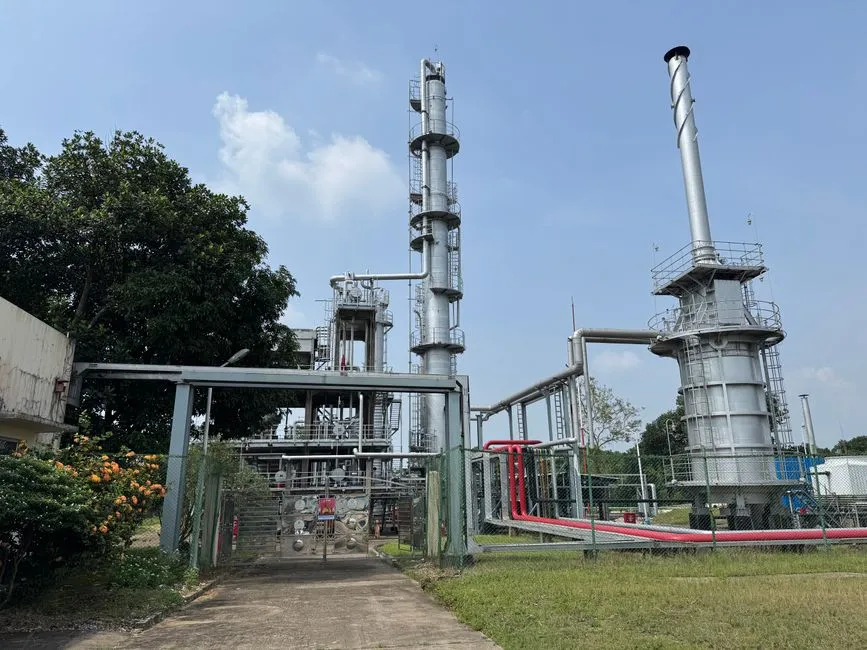
A defensible water balance starts with the FEMP cycles-of-concentration framework. Most systems operate at 2–4 CoC, 6+ is technically possible, and lifting CoC from 3 to 6 reduces makeup water by 20% and blowdown by 50% (FEMP, energy.gov). That single change is the cheapest water-saving intervention available on most Touba sites, before any new equipment is purchased.
Apply the 1/(CoC−1) blowdown ratio to translate CoC into a concrete blowdown number. At CoC 4, blowdown is approximately 25% of makeup; at CoC 6, it drops to about 20% (Genesis Water Technologies, 2026). The improvement from 4 to 6 CoC is 5 percentage points, not the 50% many sustainability reports quote, and biological and scaling risks rise sharply above 5–6 CoC without advanced treatment (Genesis Water Technologies, 2026). In Touba's hot climate, a 5–6 CoC ceiling is a realistic operational target, not a 7–8 CoC aspiration. Real plants overshoot theoretical blowdown by 15–30% (Genesis Water Technologies, 2026), so the design basis should add that contingency rather than rely on textbook ratios alone.
Translate the 2 million L/day benchmark (IDE-Tech, 2026) into a Touba case. A 10 MW edge or mid-tier facility sits an order of magnitude lower, but the ratios still hold, and at this scale, side-stream filtration and chemical-program simplification matter more than reverse osmosis. Reconcile the WUE reference band of 0.47–0.65 gal (1.8–2.5 L) per kWh (Genesis Water Technologies, 2026) with the cooling-tower TDS target of 500–1,500 mg/L and the 10–25 mg/L suspended-solids spec (Genesis Water Technologies, 2026) to define the reuse envelope. If the WUE number looks too good for the loop chemistry, the WUE is being under-counted: WUE measures site intake without separating consumption from recycled water, so a site can report a flattering WUE while still discharging contaminated blowdown (Genesis Water Technologies, 2026). The fix is to track consumption and discharge quality separately, not to chase a single headline ratio.
| CoC choice | Makeup vs CoC 3 baseline (FEMP) | Blowdown / makeup (1/(CoC−1), Genesis) | Real-plant overshoot (Genesis) | Operational note |
|---|---|---|---|---|
| 3 | Baseline | ~50% | Expect 58–65% on the meter | Conservative; default for existing systems with weak chemistry control |
| 4 | Modest reduction | ~25% | Expect 29–32% on the meter | Common operating point; reachable with disciplined side-stream filtration |
| 5–6 | 20% makeup reduction at CoC 6 vs CoC 3 | ~20% at CoC 6 | Expect 23–26% on the meter | Biological and scaling risk rises above 5–6 CoC without advanced treatment |
| 6+ | Diminishing return; 50% blowdown cut at CoC 6 vs CoC 3 | Below 20% | Site-specific | Requires chemistry-aware train, side-stream softening, or anti-scalant plus biological control |
Treatment Train Options for Touba Cooling Tower Blowdown
Three realistic trains cover the edge, mid-tier, and hyperscale cases for Touba without forcing a single answer on every project.
Train 1 (low complexity): side-stream filtration plus an optimized chemical program. The goal is to lift sustainable CoC without adding dissolved solids, which means physical treatment methods that reduce scaling and biological fouling rather than aggressive chemical dosing (Genesis Water Technologies, 2026). This is the right entry point for a 2–10 MW edge site: capital cost per gallon at hyperscale is roughly 3–4× lower than at 5 MW colocation, and operational complexity exceeds available staff at small sites (Genesis Water Technologies, 2026). Adding multi-media filtration as a polishing step ahead of the cooling loop is the standard way to drop suspended solids into the 10–25 mg/L envelope (Genesis Water Technologies, 2026).
Train 2 (mid complexity): multi-media filtration, then hollow-fiber UF pretreatment upstream of RO, then brackish reverse osmosis. UF handles particulates and microbiological load; RO rejects dissolved solids and produces a permeate suitable for cooling-tower makeup. The hard ceiling on this train is the 75–80% recovery plateau that conventional BWRO hits before silica and calcium carbonate scaling force the system to back off (IDE-Tech, 2026; FEMP, energy.gov). 75–80% recovery is enough for many Touba sites; it is not enough for hyperscale campuses that need to push toward zero liquid discharge.
Train 3 (high recovery): RO followed by a brine-concentrator step with controlled precipitation of silica, calcium carbonate, and calcium sulfate as dense solids, targeting overall recovery around 95% with permeate silica near 1 mg/L (IDE-Tech, 2026). This is the design target for a Touba hyperscale or AI-training campus where freshwater is the binding constraint, and it pairs naturally with an industrial RO system for cooling-tower blowdown polishing at the front end.
The FEMP caveat is essential: RO treatment of blowdown lowers WUE but raises PUE because of pumping energy, and RO also adds O&M cost and complexity (FEMP, energy.gov). For Touba, that PUE penalty must be scored against SENELEC grid carbon intensity rather than against water savings alone, because the same kilowatt-hour that lifts PUE also carries a carbon cost specific to the Senegalese grid mix.
| Train | Best-fit site | Recovery ceiling | Permeate quality | Key trade-off |
|---|---|---|---|---|
| 1 — Side-stream filtration + optimized chemistry | 2–10 MW edge / colocation | Lifts sustainable CoC, no permeate stream | Loop stays inside 500–1,500 mg/L TDS, 10–25 mg/L SS | Lowest capex; requires disciplined chemistry program |
| 2 — Multimedia + UF + BWRO | 10–20 MW mid-tier | 75–80% (conventional BWRO ceiling) | Suitable for cooling-tower makeup | PUE penalty from RO pumping; PUE rises with WUE fall |
| 3 — RO + brine concentrator with controlled precipitation | Hyperscale / AI training | ~95% overall | Permeate silica near 1 mg/L (IDE-Tech) | Higher complexity; solid-waste path required for dense pellets |
Matching the Train to Touba's Site Constraints
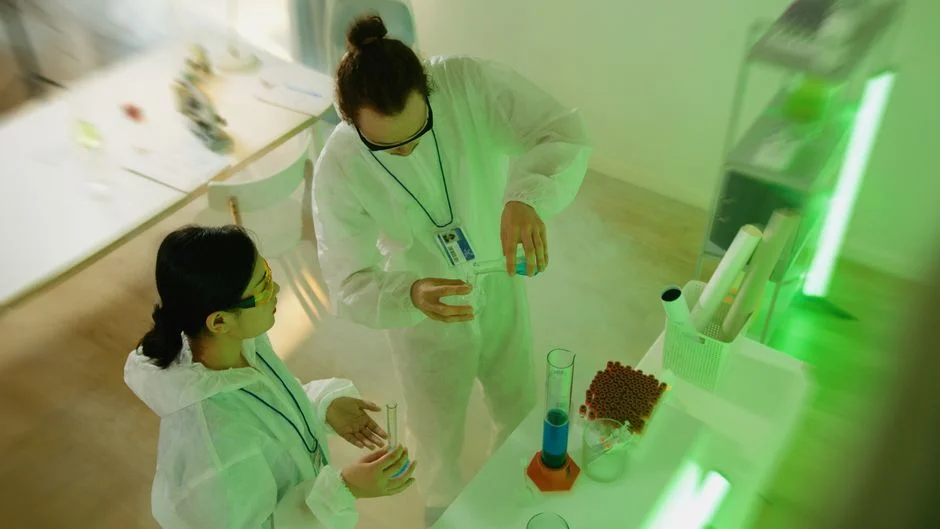
For Touba edge and mid-tier sites under about 10 MW, hyperscale RO/IX packages are uneconomic. Capital cost per gallon at small scale can be 3–4× higher than at hyperscale, and operational complexity exceeds the staff available at a typical colocation facility (Genesis Water Technologies, 2026). The right default for these sites is a modular UF + targeted polishing train, sized to the actual blowdown flow, with a simple reuse destination such as landscape irrigation or toilet flushing rather than a closed-loop cooling-tower makeup ambition.
For Touba hyperscale or AI-training campuses, the design target is the ~95% overall recovery benchmark with permeate silica near 1 mg/L (IDE-Tech, 2026), paired with DREEC/ONAS-compliant discharge of the small residual brine or its solidification as a managed waste. WUE is the headline metric the regulator and the community will see, and the 0.47–0.65 gal (1.8–2.5 L) per kWh reference band (Genesis Water Technologies, 2026) is the benchmark to write into the design basis. PUE penalty from RO (FEMP, energy.gov) is the headline the utility and CFO will see, so both metrics belong in the same document, and the WUE vs PUE trade-off must be explicit, not buried.
One more site-specific lever matters in Touba: tertiary-treated municipal wastewater in the 600–1,200 mg/L TDS range (Genesis Water Technologies, 2026) already sits inside the cooling-tower TDS envelope. A co-located industrial-park or municipal reuse partnership is worth evaluating for any Touba site inside a designated industrial zone, because the upstream water is already in spec, the treatment train can be shorter, and the discharge conversation with DREEC/ONAS becomes a conversation about residual brine, not about a large sanitary stream. A comparable LCA framing is documented in Open Engineering Inc.'s 2026 study, which found that reuse-water treatment energy can outweigh freshwater GWP in the short term but converges with decarbonized grid operation over a cooling system's service life (Open Engineering Inc., 2026). That conclusion does not transfer one-to-one to the Senegalese grid, but it is a defensible starting point for the SENELEC carbon-intensity conversation.
Decision Framework for Procurement and Permitting
Build the business case on total cost of water, not on the utility tariff alone. When discharge fees, blowdown volume, and compliance risk are added to the calculation, payback typically improves from marginal to acceptable (Genesis Water Technologies, 2026). For a Touba procurement meeting, that means the spreadsheet has to include ONAS discharge fees, the avoided cost of treated-water trucking for an isolated site, and the cost of a permit delay, not just the line-item water rate from the local utility.
Tie equipment selection to a 5-stage maturity ladder — measurement → existing-system optimization → chemistry upgrade → blowdown treatment → advanced integration — so the operator can stage capex and avoid over-buying (Genesis Water Technologies, 2026). Most facilities stall between Stage 2 and Stage 3 because the strategic clarity is missing, not because the technology is unavailable. The maturity ladder is the answer to "do we buy the RO now or wait," and the answer depends on whether the site is actually measuring its current blowdown at all.
Decide discharge vs reuse before equipment selection. A site with reliable municipal sewer access can send polished blowdown to ONAS under the Code de l'Eau framework, while an isolated Touba site inside an industrial park without municipal sewer needs RO plus brine concentration plus a solid-waste path. Require a Legionella and microbiological control plan because the warm blowdown stream is a documented risk in cooling systems using treated wastewater (Genesis Water Technologies, 2026), and a polishing step such as UV polishing for Legionella and microbial control or a chlorine dioxide generator is a defensible control.
| Site condition | Permitting path | Treatment implication | Microbial control |
|---|---|---|---|
| Inside an industrial park with ONAS sewer access | Code de l'Eau + DREEC/ONAS discharge permit; confirm sewer acceptance limits before design freeze | Polished blowdown to sewer feasible; Train 1 or Train 2 is sufficient | UV polishing on the polished stream |
| Isulated site with no municipal sewer | Code de l'Eau + DREEC surface/groundwater discharge; treat brine as a managed waste | Train 3 (RO + brine concentrator) is the correct default; solid-waste path required for dense pellets | UV polishing plus chlorine dioxide on the makeup line |
| Co-located with municipal wastewater treatment plant (industrial-park partnership) | Code de l'Eau + DREEC; reuse-of-treated-wastewater permit path; confirm 600–1,200 mg/L TDS feed | Shorter train; upstream water already in TDS envelope; side-stream filtration plus polishing | Validated upstream tertiary treatment plus UV polishing |
Frequently Asked Questions
What is the right module scale for a Touba edge data center cooling blowdown system?
For a 2–10 MW edge or colocation site, the right starting point is a modular side-stream filtration package with an optimized chemistry program, sized to the actual blowdown flow rather than to a hyperscale reference (Genesis Water Technologies, 2026). A 100–300 GPM modular blowdown treatment system is the typical entry point, and a full Train 2 (multimedia + UF + BWRO) only becomes economic once the site crosses the mid-tier threshold. Lead time is dominated by the UF skid and the chemical-program onboarding, not by the RO membranes.
What drives capital and operating cost for a blowdown RO train in West Africa?
Capital cost is driven by RO membrane area, UF pretreatment skid size, and any high-recovery brine-concentrator package; operating cost is driven by membrane replacement, energy for RO pumping (the same energy that lifts PUE per FEMP), chemical consumption, and labor. The right way to compare bids is on total cost of water including discharge fees, blowdown volume, and compliance risk, not on the equipment line item alone (Genesis Water Technologies, 2026). Request a cost breakdown that shows $/m³ of treated water and a 5-year membrane-and-energy projection before selecting a vendor.
How do we select a water treatment supplier for a Senegal-based data center project?
Shortlist suppliers who can document at least one reference install in a Sahelian or comparable West African climate, can supply a chemistry-aware train rather than a one-size-fits-all RO package, and can support the site through DREEC/ONAS permit review. Ask for a commissioning plan that includes membrane CIP procedures for high-TDS feed, a Legionella control protocol for the warm blowdown stream (Genesis Water Technologies, 2026), and a service-response commitment that does not require overseas travel for routine spares. Insist on a documented performance test at handover, not just a factory acceptance test.
What is the Senegalese regulatory pathway under the Code de l'Eau for data center discharge?
Discharge to surface water, groundwater, or municipal sewer in Senegal is governed by the Code de l'Eau and administered through DREEC (Direction Régionale de l'Environnement et des Établissements Classés) for environmental authorization and ONAS (Office National de l'Assainissement du Sénégal) for sewer acceptance. The supplied research does not quantify specific DREEC discharge limits or ONAS sewer acceptance parameters, so the design team must request the local DREEC and ONAS parameters for the specific discharge point before the basis of design is frozen, and build the treatment train around the actual numbers rather than assumed values. Plan for a pre-application meeting with DREEC and ONAS at the same time the engineering package is being developed, not after equipment has been ordered.