
Why pharmaceutical wastewater in Johnson City breaks a one-size-fits-all primary
Pharmaceutical wastewater is batch-driven, multi-contaminant, and locally regulated, which is why the DAF-versus-clarifier question cannot be answered from a generic industrial-water playbook. Production-correlated streams from a Johnson City, TN API or contract-manufacturing plant arrive in spikes rather than at steady flow: high-strength fermenter off-spec, mother-liquor discharges, caustic and surfactant CIP rinses, and solvent-bearing cleanup water can all reach the primary unit within the same shift. Each Tri-Cities plant discharges under a Tennessee Department of Environment and Conservation (TDEC) NPDES permit or a local POTW pretreatment program, and the local receiving water is the Watauga River watershed; the primary unit must protect downstream biological or membrane stages from these batch swings, not just hit a daily average.
The contaminant mix divides cleanly between two technology camps. Settleable inorganics, precipitated salts, spent fermentation media, and cell debris favour gravity or lamella separation. Emulsified oils, surfactants, low-density APIs, and floc-conditioned colloids favour dissolved air flotation. EPA's Emerging Technologies for Wastewater Treatment and In-Plant Wet Weather Management (EPA 832-R-12-011, March 2013) lists dissolved air flotation, ballasted sedimentation, and lamella-plate sedimentation among accepted physical/chemical primary treatments for industrial wastewater, so either route is defensible at a TDEC pre-application meeting when properly designed. The correct primary for a Johnson City plant is the one that removes the dominant contaminant class reliably across batch swings, not the unit with the highest single-number removal rate on a generic spec sheet.
How a DAF system actually separates pharmaceutical contaminants
A dissolved air flotation system separates contaminants by floating them rather than settling them, which is the engineering reason it is the default answer for light, emulsified, or floc-conditioned streams. Saturated water is depressurised inside the flotation cell, releasing 30–50 micron micro-bubbles that attach to floc-conditioned particles, oils, FOG, and low-density APIs, lifting them to the surface for skimming while clarified effluent leaves from below the sludge blanket (Clearwater Industries / SigmaDAF, 2026-04-27). Standard 304SS construction is the shipping norm, with 316SS available for corrosive or sanitary service; polypropylene and other alloys are also available on request (Clearwater Industries / SigmaDAF, 2026-04-27).
The HydropureWater DAF system family covers 4–300 m³/h across 13 standard models and applies the same micro-bubble principle to food, pulp & paper, textile, metalworking, petrochemical, and municipal pretreatment duties, so the same cell geometry carries over to pharmaceutical and personal-care streams once the chemistry is right. For a US pharma plant, the configuration conversation shifts to 316SS wetted parts, sanitary polish (typically Ra ≤ 0.8 µm on product-contact surfaces), orbital-welded piping, CIP spray balls, and a control package aligned with IQ/OQ/PQ documentation; confirm each of these line items against the supplier's project quote because standard builds ship in 304SS.
Chemical conditioning is what makes a DAF work on pharma streams. Coagulant, pH adjustment, and polymer flocculant are dosed into serpentine flocculation tubes or mix tanks upstream of the cell, giving 15–45 seconds of flash mix in the tubes or longer contact in agitated mix tanks; jar testing is the only reliable way to set the dose (Clearwater Industries, 2026). Without proper floc formation, micro-bubbles have nothing to attach to and removal collapses. A DAF also captures heavier grit in a bottom auger or hopper, so it is not a "no-solids" device, only a floated-solids device with a minor settleables side stream.
How a lamella clarifier separates pharmaceutical contaminants
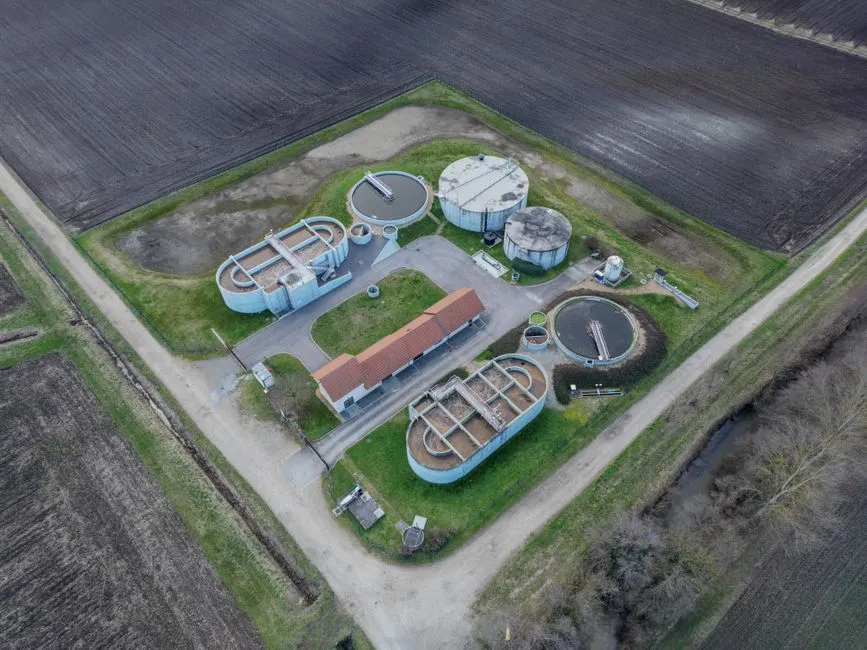
A lamella clarifier is a high-rate inclined-plate or tube settler that multiplies the effective settling area inside a small footprint. Wastewater flows between inclined plates; settleable solids drop onto the plate surface, slide to the hopper, and clarified water rises counter-current to the plates. The result is a compact primary that handles steady, dense, settleable loads at much higher hydraulic rates than a conventional clarifier.
The HydropureWater high-efficiency sedimentation tank (lamella clarifier) is rated for surface loading rates of 20–40 m/h and is documented to reduce coagulant and flocculant consumption by up to 30% versus conventional clarifiers, which is a meaningful OPEX line for high-throughput API plants dosing polymer every shift. On pharmaceutical streams, lamella works well for bulk removal of precipitated APIs, cell debris, spent fermentation media, and inorganic process solids at moderate-to-high steady hydraulic rates.
Where lamella struggles on a pharma effluent is exactly where DAF excels. Low-density APIs that do not settle without floc aid, emulsified oils and surfactants that ride the surface, and CIP foaming events that disturb the plate pack are all weak points for an inclined-plate settler. Sanitary construction is also more demanding: open-top concrete or coated-steel lamella tanks are harder to clean-in-place than a closed DAF cell, so plants with strict cross-contamination control may prefer a covered stainless lamella, or plan for a downstream DAF polish on residuals.
DAF vs lamella clarifier for pharma: head-to-head engineering matrix
The table below is the comparison a Johnson City engineer can paste into a CAPEX memo or a TDEC pre-application package. Numbers and operating ranges are drawn from the cited sources; qualitative cells are flagged where the research did not give a numeric value.
| Parameter | DAF | Lamella clarifier |
|---|---|---|
| Separation mechanism | Micro-bubble attachment lifts floc to surface; skimmer removes float | Inclined plates settle floc to hopper; clarified water rises counter-current |
| Micro-bubble size | 30–50 µm (Clearwater/SigmaDAF, 2026-04-27) | Not applicable |
| Surface loading rate | Lower per m² than lamella; very high TSS/FOG removal in a single pass when chemistry is right | 20–40 m/h (HydropureWater product data) |
| Best-fit contaminant class | Low-density APIs, emulsified oils/FOG, surfactant-laden CIP, floc-conditioned colloids | Dense settleable inorganics, precipitated APIs, cell debris, spent media at steady flow |
| Chemical conditioning | Coagulant + pH adjustment + polymer flocculant in floc tubes or mix tanks (15–45 s flash mix) | Reduced coagulant/flocculant use, up to 30% lower versus conventional clarifiers (HydropureWater product data) |
| FOG and oil removal | Established choice for free-floating oils, greases, and surfactants | Passes much of the surface load to downstream units |
| Batch-variability tolerance | Better; surface-removal process absorbs FOG and surfactant spikes | More sensitive to upset from foaming or density shifts |
| Standard wetted material | 304SS standard, 316SS available (Clearwater/SigmaDAF, 2026-04-27) | Often carbon-steel or concrete with linings; confirm 316SS or sanitary coating for pharma |
| Sanitary finish and validation | CIP spray balls, orbital-welded piping, sanitary polish, IQ/OQ/PQ packs on request | Open-top tanks harder to CIP; closed stainless builds with validation packs on request |
| Sludge handling | Float typically 3–6% dry solids; bottom auger/hopper for settleables; downstream dewatering required | Thickened underflow; downstream dewatering required |
| Typical 2026 selection rule | High FOG / API / CIP surfactant streams | Dense precipitate / cell-debris / steady flow |
| Common hybrid for batchy pharma | Polish step after lamella primary | Primary step before DAF polish |
The matrix makes the decision logic visible at a glance: pick the unit whose mechanism matches the dominant contaminant class. For a mixed Johnson City API/formulation plant running multi-product campaigns, the HydropureWater DAF system paired as a polish stage after a HydropureWater high-efficiency sedimentation tank (lamella clarifier) covers both settleable and floatable loads, with EPA 832-R-12-011 (March 2013) as the regulatory anchor that recognises both as accepted physical/chemical primaries.
2026 cost, footprint and validation reality check for Johnson City plants
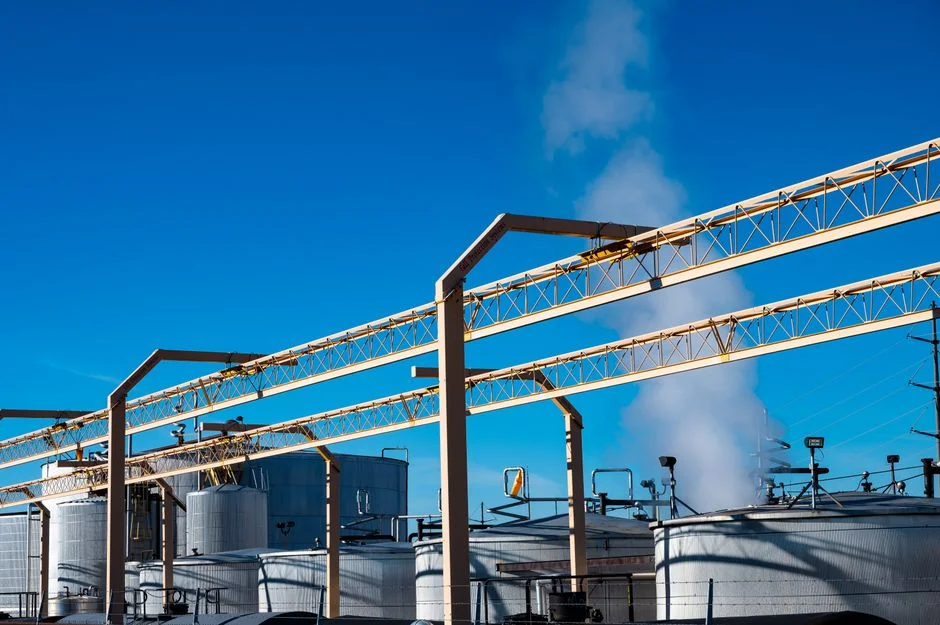
The 2026 cost driver list for a pharma-grade DAF is dominated by materials and documentation, not by the cell itself. 316SS wetted parts, sanitary polish on product-contact surfaces, orbital-welded piping, CIP spray balls, NEC-classified or ATEX panel enclosures where solvents are present, and a full IQ/OQ/PQ documentation pack are the line items that move the budget versus a standard industrial build. A 2026 lamella primary is driven by a covered or enclosed tank, a 316SS plate pack, integral sludge recirculation, an automatic chemical dosing skid (often the HydropureWater automatic chemical dosing system), and a control system that interfaces with the plant's validated automation platform; QA will also want the same IQ/OQ/PQ evidence package.
OPEX lines are similar in shape on both units: coagulant and flocculant dose, polymer for sludge thickening, energy for recycle pumps and skimmer drives, and downstream sludge dewatering. The lamella advantage is chemistry: the 20–40 m/h surface loading and up to 30% lower coagulant/flocculant consumption versus conventional settling (HydropureWater product data) is a real annual number for a high-throughput API plant dosing polymer on every batch. Footprint planning should use lamella's m² per m³/h advantage for settleable loads and DAF's removal-per-m² advantage for FOG-heavy or low-density-API loads; the comparison must be made on the actual contaminant mix, not on flow alone.
The supplied research does not contain 2026 USD CAPEX figures for either unit, so do not anchor a budget to a generic range. Ask each shortlisted vendor for a budgetary quote based on your flow, influent profile, and discharge limits, and confirm current 2026 fabrication lead times and whether the unit ships with a Factory Acceptance Test (FAT) and Site Acceptance Test (SAT) protocol compatible with your QA/validation programme before placing the PO. For wider OPEX benchmarking, the 12 data-backed strategies to cut industrial wastewater OPEX piece is a useful cross-check on chemical, energy, and sludge-handling savings lines.
Decision framework: which technology should your Johnson City plant choose in 2026
For a Johnson City pharmaceutical or contract-manufacturing plant in 2026, the choice collapses to a one-sentence rule. Choose DAF if your dominant primary-contaminant issue is FOG, oils, surfactants from CIP, or low-density APIs that respond to coagulation and flocculation; the 30–50 micron micro-bubble contact step is the differentiator and the 304SS/316SS cell geometry is well established (Clearwater/SigmaDAF, 2026-04-27). Choose a HydropureWater high-efficiency sedimentation tank (lamella clarifier) if your primary stream is steady, with dense settleable solids (precipitated APIs, cell debris, spent media) and you want a small-footprint, lower-chemistry settler rated for 20–40 m/h surface loading.
Choose both, lamella primary feeding a HydropureWater DAF system polish, if your plant runs multi-product batches with mixed contaminant profiles, which is the most common 2026 recommendation for Johnson City API and contract-manufacturing sites with batch swings and CIP foaming risk. In every case, confirm the final selection against the receiving POTW's local limits and TDEC permit conditions before purchase, and run jar tests on representative batch wastewater to size the chemistry and hydraulic loading accurately. For a comparable international design exercise, the industrial ETP and DAF system design guide for a Santiago, Chile factory walks through the same DAF-centred train against a different regulatory backdrop.
Frequently Asked Questions
What 2026 budget should a Johnson City pharma plant plan for a DAF or lamella primary?
The supplied research does not contain 2026 USD CAPEX figures for either unit, so a defensible 2026 budget must be built from vendor quotations. Ask each shortlisted supplier for a budgetary quote that itemises 316SS wetted parts, sanitary polish, orbital-welded piping, CIP spray balls, IQ/OQ/PQ documentation packs, and FAT/SAT protocols, and treat any "starting from" number without those line items as not comparable.
How do I choose between a DAF supplier and a lamella clarifier supplier for a pharma project?
Shortlist on three things the research flags as differentiators: documented flow range (for example, the HydropureWater DAF family at 4–300 m³/h across 13 models versus a given lamella's m²-per-m³/h rating), availability of 316SS wetted parts as standard rather than as an option, and willingness to ship with an IQ/OQ/PQ documentation pack and a Factory Acceptance Test protocol aligned to your QA programme. Requesting those three items in writing before the technical comparison eliminates most of the suppliers who cannot meet pharma validation expectations.
Will a single DAF or a single lamella clarifier handle a multi-product API plant with batch swings?
For a Johnson City API or contract-manufacturing site with batch swings and CIP foaming risk, the most common 2026 recommendation is a lamella primary followed by a DAF polish, not a single unit, because each technology targets a different contaminant class (dense settleables versus low-density APIs and surfactants). Confirm sizing with jar tests on representative batch wastewater before final selection.
What influent data do I need before I can compare DAF and lamella for my plant?
You need a representative influent profile that captures the batch envelope: peak and average flow, TSS, FOG, COD/BOD, surfactant loading, API residue classes expected, pH range across batches, and the receiving POTW's local discharge limits plus TDEC permit conditions. Without that data, neither a DAF nor a lamella can be sized defensibly, because the choice is driven by the dominant contaminant class, not by the headline flow number.