Why the DAF vs Clarifier Question Matters for Blackmont Mining & Metals Plants in 2026
The DAF vs clarifier question matters for Blackmont mining and metals plants in 2026 because the right answer is set by the stream, not by the vendor. Equipment selection turns on particle size distribution, FOG and reagent loading, the share of metal precipitates in the feed, and how violently flow swings between shift and shutdown — not on which technology is being marketed more aggressively that quarter.
Both dissolved air flotation (DAF) and gravity or lamella clarification are documented options for mining wastewater, so the engineer's job is to match mechanism to influent, then back-solve footprint, chemistry, and OPEX. Seven Seas Water confirms DAF is used in mining for mineral processing wastewater and tailings water treatment, which is the scope this article compares against gravity settling. The supplied research contains no 2026 Blackmont-specific discharge limits, so the reader will need to pull their own permit numbers before any final sizing decision — a deliberate gap, because inventing limits would be worse than naming them.
How a DAF System Actually Treats Mining & Metals Wastewater
A DAF system treats mining and metals wastewater by exploiting a controlled pressure drop to make contaminants float rather than sink. Ecologix describes the mechanism clearly: air is dissolved under pressure into a recycle stream of treated water, and that pressurized, air-saturated water is then released at atmospheric pressure inside the flotation tank. The sudden pressure drop forms millions of microscopic air bubbles that attach to suspended solids, fats, oils, greases, and other low-density contaminants, lifting them to the surface where a skimmer removes the float layer and leaves clarified water behind.
This mechanism is well-matched to mining streams for specific reasons. Seven Seas Water states that DAF is used in mining operations to treat industrial wastewater from mineral processing plants, where it removes fine particles, flotation reagents, and other suspended materials and supports recycling water. Seven Seas Water also documents that DAF is applied to the treatment of tailings water, where it helps recover water for reuse in the mining process and reduces the volume of waste that needs to be managed. DAF excels at the fine-particle and emulsified-contaminant categories where traditional clarification underperforms, which is why it shows up repeatedly in mineral processing duty rather than only in oily or food-plant duty. The HydropureWater DAF product line covers 4–300 m³/h across 13 models and pairs micro-bubble flotation with automatic skimming, which is the operating envelope most Blackmont P&IDs would be sized against.
One related hybrid concept — DAF followed by a Modified Moving Bed Biofilm Reactor (MMBBR) for synthetic oily wastewater — appears in an SSRN paper (Elsevier BV, doi.org/10.2139/ssrn.4731382). The full text could not be retrieved during research because the page is gated by a CAPTCHA, so it is cited only as evidence that the hybrid train exists, not as a numeric performance reference.
How a Gravity or Lamella Clarifier Treats the Same Stream
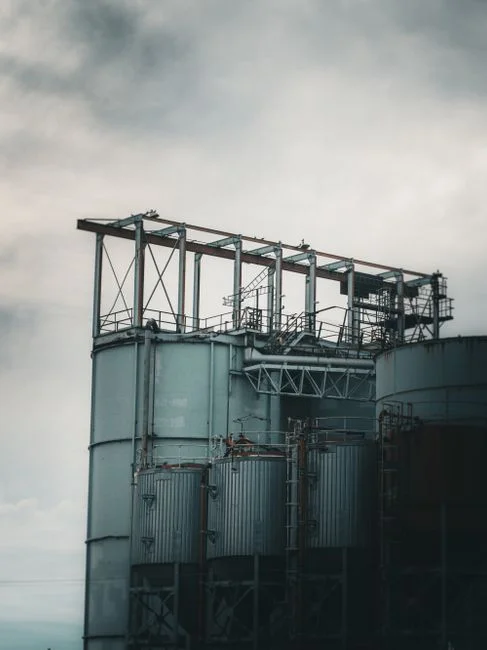
A gravity or lamella clarifier treats mining and metals wastewater by letting physics do the work: coagulant and flocculant are dosed to agglomerate suspended solids into settleable flocs, and those flocs are then separated from the water column by gravity. In a conventional basin the settling area is the surface footprint; in a lamella design, inclined plates are stacked inside the tank so the effective settling area is multiplied many times over, compressing the footprint required for a given flow.
The HydropureWater lamella clarifier combines sludge recirculation, flocculation, and inclined-plate separation inside a single packaged unit, with a documented surface loading range of 20–40 m/h and a stated reduction in chemical consumption of up to 30% compared with conventional basins. That combination makes lamella units attractive for sites where the 2026 priority is lower chemistry OPEX and a smaller civil footprint, and where the influent is dominated by dense, settleable suspended solids rather than fines, emulsified oils, or buoyant reagents. Clarifiers struggle precisely in the categories that Seven Seas Water attributes to DAF: very fine particles, emulsified oils, and buoyant flotation reagents, because those fractions either settle too slowly or never settle at all. The HydropureWater lamella clarifier (20–40 m/h surface loading, up to 30% lower chemical consumption) is the right reference unit for the settling side of the comparison, not a generic circular clarifier.
DAF vs Clarifier: Parameter Comparison for Mining & Metals Streams
The table below scores each technology against the influent and operating parameters a Blackmont plant engineer would actually evaluate. Where the supplied research gives a specific value, it is shown; where the research only describes the mechanism, the cell is marked for jar-test or vendor-P&ID confirmation.
| Parameter | DAF (dissolved air flotation) | Gravity / Lamella clarifier |
|---|---|---|
| Documented mechanism | Pressurized air-saturated recycle released at atmospheric pressure; micro-bubbles attach to suspended solids, FOG, and low-density contaminants; skimmer removes float (Ecologix) | Coagulation/flocculation followed by gravity settling; lamella variants use inclined plates to multiply effective settling area (HydropureWater lamella spec) |
| Best-fit influent | Fine particles, flotation reagents, emulsified contaminants, tailings water targeted for reuse (Seven Seas Water) | Dense, settleable suspended solids, lower FOG, lower reagent loading |
| Particle size handled | Fine particles and emulsified contaminants where traditional clarification underperforms (Seven Seas Water) | Coarser, settleable fraction; very fine particles settle poorly or not at all |
| FOG / oil handling | Designed for FOG and dispersed oil and grease removal (Seven Seas Water; Ecologix) | Poor fit; buoyant oils escape a settling basin |
| Flocculation chemistry demand | Coagulant/polymer typically required to condition surfaces for bubble attachment | Coagulant + flocculant required; lamella spec cites up to 30% lower chemical consumption vs. conventional basins (HydropureWater) |
| Surface loading / hydraulic envelope | HydropureWater DAF line: 4–300 m³/h across 13 models | Surface loading 20–40 m/h (HydropureWater lamella spec) |
| Footprint | Typically larger tank volume per m³/h due to residence time and float layer | Inclined plates compress footprint relative to conventional circular clarifiers |
| Flow range / variability tolerance | Confirm via vendor P&ID for peak-factor design | Confirm via vendor P&ID for peak-factor design |
| Automation level | Automatic skimming standard on HydropureWater DAF spec; recycle pump and saturator control are the main moving parts | Sludge recirculation and flocculation integrated; sludge handling is the main moving subsystem (HydropureWater lamella spec) |
| TSS / metals removal % for mining | Confirm via jar test / vendor P&ID — research gives no mining-specific % | Confirm via jar test / vendor P&ID — research gives no mining-specific % |
| Documented precedent on high-strength industrial feed | EPA HERO records SMBSC testing DAF on high-strength beet sugar wastewater with good removal of fine soil particles producing effluent suitable for the downstream plant | No equivalent cited case in supplied research |
Two cells are deliberately left qualitative: the exact TSS or metals removal percentage for mining streams, and the peak-flow tolerance of each vendor's specific skid. The supplied research describes mechanisms and operating envelopes but does not publish mining-specific removal percentages or hydraulic peak factors, so those numbers must come from a jar test on the actual feed and from the vendor's P&ID. The reference DAF unit for sizing conversations in 2026 is the HydropureWater DAF system (4–300 m³/h, micro-bubble flotation, automatic skimming).
Decision Framework: When a Blackmont Factory Should Pick DAF, Clarifier, or Both
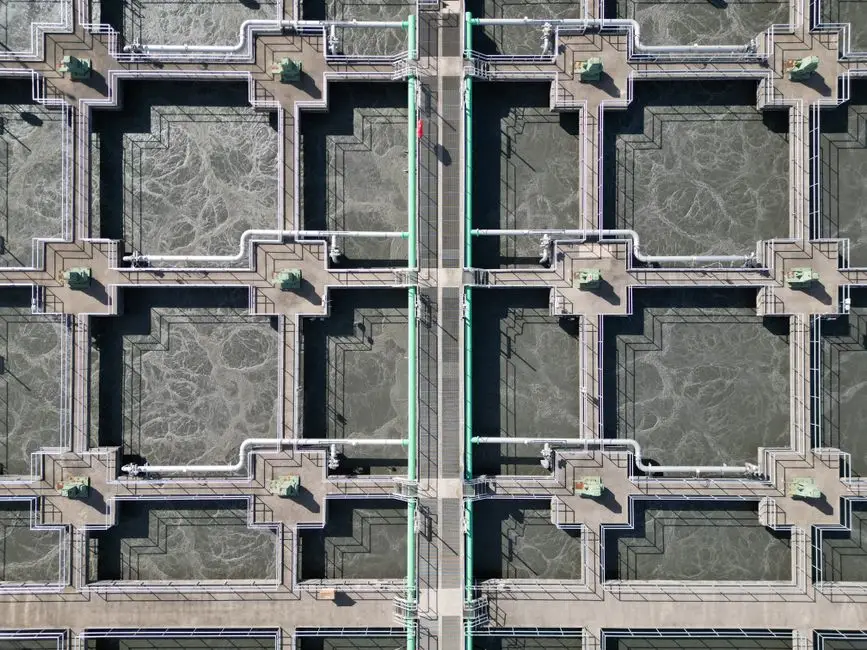
This framework translates the technical comparison into a branching recommendation for your P&ID in 2026.
- Pick DAF when the influent is dominated by fines, flotation reagents, emulsified oils, or tailings water targeted for reuse. Seven Seas Water specifically associates DAF with removal of fine particles, flotation reagents, and other suspended materials from mineral processing wastewater, and with treatment of tailings water for reuse. If the Blackmont stream carries reagent residues, emulsified lubricants, or fine clay fractions that the thickener cannot capture cleanly, DAF is the technology the research supports.
- Pick a clarifier (ideally lamella) when the stream is heavy on settleable suspended solids, FOG is low, and the 2026 priority is lower chemical consumption and simpler operation. The HydropureWater lamella clarifier spec documents 20–40 m/h surface loading and up to 30% lower chemical consumption compared with conventional basins — that is the operating envelope where a clarifier beats a DAF on OPEX and complexity.
- Consider a hybrid train — clarifier for bulk TSS reduction, DAF as a polishing or reuse step — when both fine and coarse fractions are present. This mirrors the SSRN DAF + MMBBR hybrid concept (Elsevier BV, doi.org/10.2139/ssrn.4731382), and is consistent with how many mining sites run: a thickener or clarifier knocks out the bulk, and a DAF polishes the supernatant before reuse or discharge.
- Use the EPA HERO / SMBSC DAF case as a documented precedent. EPA HERO records that SMBSC tested DAF units to clarify high-strength water flows, with test results showing good removal of fine soil particles producing effluent suitable for the wastewater treatment plant. That is not a mining site, but it is direct evidence that DAF handles high-strength industrial streams with a fine-particle signature.
For readers evaluating neighbouring US sites, the sister Blackmont/Luttrell DAF vs clarifier factory guide applies the same framework to a comparable mining/metals context.
Sizing, Costs, and What to Ask Suppliers in 2026
Sizing either technology correctly in 2026 starts with the influent, not the equipment list. The buyer must provide every vendor with the same baseline inputs: design flow in m³/h, peak factor, influent TSS, FOG content, target metals in the effluent, target water-reuse percentage, and the available footprint. Without those numbers, any quoted CAPEX is decorative. The HydropureWater DAF line covers 4–300 m³/h across 13 models, which sets the upper bound on a single-skid DAF envelope, while the HydropureWater lamella clarifier documents 20–40 m/h surface loading — both are envelopes, not project-specific guarantees.
The supplied research contains no 2026 CAPEX or OPEX figures for either DAF or lamella clarifiers in mining, so this article does not invent a price band. Request itemized quotes that separate the skid, the saturator or lamella pack, the chemical dosing skid, installation, and commissioning, then compare on a like-for-like basis. Two controllable OPEX levers are documented: automatic skimming is standard on the HydropureWater DAF spec, and the HydropureWater lamella clarifier spec cites up to 30% lower chemical consumption versus conventional basins. Chemical dosing itself is a coupled decision, and the HydropureWater automatic chemical dosing system is the matching subsystem for coagulant, flocculant, and pH control on either technology. Operators sizing a 2026 reuse loop should also review the 2026 guide to mine site water reuse and reclaimed water capacity sizing for the downstream hydraulic envelope.
Frequently Asked Questions
Is a DAF system or a clarifier cheaper to install for a Blackmont mining plant in 2026?
The supplied research does not publish 2026 CAPEX or OPEX figures for either DAF or lamella clarifiers in mining duty, so no installed-price comparison can be quoted here. Request itemized vendor quotes that separate the skid, the saturator or lamella pack, the
Frequently Asked Questions
Is DAF or a clarifier better for a Blackmont mining or metals factory in 2026?
The choice depends on the density and particle size of the suspended solids. For Blackmont facilities processing heavy metallic ores or dense metal hydroxides, a lamella clarifier remains the industry standard due to its ability to handle high-density solids settling via gravity. However, for wastewater streams containing oil, grease, or low-density metal precipitates that do not settle readily, Dissolved Air Flotation (DAF) is superior as it uses micro-bubbles to float particles to the surface for mechanical skimming.
What influent characteristics should push a Blackmont plant toward DAF instead of a clarifier?
You should prioritize DAF if your influent contains dispersed oils, greases, or light, flocculent metal hydroxides with a specific gravity approaching 1.0. DAF is specifically engineered for influent where the settling velocity is less than 0.5 meters per hour. If your TSS (Total Suspended Solids) load is highly variable or contains hydrophobic particles that resist settling in a standard clarifier, DAF provides a more reliable removal efficiency, often achieving 90-95% TSS reduction in light-solids applications.
How much does a DAF system for mining wastewater cost in 2026, and what budget line items should I expect?
In 2026, a standard industrial DAF skid for mining applications typically ranges from $85,000 to $250,000 depending on flow capacity and material of construction (e.g., 304 vs. 316 stainless steel). Your budget should include line items for the DAF vessel, air saturation system (pressure pump and compressor), chemical dosing skids for coagulants and flocculants, and an automated sludge removal mechanism. Do not overlook installation costs, which typically add 30-50% to the equipment price, covering piping, instrumentation, and PLC integration.
What flow rate and footprint should I size a DAF or lamella clarifier for in a metals finishing plant?
For a lamella clarifier, size the unit based on a surface overflow rate (SOR) of 0.5 to 1.0 m/h to ensure effective settling of metal precipitates. A DAF system is typically sized on a hydraulic loading rate of 5 to 10 m/h, allowing for a significantly smaller footprint—often 60-70% less than a conventional circular clarifier of the same capacity. In a metals finishing plant, calculate your peak hourly flow rate and include a 20% safety buffer to accommodate batch processing spikes.
Can a DAF system help a Blackmont mine meet 2026 discharge limits and reuse water from tailings?
Yes, DAF systems are highly effective at polishing tailings decant water to meet stringent 2026 discharge standards for heavy metals and residual oils. By achieving lower effluent turbidity than gravity clarifiers, DAF-treated water is often of sufficient quality for reuse in non-potable mine processes, such as dust suppression or mineral processing makeup water. Integrating DAF into your tailings circuit can significantly reduce your freshwater withdrawal requirements and lower overall water treatment compliance costs.