Why Tuscaloosa EV and Auto Plants Face a DAF-vs-Clarifier Decision in 2026
Tuscaloosa-area EV battery, EV component, and legacy auto parts plants generate a mixed wastewater profile that does not fit a single-unit-process answer. Machining lines discharge tramp oil and emulsified coolant; stamping and body-in-white cells contribute lubricants and drawing compounds; phosphating and e-coat rinses carry phosphate sludge and light solids; paint booths send overspray and waterborne paint solids; and general wash water adds low-to-medium suspended solids throughout.
The combined stream is heavy in FOG, light suspended solids, and emulsified oil, which DAF vendors specifically identify as a target stream (Clearwater/SigmaDAF, 2026-04; Kemco Systems). Discharges to the City of Tuscaloosa Water and Sewer Department Industrial Pretreatment Program are regulated locally for FOG, TSS, oils, and metals before sewer discharge, so equipment selection has to be justified against those limits. The 2026 decision is sharpened by continued EV and battery-component investment in West Alabama, which is bringing newer chemistries—such as phosphate-free conversion coatings and waterborne paint—onto shared sites with legacy machining and assembly wastewater.
How a DAF System Actually Works
DAF pressurizes a side stream of clarified water with air, saturates it under pressure in a saturation vessel, and then releases it at atmospheric pressure inside a flotation tank. The pressure drop generates 30–50 micron micro-bubbles that attach to flocculated particles and oil droplets and lift them to the surface (Clearwater/SigmaDAF, 2026-04; Clearwater/SigmaDAF, RO Membrane System Design Criteria: 2026 Engineering Guide for Industrial Wastewater). Upstream, coagulant and flocculant chemistry is added to grow the floc that micro-bubbles can contact. Mixing is done either through serpentine flocculation tubes that provide a 15–45 second flash mix with dosing locations for coagulant, pH adjustment, and polymer flocculant, or through staged mix tanks with impeller agitators for chemistries that need longer contact time. Conditioning is required for DAF performance (Clearwater/SigmaDAF, 2026-04; Kemco Systems).
A surface skimmer scrapes the floated sludge into a collection trough while heavier settled solids drop into a bottom collection zone and are augered out, so a DAF actually performs a combined flotation plus sedimentation function in one tank. Clean clarified water is required at first fill because the saturation vessel needs clean water to dissolve air under pressure; if the unit is filled with raw wastewater on first start, the system will discharge dirty, non-clarified water for an extended period and can damage the recirculation pump and air saturation system. Removal targets documented for DAF include FOG, TSS, BOD, COD, oils, greases, and metals when paired with proper chemical conditioning (Clearwater/SigmaDAF, 2026-04; Kemco Systems). The discharge point sits below the floating sludge blanket and above the settled sludge, recovering clarified water for reuse or sewer discharge while some clarified water is recycled to the pressurization loop.
How a Gravity or Lamella Clarifier Works
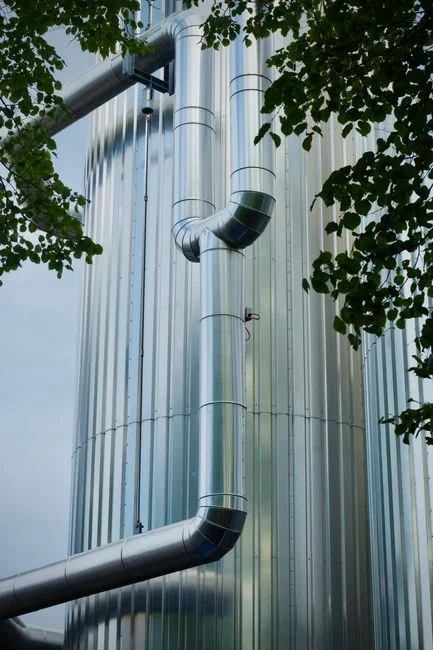
A conventional gravity clarifier relies on quiescent settling: denser particles drop to a sludge bed under low horizontal velocity, and clarified supernatant overflows a weir. The mechanism cannot remove free or emulsified oil that tends to float rather than sink, which is the first decision point for any EV/auto stream dominated by coolant, lubricant, or paint overspray.
A lamella clarifier adds inclined plates or tubes to multiply the effective settling area inside a smaller footprint. Manufacturer catalog data for lamella designs indicates 20–40 m/h surface loading and up to 30% chemical consumption reduction versus a conventional clarifier operating at the same flow. The trade-off is that clarifiers still depend on particle specific gravity, so they tolerate heavy, gritty, or metal-hydroxide solids poorly suited to flotation but struggle with low-specific-gravity paint solids, coolant tramp oil, and plastic or fiber fines common in EV and auto plants. Even most DAF vendors still include a sediment compartment in the flotation tank because real wastewater contains both floating and settleable fractions, which is why pure clarifier-only trains are uncommon in modern auto/EV plants (Clearwater/SigmaDAF, 2026-04; Clearwater/SigmaDAF).
DAF vs Clarifier: Side-by-Side Comparison for EV and Auto Wastewater
The table below lines up the two technologies on the parameters a Tuscaloosa environmental or process engineer will weigh in a 2026 selection memo. Flow-coverage data is taken from the SigmaDAF product lineup (Clearwater/SigmaDAF, 2026-04); lamella clarifier performance comes from HydropureWater's High-Efficiency Sedimentation Tank (Lamella Clarifier) catalog.
| Parameter | DAF (Dissolved Air Flotation) | Gravity / Lamella Clarifier |
|---|---|---|
| Removal mechanism | 30–50 micron micro-bubbles attach to floc and oil, lift to surface, skim; settled solids augered from bottom | Gravity settling; inclined plates in lamella designs multiply effective area |
| Best-fit pollutants | Free and emulsified oil, FOG, paint overspray, light TSS, coolant tramp oil, phosphate floc | Dense mineral solids, metal hydroxides, sand and grit from machining wash, biological floc |
| FOG and oil performance | Target stream; documented for FOG, oils, greases removal | Poor; floating oil does not settle |
| Paint overspray / waterborne paint solids | Strong fit; low-specific-gravity solids float readily | Weak; particles do not settle reliably |
| Metal-bearing sludge | Handles via downstream sediment compartment and sludge handling | Strong fit as primary clarifier before dewatering |
| Flow coverage (SigmaDAF lineup) | COMPACT ≤66 GPM single skid; modular two-skid above 66 GPM; FPAC for high-load small-to-medium flows; FPBC for low-medium loads incl. low-buoyancy particles; FPHF for high flows medium-to-large loads | Lamella design rated at 20–40 m/h surface loading; conventional clarifier needs larger plan area for the same flow |
| Footprint | Compact relative to hydraulic capacity because flotation is fast | Reduced vs conventional clarifier due to inclined plates, but still larger plan area than a comparably rated DAF |
| Chemical conditioning dependency | High; coagulant, flocculant, and pH trim upstream required for rated performance | Lower; up to 30% polymer savings vs conventional clarifier (per lamella catalog), but conditioning is optional rather than mandatory |
| Startup sensitivity | Requires clean water for first fill; raw wastewater on first start damages recirculation pump and air saturation system | More forgiving; can be brought online with dirty water |
| Downstream sludge handling | Float and settled sludge routed to a Plate and Frame Filter Press for Sludge Dewatering | Settled sludge routed to a filter press or drying bed |
| Polishing needs | May need a chemical dosing system for pH and polymer trim, plus a filter press for solids | Often paired with DAF as a polish step on the FOG side stream |
Matching Tuscaloosa EV/Auto Unit Processes to DAF or Clarifier
For machining and grinding coolant streams, DAF is the default first stage. Emulsified oil and tramp oil dominate, and chemical conditioning is straightforward: dose coagulant and flocculant upstream through an Automatic Chemical Dosing System, lift the floc on micro-bubbles, and skim. A lamella clarifier alone will not remove the oil, which is a common procurement error on this stream (Clearwater/SigmaDAF, 2026-04; Kemco Systems).
Stamping, drawing, and body-in-white wash water follows the same logic. Lubricants and oils float; a Dissolved Air Flotation (DAF) System is the workhorse, and a downstream lamella clarifier can polish residual floc if the flow justifies the footprint. For phosphating and e-coat rinse water, the load is mixed: FOG and light solids from carryover, plus metal-bearing sludge from the phosphate chemistry. The practical train is DAF first for FOG and light solids, followed by a clarifier or a filter press for the metal sludge, which mirrors how DAF vendors describe their system as handling both floating and settled fractions in one tank (Clearwater/SigmaDAF, 2026-04; Clearwater/SigmaDAF).
EV battery component plants with low-FOG but high-salinity or high-metal rinse water can invert the priority: a lamella clarifier as the primary separator with DAF only on the oily side streams. A packaged COMPACT skid keeps that scope small (Clearwater/SigmaDAF, 2026-04). When in doubt, run jar testing and a DAF pilot; both SigmaDAF and Kemco recommend application-specific piloting rather than default selection for any 2026 capital ask (Clearwater/SigmaDAF, 2026-04; Kemco Systems).
Cost, Footprint, and Compliance Drivers for the 2026 Decision
Capex drivers for a DAF installation center on unit size and material of construction. The standard build is 304SS; 316SS or polypropylene is available for corrosive auto/EV chemistries (Clearwater/SigmaDAF, 2026-04). Upstream chemical conditioning and downstream sludge dewatering must be priced in. A lamella clarifier typically needs a larger plan area for the same flow than a comparably rated DAF, so building and civil costs can dominate the capex line for a clarifier-first design.
Opex drivers for DAF include the air saturation pump energy, coagulant and flocculant consumption, and sludge hauling. Kemco notes that a downstream filter press substantially reduces waste volume and hauling cost, which is the second-largest opex line after chemistry for most plants (Kemco Systems; Plate and Frame Filter Press for Sludge Dewatering). Compliance is the third driver: equipment must demonstrably achieve local pretreatment limits on FOG, TSS, and metals, and the 2026 Tuscaloosa plant should request removal efficiency data matched to its own stream. Since this research did not supply specific 2026 cost figures for either DAF or lamella clarifier installations in Tuscaloosa, request a budget range from each shortlisted vendor based on flow, load, and discharge target.
Common Mistakes When Choosing DAF or Clarifier for Tuscaloosa Plants
The first mistake is skipping the coagulant and flocculant step upstream of DAF. DAF performance depends on chemical conditioning, not just the flotation tank (Clearwater/SigmaDAF, 2026-04; Kemco Systems). The second mistake is filling a new DAF with raw wastewater instead of clean water on first start, which delays clarified discharge and can damage the recirculation pump and air saturation system (Clearwater/SigmaDAF). The third mistake is defaulting to a clarifier when the EV/auto stream is dominated by floating oil, paint solids, and coolant—the exact profile DAF is built for. The fourth mistake is ignoring downstream sludge handling: a DAF or clarifier is only as effective as the filter press or other dewatering step that turns the floated or settled sludge into a disposable cake (Kemco Systems; Industrial Water Filter Maintenance Services: 2026 Buyer's Guide).
Frequently Asked Questions
How do I size a DAF for an EV or auto parts plant in 2026?
Match the model to the flow and load band using the SigmaDAF lineup: COMPACT single skid for flows at or below 66 GPM, modular two-skid above 66 GPM, FPAC for high-load small-to-medium flows, FPBC for low-medium loads including low-buoyancy particles, and FPHF for high flows with medium-to-large loads (Clearwater/SigmaDAF, 2026-04). Confirm sizing with jar testing and a pilot, then ask each vendor to size against your peak hourly flow, FOG, and TSS targets, not just average flow.
What should I ask a DAF or clarifier supplier before I sign a purchase order?
Request stream-specific removal efficiency data
Frequently Asked Questions
Is a DAF or a clarifier better for an EV or auto parts wastewater plant in Tuscaloosa in 2026?
The choice depends on the specific gravity and density of the pollutants. For EV battery components or auto parts manufacturing, Dissolved Air Flotation (DAF) is generally superior for removing emulsified oils, greases, and low-density suspended solids common in machining coolants and stamping lubricants. DAF systems typically achieve 90-95% removal efficiency for oil and grease, whereas gravity clarifiers struggle with particles that have a specific gravity near or below 1.0.
In the Tuscaloosa regulatory environment, DAF is often preferred to meet stringent local pretreatment limits for FOG (Fats, Oils, and Grease) that gravity-based systems cannot consistently hit. If the waste stream contains high concentrations of heavy metal hydroxides from metal finishing, a clarifier may be necessary, but DAF remains the industry standard for the high-volume oily wastewater streams characteristic of modern EV assembly plants.
What flow rate and FOG/TSS load should I size a DAF skid for in an auto parts plant?
Sizing must account for peak hourly flow rather than average daily flow to prevent hydraulic overloading. Typical automotive manufacturing wastewater requires DAF skids rated for 50 to 500 GPM depending on line throughput. FOG loading in these facilities frequently ranges from 500 mg/L to 5,000 mg/L, while Total Suspended Solids (TSS) can fluctuate between 200 mg/L and 2,000 mg/L during peak production cycles.
Engineers should size the skid based on a surface overflow rate (SOR) of 1.5 to 3.0 GPM/ft² to ensure optimal bubble-particle attachment. You must also include a 20% safety factor above your calculated peak load to accommodate the periodic "slug" discharges typical of clean-in-place (CIP) operations or machine sump pump-outs.
How do I qualify a DAF or clarifier supplier for a Tuscaloosa industrial pretreatment project?
Qualify suppliers by requiring verified performance data from similar automotive or EV manufacturing facilities operating under comparable municipal pretreatment codes. Ensure the supplier provides a pilot study or bench-scale jar testing results specifically using your facility's raw wastewater to determine the precise polymer and coagulant dosage rates required to meet local effluent discharge limits.
Check for compliance with local Tuscaloosa engineering standards, including the availability of regional technical support and local inventory of critical spare parts like air saturator pumps and sludge scraper motors. A qualified supplier must also provide a detailed integration plan for SCADA connectivity, allowing for real-time monitoring of turbidity and pH levels as required by 2026 environmental oversight protocols.
When does a lamella clarifier make more sense than a DAF in an EV/auto plant?
A lamella clarifier is the superior choice when the primary contaminants are high-density inorganic solids, such as metal hydroxides resulting from chemical precipitation processes or heavy grit from stamping and grinding operations. Because lamella plates provide a large settling area in a compact footprint, they are highly efficient at removing particles with a specific gravity greater than 1.2.
If your waste stream has a low oil content but high inorganic loading, the maintenance costs of a DAF—which include air compressor upkeep and complex dissolved air saturation monitoring—make it an inefficient choice. In these cases, a lamella clarifier provides a more robust, low-maintenance solution that reliably handles the high solids loading that would otherwise blind or overwhelm a DAF flotation zone.
What upstream and downstream equipment does a DAF system need to meet 2026 Tuscaloosa pretreatment limits?
Upstream, a DAF system requires an equalization tank to buffer flow fluctuations and a rapid-mix/flocculation tank where coagulants and polymers are injected to destabilize emulsions. An automated pH adjustment system is mandatory upstream to ensure the water enters the DAF at the optimal isoelectric point for maximum separation efficiency.
Downstream, the system requires a sludge handling unit, such as a filter press or centrifuge, to dewater the float solids for proper disposal. To meet 2026 Tuscaloosa discharge standards, the final effluent must pass through a polishing stage, such as an activated carbon filter or an organoclay media vessel, to remove any residual dissolved organics or hydrocarbons that pass through the DAF process.