Why Vancouver Housing Needs Packaged Sewage Treatment in 2026
The 2025 National Infrastructure Assessment found that more than 11% of Canada's water and wastewater infrastructure was in poor or very poor condition in 2022, with an estimated $107 billion in replacement value, a constraint that is now colliding with federal and provincial housing-acceleration targets (Yahoo Finance, 2025-11). The Federation of Canadian Municipalities' 2023 estimate puts the average Canadian new home's burden of municipally owned capital assets at about $107,000, of which roughly $39,000 is potable water and wastewater infrastructure, the public-side benchmark against which any private packaged-plant capex is judged. Tim Tierney, president of the Federation of Canadian Municipalities, called water and wastewater the top obstacle his members face, summarizing the tension as "Top. Top. Top."
Capacity rationing is no longer theoretical. North of Calgary, Airdrie is already using about 97% of the water and wastewater capacity allocated to it by Calgary for 2026, with a $114-million pipeline to Calgary's treatment system required to support up to 45,000 new homes. In Winnipeg, the North End Sewage Treatment Plant's upgrade is not expected to deliver full wastewater expansion until 2032, with about four years of remaining capacity and roughly 40,000 people of headroom. Waterloo Region in Ontario now requires developers to compete for limited wastewater capacity before projects can move ahead. For a Metro Vancouver developer facing the same gating constraint, a factory-built packaged plant is the practical response: a buried, pre-engineered biological unit that takes the development off the trunk-sewer waitlist and lets the housing schedule run on a factory lead-time rather than a regional capital program.
What Counts as a Packaged Sewage Treatment Plant
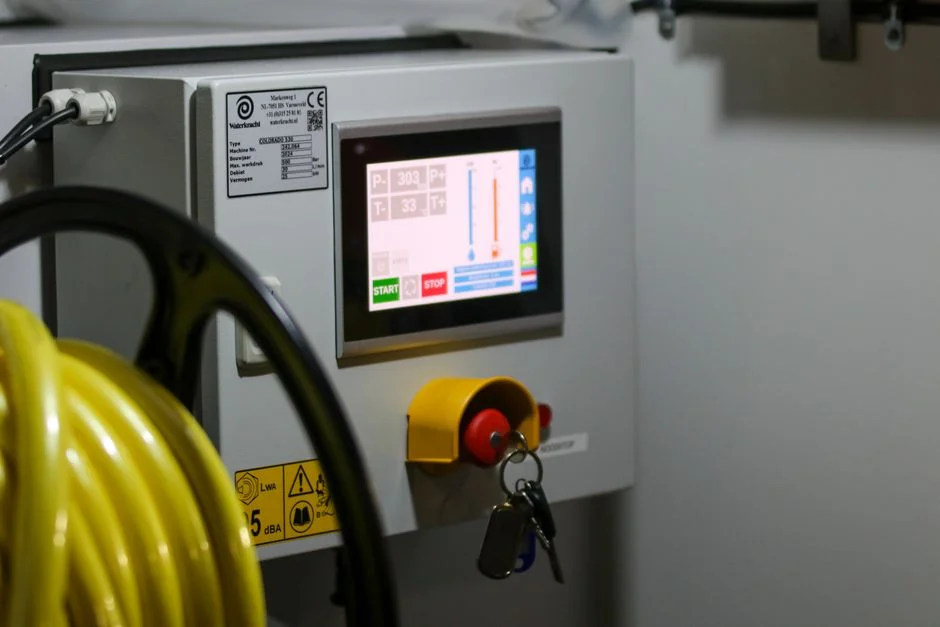
A packaged sewage treatment plant is a pre-engineered, skid- or container-integrated biological treatment unit delivered factory-tested, with screening, equalization, biological reactor, clarification or solid separation, and disinfection packaged inside one envelope. Typical building blocks include coarse screening, flow equalization, a biological stage in A/O, SBR, MBBR, or MBR configuration, a clarification or membrane-separation step, and a final disinfection stage, though not every block appears in every package. A WSZ underground A/O package plant is the canonical example of this class, with all stages in a single buried envelope.
The equipment class is distinct from a centralized municipal wastewater treatment plant such as Winnipeg's North End Sewage Treatment Plant, a multibillion-dollar upgrade whose wastewater expansion is not expected to deliver until 2032, and from a sewage-heat-recovery utility such as the False Creek Neighbourhood Energy Utility. The False Creek energy centre sits on top of an existing sewage pumping station and captures heat from sewage before it reaches the treatment plant (BBC, 2024-01); heat recovery is therefore a downstream option that can be tied to a packaged plant's effluent line, not a substitute for biological treatment. Treating those three things as interchangeable is the most common scoping error in early-stage developer briefs.
Sizing a Packaged Plant for a Vancouver Housing Development
The research supplied for this guide does not contain a fixed L/person·day design figure for Metro Vancouver, because local design criteria, fixture-unit counts, and inflow-and-infiltration assumptions vary by municipality and were not in the scraped evidence. Before any packaged plant is shortlisted, the designer must collect: population or unit count, per-capita flow assumption, peaking factor, commercial and amenity load, I/I allowance, target BOD/CBOD and TSS in mg/L, and the discharge route (reuse on-site, irrigation, or Metro Vancouver interceptor). The candidate flow envelopes for the equipment class are well documented in supplier catalogs and should be sanity-checked against the project.
Two packaged formats cover the Vancouver housing range. The WSZ underground A/O package plant series spans 1–80 m³/h, equivalent to 24–1,920 m³/day. The integrated MBR membrane bioreactor system spans 10–2,000 m³/day, with DF-series flat-sheet MBR modules producing 32–135 m³/day each at 80–225 m² of membrane area. Package plants are typically specified at average dry-weather flow with a 2–2.5× peaking allowance for short-duration hydraulic surges, because biological kinetics rather than peak flow govern sizing. As a sanity check, a 200-unit townhouse project at a typical Canadian per-capita assumption will sit in the lower end of the WSZ range, while a 600-unit mid- to high-rise project with amenity and commercial load will move into MBR territory.
| Parameter | WSZ A/O Package | MBR Integrated System | DF-Series MBR Module |
|---|---|---|---|
| Flow range | 1–80 m³/h (24–1,920 m³/day) | 10–2,000 m³/day | 32–135 m³/day per module |
| Typical biology | Anoxic/aerobic contact oxidation + sedimentation | Activated sludge + submerged PVDF membrane | Membrane module only, pairs with upstream biology |
| Footprint vs conventional activated sludge | Buried below grade, no above-grade building | ~60% smaller footprint than conventional activated sludge | Modular; sized by membrane area |
| Effluent quality target | Sewer discharge / landscape irrigation | Near-reuse quality at <1 µm filtration | <1 µm pore size, 0.1 µm option |
| Operator demand | Unattended, automated | Membrane integrity monitoring required | Individual element replacement, integrated aeration scouring |
WSZ A/O Package vs MBR Membrane Bioreactor: Side-by-Side
The WSZ unit is an anoxic/aerobic (A/O) biological contact-oxidation skid with sedimentation and disinfection in a single buried envelope, available from 1–80 m³/h, fully automated with no operator required, and installable below grade with landscaping above or trailer-mounted for mobile duty. It is the right fit for infill and lower-density Vancouver housing where footprint and visual impact matter and where the effluent will go to a Metro Vancouver sewer rather than back into the building. For projects moving from lagoon-style or older package plants, the same engineering logic appears in a 2026 guide to switching from lagoon to MBR.
An integrated MBR membrane bioreactor system combines activated sludge with submerged PVDF membrane filtration in one unit, spans 10–2,000 m³/day, and delivers an effluent at <1 µm that is close to reuse quality, suitable for irrigation, toilet flush, or district-energy make-up water. The MBR footprint is roughly 60% smaller than conventional activated sludge at equivalent load, which matters on tight Vancouver sites. Where modular right-sizing is required, DF-series flat-sheet MBR modules offer 80–225 m² configurations, 0.1 µm pore size, integrated aeration scouring, and individually replaceable elements on a stainless frame.
| Decision axis | Choose WSZ A/O when… | Choose MBR when… |
|---|---|---|
| Required effluent quality | Discharge to Metro Vancouver sewer is acceptable; secondary-treatment effluent is sufficient | Reuse for irrigation, toilet flush, or district-energy make-up water is required |
| Available footprint | Buried below grade is preferred to preserve buildable area and landscape | Site is tight and a 60% footprint reduction vs conventional activated sludge is decisive |
| Operator model | Unattended operation, no full-time operator on staff | Membrane integrity monitoring and periodic chemical cleaning are feasible |
| Heat-recovery interface | Effluent can be tapped downstream for a sewer-side heat exchanger | Higher-quality, lower-solids effluent is preferred for a False Creek-style energy utility tie-in |
| Flow envelope | 1–80 m³/h fits a 50–400-unit project | 10–2,000 m³/day fits a 400–800+ unit or mixed-use project |
BC Permits, Metro Vancouver Compliance, and Heat-Recovery Integration
The research does not give Metro Vancouver's specific discharge limits or the BC Municipal Wastewater Regulation's numeric thresholds; those documents, alongside the local Sewer Use Bylaw, must be obtained before effluent targets are finalized. What the research does establish is the four compliance hooks a packaged plant must satisfy in 2026: a building permit, an environmental discharge permit (or a sewer discharge permit if the effluent goes to a Metro Vancouver interceptor), an operational approval for an unattended buried plant, and any heating/energy utility interface agreement if the effluent is to feed a district-energy loop.
Disinfection on the packaged-plant side typically uses either a UV sterilizer for water treatment or a chlorine dioxide generator; selection depends on the receiving environment and the Sewer Use Bylaw, which Metro Vancouver's member municipalities administer individually. Once a discharge route is fixed, the developer can scope the rest of the capex with confidence, and for a parallel packaged-plant brief in a different Alberta municipality, the parallel packaged-plant guide for Calgary housing applies the same logic to a different regulatory envelope.
Designing the effluent line to be heat-recovery-ready is a defensible 2026 position. The False Creek Neighbourhood Energy Utility has been running on sewage heat since 2010, serves 6,210 apartments, and is tripling its heat-pump capacity from 3 MW to over 9 MW, with heat pumps that operate at over 300% efficiency (heat out per unit electricity in) by cooling roughly 20 °C sewage to deliver water up to about 80 °C (BBC, 2024-01). At full municipal scale, the Marselisborg WWTP in Aarhus, serving 200,000 people, already produces more energy than it consumes from waste heat and biogas. For a Vancouver housing project, a packaged-plant effluent tie-in is the smallest version of the same idea: a downstream heat exchanger on the discharge line, sized for the flow envelope, ready to feed a False Creek-style utility if one is extended to the site.
Cost, Footprint, and Operator Demand: A Vancouver 2026 Decision Framework
The FCM 2023 estimate — about $39,000 of the roughly $107,000 per-home Canadian municipal capital cost is potable water and wastewater infrastructure — is the public-side benchmark against which a private package plant's capex per unit is judged. The supplied research does not contain 2026 packaged-plant turnkey capex or opex figures, so itemized quotes must be requested for equipment, freight to BC, buried civil works, electrical and SCADA, commissioning, and a 5-year membrane and parts reserve, which is material for MBR selections. For the sludge side, a plate-frame filter press sized to the packaged plant's wasting rate is the conventional dewatering partner, and a 2026 lamella clarifier operating cost breakdown provides opex benchmarking if a clarifier is added upstream of the press.
Capex is only half the picture. A 2017 Congressional Research Service finding, cited in the BBC report, is that water treatment plants account for an estimated 30–40% of municipal electricity bills (BBC, 2024-01), which is a useful caution that the cheapest package on capex can be the most expensive on power, especially for MBR with membrane aeration duty. The decision framework below is the minimum a developer should walk into a lender meeting with.
| Decision question | If yes, lean WSZ A/O | If yes, lean MBR |
|---|---|---|
| Will the effluent be reused on-site, or discharged to a Metro Vancouver sewer? | Discharged to sewer — secondary treatment is sufficient | Reused for irrigation, toilet flush, or district-energy make-up |
| Is the site tight enough that a buried unit is required to preserve buildable area? | Buried below grade with landscaping above | Footprint-constrained; ~60% smaller than conventional activated sludge is decisive |
| Is a False Creek-type neighbourhood energy utility on the horizon for the site? | Effluent can be tapped downstream with a sewer-side heat exchanger | Lower-solids, <1 µm effluent is preferred for a utility tie-in |
| Is a permanent operator feasible? | Unattended, automated operation is required | Membrane integrity monitoring and chemical cleaning can be staffed |
| Per-home capex target vs the ~$39,000 FCM water-and-wastewater benchmark? | Lower per-unit capex envelope | Higher per-unit capex justified by reuse revenue and lower discharge load |
Frequently Asked Questions
What flow range and footprint should a 200-unit versus a 600-unit Vancouver project expect?
A 200-unit project at a typical Canadian per-capita flow will sit in the lower end of the WSZ A/O range (1–80 m³/h, equivalent to 24–1,920 m³/day), and a buried envelope is the standard configuration. A 600-unit project with amenity and commercial load will move into MBR territory (10–2,000 m³/day), where the ~60% smaller footprint versus conventional activated sludge becomes decisive on a tight Metro Vancouver site.
What 2026 lead time and shipping constraint should a developer plan for a factory-built unit into BC?
The supplied research does not give a 2026 lead-time number; a current factory slot confirmation must be requested at the RFQ stage, since WSZ skids, MBR skids, and DF-series modules are built to order, and BC-bound freight (truck or coastal container) needs to be on the supplier's logistics schedule, not assumed to match a developer-driven housing completion date.
How should Metro Vancouver Liquid Waste Management Plan and BC Municipal Wastewater Regulation compliance be confirmed before purchase?
Obtain the current Metro Vancouver Liquid Waste Management Plan, the BC Municipal Wastewater Regulation, and the local Sewer Use Bylaw for the receiving municipality, then attach them to the supplier pre-qualification package and ask the supplier to confirm in writing that the proposed packaged plant meets the specified BOD, TSS, total nitrogen, and disinfection targets at the design flow and peaking factor. This step protects the developer from a discharge-permit refusal after the unit is on site.
How does a packaged plant's capital cost per home compare to the roughly $39,000 FCM water-and-wastewater benchmark?
The FCM 2023 figure is a public-side municipal benchmark, not a packaged-plant price, and the supplied research does not include a 2026 turnkey capex number; the right action is to obtain itemized quotes for equipment, freight to BC, buried civil works, electrical and SCADA, commissioning, and a 5-year membrane and parts reserve, and then compare that per-home number, plus avoided development charges, against the ~$39,000 reference before committing capex.
Can a packaged plant feed a district heat-recovery loop the way False Creek does?
Yes, in principle. The False Creek Neighbourhood Energy Utility already serves 6,210 apartments from sewage heat and is tripling its heat-pump capacity from 3 MW to over 9 MW, with heat-pump efficiencies above 300% (BBC, 2024-01). For a Vancouver housing project, that means specifying the packaged plant's effluent line with a downstream heat-exchanger connection, sized for the design flow, so the site is ready to tie into a False Creek-type utility if one is extended to the neighbourhood.