Why Doswell-Area Mills Are Indirect Dischargers, Not Direct Ones
Pulp and paper plants near Doswell, Virginia that discharge to a municipal sewer are regulated as indirect dischargers under the EPA Pretreatment Program, with effluent limits set by 40 CFR Part 430 (Pulp, Paper and Paperboard Effluent Guidelines), originally promulgated in 1974–1977 and last substantially amended for toxic pollutants in 1998 (EPA, Pulp, Paper and Paperboard Effluent Guidelines). The applicable subcategory under Part 430 depends on the mill's output, and the compliance path changes based on whether the facility is an indirect discharger sending wastewater to a publicly owned treatment works (POTW), or a direct discharger holding an NPDES permit for surface water.
The Doswell / Hanover County corridor hosts a cluster of recycled paperboard and tissue-from-wastepaper operations that route effluent to a municipal sewer rather than a direct stream outfall, placing them on the pretreatment track. This distinction dictates the pretreatment standards, the categorical subcategory lookup, the local POTW permit mechanism, and the application of cluster rules under 40 CFR Part 430.
EPA defines an indirect discharger as a facility that sends pollutants to a POTW, and a direct discharger as a point source that discharges to waters of the United States (EPA, Pulp, Paper and Paperboard Effluent Guidelines). For direct dischargers, effluent limits are written into the facility's individual NPDES permit; for indirect dischargers, Part 430 limits are incorporated into permits or other control mechanisms, meaning the limits flow through the local POTW's pretreatment ordinance. The U.S. "cluster rules" for the pulp and paper sector provided the major incentive for the pollutant reductions the industry has delivered since the 1990s (NCSU BioResources review).
Pick the Right 40 CFR Part 430 Subcategory First
Mapping the mill to the correct 40 CFR Part 430 subcategory is the primary step before quoting any limit, because regulated pollutants and numeric ceilings vary by subcategory, and a misclassified plant poses a compliance risk (EPA, Pulp, Paper and Paperboard Effluent Guidelines). Part 430 is organized into 12 subcategories (A through L) covering kraft, sulfite, semi-chemical, groundwood, deink, non-wood, secondary fiber, and purchased-pulp operations. Subcategory A covers dissolving pulp at kraft mills; B covers bleached papergrade kraft and soda; C covers unbleached kraft mills; G and H cover groundwood and chemi-mechanical pulping; I covers deink mills; J covers secondary fiber mills; and K and L cover non-integrated mills using purchased pulp (EPA).
For the Doswell-area cluster, the practical subcategory decision is between J and L. A mill making paperboard or tissue from wastepaper without deinking is governed by subcategory J. A mill buying market pulp to make tissue, non-woven, filter, or paperboard at a non-integrated facility is governed by subcategory L (EPA). Because the regulated pollutant list — BOD, TSS, AOX, color, toxicity — is subcategory-specific, the engineer must identify the subcategory before pulling any numeric ceiling. The table below maps the most relevant subcategories to the Doswell-area product mix; a complete subcategory-by-product table is maintained at 40 CFR Part 430.
| Subcategory | Typical product (EPA, 40 CFR Part 430) | Doswell-area applicability | Regulated pollutant emphasis (EPA) |
|---|---|---|---|
| J — Secondary Fiber | Paperboard from wastepaper (non-corrugating or corrugating medium furnish); tissue from wastepaper without deinking; molded products; builders' paper and roofing felt | Recycled paperboard and tissue-from-wastepaper mills | BOD, TSS, color, pH; AOX is generally low because chlorine bleaching is not in the furnish (NCSU review) |
| L — Purchased Pulp | Tissue, filter, non-woven, and paperboard at non-integrated mills | Tissue or non-woven mills buying market pulp | BOD, TSS, color, pH; AOX depends on whether the purchased pulp was bleached with chlorine (NCSU review) |
| C — Unbleached Kraft | Linerboard, bag paper, unbleached kraft–NSSC cross-recovery mills | Unlikely in Doswell unless an unbleached kraft line is co-located | BOD, TSS, color, toxicity (EPA) |
How a Mill Treatment Train Actually Meets Pretreatment Limits
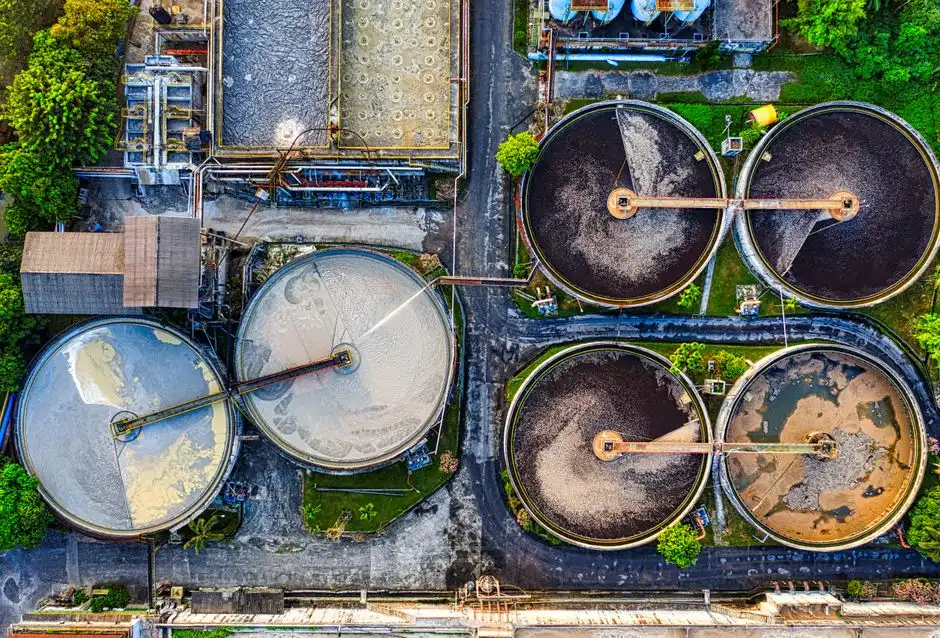
Physical hardware in a staged treatment train meets the regulatory framing defined in 40 CFR Part 430. The industry has cut water consumption by about 50% over the past 20 years and by roughly 95% per tonne of paper over the past 30 years, an internal-circuits achievement that reduces the absolute pollutant load sent to the POTW (NCSU BioResources review). Conventional wastewater treatment in P&P is primary clarification followed by activated sludge, while higher removal of COD, toxicity, and color is achieved by adding anaerobic biological stages, advanced oxidation, bioreactors, or membrane filtration downstream of activated sludge (NCSU review).
Upstream of biological treatment, mills use dissolved air flotation (DAF) systems, filtration save-alls, and kidney-like operations to purify process water and reduce the load reaching end-of-pipe treatment; chemical dosing with coagulants, flocculants, filter aids, pH adjusters, and optimized microbial cultures improves removal performance (NCSU review). Up to 70 m³ of wastewater is generated per metric ton of paper produced, and the P&P industry uses about 70% of its water intake as process water (NCSU review). Full closure of water circuits is limited by the accumulation of contaminants, which can cause corrosion, deposits, odors, and altered paper-machine runnability; if further closure is required, the effluent must be treated for reuse in the process (NCSU review).
For a subcategory J mill, the typical flow is: pulping and save-all, then a DAF primary removal stage, equalization, activated sludge (often with an anaerobic selector), secondary clarification, filtration or DAF polish, pH trim, and finally sewer. AOX is generally low in this subcategory because chlorine bleaching is not in the furnish (NCSU review). Where the POTW's local sewer limits are tighter than what conventional activated sludge can deliver, or where internal reuse is a goal, an MBR membrane bioreactor system can be added as a polishing or barrier step after biological treatment, with UF or MBR modules replacing the secondary clarifier to deliver sub-1 µm solids separation (NCSU review).
Pretreatment Parameters the POTW Will Ask About
The classic P&P effluent parameters are BOD, COD, TSS, color, pH, and AOX (adsorbable organic halides); the BOD-to-COD ratio indicates how much of the organic load is biodegradable, determining whether the biological stage alone is sufficient or whether polishing is required (NCSU BioResources review). Chemical pulping has been reported to generate more than 40% of the poorly biodegradable organics in total effluent organic matter, which is the driver for adding biological polishing or advanced oxidation processes (NCSU review). AOX is generally proportional to chlorine consumption in bleaching, and industry-wide AOX emissions are down by more than 80% since 1990 (NCSU review).
Conventional activated sludge is the workhorse for BOD and COD removal; anaerobic stages and advanced oxidation are added when poorly biodegradable organics, toxicity, or color exceed the local sewer limits, and membrane filtration (UF or MBR) is used as a polishing or barrier step where the POTW ordinance or internal reuse target demands it (NCSU review). Each parameter is regulated under a different subcategory-specific limit in 40 CFR Part 430, so the exact numeric ceiling must be taken from the subcategory the mill falls into and confirmed against the local POTW's pretreatment ordinance (EPA, Pulp, Paper and Paperboard Effluent Guidelines). Chemical support across the train — coagulant, flocculant, pH adjuster, biocide — is delivered through an automatic chemical dosing system, and the resulting sludge is typically dewatered on a plate and frame filter press before disposal. The table below is the working parameter list an engineer should hand to the POTW and to vendors when sizing equipment.
| Parameter | What it measures | Source framework | Treatment response |
|---|---|---|---|
| BOD (biochemical oxygen demand) | Biodegradable organic load | 40 CFR Part 430 subcategory limit (EPA) | Primary clarification + activated sludge (NCSU review) |
| COD (chemical oxygen demand) | Total organic load, including poorly biodegradable fraction | 40 CFR Part 430 subcategory limit (EPA) | Activated sludge; add AOPs or membrane polish if poorly biodegradable fraction is high (NCSU review) |
| TSS (total suspended solids) | Particulate load | 40 CFR Part 430 subcategory limit (EPA) | DAF primary removal and secondary clarification; UF/MBR polish for sub-1 µm (NCSU review) |
| Color | Dissolved lignin and color bodies | 40 CFR Part 430 subcategory limit (EPA) | Biological polishing; advanced oxidation for residual color (NCSU review) |
| pH | Acidity / alkalinity | 40 CFR Part 430 subcategory limit (EPA) | In-line pH trim after biological treatment (NCSU review) |
| AOX (adsorbable organic halides) | Halogenated organics from bleaching | 40 CFR Part 430 subcategory limit (EPA) | Process change to low-chlorine or chlorine-free bleaching; AOX load in subcategory J is generally low (NCSU review) |
Doswell-Specific Sizing and Vendor Inputs
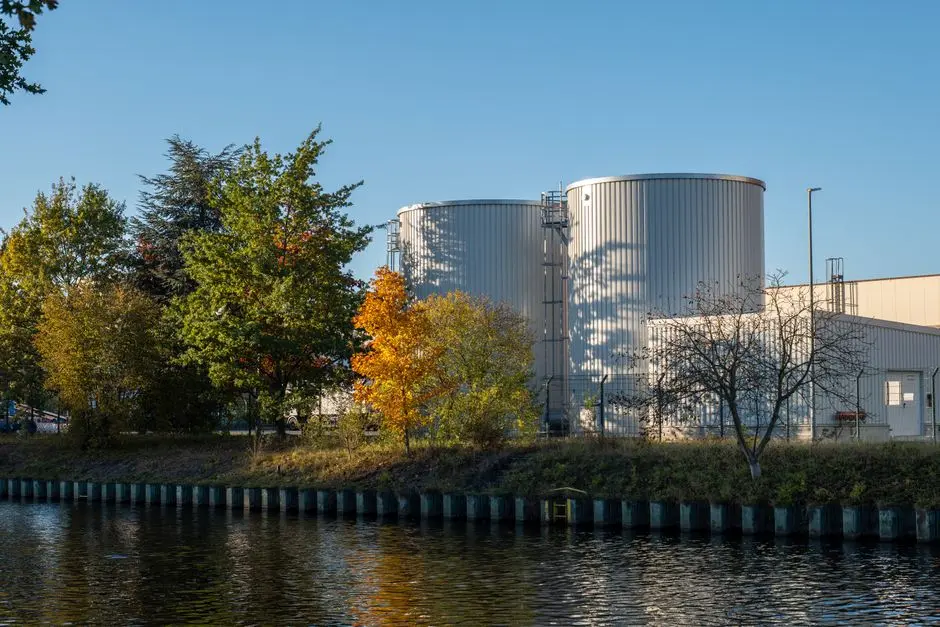
The regulatory and process picture turns into a vendor brief through an ordered checklist. First, confirm the 40 CFR Part 430 subcategory — most likely J or L for a recycled paperboard or tissue mill near Doswell — before any equipment is sized, because the regulated pollutant list and the local limits both depend on that call (EPA, Pulp, Paper and Paperboard Effluent Guidelines). Second, pull the local POTW's pretreatment ordinance and any categorical standards incorporated by reference; these set the actual numeric limits on top of 40 CFR Part 430, and the Hanover County sewer authority is the controlling body in this corridor (EPA).
Third, provide the design flow in m³/day and the production rate in tonnes of paper per day, as wastewater generation can reach 70 m³ per metric ton of paper (NCSU BioResources review). Fourth, provide raw-water BOD, COD, TSS, pH, temperature, and AOX profiles across the production week so the biological stage can be sized. Fifth, decide whether the goal is sewer discharge only, or sewer discharge plus internal reuse, noting that full closure of water circuits requires extensive treatment and is limited by contaminant accumulation. Sixth, specify the chemical program — coagulant, flocculant, pH adjuster, biocide — so dosing skids can be matched to the rest of the train (NCSU review). Finally, request an MBR or UF polishing step only if the POTW ordinance or internal reuse objective requires sub-1 µm solids; coordinate aeration design through a pulp and paper wastewater aeration system design guide and consider AI optimization of chemical dosing in paper manufacturing for the coagulant and flocculant feed.
Frequently Asked Questions
What subcategory of 40 CFR Part 430 governs a recycled paperboard mill near
Frequently Asked Questions
What 40 CFR Part 430 subcategory applies to a recycled paperboard or tissue mill near Doswell, Virginia?
Recycled paperboard mills typically fall under 40 CFR Part 430 Subpart J (Secondary Fiber Non-Deinked) or Subpart K (Secondary Fiber Deinked), depending on the presence of deinking operations. Tissue mills utilizing recycled pulp are generally categorized under Subpart G (Tissue, Filter, Non-Woven, and Paperboard from Recycled Waste). Facilities must identify their specific production processes to determine which categorical pretreatment standards (PSES) apply, as these define the mass-based or concentration-based limitations for regulated pollutants like BOD5, TSS, and AOX.
How does an indirect discharger prove compliance to a Virginia POTW under the EPA Pretreatment Program?
In Virginia, indirect dischargers prove compliance by adhering to the requirements set forth in their individual industrial user permit issued by the local Publicly Owned Treatment Works (POTW). This involves regular self-monitoring and submission of periodic compliance reports, which must include analytical results from certified laboratories for parameters such as pH, flow, BOD, TSS, and any specific local limits defined by the POTW's Sewer Use Ordinance. Facilities must maintain detailed records and sampling logs for at least three years, as these are subject to audit by the POTW and the Virginia Department of Environmental Quality (VDEQ).
Which wastewater treatment technologies are most commonly used to meet pulp and paper sewer discharge limits?
Common pretreatment technologies include primary clarification to remove settleable solids and Dissolved Air Flotation (DAF) for the removal of total suspended solids (TSS) and fats, oils, and grease (FOG). For soluble organic reduction, biological treatment systems such as Moving Bed Biofilm Reactors (MBBR) or Membrane Bioreactors (MBR) are frequently employed. These systems are often paired with pH neutralization and flow equalization basins to ensure the influent characteristics remain within the stable operating range required by the downstream POTW.
How do I size a DAF or MBR system for a pulp and paper pretreatment project, and what inputs do I send to vendors?
Sizing is determined by calculating the daily hydraulic load (MGD) and the organic mass loading (lbs/day of BOD or COD). When contacting vendors, you must provide a comprehensive water quality profile including peak and average flow rates, temperature ranges, pH fluctuations, and the concentration of critical constituents such as TSS, BOD5, COD, and nitrogen/phosphorus levels. Additionally, providing the specific discharge limits mandated by the local POTW allows vendors to perform mass balance calculations to guarantee that the selected system footprint and treatment capacity will meet the 2026 compliance targets.
What are the biggest compliance risks for a paper mill discharging to a POTW sewer in 2026?
The primary compliance risks involve exceeding local limits for pH, temperature, and specific toxic pollutants that can interfere with the POTW's biological treatment processes or contaminate biosolids. By 2026, many POTWs are tightening limits on total nitrogen and phosphorus, as well as emerging contaminants that may impact the utility's ability to meet its own VPDES permit requirements. Failure to maintain consistent pretreatment performance during production surges or process upsets can result in significant surcharges, mandatory enforcement actions, or potential revocation of the industrial sewer discharge permit.