Finland's industrial wastewater treatment operates under the Finnish Water Utilities Association guidance and EU directives, with common planning thresholds of COD below 250 mg/L and TSS below 50 mg/L. The country allocates roughly 40% of industrial water use to pulp and paper, 25% to food processing, and 15% to metalworking, each with distinct pollutant profiles. Cold-climate conditions of 0-10 °C for over six months each year require insulated tanks, heated enclosures, or extended hydraulic retention times to keep biological and membrane systems within design performance bands.
Why Finland's Industrial Wastewater Treatment Demands a Custom Approach
Finland's industrial wastewater management is guided primarily by the Finnish Water Utilities Association's 2018 guide (Publication No. 69), which sets a collaborative framework for municipalities, industries, and water utilities. Generic packaged systems tend to miss this local governance layer, and most plants we work with end up renegotiating their pre-treatment agreement at least once during commissioning. Sector water demand breaks down to pulp and paper at approximately 40%, food processing at 25%, metalworking at 15%, and chemicals at 10% (Finnish Environment Institute, 2023), so off-the-shelf skids rarely fit a single facility's mix of organic load, FOG, and metals.
The Finnish Water Act 587/2011 sets the enforcement framework: supervisory authorities may impose conditional fines and enforced suspension, and environmental offences are prosecuted under Chapter 48 of the Criminal Code. Cold-climate performance is the second design driver. With 0-10 °C ambient conditions for over half the year, biological kinetics slow sharply, membrane fouling rates rise, and grit/sludge lines freeze unless trace-heated. Cold-climate retrofits on existing plants typically focus on insulated tanks, building enclosures for MBR halls, and longer HRT rather than reactor resizing.
Finnish Industrial Wastewater Regulations: 2025 Compliance Thresholds and EU Alignment
FIWA Publication No. 69 (2018) does not set one national COD or TSS schedule; utilities lock limits into industrial wastewater agreements. Common planning thresholds for general industrial discharges remain COD below 250 mg/L, BOD₇ below 30 mg/L, TSS below 50 mg/L, total phosphorus below 1 mg/L, and total nitrogen below 10 mg/L. These values are tighter than baseline EU rules in many cases, reflecting Finland's lake-rich hydrology and Baltic Sea commitments. Sector-specific planning bands layer on top: pulp and paper COD below 350 mg/L, food processing BOD₇ below 20 mg/L, and metalworking heavy metals in the 0.1-1 mg/L band depending on the element.
Finland implements the EU Urban Waste Water Directive 91/271/EEC and the Industrial Emissions Directive 2010/75/EU, with stricter local limits applied to discharges into the Baltic Sea catchment or other sensitive receiving waters. Any facility discharging to a public sewer must hold a pre-treatment agreement with the municipal water utility, which sets effluent quality, flow caps, monitoring points, and reporting frequency. Annual compliance audits are standard, and deviations trigger enforcement under the Finnish Water Act 587/2011.
| Parameter | General Industrial Effluent Limit (2025, Finnish Water Utilities Association) | Pulp & Paper (Specific Limit) | Food Processing (Specific Limit) | Metalworking (Specific Limit) |
|---|---|---|---|---|
| COD | < 250 mg/L | < 350 mg/L | < 250 mg/L | < 250 mg/L |
| BOD₇ | < 30 mg/L | < 30 mg/L | < 20 mg/L | < 30 mg/L |
| TSS | < 50 mg/L | < 50 mg/L | < 50 mg/L | < 50 mg/L |
| Total Phosphorus | < 1 mg/L | < 1 mg/L | < 1 mg/L | < 1 mg/L |
| Total Nitrogen | < 10 mg/L | < 10 mg/L | < 10 mg/L | < 10 mg/L |
| Heavy Metals (e.g., Ni, Cr, Cu) | Varies by metal | Not typically primary concern | Not typically primary concern | < 0.1–1 mg/L (specific to metal) |
Industrial Wastewater Treatment Processes Used in Finland
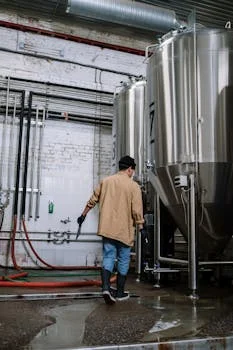
Most Finnish treatment trains start with rotary mechanical bar screens (GX Series) that remove about 90% of coarse solids larger than 6 mm, which is critical on pulp mill feed where fibers otherwise foul downstream pumps. From there, suspended solids and FOG are stripped by DAF units running at 4-8 m/h hydraulic loading, delivering 92-97% TSS removal and 85-90% FOG reduction (Veolia data). Where pathogen counts or water reuse are the driver, a DF Series MBR downstream polishes effluent to below 1 mg/L TSS with 99% pathogen reduction.
Cold-climate operation shapes the equipment list. MBR tanks are typically housed in insulated buildings with trace heating on mixed-liquor lines, and HRT is sized at the cold-season influent temperature rather than the design summer value. Chemical polishing is handled by PLC-controlled PAC dosing skids, which can cut COD by 60-80% on pulp and paper wastewater when paired upstream of DAF. Sludge is then dewatered on plate and frame filter presses to 30-40% dry solids, cutting disposal volume by 50-70% and keeping sites inside the Finnish Waste Act 646/2011 envelope.
You can explore DAF systems for pulp and paper and food processing designed for robust performance, review DF Series MBR systems for water reuse and pathogen reduction engineered for demanding environments, look at PLC-controlled chemical dosing for COD and phosphorus removal tailored for precision, and read about sludge dewatering to 30-40% dry solids for cost-effective disposal.
Equipment Selection Framework: Matching Systems to Finland's Industries
Equipment selection in Finland starts from the influent profile, not the technology catalog. Pulp and paper sites carry high TSS, FOG, and COD, so DAF units form the primary stage, with PAC dosing on top to drive COD and phosphorus down toward the discharge consent. Food processing plants see high BOD/COD plus pathogen load, and DF Series MBR systems are the default where reuse water or tight pathogen counts are required. Metalworking lines are dominated by dissolved nickel, chromium, and copper, so chemical precipitation followed by lamella clarifiers is the standard train, with hydroxide sludge pressed separately. Pharmaceutical and hospital waste adds APIs and antibiotic-resistant bacteria, which is where ozone disinfection earns its place ahead of any biological stage.
Field results from Finnish sites back the framework: a pulp mill hit 95% TSS removal with a DAF in 2024, a dairy plant reported 99% E. coli removal on an MBR in 2023, a plating facility achieved 99.5% nickel removal via precipitation and lamella in 2024, and a hospital logged a 99.9% log reduction in target bacteria with ozone in 2023. These are the numbers procurement teams usually want to see before signing a performance guarantee.
- Pulp & Paper Industry: High TSS, FOG, and COD call for DAF systems as the primary stage, with PAC chemical dosing downstream to reduce COD and phosphorus. A Finnish mill achieved 95% TSS removal with a DAF in 2024.
- Food Processing: High BOD/COD, FOG, and pathogens favor DF Series MBR systems for pathogen reduction and non-potable water reuse. A Finnish dairy plant reported 99% E. coli removal on MBR in 2023.
- Metalworking: Heavy-metal loads are handled by chemical precipitation converting dissolved metals to insoluble hydroxides, followed by lamella clarifier sedimentation. A Finnish plating facility hit 99.5% nickel removal in 2024.
- Pharmaceuticals/Hospitals: APIs and resistant bacteria require advanced oxidation such as ozone disinfection ahead of biological treatment. A 2023 hospital project showed 99.9% log reduction in target bacteria.
| System Type | Target Industries in Finland | Typical Influent Characteristics | Key Removal Efficiency | Typical CAPEX (Finland) | Typical OPEX (Finland) |
|---|---|---|---|---|---|
| DAF | Pulp & Paper, Food Processing, Slaughterhouses | High TSS (>200 mg/L), FOG (>50 mg/L), moderate COD | 92-97% TSS, 85-90% FOG | €50,000–€300,000 | €0.5–€1.5/m³ |
| MBR (DF Series) | Food Processing, Pharmaceuticals, Municipal-Industrial Mix | Moderate BOD/COD, pathogens, low TSS | <1 mg/L TSS, 99% pathogen, 95%+ BOD/COD | €100,000–€1,000,000 | €1.0–€3.0/m³ |
| Chemical Dosing (PAC) | Pulp & Paper, Food Processing (as pre-treatment/polishing) | High COD, phosphorus | 60-80% COD, 80-95% Phosphorus | €20,000–€100,000 | €0.2–€0.8/m³ (chemical cost) |
| Chemical Precipitation + Sedimentation | Metalworking, Mining | Heavy metals, dissolved solids | 95-99.5% heavy metals | €70,000–€500,000 | €0.4–€1.0/m³ |
For more detailed guidance on specific DAF system configurations, refer to how to select the best DAF system for your Finnish facility.
Cost Benchmarks: CAPEX and OPEX for Industrial Wastewater Systems in Finland
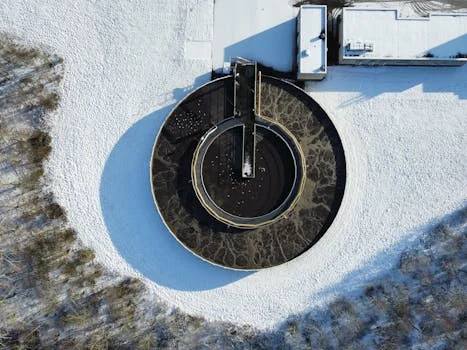
Capital expenditure in Finland scales with flow and treatment goal. DAF systems for 4-300 m³/h typically run €50,000-€300,000. DF Series MBR systems for 10-2,000 m³/day sit at €100,000-€1,000,000, and skid-mounted PAC dosing packages fall between €20,000 and €100,000 depending on chemistry. Underground package plants such as the Underground Package Sewage Treatment Plant (WSZ Series) are an alternative for small flows where surface footprint is the binding constraint.
Operating cost is dominated by energy, which runs 30-50% of OPEX on DAF trains and 40-60% on MBR trains because of aeration and cold-season heating. Chemicals add 20-40% on DAF and 10-20% on MBR; maintenance and spares run 10-25%; sludge transport and disposal account for 5-15%. Heat recovery from treated effluent, high-efficiency motors, and automatic chemical dosing systems for tighter dosage control are the levers most plants actually pull. Payback lands at 2-4 years for DAF on pulp mills (around €50,000/year in fine and sludge savings, Owatec data) and 3-5 years for MBR on food processors (around €80,000/year from reuse water and lower discharge fees). The Finnish Ministry of the Environment funds up to 40% of CAPEX for projects aligned with EU BAT, subject to environmental impact assessment and project proposal review.
| System Type | Typical CAPEX Range (2025, Finland) | Typical OPEX Breakdown | Estimated ROI (Industry Example) |
|---|---|---|---|
| DAF System (4–300 m³/h) | €50,000–€300,000 | Energy (30-50%), Chemicals (20-40%), Maintenance (10-20%), Sludge Disposal (5-15%) | 2-4 years (Pulp Mills: €50k/year savings) |
| MBR System (10–2,000 m³/day) | €100,000–€1,000,000 | Energy (40-60%), Maintenance (15-25%), Chemicals (10-20%), Sludge Disposal (5-10%) | 3-5 years (Food Processors: €80k/year savings) |
| Chemical Dosing System (Skid-mounted) | €20,000–€100,000 | Chemicals (50-70%), Energy (10-20%), Maintenance (10-20%) | 1-3 years (Phosphorus removal: Fines avoidance) |
Implementation Checklist: Steps to Deploy a Compliant System in Finland
Deploying a compliant system in Finland is a six-step exercise, and skipping the early characterization step is the most common reason projects slip into non-compliance during commissioning. Use ISO 17025-accredited Finnish laboratories for influent sampling so the utility accepts the data without re-testing.
- Step 1: Characterize Wastewater. Run influent analysis for COD, TSS, BOD, pH, temperature, heavy metals, and any sector-specific organics, using ISO 17025-accredited labs so the data passes audit.
- Step 2: Secure Pre-treatment Agreement. Negotiate the discharge consent with the municipal water utility: effluent quality, flow cap, monitoring points, and reporting frequency all need to be locked in before equipment selection.
- Step 3: Select Equipment. Match influent profile to technology using the framework above (DAF, MBR, PAC dosing, precipitation), and require Finnish-specific performance guarantees covering cold-climate operation.
- Step 4: Install and Commission. Build cold-climate adaptations in from day one: insulated tanks, trace heating on pipework, and heated enclosures for MBR systems so biological kinetics stay inside design bands.
- Step 5: Train Operators. Train staff on system operation, routine maintenance, and the monthly/quarterly compliance reporting that local environmental authorities require.
- Step 6: Monitor and Optimize. Install continuous sensors for pH, turbidity, flow, and dissolved oxygen, and tie them into a remote dashboard so deviations trigger action before they trigger fines.
Who this is for and when to look at other options
This guide fits plant engineers, EPC contractors, and procurement managers sizing a treatment train for a Finnish industrial site that must meet FIWA agreement limits and the EU Industrial Emissions Directive. If your flow is below about 5 m³/day and the discharge is domestic in character, an Underground Package Sewage Treatment Plant (WSZ Series) is usually a simpler fit than a full DAF or MBR train. For a DAF-side selection checklist, refer to how to select the best DAF system for your Finnish facility. Send your influent data and target effluent limits to request a sized proposal and CAPEX/OPEX range.
Frequently Asked Questions
What are the three types of industrial wastewater treatment?
The three primary types are physical (screening, sedimentation, dissolved air flotation), biological (activated sludge, membrane bioreactors), and chemical (coagulation, flocculation, disinfection, pH adjustment). Finnish plants typically combine all three in series, for example DAF for physical separation, MBR for biological polishing, and chlorine dioxide or ozone for chemical disinfection, to clear FIWA agreement limits.
How does Finland keep its water clean?
Finland combines strict industrial and municipal discharge limits (COD below 250 mg/L, total phosphorus below 1 mg/L), mandatory pre-treatment agreements for any facility discharging to a public sewer, and wide use of DAF and MBR systems. The national Baltic Sea Action Plan layers on nutrient reduction targets for the most sensitive receiving waters.
What is the cost of a DAF system for a 100 m³/h pulp mill in Finland?
A 100 m³/h DAF for a Finnish pulp mill typically runs €150,000-€200,000 CAPEX, with annual OPEX of €30,000-€50,000 covering energy, chemicals, and maintenance. Payback is usually 2-3 years, driven by avoided regulatory fines and lower sludge disposal costs.
Can MBR systems operate in Finland's cold climate?
Yes, MBR systems run in Finland when they are designed for it. Insulated tanks and heated buildings or enclosures keep mixed-liquor temperatures inside the biological activity band, integrated aeration boxes mitigate cold-season membrane fouling, and the DF Series MBR skid is specced for these conditions from the outset.
What are the penalties for non-compliance with Finnish wastewater regulations?
Under the Finnish Water Act 587/2011, authorities may impose conditional fines and enforced suspension until the site returns to compliance, and may require system upgrades. Environmental impairment offences are prosecuted under Chapter 48 of the Criminal Code, and repeat or severe damage cases can face stricter criminal measures.
What drives typical OPEX for a Finnish wastewater plant?
Energy is the largest line item at 30-50% of OPEX on DAF trains and 40-60% on MBR trains, mostly from aeration and cold-season heating. Chemicals add 20-40% on DAF and 10-20% on MBR, maintenance and spares run 10-25%, and sludge transport plus disposal account for 5-15%. Heat recovery from treated effluent and tight automatic chemical dosing are the levers that most reliably move OPEX down.