

Why Tannery Wastewater Breaks Generic DAF Sizing Rules
Tannery effluent is a complex mix of beamhouse liquor (high BOD, suspended solids, hair, sulfide), chrome tanning liquor (trivalent chromium, neutral salts, pH 3.5–4.5), finishing wastewater, and saline spent pickle liquor that pushes total dissolved solids into the tens of thousands of mg/L. Out-of-the-book DAF sizing tables assume a relatively homogeneous feed; a tannery feed swings across all of those characteristics every shift.
Generic hydraulic-loading ranges fail because the load is dominated by sulfide and chrome that flotation cannot touch. An engineer who sizes to total solids ends up with a tank that is overloaded on the part DAF actually removes and under-loaded on the part it cannot. The Global NEST DAF + MMBBR study lists leather manufacturing alongside petroleum refining, food production, car washes, and slaughterhouses as a generator of significant oily wastewater volumes, though the study does not provide tannery-specific numbers. Sizing a DAF directly from the combined, untreated tannery stream without equalization will produce a unit that swings between under- and over-loaded every shift, making chrome breakthrough into the biological stage almost inevitable.
Pre-DAF Process Flow for a Tannery ETP
The sequence for a tannery ETP includes screening and grit removal, flow equalization, sulfide oxidation, chrome precipitation, pH correction, chemical dosing, and finally DAF. This layout ensures the wastewater is properly conditioned before reaching the flotation stage. The beamhouse sulfide stream must be oxidized or stripped with hydrogen peroxide or aeration before any chrome-bearing stream joins the line; mixing the two without first destroying sulfide creates an H₂S release risk and can re-dissolve precipitated chrome. Chrome precipitation is normally run in a dedicated tank with NaOH dosing to pH 8–9, followed by a lamella or settling step that pulls the chrome-bearing sludge out before the clarified supernatant is blended with the rest of the wastewater. The chrome sludge is segregated and never fed to the DAF or the biological stage; it is handled as a hazardous residue. The Kemco process flow provides a template—coarse filtration, pH control, DAF, sludge dewatering—which a tannery version follows with the sulfide and chrome steps inserted upstream. The pre-DAF chemistry decides downstream performance, so an automatic chemical dosing package for pH, coagulant, and flocculant should be specified in the same RFQ as the flotation unit.
DAF Design Parameters You Should Put in the Spec
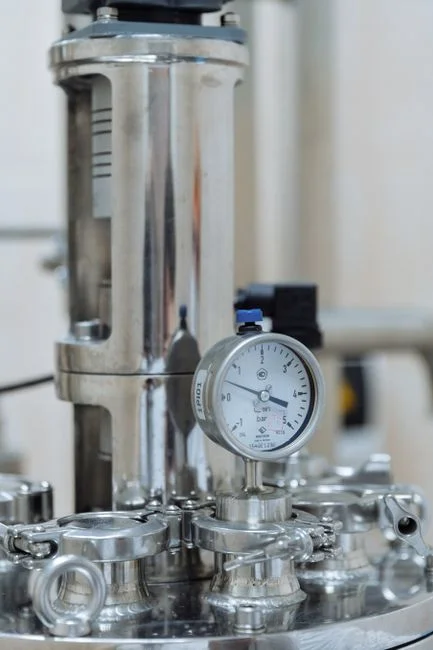
The published industrial DAF design envelope, compiled by the WEF and Purdue Industrial Wastes Technical Conference, provides defensible numbers for an RFQ. Recycle pressure sits in the 40–75 psig working range across Metcalf & Eddy (1991) and 25–70 psig across Corbitt (1999), with saturation efficiencies of 50–90% reported for modern whitewater systems. Pressurization tank detention runs 0.5–3.0 minutes, with modern high-efficiency designs clustering at the low end. Hydraulic loading rate is 0.35–5.50 gpm/ft² across published industrial references; a unit sized below 1.0 gpm/ft² for tannery duty is over-sized and one above 3.0 gpm/ft² needs pilot confirmation. Solids loading rate sits at 0.8–2.8 lb/ft²·hr, and tannery streams with very high suspended solids will sit at the upper end without pilot data to back the number down. The A:S ratio envelope is 0.005–0.200 lb air/lb solids across the same references. The WEF/Purdue rendering case study is the most aggressive published benchmark and shows a full-scale DAF at 1.8 gpm/ft² hydraulic loading, 0.0006 A:S ratio, 80 psig recycle, 40.1 lb/ft²·hr solids loading, and 0.72 SCFH/gpm air solution rate—the same dissolved air delivered with 50–70% less recycle flow than older whitewater designs. The spec should require a recycle rate, an air-solution rate (SCFH/gpm), and an A:S ratio, rather than just a tank footprint, and it should anchor a candidate supplier with the broader DAF specification framework already published. A HydropureWater DAF system ordered against this envelope ensures the rest of the ETP is designed to receive consistent influent.
| Parameter | Published Industrial Range (WEF/Metcalf & Eddy/Corbitt) | Rendering Full-Scale Benchmark (WEF/Purdue 2000) | Spec Note for Tannery |
|---|---|---|---|
| Recycle pressure (psig) | 15–75 | 80 | Demand 60–80 for modern whitewater; accept 40–60 only with efficiency data. |
| Saturation efficiency (%) | 50–95 | Not stated | Require vendor test data, not a nameplate claim. |
| Pressurization detention (min) | 0.5–3.0 | Not stated | Spec ≤1.0 for high-efficiency designs. |
| Hydraulic loading rate (gpm/ft²) | 0.35–5.50 | 1.8 (feed only); 2.5 (incl. recycle) | Stay at 1.0–2.5 unless pilot justifies higher. |
| Solids loading rate (lb/ft²·hr) | 0.8–2.8 | 40.1 | Tannery typically at upper end of the published band; confirm by pilot. |
| A:S ratio (lb air/lb solids) | 0.005–0.200 | 0.0006 | Modern chemistry-driven designs can run well below older textbook values. |
| Air solution rate (SCFH/gpm) | Not in envelope | 0.72 | Require vendor figure; do not accept tank size alone. |
Coagulation and Flocculation Chemistry in Front of the DAF
Proper coagulant and flocculant dosing is required because the DAF will only float what naturally separates; most tannery colloidal COD and emulsified FOG must be destabilized first to prevent carry-through. The standard program is a cationic coagulant (alum, polyaluminum chloride, or ferric chloride) for charge neutralization, followed by an anionic or cationic polymer for floc strength. Specific reagent selection requires jar testing per stream because tannery sub-streams vary widely. In the WEF/Purdue rendering pilot, cationic polymer was added through a flocculation tube directly before the DAF; the same arrangement is used in tannery DAFs to control floc size and bubble attachment, allowing that unit to run a 0.0006 A:S ratio at industrial scale. The pH window for the coagulant must be held tight. Consequently, automatic chemical dosing with pH feedback belongs in the same procurement line as the DAF.
DAF Performance Benchmarks from High-Strength Industrial Effluents
The WEF/Purdue rendering case study provides the most relevant full-scale, peer-reviewed performance data point for benchmarking tannery expectations. The full-scale unit was 180 ft², ran at 330 gpm influent, 90 gpm recycle (27% recycle), 80 psig recycle pressure, 65 SCFH air injection, and 0.72 SCFH/gpm air solution rate, with hydraulic loading of 1.8 gpm/ft² feed only (2.5 gpm/ft² including recycle) and solids loading of 40.1 lb/ft²·hr at a 0.0006 A:S ratio. On an influent of 43,706 mg/L TSS, 113,864 mg/L COD, and 18,568 mg/L O&G, the full-scale DAF delivered 99.4% TSS removal, 91.7% COD removal, and 99.6% O&G removal. The 15 ft² pilot on the same effluent produced 98.6% TSS, 89.3% COD, and 99.2% O&G removal, indicating that pilot data is a reliable predictor for full-scale performance. While these numbers cannot be quoted as direct tannery performance, they prove that DAF can handle the order-of-magnitude strength typical of beamhouse and combined tannery streams once the chemistry is correct. Use these values as a design ceiling, then perform a jar test and a short pilot on the actual tannery stream.
What Comes After the DAF in a Tannery ETP
The DAF is sized for the needs of the subsequent treatment stage rather than total flow. The Global NEST DAF + MMBBR study combined flotation (10 min flotation time, 72 L/min air flow) with an MBBR train running 23.5 hr HRT and 13/23 min mixing per stage, a configuration tanneries can mirror with MBBR or conventional activated sludge—see the DAF vs IAF comparison for why MBBR is often the preferred biological choice after high-strength DAF effluent. The DAF effluent target must match the biological stage's tolerance for residual COD, ammonia, and sulfide to prevent overloading. Sludge skimmed off the DAF is normally dewatered on a plate and frame filter press before disposal; chrome sludge is handled in a separate press and disposal route. A membrane stage such as an MBR downstream of the DAF provides polishing if the tannery needs reuse water, and it is also where operating discipline matters most—routine items are covered in the DAF maintenance checklist.
Frequently Asked Questions
Is DAF the right first step for tannery wastewater, or should the plant go straight to biological treatment?
DAF is the standard first step for tannery effluent because the beamhouse stream alone overwhelms biological treatment with suspended solids, FOG, and colloidal COD. The Global NEST DAF + MMBBR study places DAF in front of the biological reactor for this reason, and the WEF/Purdue case study shows DAF removing 99%+ of TSS and O&G on a stream of comparable strength. A plant that skips DAF will load its biology with floatable solids, and chrome will pass into the biological stage.
What design parameters should be locked into a DAF RFQ for a tannery project?
The RFQ should require a recycle pressure in the 60–80 psig range, saturation efficiency of 50–90% supported by test data, pressurization detention at or below 1.0 min, hydraulic loading of 1.0–2.5 gpm/ft², solids loading referenced to the 0.8–2.8 lb/ft²·hr band with a pilot to justify deviation, A:S ratio referenced to the 0.005–0.200 lb air/lb solids envelope, an explicit air solution rate in SCFH/gpm, and an automatic chemical dosing package for pH, coagulant, and flocculant. The supplier should confirm the recycle rate and air-solution rate numerically, as the WEF/Purdue paper shows the same dissolved air can be delivered with 50–70% less recycle flow than older designs.
How should chrome and sulfide be handled before the DAF?
Chrome is precipitated with NaOH to pH 8–9 in a dedicated tank, settled out as a chrome-bearing sludge, and segregated from the DAF and biological stages as a hazardous residue. Sulfide from the beamhouse must be oxidized with hydrogen peroxide or stripped with aeration before any chrome stream is allowed to join the line; otherwise, mixing the two creates an H₂S release risk and can re-dissolve chrome. Both steps belong upstream of pH correction and DAF chemistry.
How do I judge whether a DAF supplier is technically credible for tannery duty?
Ask for a published case study on a stream in the same strength band (tens of thousands of mg/L TSS, O&G above 10,000 mg/L), pilot data on the actual tannery feed, and a written guarantee on the air-solution rate and A:S ratio the unit