Why 2026 Is a Pivotal Pretreatment Year for Seattle Petroleum Operators
The 2024 modification to the 2013 Seattle/King County consent decree reshapes how the King County Industrial Waste Program (KCIW) allocates headworks capacity through 2037, and any petroleum operator preparing a 2026 permit renewal or responding to a KCIW violation letter is operating inside that enforcement window. According to EPA's June 26, 2024 announcement, the agreement extends project completion dates from 2030 to 2037 and pairs them with a $194 million WIFIA loan to West Point Treatment Plant, on top of a $134.5 million WIFIA loan that brought the 70 MGD Georgetown Wet Weather Treatment Station online in December 2022 (EPA, 2024-06-26). The Georgetown station specifically treats combined sewage that would otherwise discharge to the Duwamish River — exactly the receiving water for many petroleum and bulk-terminal outfalls in the industrial corridor south of downtown Seattle.
For any petroleum discharger, the practical effect is that KCIW has both the regulatory authority and the regional justification to tighten its pretreatment expectations during this permit cycle. Under 40 CFR 403.6 and 40 CFR Parts 405–471, petroleum refining is a categorical industry, and King County states that "categorical dischargers must get a full King County permit. A permit is mandatory regardless of their wastewater discharge volume" (King County, Industrial Waste Program). That categorical status also drags in the prohibited-discharge standards of 40 CFR 403.5 and the local-limits overlay codified under King County Code 28.84.060. A 2026 permit applicant should treat the consent-decree timeline as a compliance clock: every local-limit exceedance during this window is more likely to draw an enforcement response tied to the regional capacity narrative.
The Three-Layer Compliance Framework: Federal, Categorical, and Local
Petroleum pretreatment in King County is governed by three stacked rule layers, and operators who conflate them create the most common compliance gap. Layer 1 is the federal baseline: 40 CFR 403.5 sets prohibited-discharge standards for flammable, explosive, corrosive, and toxic-gas wastes, while 40 CFR 403.6 authorizes EPA to issue categorical pretreatment standards for specific industries (EPA Local Limits Development Guidance, 2021-06-25).
Layer 2 is the categorical standard itself. Petroleum refining is covered by 40 CFR Part 419, which sets technology-based effluent limits for oil and grease, phenols, sulfides, ammonia, total suspended solids, and chromium at refineries (King County, Industrial Waste Program). These are the floor, not the ceiling — meeting 40 CFR Part 419 does not exempt a discharger from local limits.
Layer 3 is the King County overlay. King County's local limits are set through a King County Public Rule and codified in King County Code 28.84.060, and they apply to every facility that discharges industrial wastewater into the King County sewer system, "in addition to all federal limits on pollutants" (King County, Industrial Waste Program). The numbers in the permit come from EPA's Local Limits Development Guidance, which describes the Maximum Allowable Headworks Loading (MAHL) methodology: Step 1, determine Pollutants of Concern; Step 2, collect and analyze data; Step 3, calculate MAHLs; Step 4, designate and implement local limits; Step 5, address collection system concerns (EPA Local Limits Development Guidance, 2021-06-25). When a petroleum operator reads a KCIW permit number, the MAHL calculation is the upstream reason that number exists.
Petroleum-Relevant Local Limits You Must Hit at the Sampling Manhole
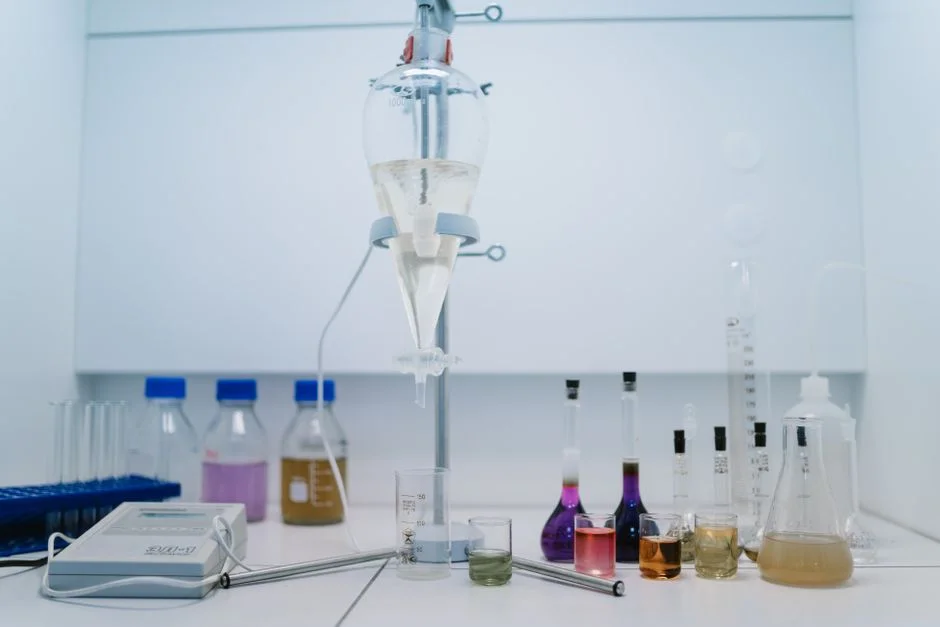
The parameter set below is the KCIW sample-manhole envelope a refinery, bulk terminal, or used-oil re-refinery must clear on every monitoring event. The pH rule is one of the more structured in the program: the instantaneous maximum is 12.0, the instantaneous minimum is violated by any grab or continuous reading below 5.0, and the daily minimum is violated either by a 15-minute continuous recording below 5.5 or by four consecutive grab samples at intervals of at least 15 minutes in a 24-hour period all sitting below 5.5 (King County, Industrial Waste Program). The structure is deliberate — a slug of acidic process water can be caught by either definition.
For fats, oils, and grease, the King County limit is nonpolar FOG ≤ 100 mg/L, and "separator plans must be approved by King County Industrial Waste (KCIW)" (King County, Industrial Waste Program). Polar (free-floating) FOG is treated separately: KCIW requires a FOG control plan for some polar-FOG dischargers, with the goal of preventing sewer blockages. Temperature is similarly staged: industrial wastewater must not exceed 150 °F (65 °C) at the point of discharge to the public sewer, must not exceed 104 °F (40 °C) when it arrives at the treatment plant, and any temperature that interferes with biological treatment is prohibited (King County, Industrial Waste Program).
Explosion hazard is controlled two ways. First, "no person shall discharge any pollutant … with a closed-cup [flash point] of less than 140 degrees Fahrenheit or 60 degrees Centigrade using the test methods specified in 40 CFR 261.21." Second, "at no time shall two successive readings on an explosion hazard meter … be more than 5 percent of the Lower Explosive Limit (LEL) … nor shall any single reading be more than 10 percent of the LEL" (King County, Industrial Waste Program). Hydrogen sulfide is enforced at designated atmospheric monitoring stations, and KCIW "may restrict soluble sulfide discharges on a case-by-case basis. For guidance, King County has a screening limit of 0.1 mg/liter" (King County, Industrial Waste Program). Metals are issued as both aqueous mg/L and mass-based lb/day limits, the mass allocation is derived from a one-standard-deviation review of plant influent at the average flow rate, "King County local limits are set for total metals, not dissolved metals," and non-Significant Industrial Users discharging less than 5,000 gpd "only need to comply with the instantaneous limits" (King County, Industrial Waste Program).
| Parameter | King County local limit | Type of limit | Petroleum-stream impact |
|---|---|---|---|
| pH | 12.0 max instantaneous; 5.0 instantaneous minimum; 5.5 daily minimum (15-min continuous or 4 grabs) | Instantaneous + daily | Caustic tank leaks, spent-caustic streams, acid cleaning |
| Nonpolar FOG | 100 mg/L | Daily maximum / instantaneous | API/CPI separator overflow, tank-water draws |
| Polar FOG | Minimization; FOG control plan when required | Plan-based | Free-floating vegetable/animal oils from blending |
| Temperature | 150 °F (65 °C) at sewer; 104 °F (40 °C) at POTW; no biological interference | Point-of-discharge + POTW arrival | Hot process water, condenser bleed, desalting |
| Flash point | Closed-cup < 140 °F (60 °C) prohibited (40 CFR 261.21 method) | Prohibited | Slop oil, gasoline-contaminated water |
| Explosion hazard | No 2 successive LEL readings > 5%; no single reading > 10% LEL | Continuous | Vapor-bearing separator effluent |
| Soluble sulfide | 0.1 mg/L screening; case-by-case | Site-specific | Sour-water streams, hydroprocessing |
| Atmospheric H2S | Set at designated monitoring stations | Atmospheric | Wet wells, junction structures |
| Metals | mg/L aqueous + lb/day mass; total metals (not dissolved) | Daily + mass | Spent catalyst, corrosion products, additives |
| Cyanide | Cyanide amenable to chlorination (CAC) — not total cyanide | Daily maximum + instantaneous max | Crude overhead, FCC, coker wastewater |
| Settleable solids | Local limit on settleable solids; liable for backups caused | Site-specific | API sludge, desalter mud, sand/grit |
On-Site Pretreatment Train: From Oil-Water Separator to Compliance Sampling
The unit-operation train that brings a petroleum discharge inside the KCIW envelope is the same one KCIW's enforcement team will audit against the permit. The first stage is coarse screening and equalization. A rotary mechanical bar screen protects downstream equipment from rags and debris that arrive with truck wash-down, contaminated groundwater, and stormwater; equalization basins dampen slug loads of hydrocarbons and heat so the separator sees a stable influent. The second stage is primary oil-water separation: an API or CPI gravity separator, designed and stamped by KCIW because "separator plans must be approved by King County Industrial Waste" (King County, Industrial Waste Program). Without KCIW-stamped separator plans, a refinery cannot meet the nonpolar FOG ceiling — the separator is the unit operation that KCIW has chosen to gate.
The third stage is dissolved air flotation. A dissolved air flotation system polishes emulsified and nonpolar FOG toward the 100 mg/L ceiling and captures suspended solids that survive the gravity separator. The fourth stage is pH and temperature conditioning, handled by a PLC-controlled chemical dosing skid for acid/caustic and a cooling step: the goal is to hold pH 5.0–12.0 and temperature ≤ 150 °F at discharge while keeping the 15-minute pH 5.5 daily-minimum envelope intact.
The fifth stage targets sulfide and cyanide. Oxidation or alkaline chlorination is used for sulfide destruction, with the target set near the 0.1 mg/L soluble-sulfide screening value. Cyanide amenable to chlorination (CAC) is destroyed by chlorination on the same skid — KCIW tracks CAC, not total cyanide, so the discharger measures what the permit tracks. The sixth stage is metals precipitation and final polishing: pH-adjusted hydroxide or sulfide precipitation of dissolved metals to meet the total-metals mass allocation in the KCIW permit, followed by a high-efficiency sedimentation tank for solids capture. Operators should not skip the dewatering question at the back end — oily DAF and lamella sludge must be dewatered, which is covered in the next section.
2026 Equipment Selection Matrix for Spec-Writers
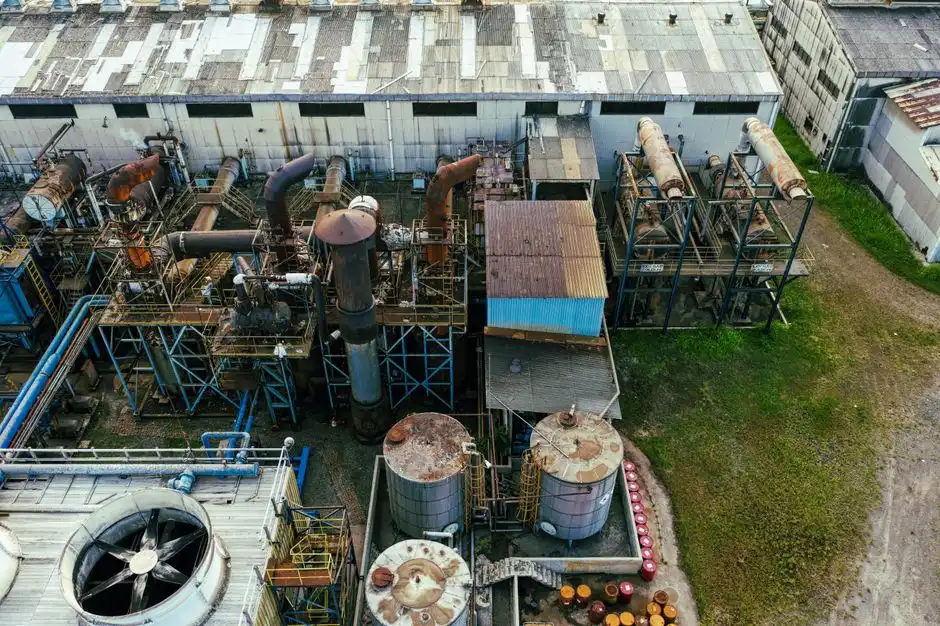
The matrix below maps each KCIW parameter to the unit operation a 2026 spec-writer should be evaluating. It is a duty-class decision aid, not a bill of materials: confirm hydraulic residence time, materials of construction, and KCIW plan-approval requirements against your own influent characterization before issuing a purchase order.
| Target parameter / duty | Recommended unit operation | Sizing / duty notes | Procurement check before PO |
|---|---|---|---|
| Nonpolar FOG ≤ 100 mg/L; emulsified oil; TSS at 4–300 m³/h | Dissolved air flotation system with micro-bubble generation and automatic skimming | Size hydraulic residence time to the 100 mg/L ceiling and peak slug; confirm air-to-solids ratio for refinery O&G | Submit separator/DAF plans to KCIW for approval (per S2) |
| DAF + lamella sludge dewatering | Plate and frame filter press for oily sludge | Volume reduction and dryness target depend on waste-hauler acceptance criteria | Request cake-solids data at representative feed; confirm polymer dose for oily sludge |
| pH 5.0–12.0 with 15-min pH 5.5 daily minimum | PLC-controlled automatic dosing skid for acid/caustic, plus flow-paced control | Hold pH within the instantaneous and daily minimum envelopes; redundant pumps for reliability | Confirm continuous pH logging cadence matches KCIW ERP triggers |
| Cyanide amenable to chlorination; sulfide oxidation | Sodium hypochlorite dosing on the same skid; ORP-controlled | Track CAC (not total cyanide); verify chlorine residual and contact time | Confirm disinfection byproduct limits with KCIW permit text |
| Metals precipitation to total-metals mass allocation | pH-adjusted hydroxide/sulfide precipitation + high-efficiency sedimentation tank | Operate at the pH window that minimizes amphoteric redissolution (Ni, Zn) | Pull the lb/day mass allocation from your KCIW permit; size clarifier on peak flow |
| Optional water reuse / cooling-tower makeup | MBR integrated wastewater treatment or UF polish | Reuse path, not a regulatory requirement; increasingly requested by KCIW in mass-loading reviews | Confirm reuse quality with the end user (cooling-tower specs, boiler specs) |
For a comparison of DAF against clarifier-based approaches in a similar petroleum service, see the prior engineering write-up on DAF vs clarifier for petroleum bulk wastewater, and for a broader supplier-side perspective, the 2026 buyer's guide for industrial wastewater management solutions providers. If you also operate an inland facility, the parallel compliance write-up at petroleum pretreatment compliance near Mishawaka walks through a comparable categorical-and-local framework with different local-limit numbers.
Permit, Sampling, and Reporting Obligations Unique to King County
The paperwork layer is where first-time categorical applicants most often stumble. Because petroleum refining is categorical under 40 CFR Part 419, a full King County Industrial Waste permit is mandatory regardless of discharge volume (King County, Industrial Waste Program). A non-Significant Industrial User discharging less than 5,000 gpd "only need[s] to comply with the instantaneous limits," but categorical sampling and self-monitoring frequencies still apply; the exact schedule is in KCIW's Local Discharge Limits document, PUT 8-13-2-PR.
RCRA dual notification is the second obligation that surprises operators. If the facility sends more than 100 kg per month of listed or characteristic RCRA hazardous waste to the sewer, the operator must notify KCIW, EPA Region 10 at 1200 6th Avenue, Seattle, WA 98101, and the Washington Department of Ecology Solid and Hazardous Waste Management Division, Mail Stop PV-11, Olympia, WA 98504 (King County, Industrial Waste Program). Identifying the listed or characteristic RCRA hazardous wastes on the wastewater discharge permit application serves as notice to KCIW. The third obligation is to pre-align your own data with the KCIW Enforcement Response Plan, because the ERP defines how noncompliance triggers escalating responses; a permittee who reviews the ERP against their own sampling cadence is rarely surprised by an enforcement letter.
Frequently Asked Questions
Which 40 CFR part covers petroleum refining, and is a small bulk terminal still a categorical discharger?
Petroleum refining is covered by 40 CFR Part 419, the EPA categorical standard for the industry. King County states that "categorical dischargers must get a full King County permit. A permit is mandatory regardless of their wastewater discharge volume," and the categorical list includes petroleum refining as well as related bulk-terminal activities (King County, Industrial Waste Program). The volumetric exemption applies only to which numeric limits a non-SIU must meet, not to whether a permit is required at all.
What 2026 budget envelope should a refinery plan for a DAF plus dosing skid, and what is the KCIW plan-approval check before placing a PO?
The research data does not include a current 2026 unit-cost figure for a refinery-grade DAF or PLC-controlled dosing skid, so do not rely on a generic price-per-m³/h. The actionable check before issuing a purchase order is the KCIW separator-plan approval: King County states that "separator plans must be approved by King County Industrial Waste (KCIW)" for any discharger subject to the nonpolar FOG limit, and the KCIW oil and water separator fact sheet is the formal submittal package (King County, Industrial Waste Program). Buyers should request a budgetary quote that holds for 90 days, a submittal package compliant with that fact sheet, and a written commitment from the supplier to revise the design if KCIW comments on the plan — that last item is where projects most often lose weeks of schedule.
How should I read a KCIW violation notice, and which parameters are most often cited at petroleum sites?
A KCIW violation notice will identify the specific parameter, the sampling event, the limit exceeded, and the ERP tier triggered. The parameters most often cited at petroleum and bulk-terminal sites are the ones that map directly to a unit-operation failure: nonpolar FOG (separator or DAF underperformance), pH excursion outside the 5.0–12.0 instantaneous band, temperature above 150 °F at the point of discharge, and a single LEL reading above 10% (King County, Industrial Waste Program). When you receive a notice, the first internal check is which stage of the on-site train is responsible: separator upstream of DAF, dosing skid for pH, cooling for temperature, or vapor control for LEL.
Is cyanide amenable to chlorination the same as total cyanide for permit purposes, and why does it matter?
No. King County's permit limit is for cyanide amenable to chlorination (CAC), not total cyanide — KCIW's own local-limits table marks the asterisk explicitly: "Cyanide amenable to chlorination, not total cyanide" (King County, Industrial Waste Program). The distinction matters because CAC measures the cyanide fraction that chlorination can actually destroy, while total cyanide includes cyanide complexes that resist chlorination. A refinery that measures total cyanide against the CAC limit will over-report its own violation rate; the lab method has to match the permit's definition.