

Why a Baku Factory Needs DAF Inside the ETP Train, Not Instead of It
A Baku factory typically needs a DAF unit as the primary or pre-treatment stage of an industrial ETP, not as a stand-alone system. DAF uses micro-bubbles 10–100 microns in diameter (OpenBlueprint, Quora) generated by pressurizing clarified effluent, saturating it with air, and releasing it at atmospheric pressure so bubbles attach to suspended solids and float them to a mechanical skimmer. In a refinery-style effluent train, DAF sits between the API oil separator and the biological stage, protecting microbes from emulsified oil (OpenBlueprint, Quora). For Baku's dominant oil & gas, food processing, textile, and metalworking discharges, a DAF front-end feeding a three-tier ETP — primary, secondary, tertiary — is the standard 2026 configuration.
The Baku industrial base on the Absheron Peninsula centres on oil and gas, petrochemical, food processing, textile finishing, and metalworking. Each of these generates effluent with either high total suspended solids (TSS), fats-oils-grease (FOG), or emulsified oil that a biological stage cannot tolerate directly. OpenBlueprint (Quora, July 2025) is explicit on the failure mode: if emulsified oil reaches the biological reactor, it coats the bacteria in a suffocating film, prevents oxygen transfer, and destroys the microbial colony. A DAF placed upstream lifts those emulsions out of the water column before biology, acting as the protective barrier between raw physical separation and biological polishing.
A DAF unit is not a substitute for a discharge permit. Even an excellent flotation effluent still contains dissolved organics, inorganics, and microbial load that must be reduced through secondary and tertiary stages before the stream meets local norms. The supplied research contains no Baku-specific numeric discharge limits; the engineer must request current norms from the Ministry of Ecology and Natural Resources (MENR) and the Baku municipality before any RFQ is sized. A Baku specification without confirmed local limits is a specification without a target. For the technical mechanism that makes DAF the front-end choice, the best DAF unit engineering guide gives the supporting parameter discussion.
How DAF Works: The Micro-Bubble Mechanism Behind Every Baku Specification
Dissolved air flotation is a physico-chemical process in which very small air bubbles attach to solid particles and give them a high rate of ascent to the surface (Roughman, Quora). The bubbles are produced by a controlled pressure cycle that any Baku vendor should be able to describe in writing.
- Recycle pressurisation. A side-stream of clarified effluent is taken off, pressurised, and saturated with air in a dedicated saturation drum (OpenBlueprint, Quora).
- Atmospheric release. The supersaturated recycle is injected into the flotation tank at normal pressure. The dissolved air comes out of solution as micro-bubbles, usually 10–100 microns in diameter (OpenBlueprint, Quora).
- Attachment and floatation. The micro-bubbles attach to suspended solids and oil droplets, drastically reducing the particles' specific gravity and lifting them to the surface (OpenBlueprint, Quora).
- Skimming and overflow. A mechanical skimmer scrapes the accumulated froth and sludge into a sludge holding tank; clarified water exits under an overflow weir (OpenBlueprint, Quora).
The mechanism is mature and well-documented, which is why a comparable commercial system — the Clean Water Technology GEM 150/300 — is delivered as an engineered package for the removal of TSS, FOG, and undissolved materials in the dairy industry (Ultra V Solutions, Facebook, 2021-08-20). That same principle applies directly to Baku's food processing and dairy plants, where the influent profile is dominated by suspended solids and emulsified fats. The hardware that delivers the micro-bubbles, the saturation drum, the recycle pump, and the skimmer is identical regardless of whether the influent is refinery or dairy. The DAF system product specification should be checked against the mechanism described above before any quote is accepted.
The Three-Tier ETP Structure Every Baku Plant Engineer Should Specify
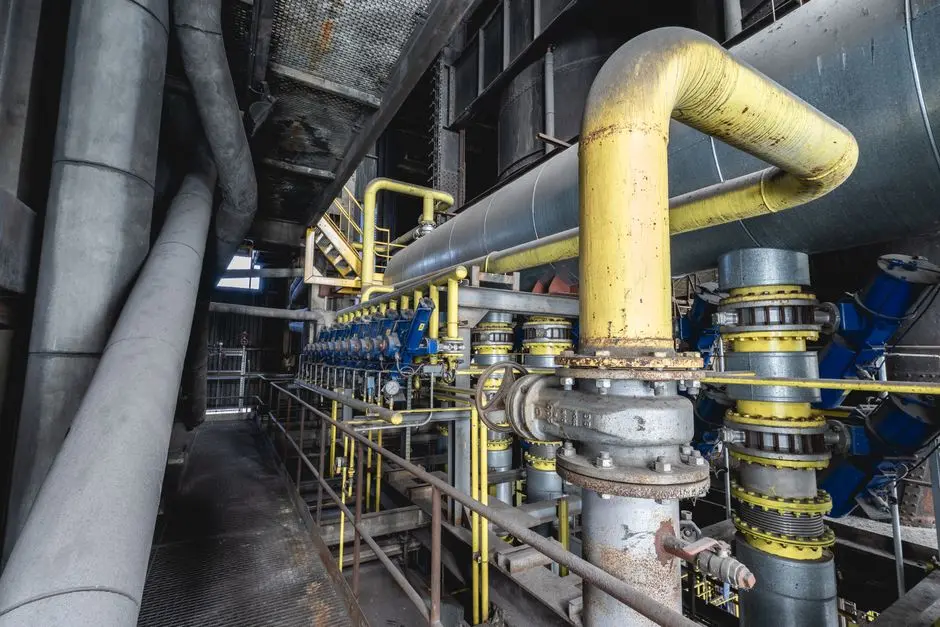
An ETP is conventionally described in three tiers, each removing a different class of pollutant (Ishanee Sharma, Quora). The structure is the same whether the plant sits in Baku, Vienna, or Algiers; what changes is the unit operation that occupies the primary slot.
| Tier | Function | Typical Unit Operations | Baku Implication |
|---|---|---|---|
| Primary | Remove settleable solids, FOG, and gross TSS; control pH; destabilise emulsions | Screening, grit removal, API separator, DAF, coagulation/flocculation | DAF goes here when FOG or emulsified oil is present; otherwise a simple clarifier may suffice |
| Secondary | Reduce dissolved organics biologically | Aerobic (activated sludge, MBBR, MBR) or anaerobic (UASB) reactors | Choice depends on influent strength, footprint, and whether biogas recovery is desired |
| Tertiary | Polish residual inorganics, pathogens, and colour | Filtration, chlorination, alum dosing, UV (Ishanee Sharma, Quora) | Required to meet local discharge or reuse targets — must be sized to MENR/municipal limits |
For Baku, the DAF is normally placed at the head of the primary stage, or as a pre-primary step when FOG or emulsified oil is present, so that the downstream biology sees a feed it can actually treat. A Vienna ETP and DAF guide provides a comparable three-tier reference configuration for an analogous European industrial setting; the tier logic is the same even where the local discharge envelope differs.
Matching Baku Industry Profiles to the Right DAF + ETP Configuration
Different Baku industries need different trains. The configuration below is derived from the documented role of DAF in refinery service (OpenBlueprint, Quora) and the documented flocculation/flotation package for dairy (Ultra V Solutions, Facebook, 2021-08-20).
| Industry | Typical Influent Character | Conventional 2026 Train | Why DAF Front-End |
|---|---|---|---|
| Oil & gas, refinery, petrochemical | Free oil, emulsified oil, high TSS | API separator → DAF → biological → polishing | Emulsified oil from crude desalting and catalytic cracking must be lifted before biology (OpenBlueprint, Quora) |
| Food processing, dairy, beverage | High TSS, FOG, undissolved solids | Screening → flocculation/DAF (e.g. GEM 150/300) → biological → polishing | Flocculation/flotation packages are sold specifically for TSS, FOG, and undissolved solids in dairy (Ultra V Solutions, Facebook, 2021-08-20) |
| Textile and metalworking | High TSS, colloids, oil-bearing coolants | Screening → DAF → biological → polishing | Emulsified oil and oil-bearing coolants foul biology the same way refinery emulsions do |
| Light municipal-style factory sewage (small facilities) | Domestic-strength waste plus kitchen FOG | Screening → DAF (if FOG present) → MBR package | MBR can replace conventional biology but still benefits from upstream DAF when kitchen or process FOG is present |
For Baku facilities in the first three rows, the DAF system is the unit operation that decides whether the downstream biological stage survives. A Baku MBR package without upstream DAF will accumulate FOG on the membranes and lose flux within weeks; the engineer should plan accordingly.
Sizing Parameters and Data to Demand in a Baku RFQ
A vendor cannot size a DAF or a full ETP without site-specific inputs. The list below is the minimum data the engineer should hand to any short-listed supplier so quotations are comparable. No Baku-specific CAPEX or OPEX figures are present in the supplied research, so cost must be requested from vendors as a range and benchmarked against regional guides.
| Parameter | What to Specify | Why It Matters |
|---|---|---|
| Flow | Average and peak hydraulic loading in m³/h, plus diurnal variation | Peak flow drives flotation tank volume and recycle pump sizing |
| Influent quality | TSS, FOG, COD, BOD, oil-in-water, pH, temperature | Sets DAF removal target and downstream biology loading |
| Micro-bubble spec | Bubble size 10–100 microns (OpenBlueprint, Quora); confirm in writing | Bubble size distribution controls attachment efficiency |
| Recycle ratio | Requested as % of throughput, typically 10–30% | Drives air-to-solids ratio and float formation |
| Sludge handling | Skimmer output to a sludge holding tank and downstream dewatering via a plate and frame filter press | DAF sludge is wet and voluminous; dewatering choice drives OPEX |
| Chemical dosing | Coagulant and flocculant capacity via an automatic chemical dosing system | Emulsion destabilisation must be matched to the flow |
| References | Ask for projects in Azerbaijan, the Caspian region, or comparable oil-and-gas economies (Algeria, Turkmenistan) | Regional supply patterns and logistics constraints are similar |
The engineer should also request FAT documentation, hydraulic test certificates, and a pre-assembled DAF skid to reduce site work at the Baku facility. These are the basis on which quotations should be compared.
Supplier Selection Checklist for a Baku ETP and DAF Package
Choosing a vendor on price alone is a frequent cause of failure in Caspian-region ETP projects. The checklist below reduces risk by forcing the comparison onto documented experience, regional references, and after-sales reach.
- Documented flotation experience. Confirm the vendor's track record with TSS, FOG, and undissolved-solids flotation. The GEM 150/300 case (Ultra V Solutions, Facebook, 2021-08-20) shows that engineered flocculation/flotation systems are sold as packages, not as generic skids.
- Regional references. Ask for Caspian, MENA, or CIS-region references; adjacent engineering guides exist for Algeria, Jordan, Uganda, Peru, Portugal, the UK, and Vienna, and a Baku project shares logistics constraints with those markets. The Algeria DAF guide is a useful reference for the supplier shortlist structure.
- Pre-assembly and documentation. Request a pre-assembled DAF skid, FAT records, and hydraulic test certificates to cut site work and commissioning time on the Absheron Peninsula.
- After-sales reach. Verify that the vendor can deliver spares and a commissioning engineer to Baku within a defined window. Remote supply hubs in Europe and China add days to any spares shipment; price that into the comparison.
Frequently Asked Questions
How much does an industrial DAF unit cost for a Baku factory?
The supplied research contains no Baku-specific CAPEX or OPEX figures. A buyer should request a written quotation from each short-listed vendor, broken down by skidded DAF unit, recycle pump package, saturation drum, skimmer, chemical dosing, and sludge dewatering. Benchmark the resulting range against regional engineering guides for Algeria and Vienna.
Which suppliers can deliver a DAF and full ETP to the Absheron Peninsula?
No single supplier is named in the supplied research, and the engineer should avoid choosing on price alone. The defensible approach is to demand documented Caspian, MENA, or CIS-region references — adjacent engineering guides cover Algeria and Vienna factories — and to verify spares logistics and commissioning travel time before signing.
Where in the ETP train should the DAF be placed for a refinery or food plant in Baku?
For refinery and petrochemical service, DAF sits downstream of the API oil separator and upstream of the biological reactor so emulsified oil is lifted before it can coat the bacteria (OpenBlueprint, Quora). For food processing and dairy, the DAF — or an equivalent flocculation/flotation system such as the documented GEM 150/300