Why domestic sewage is a strategic problem in Algeria
Algeria sits below the 1,700 m³ per-capita-per-year freshwater threshold with less than 500 m³ available, and only 11.3 km³ of renewable water for a population over 46 million (Springer 2025 review of Algerian wastewater treatment). The World Meteorological Organization projects that hyperarid countries such as Algeria will see water demand climb 40–50% by 2030 as agriculture, industry and households compete for the same shrinking resource (Springer 2025 review). Intermittent supply magnifies the problem: 78% of urban residents receive water on a non-continuous schedule, and in districts such as Bouzeguène in Kabylie, water arrives only every 10 days (Wikipedia, Water supply and sanitation in Algeria). For an engineer sizing a domestic sewage plant, this is the operating reality — every cubic metre of treated effluent that is safely discharged or reused displaces demand on a network that already cannot meet its customers.
Distributed reuse is therefore not a sustainability talking point but a planning constraint. The Office National d'Assainissement (ONA) and Algérienne des Eaux (AdE) cover the country, but the ONA runs only 68 of more than 400 plants directly; the rest sit under private or municipal management, often with the maintenance gaps that come with thinner operator capacity (Wikipedia). A project team that treats domestic sewage as a local water-reuse asset, not just a discharge compliance task, will align with the national priority as defined by Decree No. 07-149 of 20 May 2007 on reclaimed-water irrigation (Wikipedia).
The Algerian treatment fleet: how many plants and what technology
The National Sanitation Office records more than 400 wastewater treatment plants nationwide, up from 18 in 2000 and 113 in 2011 (Springer 2025 review; Wikipedia). Of the 113 plants captured in the 2011 census, 56 used activated sludge and 67 were lagoon systems of varying sizes; that mix still broadly defines the asset base today, with membrane bioreactor (MBR) units added on newer municipal projects (Wikipedia). The sewer network that feeds those plants is 41,000 km long, anchored by large activated-sludge plants that combine tertiary sand filtration to treat more than 200,000 m³/day, and a modern MBR installation handling about 100,000 m³/day (Wikipedia; Springer 2025 review).
The headline compliance figure is unflattering: roughly 40% of plants do not meet dirty-water discharge standards because of maintenance backlogs and operator-skill gaps (Springer 2025 review). That number is the entry point for packaged, automated, lower-touch plants — a market signal that an EPC contractor or municipal procurement officer can read directly.
| Asset class | Reported value | Source / date |
|---|---|---|
| WWTPs nationwide | >400 | Springer 2025 review; National Sanitation Office latest data |
| WWTPs in 2000 | 18 | Wikipedia (citing 2011 government figures) |
| WWTPs in 2011 | 113 (56 activated sludge, 67 lagoon) | Wikipedia (2011 government figures) |
| Largest conventional plant capacity | >200,000 m³/day (activated sludge + sand filtration) | Wikipedia; Springer 2025 review |
| Largest MBR plant capacity | ~100,000 m³/day | Springer 2025 review |
| Sewer network length | 41,000 km | Wikipedia (2011 figures) |
| Plants failing dirty-water standards | ~40% | Springer 2025 review |
| National treatment coverage | ~60% (Algeria) vs 92% (Tunisia), 75% (Morocco), <15% (Libya) | Springer 2025 review |
| Modernization rate | 30% (Algeria) vs 70% (Tunisia), 50% (Morocco) | Springer 2025 review |
Domestic sewage characteristics in Algeria and the discharge envelope
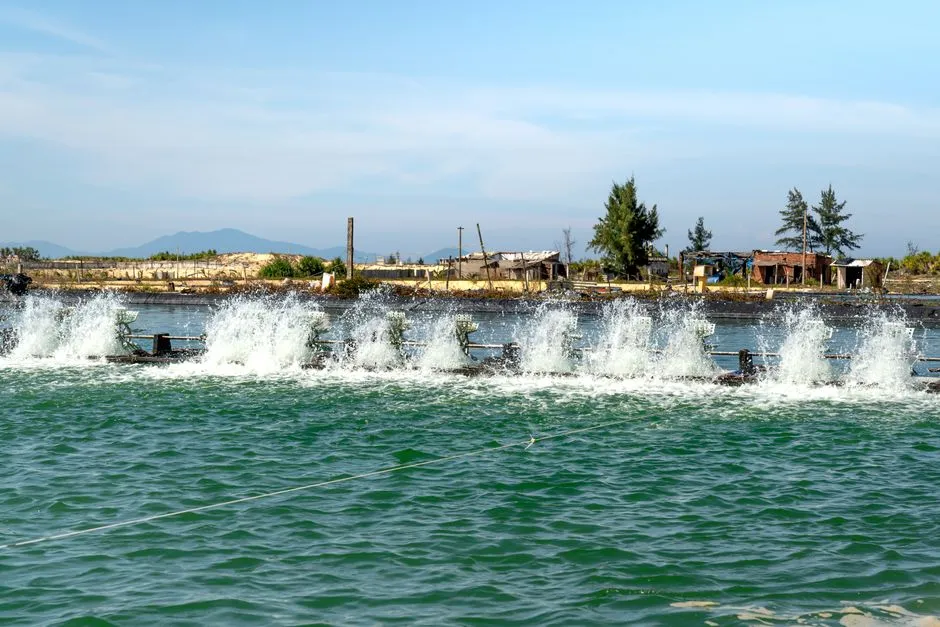
Primary treatment on some northern Algerian plants achieves close to a 50% reduction in suspended solids, which is the realistic baseline a design engineer can assume for downstream biological and tertiary steps (Springer 2025 review). For biological oxygen demand (BOD), the regional benchmark is the Choutrana plant in Tunisia, which combines advanced tertiary treatment to remove 97% of BOD — versus roughly 85% in Algerian plants on the same influent class (Springer 2025 review). The 12-point gap defines the headroom available to a well-specified Algerian scheme, and the engineering choices (mixed liquor suspended solids target, hydraulic retention time, tertiary polishing) that close it.
Effluent discharge standards are set by an Algerian executive decree cited in the Springer 2025 review; that instrument is the binding reference for plant sizing, reuse permitting and operator reporting, and the project team should name it in the design basis. Industrial ingress is a real risk on nominally domestic catchments: a Constantine filtration pilot reached 85% heavy-metal removal through well-specified tertiary steps, demonstrating that reuse quality is achievable even where light industrial loads enter the sewer (Springer 2025 review). For a housing scheme, hotel or hospital site, this means designing for variable influent and specifying polishing that can clear metals and fine suspended solids before discharge or reuse.
Technology options for domestic sewage treatment in Algeria
Conventional activated sludge remains ONA's default and the technology with the deepest local operational experience and spare-parts base; it is the right choice for centralized municipal flows above roughly 5,000 m³/day where land is available and trained operators are on hand. MBR delivers near-reuse-quality effluent with sub-micron solids retention in roughly 60% of the footprint of conventional activated sludge, and Algeria already operates an MBR plant at about 100,000 m³/day (Springer 2025 review). For a domestic project, that translates into a packaged MBR membrane bioreactor for Algerian municipal sewage that lets the same site meet irrigation-reuse limits without a separate tertiary train.
Package and underground plants fill the decentralized niche. A/O biological contact oxidation units in the WSZ series are buried, fully automated and rated for 1–80 m³/h, which covers residential communities, hotels, hospitals, factories and rural sites where land is constrained or operator skill is thin (HydropureWater WSZ product data). A buried package STP for Algerian communities and hotels removes the need for a dedicated operator building and fits the intermittent-power, intermittent-staff reality of smaller wilayas. Lagoon systems remain relevant for low-capex rural schemes, but the 40% non-compliance rate in the national fleet is a reminder that unmonitored lagoon designs carry a real effluent-quality risk (Springer 2025 review).
Automation is now a procurement expectation, not an option. A 2023 study at the Algiers wastewater treatment plant showed that AI-based process control lifted utilization efficiency by more than 15% and cut energy use by 15–20% (Springer 2025 review). PLC control and remote monitoring should be specified as baseline, with AI overlay as an optional scope line for plants above ~5,000 m³/day.
| Technology | Typical flow band | Footprint vs CAS | Operator demand | Best-fit project | Source |
|---|---|---|---|---|---|
| Conventional activated sludge (CAS) | >5,000 m³/day | Baseline | High (trained crew) | Centralized municipal schemes | Wikipedia; Springer 2025 review |
| MBR | ~50–5,000 m³/day; 100,000 m³/day proven in Algeria | ~40% of CAS | Moderate (PLC + membranes) | Reuse-quality discharge, space-constrained urban sites | Springer 2025 review |
| Package A/O (WSZ) | 1–80 m³/h | Buried; minimal surface | Low (automated, no on-site operator) | Housing, hotels, hospitals, rural sites | HydropureWater WSZ product data |
| Lagoon systems | Small rural wilayas | Large land take | Low (but quality risk) | Low-capex, low-flow rural projects | Wikipedia; Springer 2025 review |
Choosing a treatment train for a domestic project in Algeria
Step 1: confirm the end-use. Discharge to a wadi, irrigation reuse under Decree 07-149, or industrial cooling each sets a different effluent envelope; reuse-quality targets are the single biggest driver of whether MBR is justified over conventional activated sludge (Wikipedia). Step 2: match the flow band. Centralized plants above roughly 5,000 m³/day typically stay with conventional activated sludge, the 50–5,000 m³/day band is the MBR sweet spot, and flows below 50 m³/day point to a packaged A/O or buried plant.
Step 3: lock in headroom. Utilities are targeting a 70% rise in industrial treatment load, so hydraulic and aeration capacity should carry at least 20–30% growth margin to avoid a near-term retrofit (Springer 2025 review). Step 4: specify automation. The 2023 Algiers pilot shows 15–20% energy savings from AI-assisted control, and PLC plus remote monitoring is now a baseline expectation for ONA and private O&M contracts (Springer 2025 review). For reuse-bound sites, the same envelope maps to a membrane bioreactor train for irrigation-quality discharge or, for smaller community loads, a buried package A/O plant that meets Decree 07-149 limits with the right polishing.
| Decision step | Engineer action | Algerian input that drives the answer |
|---|---|---|
| End-use | Set BOD / SS / turbidity targets | Decree 07-149 reuse limits; wadi discharge class |
| Flow band | Pick CAS / MBR / package | Project peak flow; ONA operational class |
| Headroom | Add 20–30% hydraulic & aeration margin | +70% industrial load target (Springer 2025 review) |
| Automation | Specify PLC + remote monitoring; AI optional | Algiers 2023 AI pilot — 15–20% energy savings (Springer 2025 review) |
Reuse, compliance and cost reality in 2026
Decree No. 07-149 of 20 May 2007 sets the procedure for granting a reclaimed-water irrigation permit and is the legal anchor for any reuse design (Wikipedia). Nationally, less than 15% of treated wastewater is reused, but more than 60% is reused in some wilayas, and a 2020 Ministry of Water Resources study in Blida recorded a 20% agricultural production gain alongside a 30% cut in water-supply costs when farmland was irrigated with reused water (Springer 2025 review). For a developer, that is the financial case the project must build around, because volumetric tariffs alone will not.
The tariff reality is stark. The sewer tariff for the lowest residential block in the Algiers, Constantine and Annaba zones is 2.35 DZD/m³ (about 3 US cents), roughly 20 times below Central European levels (Wikipedia). With that kind of cost-recovery gap, the ONA-funded model depends on state subsidy, and any private or EPC-financed scheme must rest on reuse value, avoided water-supply capex, or a long-term O&M contract. The modernization gap is the procurement signal: only 30% of Algerian wastewater infrastructure is classified as modern, against 70% in Tunisia, so retrofit, instrumentation, automation and packaged-plant supply are the realistic 2026 spending priorities (Springer 2025 review). Compared with the regional picture in Domestic sewage treatment in Tangier — regional comparison and the plant-level detail in Domestic sewage treatment in Agadir — M'zar plant detail, Algeria is the higher-volume, lower-modernization market of the three.
2026 equipment checklist for an Algerian domestic sewage project
Headworks protection: a fine mechanical bar screen at the inlet to remove rags, plastics and grit that would otherwise foul downstream biological stages. The GX series rotary mechanical bar screen covers this duty and is sized to the peak flow of the incoming sewer (HydropureWater GX Series data).
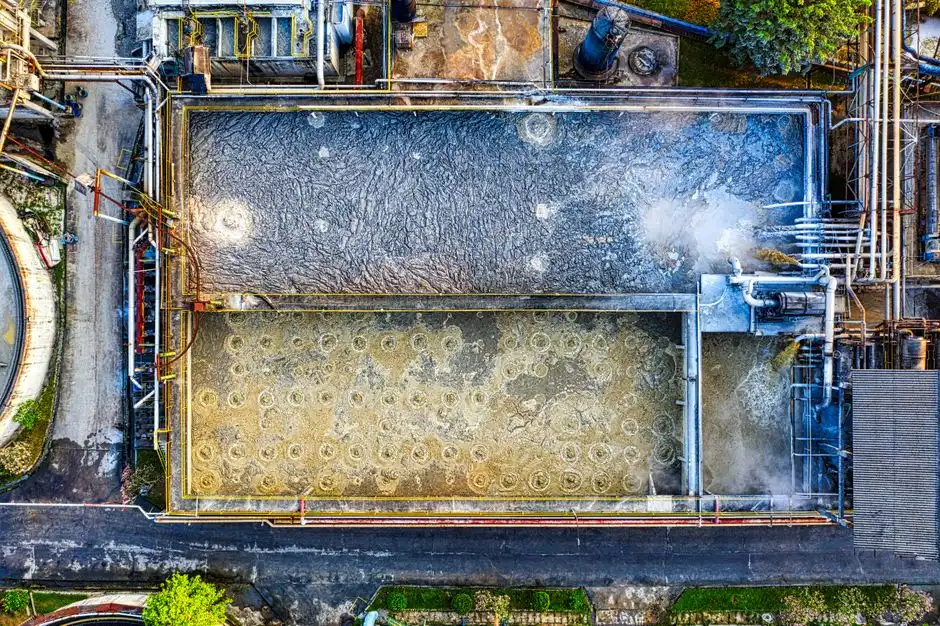
Biological stage: an MBR membrane bioreactor for flows up to 2,000 m³/day when reuse-quality effluent is the target, or a packaged A/O plant from the WSZ series for 1–80 m³/h community, hotel or hospital duty (HydropureWater MBR and WSZ product data). The MBR route removes the need for a separate clarifier and tertiary solids filter, and the WSZ route buries the entire train below grade.
Tertiary step: a lamella clarifier or multi-media filter to polish suspended solids and protect reuse targets. The high-efficiency sedimentation tank in the HydropureWater catalog covers this duty at the flow band of the upstream biological stage (HydropureWater product catalog).
Disinfection: UV-C sterilization for chlorine-resistant pathogens without disinfection by-products, or chlorine dioxide generation for larger municipal schemes with longer distribution loops (HydropureWater UV and ClO₂ product data). UV is the default for package plants serving a single reuse user; ClO₂ fits ONA-style distribution networks.
Sludge line: a plate and frame filter press to dewater the 40–50% suspended-solids load carried over from primary stages, and to bring cake solids to a level that local disposal or agricultural reuse can accept (HydropureWater product catalog). Buyers should request cake-solids guarantees tied to the actual mixed-liquor suspended-solids range, not generic catalog numbers.
Frequently Asked Questions
What is the realistic national coverage rate for domestic sewage treatment in Algeria?
National treatment coverage sits at roughly 60%, against 92% in Tunisia and 75% in Morocco, and only about 30% of the existing plant base is classified as modern, which is why retrofit and packaged-plant supply dominate 2026 procurement (Springer 2025 review). Any buyer should request a site-by-site ONA compliance certificate rather than relying on the national average.
Which technology should I specify for a 50–5,000 m³/day domestic project in Algeria?
This is the MBR sweet spot: Algeria already runs an MBR plant at about 100,000 m³/day, and MBR delivers near-reuse effluent in roughly 60% of the footprint of conventional activated sludge (Springer 2025 review). For flows below about 80 m³/h, a packaged A/O plant from the WSZ series is the lower-capex alternative and is the right choice for housing, hotel or hospital sites.
What reuse permit and effluent limits apply to an Algerian domestic STP?
Reclaimed-water irrigation is governed by Decree No. 07-149 of 20 May 2007, and the binding technical limits are set by an executive decree cited in the Springer 2025 review. Buyers should request the exact decree number, the relevant wilaya discharge class, and a draft reuse permit timetable before committing to a treatment train.
How should I budget for an Algerian domestic sewage project in 2026?
Volumetric cost recovery is weak: the lowest residential sewer block is 2.35 DZD/m³ (about 3 US cents), roughly 20 times below Central European tariffs (Wikipedia). The business case must rest on reuse value — the 2020 Blida study recorded a 20% agricultural production gain and a 30% cut in supply costs (Springer 2025 review) — or on avoided supply-side capex, so request a reuse-offtake letter and a shadow-price model from the client before sizing the plant.