Why Nowrangapur Sites Cannot Default to Blowdown-to-Sewer
Nowrangapur sits on the southwestern edge of Odisha, bordered by the Indravati catchment and the Eastern Ghats foothills, and a 2026 data-centre build here cannot plan around a "send blowdown to the municipal sewer" default. India-wide, data centres consumed roughly 150 billion litres of water in 2024, a figure projected to more than double by 2030 as AI workloads push rack density upward (Earth5r, citing CEEW and SYSTEMIQ, 2025).
The same source notes that 57% of Indian districts now fall in the high to very high extreme-heat-risk band, and the southwest Odisha belt, with its hot pre-monsoon summers and seasonal stream recession, is exactly the kind of district where the CEEW heat atlas needs to be checked before sizing a cooling plant. Odisha has a data-centre policy framework but, unlike Rajasthan's 2025 model, it does not yet embed a sustainability chapter, so the binding constraints in Nowrangapur are the OSPCB discharge consent, the operator's BRSR Principle 6 disclosure, and any hyperscaler tenant water-stewardship asks (analogy from S5 state-policy analysis). Direct discharge fees in water-stressed jurisdictions now run above $5–15 per thousand gallons, and some regulators cap blowdown TDS below 1,500 mg/L, both of which push the design away from disposal and toward an internal reuse loop (Genesis Water Tech).
Two Wastewater Streams, Two Treatment Trains
Two chemically and legally distinct streams arrive at the treatment boundary, and they must stay separated. Stream 1 is cooling-tower blowdown (CTBD), the periodic purge from the recirculating cooling loop, typically at 1,200–6,000 mg/L TDS, four to eight times the makeup, with 10–50 mg/L suspended solids and an accumulated load of biocides, corrosion inhibitors, scale inhibitors, dispersants, silica and hardness, plus legacy chromate or high-phosphate chemistry on older sites (Genesis Water Tech). Stream 2 is staff sewage from offices, the cafeteria and any on-site housing, which is lower in flow but driven by BOD, nutrients and pathogens, and which must meet OSPCB domestic-effluent parameters on its own consent line. Routing sewage into the CTBD RO train fouls membranes with biological solids, swings the feed TDS, and breaks the industrial-versus-domestic consent split that OSPCB applies separately to each stream. Conventional BWRO on this kind of feed plateaus at 75–80% recovery before scaling becomes unmanageable, so the train has to be designed with scaling chemistry, not just nominal recovery, in mind from day one (IDE Tech).
| Parameter | Cooling Tower Blowdown (CTBD) | Staff Sewage |
|---|---|---|
| Source | Purge from evaporative cooling loop | Offices, cafeteria, staff housing |
| Flow share | Dominant (most of liquid waste) | Minor, camp-scale |
| TDS | 1,200–6,000 mg/L (4–8× makeup) | Low (municipal-quality) |
| Suspended solids | 10–50 mg/L, plus corrosion products and biofilm | BOD, COD, nutrients, pathogens |
| Treatment focus | Side-stream filtration → UF → RO (± MVC) for reuse | Packaged A/O or MBR to OSPCB consent |
| Consent reporting | Discharge by destination and level of treatment, ZLD status (BRSR Principle 6) | Separate domestic effluent line under OSPCB consent |
Reference Water Balance for a 5–20 MW Nowrangapur Site

The working benchmark for an Indian hyperscale facility is the IEA figure cited by CEEW: a 100 MW site uses roughly 0.8–2 million litres a day for on-site cooling, with the upper end of the band realistic for hot-summer Vidarbha-analogue climates where free-cooling hours are short (Earth5r, citing CEEW and IEA, 2025). For a 5–20 MW Nowrangapur project, the sizing path is: pick a per-MW water use inside that envelope, then apply a 20–30% blowdown fraction on makeup water to estimate blowdown volume (KETOS; Genesis Water Tech). Makeup source choice then drives the consent narrative. A draw from a shared community borewell in the Nabarangpur–Indravati hinterland reads as a stressed-source consent to OSPCB, while a draw from the Indravati Irrigation Project canal is more resilient but still needs a discharge path for RO concentrate. Engineers must collect contracted IT load, design PUE, target WUE (L/kWh), cooling-tower cycles of concentration, makeup source and quality, and Nowrangapur-specific wet-bulb and dry-bulb design conditions before any of the numbers below can be locked.
| Site scale | Cooling makeup envelope (L/day) | Blowdown at 20–30% of makeup (L/day) | Nowrangapur implication |
|---|---|---|---|
| 5 MW | 40,000–100,000 | 8,000–30,000 | Lower end if free-cooling hours are high; upper end in peak summer |
| 10 MW | 80,000–200,000 | 16,000–60,000 | Plan reuse train against upper end; pre-allocate ZLD footprint |
| 20 MW | 160,000–400,000 | 32,000–120,000 | OSPCB consent negotiation and concentrate path become critical |
The 2026 Reuse-First Treatment Train
The 2026 default for an Indian data centre is a four-stage reuse train that returns blowdown to the cooling-tower make-up stream rather than sending it to a sewer or a full ZLD system. Each stage removes a specific class of foulant so the next stage can run at its design recovery. Stage 1 is side-stream filtration at 10–25 microns, treating 1–5% of the circulation flow, with $50,000–200,000 in capex and minimal opex, dropping TSS, corrosion products and biofilm so downstream membranes can run clean (Genesis Water Tech). Stage 2 is ultrafiltration on a HydropureWater UF skid, 0.01–0.1 micron PVDF, 10–30 psi, 90–95% recovery, removing colloids, bacteria and high-molecular-weight organics, with chemical cleaning every 1–3 months (Genesis Water Tech). Stage 3 is reverse osmosis on a HydropureWater industrial RO system, 95–99% rejection, 50–85% recovery, permeate at 10–50 mg/L TDS, with a 50,000 GPD unit in the $250,000–500,000 installed range and $1.50–3.00 per 1,000 gallons opex (Genesis Water Tech). Stage 4 is mechanical vapor compression or a brine concentrator, added only when concentrate cannot be discharged under consent, with 95–98% recovery, distillate below 10 mg/L TDS, 15–25 kWh per 1,000 US gallons, and $1–3 million capex for 10,000–30,000 GPD systems (Genesis Water Tech). For high-silica or scaling-prone CTBD, controlled precipitation of sparingly soluble salts in a fluidised-bed reactor can let the RO stage run well past the conventional 75–80% ceiling without multi-stage complexity, which is the practical way to defend a high-recovery claim in a bid review (IDE Tech).
| Stage | Function | Key parameters | Cost band (typical data-centre scale) |
|---|---|---|---|
| 1. Side-stream filtration | Drop TSS, corrosion products, biofilm | 10–25 micron, 1–5% of circulation flow | $50,000–200,000 capex; low opex (Genesis Water Tech) |
| 2. Ultrafiltration | Colloids, bacteria, organics removal | 0.01–0.1 micron, 90–95% recovery, 10–30 psi | Sized to flow; CIP every 1–3 months |
| 3. Reverse osmosis | Dissolved solids, hardness, silica rejection | 95–99% rejection, 50–85% recovery, permeate 10–50 mg/L TDS | $250,000–500,000 installed for 50,000 GPD; $1.50–3.00 per 1,000 gal opex (Genesis Water Tech) |
| 4. MVC / brine concentrator | Brine volume reduction, high-purity distillate | 95–98% recovery, <10 mg/L TDS distillate | $1–3M capex for 10,000–30,000 GPD; 15–25 kWh per 1,000 US gal (Genesis Water Tech) |
When ZLD Becomes the Right Answer in Nowrangapur
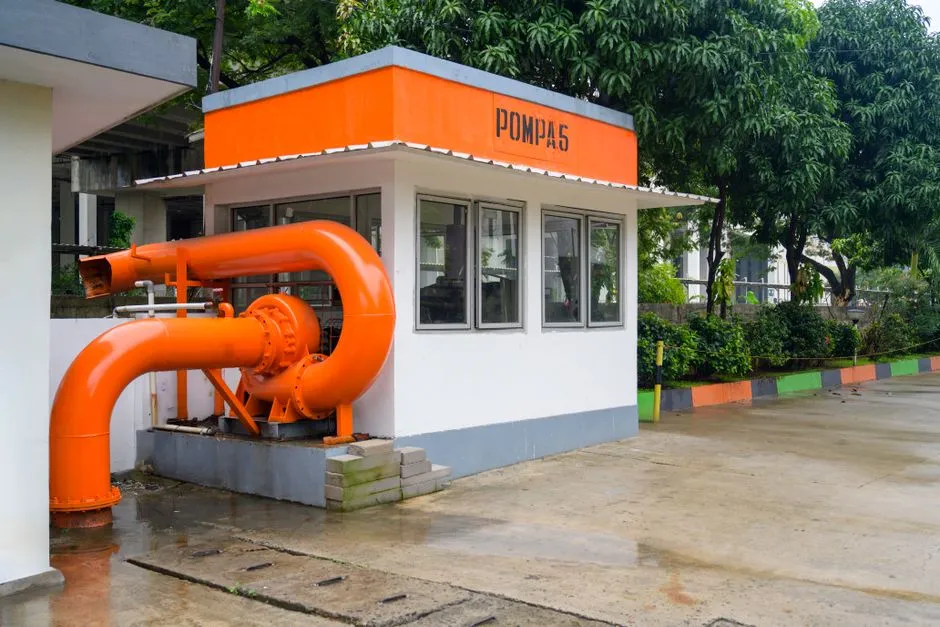
Zero liquid discharge is a hardware response to a closed consent path, not a default. A full ZLD train pairs RO or NF concentration with an evaporative stage (MVC or brine concentrator) and a crystallizer, reaching 95–99% overall recovery at $3–8 million capex and $5–15 per 1,000 gallons opex (Genesis Water Tech). For a 5–20 MW Nowrangapur site, ZLD is justified only when OSPCB consent prohibits concentrate discharge, when the only viable makeup is a stressed shared borewell in the Indravati hinterland, or when the operator has signed a water-positive pledge that needs hardware behind it. Partial ZLD using MVC can reduce concentrate volume by 80–90% at lower cost than full ZLD, with the residual brine sent to authorised haulers, deep-well injection, or a special discharge permit, which is often the right interim answer while consent terms evolve (Genesis Water Tech). Reuse at this scale is already proven: AWS was cooling 20 data centres on purified wastewater by 2023, and Google uses reclaimed or non-potable water at over 25% of its campuses, a useful reference for the bid narrative when OSPCB asks why a reuse-first train is technically defensible (KETOS).
Staff Sewage: Packaged A/O or MBR to OSPCB Consent
Staff sewage is sized against the CPHEEO urban norm of 135 litres per person per day, cross-checked against the Earth5r estimate that a 100 MW facility's water footprint is equivalent to the daily domestic supply of roughly 6,000–15,000 people (Earth5r, 2025). For a 5–20 MW site the sewage flow is modest, and the right plant depends on footprint and reuse intent. A WSZ packaged A/O plant suits campus flows in the 1–80 m³/h range and can be buried where land is at a premium, while a HydropureWater MBR, covering 10–2,000 m³/day with sub-micron filtrate, is the right pick when the operator wants to reuse the effluent for landscaping or toilet flushing. The packaged plant must meet OSPCB domestic-effluent parameters and is reported separately from CTBD under BRSR Principle 6, so the engineering and the disclosure paperwork both depend on keeping the two streams apart. A HydropureWater ClO₂ generator belongs on the CTBD side for cooling-loop biocide control, not on the sewage side, since the chemistries and dose rates are not interchangeable.
Nowrangapur Decision Matrix and Sourcing Checklist
The matrix below is the artefact a facilities engineer or EPC PM can carry into a bid review. Cost bands are drawn from Genesis Water Tech; reuse is the lowest-risk 2026 default for new Nowrangapur builds, with ZLD retained as a future-proofing option if OSPCB tightens discharge TDS limits (some jurisdictions already cap blowdown TDS below 1,500 mg/L). The companion checklist, supplier qualification, lead time into southwestern Odisha, and consent verification, is what procurement should send out before signing.
| Scenario | Discharge path | Treatment train | Capex band | Opex band | When to pick |
|---|---|---|---|---|---|
| Reuse (RO permeate → cooling make-up) | Discharge to OSPCB-approved sewer or authorised hauler | Side-stream filtration + UF + RO | ~$250,000–500,000 for 50,000 GPD RO (Genesis Water Tech); plus ancillaries | $1.50–3.00 per 1,000 gal treated (Genesis Water Tech) | 5–20 MW site with consent allowing concentrate discharge; makeup from a sustainable source |
| Partial ZLD (RO + MVC, brine hauled) | Residual brine to authorised hauler or special permit | Reuse train + MVC, no crystallizer | $1–3M for MVC plus RO (Genesis Water Tech) | Energy-dominated; MVC at 15–25 kWh per 1,000 US gal (Genesis Water Tech) | Consent restricts discharge volume or TDS; hyperscaler tenant asks for higher recovery |
| Full ZLD (RO + MVC/brine concentrator + crystallizer) | Solid salt cake only | RO + MVC + crystallizer | $3–8M (Genesis Water Tech) | $5–15 per 1,000 gal (Genesis Water Tech) | Discharge prohibited; stressed borewell only; operator has a water-positive pledge |
For Nowrangapur specifically, the recommended default for a 5–20 MW build in 2026 is reuse-first: side-stream filtration + UF + RO, concentrate to an OSPCB-approved sewer or authorised hauler, and the recovery rate disclosed under BRSR Principle 6. Move to partial or full ZLD only if OSPCB refuses the concentrate path or the makeup source is a stressed shared borewell; otherwise hold the MVC footprint as future-proofing. Shortlist suppliers that can document India-relevant references and a working MVC or high-recovery RO design, and ask for hyperscaler precedents analogous to the AWS and Google cases (KETOS). Confirm lead time on the MVC or RO skids, membrane-replacement logistics into southwestern Odisha, and local service coverage before signing, and cross-check the OSPCB consent text against the BRSR Principle 6 disclosure language you intend to publish.
Frequently Asked Questions
What is the cost band for a 50,000 GPD blowdown RO train in Nowrangapur?
A 50,000 GPD RO unit treating cooling-tower blowdown is in the $250,000–500,000 installed range, with operating cost of $1.50–3.00 per 1,000 gallons treated (Genesis Water Tech). Add side-stream filtration ($50,000–200,000) and UF ancillaries, and the blowdown train alone typically lands in the low-six-figure to low-seven-figure USD band before any MVC stage. Final pricing depends on project blowdown volume, Nowrangapur ambient conditions, and the consent path, so request a sizing backed by your PUE, WUE target and cycles of concentration rather than accepting a catalogue number.
When should a Nowrangapur site choose full ZLD over a reuse-first train?
ZLD is justified only when the alternative paths are blocked: OSPCB consent prohibits concentrate discharge, the only available makeup is a stressed shared borewell in the Nabarangpur–Indravati hinterland, or the operator has committed to a water-positive pledge that needs hardware behind it. Full ZLD runs $3–8 million in capex and $5–15 per 1,000 gallons in opex (Genesis Water Tech). Partial ZLD using MVC captures most of the recovery at lower cost, so request an MVC-only option alongside the full ZLD quotation and decide against the actual consent text, not a generic policy benchmark.
Can cooling-tower blowdown and staff sewage share one treatment plant in Nowrangapur?
No. CTBD carries biocides, corrosion inhibitors, scaling ions and high TDS, while staff sewage carries BOD, nutrients and pathogens; running them through one plant fouls the RO membranes, swings the feed TDS, and breaches the industrial-versus-domestic consent split that OSPCB applies separately to each stream. Use a WSZ packaged A/O plant where footprint is the constraint, or an MBR if the intent is to reuse effluent for landscaping or toilet flushing, and report it separately under BRSR Principle 6.
What does BRSR Principle 6 require a Nowrangapur data centre to disclose about blowdown handling?
BRSR Principle 6 requires disclosure of water withdrawal by source, consumption, water intensity, discharge by destination, level of treatment, and ZLD status, so the way a facility treats CTBD is a direct disclosure line item, not a footnote (Earth5r, 2025). For a Nowrangapur build that means the OSPCB consent number, the concentrate destination (sewer, hauler, deep well), the recovery rate, and the ZLD status must all be captured in the BRSR filing before the operator is bound by SEBI's top-1,000 listed-company scope. Lock this language with the compliance team at bid stage so the engineering and the disclosure do not drift apart.
What supplier-qualification questions should procurement send out for an MVC or high-recovery RO skid into Nowrangapur?
Shortlist suppliers that can document both an India-relevant reference list and a working MVC or high-recovery RO design, and ask for hyperscaler precedents analogous to the AWS and Google cases cited by KETOS. Request evidence that the proposed train meets BRSR Principle 6 disclosure and OSPCB consent parameters for the Nowrangapur site, and confirm lead time on the MVC or RO skids, membrane-replacement logistics into southwestern Odisha, and local service coverage before signing. Ask also for a written statement on cycles of concentration the train is designed to support, since that number drives the blowdown volume and the consent narrative.
Related Equipment
- HydropureWater UF skid — specifications, capacity range, and technical data
- HydropureWater industrial RO system — specifications, capacity range, and technical data
- WSZ packaged A/O plant — specifications, capacity range, and technical data
- HydropureWater MBR — specifications, capacity range, and technical data
- HydropureWater ClO₂ generator — specifications, capacity range, and technical data