
What Biloxi Mining and Metals Wastewater Streams Actually Contain
Before a Biloxi-area plant can choose between a dissolved air flotation unit and a gravity or lamella clarifier, the engineering team has to characterise what is actually flowing through the trenches. Gulf Coast mining and metals operations rarely run a single feed; the same site often sees heavy mineral slurries from aggregate washing, colloidal metal-bearing rinsewater from a galvanic line, and oily washdown from parts washers or machine sumps, all of which can converge on a common lift station. The total suspended solids (TSS) number alone is not enough to drive separator selection — the density of the suspended phase and whether it is floatable, settleable, or both is what matters.
Three feed archetypes dominate this region. (a) Heavy mineral slurries and tailings-dewatering filtrate carry dense, fast-settling particles — silica sand, scale, mill scale, iron-bearing fines — that drop out of suspension under gravity within minutes in a jar test. (b) Metals-finishing rinsewater and galvanic line washwater carry colloidal and complexed metals (zinc, nickel, copper, chromium), often precipitated as metal hydroxide floc that has very low settling velocity and is sensitive to shear. (c) Oily cuttings, lubricants and hydraulic fluid mixed with metal fines produce a low-density, floatable layer that physically rises once it is coalesced.
Biloxi's industrial base around the Port, the shipyards, and the Back Bay creates a mix of process streams, so most plants are not single-feed. Equipment should be sized on the worst-case stream, not the average. The data inputs to pull before any decision are: daily flow (m³/h), peak instantaneous flow, TSS, FOG, pH range, temperature, and the dominant metal species. Without these, any DAF-vs-clarifier comparison is guesswork.
How a DAF System Works on Mining and Metals Feed
A dissolved air flotation (DAF) clarifier is a physical separator in which saturated water is depressurised inside the unit, releasing microbubbles in the 30–50 µm range that attach to conditioned floc and float it to the surface, where a paddle skimmer removes the scum (Clearwater Industries / SigmaDAF, 2026-04-27). The mechanism is straightforward in principle, but the engineering detail matters for metals feeds.
DAF is not a standalone physical separator. The feed must be chemically conditioned first — coagulation and flocculation build the particle size and surface character that allow bubbles to attach. Clearwater Industries notes that the chemical treatment can be achieved by serpentine flocculator mix tubes or chemical mix tanks, and that without this step removal efficiency drops (2026-04-27). For a metals plant, that usually means a coagulant (ferric chloride, alum, or a cationic polymer) followed by a flocculant, both dosed upstream of the flotation cell.
Inside the vessel, the system removes two fractions simultaneously: a paddle skimmer scrapes the floated layer while an auger at the bottom removes heavier settleable solids (Clearwater Industries, 2026-04-27). That dual-removal geometry is useful on mineral feeds that contain both floatable and settleable material, because a single vessel can handle what would otherwise be split between a clarifier and a float cell.
The HydropureWater DAF system family maps to common mining/metals flows as follows. The FPHF model combines cross- and countercurrent flow for high flows with low-to-large solids loads. The FPBC uses a lamella pack to treat low-to-medium solids, including low-buoyancy particles, at reduced flow velocity. The COMPACT unit is a pre-assembled turnkey with chemical conditioning, sensors, PLC controls, and a single-skid design for flows of 66 GPM or less, with a modular two-skid configuration above that threshold (Clearwater Industries, 2026-04-27). Standard material of construction is 304SS, with 316SS and polypropylene available on request.
How a Gravity and Lamella Clarifier Works on Mining and Metals Feed
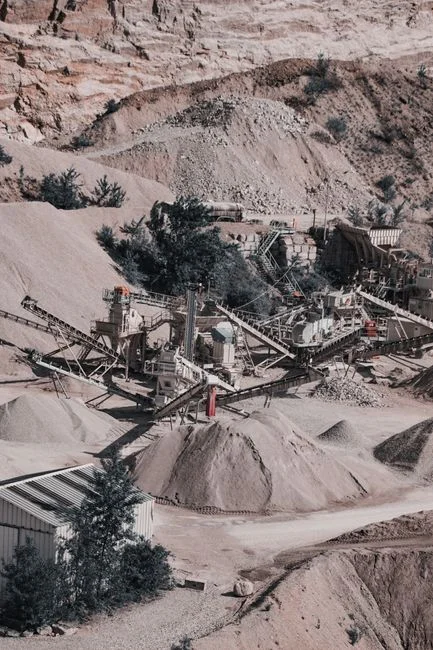
A gravity clarifier is the workhorse of mineral processing: a quiescent zone, a sludge hopper, surface overflow launders, and usually a flocculation zone upstream. It works when particles will settle by gravity within the available residence time. There is no compressed-air system, no saturator, no recycle pump, and the controls are typically a simple sludge-pump timer and a torque or turbidity-based sludge-level signal. For a heavy mineral slurry — tailings filtrate, scale pit water, sand-laden runoff — that simplicity is the selling point.
The lamella clarifier variant compresses the same physics into a smaller footprint by stacking inclined plates (commonly at 55–60°) inside the tank, multiplying the effective settling area per unit of plan area. The HydropureWater lamella clarifier is built around that inclined-plate geometry, which is why it appears in space-constrained retrofit installations. The exact surface-loading rate and plate spacing for a given flow and TSS profile should be confirmed with the vendor's curve; this article does not state a generic figure.
For Biloxi mining feeds, the clarifier's value proposition is mechanical simplicity: no aeration system to maintain, no saturator, lower operating energy, fewer chemical inputs. The trade-off is a larger footprint per m³/h than a DAF, plus sensitivity to upset hydraulic loads — a slug of slurry or a flow spike will resuspend already-settled solids and carry them over the weir. For a metal hydroxide floc with very low settling velocity, a clarifier alone will struggle, which is why many plants pair a lamella clarifier downstream of a DAF as a polishing step rather than treating them as alternatives.
DAF vs Clarifier for Mining/Metals: Side-by-Side Comparison
For a primary separator selection memo, a side-by-side artefact is more useful than prose. The table below maps the operational parameters a Biloxi engineer will be asked about. Where the supplied research does not provide a number, the cell calls out the input to request rather than inventing a figure.
| Parameter | Dissolved Air Flotation (DAF) | Gravity / Lamella Clarifier | |
|---|---|---|---|
| Best feed fit | Low-density floc, oil & grease, oil-coated metal fines | Dense, fast-settling mineral particles | |
| Microbubble / settling mechanism | 30–50 µm microbubbles attach to floc and float it (Clearwater Industries, 2026-04-27) | Gravity settling; inclined plates (lamella) multiply effective area | |
| Internal sludge removal | Paddle skimmer for float + bottom auger for settleable fraction (Clearwater Industries, 2026-04-27) | Sludge hopper, scraper or suction header, periodic pump-out | |
| Footprint at a stated flow | Compact; COMPACT DAF is single-skid ≤ 66 GPM, two-skid modular above (Clearwater Industries, 2026-04-27) | Larger plan area per m³/h; lamella reduces but does not eliminate the penalty | |
| Chemical demand | Coagulant + flocculant required upstream; chemical conditioning is integral to performance (Clearwater Industries, 2026-04-27) | Often none; coagulant/polymer only if floc settling is poor | |
| Energy demand | Saturator pump, recycle pump, skimmer drive, controls | Sludge pump and occasional mixer; no aeration system | |
| Material of construction | Standard 304SS; 316SS and PP available on request (Clearwater Industries, 2026-04-27) | Commonly 304SS or coated carbon steel; FRP and PP variants exist | |
| Sludge consistency | Float layer (typically 2–5% solids range, vendor-specific) | Underflow (typically denser, vendor-specific) | Request vendor curve for your flow & TSS profile |
| Capex / opex bias | Higher chemical OPEX; lower civil/footprint cost | Lower chemical OPEX; higher civil/footprint cost | Request vendor curve for your flow & TSS profile |
| Startup speed | Quick start-up once chemistry is dialled in (Clearwater Industries, 2026-04-27) | Slower to reach steady state; less sensitive to chemistry |
The one-line summary: DAF wins on footprint, oil/fine-floc removal, and startup speed; clarifier wins on simplicity, energy, and dense-settling feeds. A HydropureWater DAF system is the right reference for the former, and a lamella clarifier for the latter.
Decision Tree: When a Biloxi Metals Plant Should Choose DAF or a Clarifier
Convert the comparison into four if/then rules so a non-specialist manager can apply the framework to their own streams without re-reading the article.
- Rule 1 — Oil, FOG, or low-density floc present. If the stream carries free or emulsified oil, fats/oils/grease, oil-coated metal fines, or low-density metal hydroxide floc, default to DAF as the primary step. The 30–50 µm microbubbles attach to that material and lift it (Clearwater Industries, 2026-04-27); a clarifier will let it escape over the weir.
- Rule 2 — Heavy, fast-settling mineral slurry. If the stream is a tailings filtrate, scale pit water, or sand-laden runoff, and the particles settle visibly in a jar test inside a minute or two, default to a gravity or lamella clarifier. No reason to pay for compressed air and chemistry the feed does not need.
- Rule 3 — Mixed feed (typical Biloxi shipyard metals shop). If the plant sees both oily parts-washer water and mineral grit washwater, specify DAF upstream of a lamella clarifier as a polishing step, not as alternatives. The DAF strips the floatable and colloidal fraction; the lamella catches what slips through or settles in the DAF's collection zone.
- Rule 4 — Site constraints. If the site is footprint-constrained near the Back Bay of Biloxi, weight the DAF advantage. If footprint is available and operations labour or skills are limited, weight the clarifier simplicity advantage.
Tie-breaker: when in doubt, run a jar test for settling and a bench-scale DAF (or cylinder flotation test) for the floatable fraction, then size the unit on the worst-case result. A HydropureWater automatic chemical dosing system makes that bench work reproducible and is the same skid that ships with a full-scale DAF.
Biloxi and Mississippi Compliance Layer for a 2026 Selection
Technology choice and permit pathway are not separable decisions. The federal categorical standard that comes up first for mining and primary metals is 40 CFR Part 440 — Ore Mining and Dressing Point Source Category — but its applicability depends on the SIC/NAICS code and the specific subcategory, and the actual subcategory limits have to be confirmed against current EPA text before any sizing is finalised. Metals-finishing shops more typically fall under 40 CFR Part 433 (Metal Finishing), again to be verified against the current EPA tables; an operation can fall under more than one category if it runs both extractive and finishing processes.
At the state level, Mississippi DEQ's Office of Pollution Control sets the state effluent limits and the monitoring schedule. The limits and the monitoring frequency differ depending on whether discharge is to a publicly owned treatment works (POTW), to surface water under an NPDES permit, or to an underground injection control (UIC) well — the Back Bay of Biloxi and other surface-water discharges carry a different set of expectations than a pre-treatment connection to a municipal sewer.
The supplied research did not include specific numeric effluent limits for 40 CFR Part 440, 40 CFR Part 433, or Mississippi DEQ. Treat any number you see in marketing material as a starting point only and pull the current limit set from EPA and MDEQ before final sizing. For plants near the Port of Biloxi, also check local pre-treatment programme requirements on top of the state and federal layers.
Procurement Checklist and Total Cost of Ownership Considerations
The technical comparison gets you to a shortlist; the procurement questions decide which vendor wins. Use this checklist in the RFQ stage.
- Equipment spec. Material of construction (304SS is standard per Clearwater Industries, 2026-04-27; 316SS or PP where chloride or chemistry warrants), saturated recycle ratio (typically 20–50% of forward flow, vendor-specific), hydraulic loading at design flow, expected float-solids yield, PLC and instrumentation scope, and whether the chemical conditioning skid is included.
- Skid vs field-built. For a Biloxi plant that values fast install and a single point of accountability, the COMPACT DAF reference point — pre-assembled chemical conditioning, DAF, sensors, instruments, and control panel on a single skid ≤ 66 GPM, two-skid modular above — is the right benchmark (Clearwater Industries, 2026-04-27).
- Operating cost lines. Coagulant and flocculant consumption (DAF is chemical-hungry; this is often the largest controllable OPEX), polymer cost per m³ treated, compressed-air or blower energy, skimmer and auger wear parts, and sludge haul-off — the haul-off line is the dominant OPEX for both DAF and clarifier, and it should be sized with a HydropureWater plate and frame filter press downstream if cake dryness matters.
- Spare parts and service coverage. Confirm the manufacturer's regional service footprint. Clearwater Industries / SigmaDAF is based in Brown Deer, WI, and Sigmadaf has completed 800+ projects across 25+ countries, which is relevant to lead-time risk and parts availability (Clearwater Industries, 2026-04-27).
- 10-year view. Compare DAF and lamella on a 10-year cost basis, including chemical OPEX, energy, maintenance, and sludge disposal. A clarifier's lower chemical bill often offsets a portion of its larger footprint cost in land-constrained sites; the reverse is true in tight retrofits.
Frequently Asked Questions
How do I size a DAF for a 50 GPM metals-finishing stream?
Anchor on hydraulic loading, saturated recycle ratio (typically 20–50% of forward flow, vendor-specific), and float-solids yield at your TSS and FOG numbers. A 50 GPM flow falls inside the COMPACT DAF single-skid range of 66 GPM or less (Clearwater Industries, 2026-04-27), so a pre-assembled turnkey with chemical conditioning and PLC controls is the relevant reference point. Request a sizing curve that includes recycle ratio and expected float yield at your design TSS.
Is a lamella clarifier enough on its own, or do I need a DAF?
It depends on the density of the suspended phase. Dense mineral solids that settle visibly in a jar test can be handled by a clarifier alone. Oil-bearing streams, oil-coated metal fines, and fine metal hydroxide floc need flotation — a clarifier will let that material escape over the weir. On mixed feeds, the standard arrangement is DAF primary with a lamella clarifier polishing.
What does a DAF system cost for a mid-size Biloxi plant?
Capex and opex depend on material of construction, design flow, automation scope, and whether the chemical conditioning skid is included. Request a budget range with and without the chemical dosing skid, and ask the vendor to break out polymer consumption per m³ at your design TSS so the 10-year OPEX is visible. Do not rely on figures quoted in marketing material or third-party articles.
How long does a DAF delivery and commissioning take in 2026?
Skid-based units ship faster than field-built because fabrication, controls, and chemistry are integrated and tested at the factory. Confirm the current lead time and the on-site commissioning window with the manufacturer at the time of quote — a Port Angeles mining/metals DAF-vs-clarifier guide and the mining/metals pretreatment compliance guide cover adjacent jurisdictions; verify Gulf Coast specifics with the vendor.
What compliance risk is unique to discharging mining/metals wastewater near Biloxi?
Confirm whether the operation falls under 40 CFR Part 440 (Ore Mining and Dressing) or 40 CFR Part 433 (Metal Finishing), or both, and pull the current subcategory limits from EPA before sizing. Layer Mississippi DEQ Office of Pollution Control requirements on top, and check whether discharge is to POTW, surface water, or a UIC well — the limits and monitoring schedule differ. This article does not state numeric effluent limits; treat any number you see elsewhere as a starting point and verify against current EPA and MDEQ text. For a broader view of lamella trade-offs, the lamella clarifier advantages and disadvantages guide covers the engineering case in more depth.