Why Rabat's Domestic Sewage Needs a Multi-Stage Train in 2026
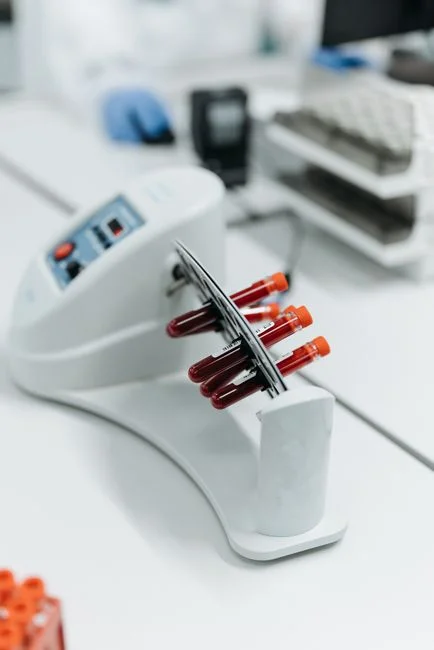
Domestic sewage treatment in Rabat in 2026 starts at the primary stage with coagulation-flocculation using aluminum sulphate (alum), as documented by E3S Web of Conferences (2022) at the Ain Aouda City wastewater plant using an ONEE laboratory jar-test protocol with a GPB FLCDidatec (France) apparatus. That primary step removes suspended and colloidal matter but does not address the dissolved organics and nutrients that a downstream biological reactor must still handle.
Growth in coastal and peri-urban housing, hotels, and institutional campuses is raising hydraulic and organic loading on existing plants, requiring 2026 specifications to combine an enhanced primary step with a packaged biological reactor downstream. The conventional train runs: influent → screening → grit removal → coagulation-flocculation/sedimentation → biological reactor → clarification/disinfection → reuse or controlled discharge. The Ain Aouda work covers only the first chemical stage, so anything beyond it must be specified by the project engineer against site-specific loadings and the receiving environment.
Rabat Influent Characteristics and Primary-Treatment Design Parameters
The Ain Aouda study limits its scope to coagulant chemistry and jar-test methodology. The two independent variables investigated were coagulant dose and pH at optimum dosage, and the test apparatus was a GPB FLCDidatec (France) jar tester using aluminum sulphate Al2(SO4)3·18H2O (alum) at the ONEE laboratory (E3S Web of Conferences, 2022). The paper does not publish influent BOD, COD, TSS, ammonia, or total-phosphorus concentrations for the Ain Aouda stream, so the engineer cannot size downstream biology from the paper alone. For a 2026 design, request a recent plant-specific influent characterization from the operator (ONEE, Lydec, or the local regulated utility) and run that data into the biological loading calculation. The paper also does not quantify secondary factors that drive jar-test outcome on a real site: mixing intensity, settling time, temperature, and salinity intrusion in coastal Rabat should be checked during on-site jar tests before any coagulant dose is fixed in procurement documents. The residual soluble BOD and ammonia load leaving primary clarification then sets the aeration tank volume and MLSS target for the biological reactor selected next.
| Parameter | Value reported in E3S Web of Conferences (2022) | Design implication for 2026 Rabat |
|---|---|---|
| Coagulant | Aluminum sulphate Al2(SO4)3·18H2O (alum) | Use as primary-stage chemical; request dose from on-site jar test |
| Jar-test apparatus | GPB FLCDidatec (France), ONEE laboratory | Match protocol when verifying performance for a different catchment |
| Independent variables studied | Coagulant dose; pH at optimum dose | Both must be re-confirmed per site; do not transfer values across plants |
| Influent BOD / COD / TSS / NH3-N / TP | Not reported in the S2 paper | Request from ONEE/Lydec before final sizing |
| Mixing intensity, settling time, temperature, salinity | Not reported in the S2 paper | Capture in on-site jar test for coastal Rabat |
MBR vs Conventional Activated Sludge vs A/O Package Plant
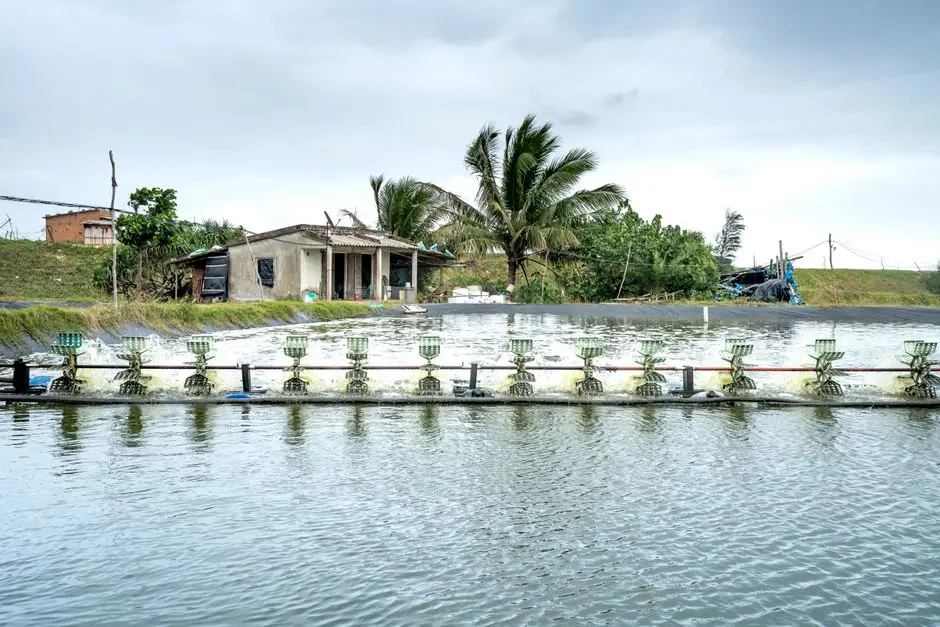
Conventional activated sludge (CAS) is the lowest-CAPEX biological option and the most familiar to Moroccan operators, but it carries the largest footprint and usually needs a tertiary polishing step to reach reuse quality. The buried A/O package sewage treatment plant is the 2026 default for residential compounds, hotels, and small institutions because it combines anoxic and aerobic zones with sedimentation and disinfection in a single buried, fully automated skid, handling 1–80 m³/h across residential communities, hotels, hospitals, factories, and rural areas (HydropureWater WSZ product specification). Where the developer needs near-reuse-quality effluent or a tight footprint — typical of dense urban infill in Agdal, Hay Riad, or Salé — the MBR membrane bioreactor system replaces the secondary clarifier with flat-sheet PVDF modules at 0.1 μm pore size, achieves sub-micron filtration of the mixed liquor, and runs at a smaller footprint than CAS at matched flow. The decision rule is straightforward: choose the A/O package plant when discharge to a municipal sewer is acceptable and footprint is flexible; choose MBR when irrigation reuse, toilet flushing, or watering is in scope, or when the site footprint is constrained.
| Criterion | Conventional Activated Sludge (CAS) | A/O Package Plant (WSZ-style) | MBR |
|---|---|---|---|
| Typical flow range | Site-specific; large civil works | 1–80 m³/h (HydropureWater WSZ spec) | 10–2,000 m³/day per unit (HydropureWater MBR spec) |
| Footprint | Largest; separate clarifier and tertiary stage | Compact; buried skid, landscaping possible above | Compact; flat-sheet modules replace clarifier |
| Effluent quality vs reuse | Usually needs tertiary polishing for reuse | Suitable for sewer discharge; reuse needs polishing | Near-reuse quality; <1 μm filtration, suitable for irrigation/toilet flushing |
| Operator requirement | Trained on-site operator | Fully automated, no operator required (WSZ spec) | Automated with membrane maintenance schedule |
| Best fit in Rabat 2026 | Large municipal works only | Compounds, hotels, schools, hospitals, rural clusters | Dense urban infill, reuse-mandated sites, constrained plots |
Wet-Weather Peak Flow, Equalization and Sanitary Sewer Realities
US EPA confirms that sanitary sewers not built to be watertight can receive large volumes of infiltration and inflow (I/I) during wet weather, causing sanitary sewer overflows (SSOs) and operational problems at the treatment plant serving the collection system (US EPA, Municipal Wastewater, npdes). Significant wet-weather flow increases at the treatment plant create operational challenges and can adversely affect treatment efficiency, reliability, and control of unit-process operations, which means peak wet-weather flow — not average dry-weather flow — should drive equalization tank volume, screen sizing, and pump capacity. For Rabat projects, the design peak factor must be confirmed by flow monitoring on the specific catchment rather than transferred from a textbook; coastal Moroccan rainfall patterns are Mediterranean, with sharp multi-day events that load separate sanitary networks through manhole defects and illegal roof connections. Combined sewers have not been permitted in new US construction since the first half of the 20th century per the same EPA reference, and the same separate-sanitary principle should govern new Rabat developments, with no stormwater cross-connections. Where existing networks suffer I/I, an upstream flow-equalization or overflow buffer between primary clarification and the biological stage protects the aeration tank and membrane modules from shock loadings.
Procurement Checklist for a 2026 Rabat Domestic Sewage Plant
The first inputs to collect are design daily flow (m³/day), peak wet-weather flow, BOD/COD/TSS/NH3-N loadings, the discharge point (municipal sewer vs. reuse), and the reuse quality target — these together decide whether A/O or MBR is the right answer. The S2 paper does not address packaged-plant procurement, so the engineer must build the vendor shortlist directly: process type (A/O vs MBR), automation level, footprint and burial depth, power consumption (kWh/m³), membrane material and warranty for MBR, and a reference list of Moroccan or North African installations. Confirm the plant is sized to meet the Moroccan discharge limits applicable to the receiving environment — surface water, marine outfall, or irrigation reuse — and pair the biological stage with a disinfection unit such as a UV sterilizer for the disinfection stage where the reuse target rules out chlorination by-products. Finally, ask vendors about skid-mounted pre-wired vs. field-assembled configuration, buried-vs-trailer options for pilot or temporary deployment, and whether commissioning plus operator training are included. Request firm quotations and delivery windows per site rather than relying on a generic benchmark.
| Checklist item | What to request from the vendor | Why it matters for Rabat 2026 |
|---|---|---|
| Design inputs | Daily flow (m³/day), peak wet-weather flow, BOD/COD/TSS/NH3-N, discharge point, reuse target | Drives A/O vs MBR selection and biological-reactor sizing |
| Process configuration | A/O package or MBR; anoxic/aerobic zoning; MLSS range | Matches influent characterization and reuse requirements |
| Footprint and burial | Footprint (m²), burial depth, landscaping compatibility | Relevant for dense urban infill in Agdal / Hay Riad / Salé |
| Power and membranes | kWh/m³; MBR membrane material, pore size, warranty terms | Defines OPEX and replacement-part risk |
| Compliance | Discharge-limit compliance (surface water / marine outfall / irrigation); disinfection type | Required for ONEE/Lydec acceptance and reuse permits |
| Delivery and installation | Skid pre-wired vs field-assembled; buried vs trailer; commissioning, training, spare parts | Determines site works duration and handover readiness for 2026 commissioning |
Frequently Asked Questions
What is the realistic 2026 cost range for a packaged domestic sewage treatment plant in Rabat?
The supplied research does not publish a packaged-plant price for Rabat, so a firm figure cannot be quoted. Ask each shortlisted vendor for a quotation tied to your specific design daily flow, peak wet-weather flow, BOD/COD/TSS/NH3-N loadings, and reuse target; the spread between an A/O package plant and an MBR is driven mainly by membrane count and pretreatment, not by tankage.
How do I choose between an A/O package plant and an MBR for a Rabat hotel or residential compound?
Choose the buried A/O package sewage treatment plant when the project discharges to a municipal sewer and footprint is not critical; the WSZ-series specification covers 1–80 m³/h with no on-site operator. Choose the MBR membrane bioreactor system when the project reuses effluent for irrigation, toilet flushing, or watering, or when the plot is constrained in Agdal, Hay Riad, or Salé.
What does the Ain Aouda jar-test study actually tell a 2026 design engineer?
It confirms that aluminum sulphate (alum) is the documented primary-stage coagulant tested at the ONEE laboratory on Ain Aouda City wastewater using a GPB FLCDidatec (France) jar tester (E3S Web of Conferences, 2022), with coagulant dose and pH at optimum dose as the two independent variables. It does not publish influent BOD/COD/TSS/NH3-N, so the engineer must still request a current plant-specific characterization before sizing the biological stage.
Why does peak wet-weather flow matter for a Rabat sewage plant, and how should I size for it?
US EPA states that significant wet-weather flow increases at the treatment plant create operational challenges and can adversely affect treatment efficiency, reliability, and control of unit-process operations (US EPA, Municipal Wastewater, npdes). Size equalization, screening, and pump capacity from peak wet-weather flow measured on the specific catchment rather than average dry-weather flow, and confirm there are no stormwater cross-connections on the separate sanitary network.