Why Rural Sanitation in Morocco Is an Engineering Problem, Not Just a Policy One
As of the most recent comparable figures, 52% of Morocco's rural population had access to an improved sanitation facility, 6% used shared latrines, and 38% practiced open defecation (Wikipedia, Water supply and sanitation in Morocco, 2011 data). The rural water-supply side tells a different story: under the PAGER program, rural water access rose from 14% in 1995 to 61% in 2004 and 77% in 2006, and PAGER has been recognized by the United Nations as international good practice (Wikipedia, Water supply and sanitation in Morocco). The disconnect — 77% rural water access against 52% improved sanitation and 38% open defecation — is the engineering problem this article is built around.
By 2009, more than 100 wastewater treatment plants existed in Morocco, but they were concentrated in small and medium-sized interior towns; only about 21% of collected wastewater nationally undergoes any treatment, and most douars remain unsewered (Wikipedia, Water supply and sanitation in Morocco). A 2004 World Bank study cited in the same source notes that "sewerage service is completely lacking in the peri-urban areas of secondary urban centers." The rural brief, therefore, is not a scaled-down urban plant. It is a decentralized, low-O&M, no-grid-tolerant package plant sized for 200–5,000 population equivalents (PE), designed to operate under intermittent attendance and seasonal hydraulic swings.
Translating the coverage gap into design numbers, a 1,000-PE douar that today relies on septic tanks or open discharge needs a complete process train — headworks screening, biological treatment, clarification, disinfection, and sludge dewatering — sized to local per-capita loads rather than to European reference data. That translation is the rest of this guide.
Institutional Map: ONEE, PAGER, and the National Sanitation Programme
The buyer and the operator are not the same party in rural Morocco, and the technology choice has to fit both. The National Office of Electricity and Drinking Water (ONEE) remains the central actor for bulk water production, supply to local operators, and service provision in smaller towns and rural areas (Wikipedia, Water supply and sanitation in Morocco). PAGER is the recognized rural water and sanitation program that drove the 14%→77% rural water-access gain; a 5% special tax on bulk water sales helps finance it, and ONEE (then ONEP) executes most of the donor-financed rural works, including the ninth drinking water and sanitation project (appraised 2006) and the tenth drinking water supply project (approved 2008) (Wikipedia, Water supply and sanitation in Morocco).
The National Sanitation Programme, launched in 2005, aimed to expand wastewater treatment capacity and improve urban sewerage coverage (Wikipedia, Water supply and sanitation in Morocco). Its urban bias is precisely the gap a decentralized package plant fills for a 200–5,000-PE douar that falls outside the program's main sewered footprint. The same source documents a service-provision split that any O&M plan must respect: private concessionnaires serve 38% of urban water customers, municipal utilities 31%, ONEE 28%, and municipalities providing services directly 3%. Morocco also has 1,547 municipalities, of which 1,298 are classified as rural — a ratio that explains why equipment selection must anticipate a small or non-specialist operator.
For an EPC contractor or donor program officer, the practical implication is that the technology shortlist must be defensible to ONEE on bulk-infrastructure grounds, affordable to a rural municipality on lifecycle grounds, and operable by a municipal utility or concessionnaire under the published tariff structure. Where reuse is intended, reclaimed water currently provides only a fraction of the country's water needs, so any reuse case must be tied to a specific end-use — green-space irrigation, agriculture, or groundwater recharge — rather than assumed.
Sizing a Rural WWTP: Per-Capita Loads, Flows, and Climate Adjustments
Rural Morocco does not generate the dilute sewage that US/EU reference figures assume. For developing-country conditions, published typical values for raw sewage are 50 g/person/d of BOD (≈300 mg/L), 100 g/person/d of COD (≈600 mg/L), 8 g/person/d of total nitrogen (≈45 mg/L), 4.5 g/person/d of ammonia-N (≈25 mg/L), and 1.0 g/person/d of total phosphorus (≈7 mg/L) (Wikipedia, Sewage). The wider published ranges are 40–60 g/person/d BOD (250–400 mg/L), 80–120 g/person/d COD (450–800 mg/L), 6–10 g/person/d total nitrogen, and 0.7–2.5 g/person/d total phosphorus (Wikipedia, Sewage). These are the right starting numbers for a douar where per-capita water use is low and the sewer is short.
Two common sizing errors follow from using high-income reference data instead. First, US figures of ~85 g BOD/person/d at 190 L/person/d overstate the hydraulic flow and understate the influent concentration for a rural Moroccan catchment; the same source notes that in regions where water use is low, the strength of the sewage is much higher than in the United States (Wikipedia, Sewage). Second, fecal coliform tracking is essential because E. coli in raw sewage is typically present at concentrations of around 10 to 100 million per 100 mL, and any reuse scenario has to size disinfection against that load (Wikipedia, Sewage).
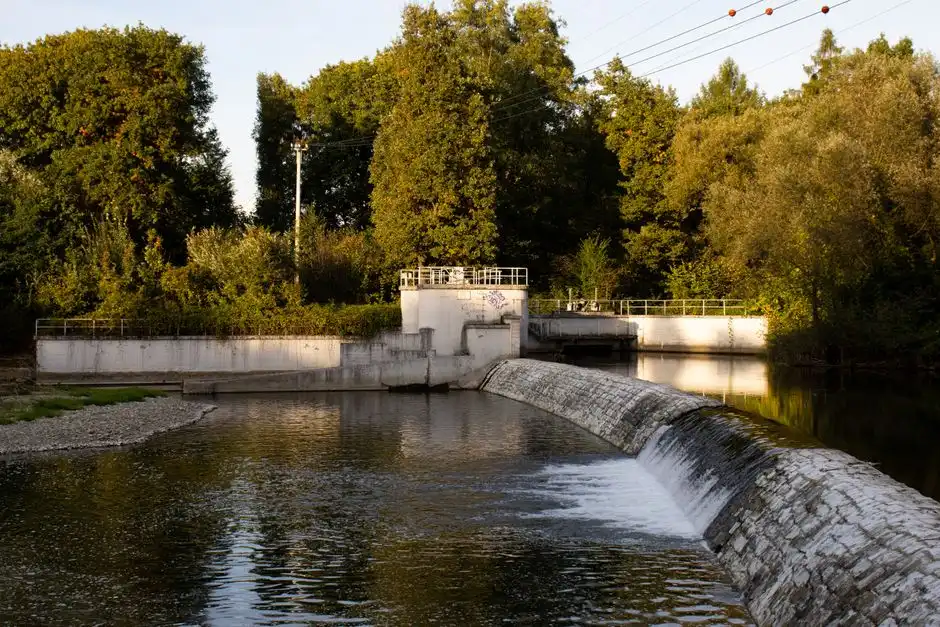
For climate context, Morocco has about 22 billion cubic metres of conventional renewable water resources per year, equivalent to roughly 730 m³/capita/year, distributed across seven major river basins originating in the Atlas Mountains (Wikipedia, Water supply and sanitation in Morocco). That figure, combined with a developing-country per-capita flow assumption, gives the engineer the boundary condition for hydraulic design. A worked example for a 1,000-PE douar at 50 g BOD/cap/d yields 50 kg BOD/day of influent load. The full hydraulic flow must be confirmed with the operator because the supplied research does not provide a Moroccan rural per-capita flow figure; request a recent metered daily consumption from ONEE or the local régie before locking the design flow.
| Parameter | Developing-country typical (per cap/d) | Approx. concentration | High-income US reference (per cap/d) |
|---|---|---|---|
| Total solids | 180 g | 1,100 mg/L | — |
| BOD | 50 g | 300 mg/L | 85 g @ 190 L/cap/d (≈450 mg/L) |
| COD | 100 g | 600 mg/L | 198 g (≈1,050 mg/L) |
| Total nitrogen | 8 g | 45 mg/L | 13.3 g (organic + ammonia, 70.4 mg/L) |
| Ammonia-N | 4.5 g | 25 mg/L | 7.8 g (41.2 mg/L) |
| Total phosphorus | 1.0 g | 7 mg/L | 3.28 g (17.3 mg/L) |
Sources: Wikipedia, Sewage (developing-country and US typical values); concentrations calculated against the stated per-capita flow. The US column is included only as a contrast — do not size a douar plant to it.
Technology Options for Rural Morocco: A/O Package, MBR, Constructed Wetlands, Cluster Septic
Four technology families cover the bulk of the 200–5,000-PE rural range. Each fits a different operating constraint, and the choice should be driven by reuse intent, available footprint, and operator capacity rather than by capex alone.
An underground A/O package sewage treatment plant combines anoxic/aerobic biological contact oxidation with sedimentation and disinfection in a single buried unit, is fully automated with no operator required, handles 1–80 m³/h, and suits residential communities, hotels, hospitals, factories, and rural areas (HydropureWater WSZ product page). It is the workhorse option where buried installation matters — for example, inside a douar footprint with no land buffer — and where the operator cannot attend the unit daily.
An MBR membrane bioreactor pairs activated sludge with submerged PVDF membrane filtration, delivers near-reuse-quality effluent at sub-micron filtration, achieves roughly 60% smaller footprint than conventional biology, and covers a 10–2,000 m³/day range, making it the right pick where reuse for irrigation or groundwater recharge is intended and the footprint is tight (HydropureWater MBR product page).
Constructed wetlands are a low-energy, low-O&M option for very small douars where land is available and discharge standards are relaxed. Specific Moroccan performance data for constructed wetlands is not in the supplied research; the buyer should confirm current regulatory acceptance with the watershed authority before committing. Cluster septic tanks with intermittent sand filters remain the lowest capex route for sub-200-PE hamlets, with the trade-off being limited effluent quality and the footprint the sand filter requires.
| Technology | Best-fit douar profile | Footprint | Operator demand | Effluent target |
|---|---|---|---|---|
| WSZ underground A/O package | 500–2,000 PE, buried install, no full-time operator | Small (buried) | Low (automated) | Discharge to wadi or irrigation |
| MBR membrane bioreactor | 500–5,000 PE, reuse intended, tight footprint | Compact (~60% of conventional) | Moderate (membrane care) | Reuse-quality, sub-µm filtration |
| Constructed wetland | 200–500 PE, land available, relaxed discharge | Large | Very low | Discharge; quality depends on design |
| Cluster septic + sand filter | <200 PE hamlet, lowest capex | Moderate–large (filter) | Low (periodic desludging) | Basic discharge only |
Selection rule: pick MBR where reuse is intended and footprint is tight, an underground A/O package sewage treatment plant where buried installation and automation matter, and constructed wetlands where land and O&M budget are the binding constraints. Detailed performance against Moroccan effluent limits is not in the supplied research and must be confirmed with the regulator before procurement.
Pretreatment and Disinfection: Building a Complete Process Train
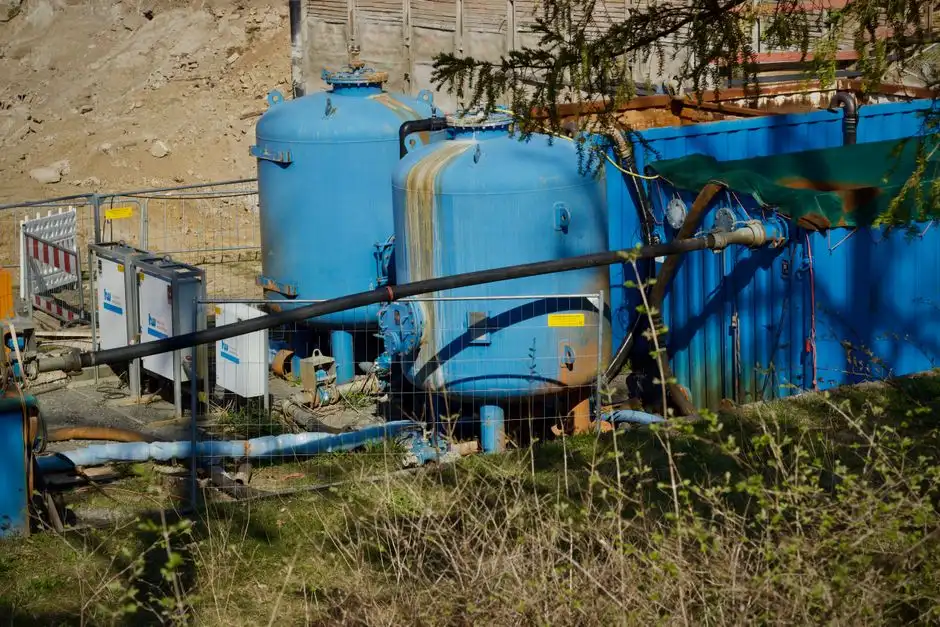
A package biology unit is not a plant. The headworks and disinfection chain are what make the system survive rural O&M conditions, and they have to be specified together. At the head end, a rotary mechanical bar screen for headworks with stainless steel rake teeth and dual overload protection suits rural intermittent-duty operation, protecting downstream biology from rag and grit that would otherwise accumulate and force an unscheduled shutdown.
Disinfection choice depends on whether residual is required. Chemical-free UV is effective against chlorine-resistant Cryptosporidium and Giardia and is available in open-channel or pipeline configurations (HydropureWater UV product page); it is the default where the effluent discharges to a wadi or is reused for restricted irrigation. A chlorine dioxide generator covers 50–20,000 g/h for cases where a residual disinfectant is required in the collection or reuse network (HydropureWater ClO2 product page). Sludge handling closes the train: a plate and frame filter press for sludge dewatering covers 1–500 m² filtration areas with manual, hydraulic, or PLC options, allowing the operator to match attendance level to the technology tier.
The complete line, in order, is headworks screening → biology → clarification/disinfection → sludge dewatering. Skipping any of the four is the most common reason a rural plant fails within its first two years. The connected domestic sewage coverage problem is broader than any single douar, which is why an engineering guide that covers the full train — including the upstream domestic sewage treatment in Morocco engineering guide context — reads more usefully than a reactor-only spec.
Decision Framework: Which Plant Fits Which Douar Profile
The four technology families collapse into a usable selection tool. The table below pairs douar size, the binding constraint, and the recommended primary unit. All scenarios still require headworks screening, disinfection (UV or ClO₂), and sludge dewatering — the biology alone is never the complete answer.
| Douar size (PE) | Binding constraint | Recommended primary unit | Disinfection |
|---|---|---|---|
| 200–500 | Land available, no reuse, lowest O&M | Constructed wetland or cluster septic + intermittent sand filter | UV (open channel) |
| 500–2,000 | Buried installation, no full-time operator | Underground A/O package, 1–80 m³/h range | UV or ClO₂ depending on residual need |
| 500–5,000 | Reuse for irrigation or groundwater recharge, tight footprint | MBR membrane bioreactor for rural reuse, 10–2,000 m³/day range | UV (reuse) |
Before locking the train, request four inputs from the buyer or regulator that the supplied research does not specify: target effluent BOD/COD/TSS limits, the intended reuse end-use (if any), the available footprint, and grid versus solar power availability. Comparable package-plant project planning in other water-scarce regions is documented in the domestic sewage treatment in water-scarce regions guide, and the broader engineering checklist is in this package wastewater treatment plant engineering guide.
Frequently Asked Questions
What is a realistic budget range for a rural Moroccan package WWTP in 2026?
The supplied research does not contain a current price quotation for a 200–5,000-PE package plant in Morocco, and any number cited without a vendor-specific quote is unreliable. The actionable step is to request a written quote that itemises the biology unit, headworks screening, disinfection, and sludge dewatering as separate line items, asks for a 10-year spare-parts list, and states the power demand in kWh/day at the design flow. Compare at least three vendors on the same line-item basis before award.
How do I select a supplier for a decentralized douar WWTP and what compliance risks should I flag?
Selection should hinge on three documented checks: a reference list of at least two operating plants in the 200–5,000-PE range in North Africa or comparable climate, a factory acceptance test (FAT) report for the specific unit being offered, and a written statement of compliance with Moroccan discharge or reuse limits. Compliance risk to flag in writing before signing: confirm with the regulator whether the intended discharge or reuse end-use requires a specific treatment class, because the supplied research does not state current national effluent limits, and obtain the operator's written acceptance of the proposed O&M cadence.
Which technology is best for a 1,000-PE douar if the end-use is irrigation reuse?
For irrigation reuse at 1,000 PE, an MBR membrane bioreactor is the documented best fit because it delivers near-reuse-quality effluent at sub-micron filtration in a compact footprint (HydropureWater MBR product page). The buyer must still confirm the local reuse standard, the required disinfection log-reduction for fecal coliform, and the irrigation crop restriction list with the watershed authority before procurement.
How does the rural water–sanitation gap affect the design of a decentralized WWTP?
The 38% open-defecation and 52% improved-sanitation figures (Wikipedia, Water supply and sanitation in Morocco, 2011) mean a rural catchment can produce highly variable influent — both in concentration and in pathogen load — depending on how many households are actually connected to the new sewer. The design should be checked at both the developing-country typical load (50 g BOD/cap/d) and at a higher-strength scenario, and disinfection should be sized to the 10–100 million E. coli per 100 mL range documented for raw sewage (Wikipedia, Sewage).
Related Equipment
- chemical-free UV disinfection — specifications, capacity range, and technical data