Which Auburn? Jurisdictional Fork Determines Your Limits
Mining and metals plants searching for discharge rules "near Auburn, United States" encounter two entirely different pretreatment regimes that share nothing except a city name. Auburn, New York operates a city-administered industrial pretreatment program under Article V of the municipal sewer use ordinance, with numeric local limits codified in §13-2000. Auburn, Alabama sends wastewater to the H.C. Morgan Water Pollution Control Facility (WPCF) operated by Veolia under a permit administered by the Alabama Department of Environmental Management (ADEM), and individual industrial limits are derived from the POTW's NPDES permit rather than published as a public table. Confirming the correct jurisdiction is the first engineering step, because designing to the wrong limit set guarantees permit denial and capital waste.
| Parameter | Auburn, NY | Auburn, AL |
|---|---|---|
| Regulating authority | City of Auburn Municipal Utilities (Article V, §13-2000) | ADEM via City of Auburn Water Resource Management / Veolia |
| Public local limits | 21 pollutants, 24-hr composite (S2) | Not publicly codified; site-specific per permit |
| POTW | City sewer system | H.C. Morgan WPCF, 25 MGD MMADF permitted (S4) |
| Treatment process | Not specified in ordinance | Conventional activated sludge + UV disinfection (S4) |
| 2025 average flow | Not reported in research | 6.973 MGD (S4) |
| 2025 max daily flow | Not reported in research | 21.498 MGD (S4) |
| Discharge receiving water | City POTW outfall | Parkersons Mill Creek (S4) |
| Biosolids standard | Per City ordinance | Class B per 40 CFR Part 503 (S4) |
Before any process flow diagram is drawn, the project engineer should request a pretreatment application packet from the correct municipality and confirm whether the facility falls inside an industrial pretreatment program with local limits development requirements or under categorical pretreatment standards 40 CFR 403. The two pathways produce very different design bases, and mixing them is the single most common compliance error for new projects in ambiguous geographies.
Auburn, NY Local Limits — Numeric Targets for Mining/Metals
Auburn, NY publishes a 21-pollutant local limits table under Article V, §13-2000, enforced as 24-hour composite samples at each industrial sewer lateral immediately prior to discharge to the City sanitary sewer (S2). The numeric values below are the design targets an engineer must hit on a continuous basis, with no dilution allowance permitted and mass limits available to the Director of Municipal Utilities if dilution is detected (S2 §13-2000).
| Pollutant | 24-Hour Composite Limit (mg/L) | Mining/Metals Relevance |
|---|---|---|
| Antimony | 2.0 | Smelter dust, refractory ores |
| Arsenic | 2.0 | Sulfide ore processing, roast piles |
| Barium | 5.0 | Drilling mud, barite processing |
| Cadmium | 0.5 | Zinc concentrate, Ni-Cd batteries |
| Chromium, hexavalent | 2.0 | Stainless pickling, plating |
| Chromium, total | 2.0 | Alloy production, plating |
| Copper | 1.5 | Heap leach, electrowinning |
| Iron | 10.0 | Acid mine drainage, pickling |
| Lead | 1.0 | Smelter flue dust, battery breakdown |
| Mercury | 0.002 | Au-Ag ore processing, retort condensate |
| Nickel | 5.0 | Laterite processing, plating rinse |
| Selenium | 3.0 | Copper refining |
| Silver | 0.02 | Photographic, Ag-bearing concentrates |
| Zinc | 5.0 | Galvanizing, Zn concentrates |
| Cyanide | 1.0 | Gold/silver heap leach, electroplating |
| Methylene chloride | 0.7 | Solvent cleaning of metal parts |
| Phenol | 10.0 | Resin/coke operations |
| Toluene | 5.3 | Solvent degreasing |
| Trichloroethylene | 3.0 | Vapor degreasing |
| Tetrachloroethylene | 3.0 | Dry cleaning adjacent to metal shops |
| 1,1,1-Trichloroethane | 3.0 | Historic solvent use |
Beyond the metal suite, the ordinance caps BOD5 at 300 mg/L, sets a closed-cup flashpoint floor of 140°F, and prohibits two successive LEL meter readings above 5% or any single reading above 10% at the discharge point (S2). Cyanide at 1.0 mg/L is the binding constraint for any gold or silver heap-leach operation discharging to the City sewer, and iron at 10.0 mg/L controls most acid mine drainage streams without aggressive precipitation. For facilities with solvent degreasing, the VOC limits (methylene chloride 0.7, TCE 3.0, PCE 3.0, toluene 5.3 mg/L) are enforceable on the same composite sample, so source control or carbon adsorption must be sized alongside metal removal. A lead removal technology comparison for mining wastewater often resolves whether hydroxide precipitation alone meets the 1.0 mg/L Pb ceiling, or whether a sulfide polish is required for plants blending feed with high zinc or copper.
Auburn, AL Pathway — NPDES Permit & POTW Capacity Constraints
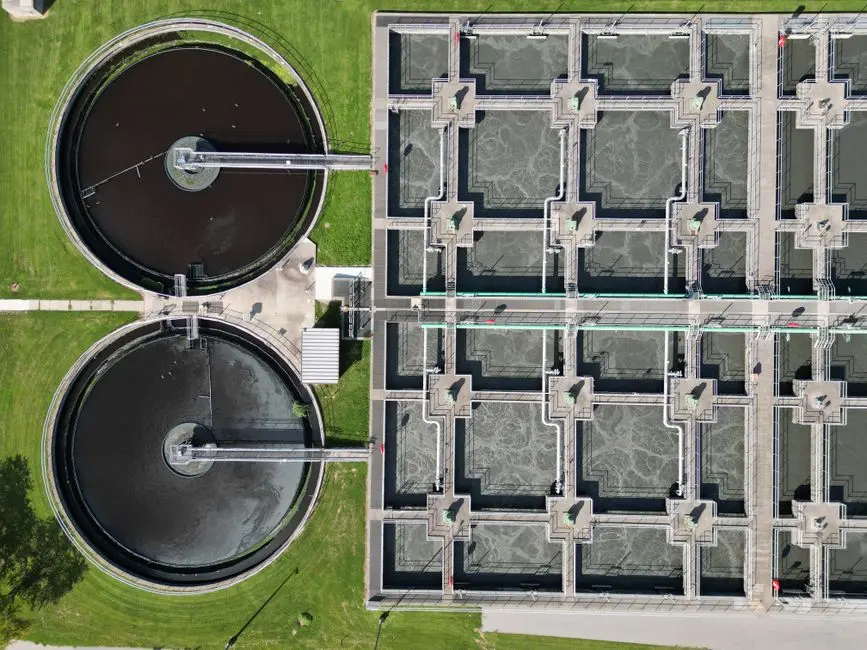
The Alabama pathway is permit-specific rather than ordinance-driven, and capacity headroom at the receiving POTW is a real engineering constraint. The H.C. Morgan WPCF is permitted for 25 MGD maximum month average daily flow (MMADF); 2025 actual data show an annual average of 6.973 MGD and a maximum daily treated of 21.498 MGD, which means wet-weather flows can push the plant to roughly 86% of permitted capacity in a single day (S4). The facility uses conventional activated sludge with UV disinfection and discharges to Parkersons Mill Creek under an ADEM-issued NPDES permit; biosolids are treated to Class B standard per 40 CFR Part 503 and land-applied on a private farm (S4).
Because ADEM sets effluent limits for the POTW rather than publishing local limits for each industrial user, an industrial discharger receives site-specific permit limits derived from the POTW's waste load allocation. The application goes through the City of Auburn Water Resource Management department and Veolia's pretreatment coordinator. There is no public local-limits table analogous to the NY Article V §13-2000 schedule, so the design engineer cannot start detailed equipment sizing until the permit letter is in hand. The advantage of the AL route is significant hydraulic headroom under normal conditions, and the conventional activated sludge process will polish residual organics and some metals provided the industrial stream does not slug the aeration basin with inhibitory loads.
Mining/Metals Wastewater Profile — What You're Treating
Mining and metals wastewater is characterized by low pH, high total suspended solids, and a dissolved metal suite that overlaps almost perfectly with the Auburn NY local limits table. According to the EPA mineral mining and processing industry development document (S3), typical contaminant concentrations span wide ranges depending on ore type and process water source: low pH from sulfide oxidation or spent process chemicals, high TSS from crushing, milling, and tailings handling, dissolved metals at concentrations orders of magnitude above the NY local limits, sulfate from acid mine drainage, and cyanide where heap leach circuits are present. A qualitative gap analysis against the §13-2000 table (S2) shows that raw mine water without pretreatment exceeds the limits for cadmium, copper, lead, mercury, nickel, zinc, cyanide, and iron in essentially every ore body, and the cost of treatment versus hauling or zero-liquid-discharge is the economic decision that drives whether a project can sewer-discharge at all.
Flow variability is the second design driver. Stormwater ingress into process sumps, seasonal mill throughput changes, and batch discharges from electrowinning or refining create peak-to-average ratios that often exceed 3:1. The treatment train must be sized to peak hourly flow and peak metal load simultaneously, with equalization providing both hydraulic and mass-load dampening. For a heap-leach operation, the bleed stream is a continuous side-stream with relatively stable composition, but it carries residual cyanide and copper/zinc that must be addressed before sewer discharge under the NY 1.0 mg/L CN cap.
Treatment Train Design — Unit Processes Mapped to Limits
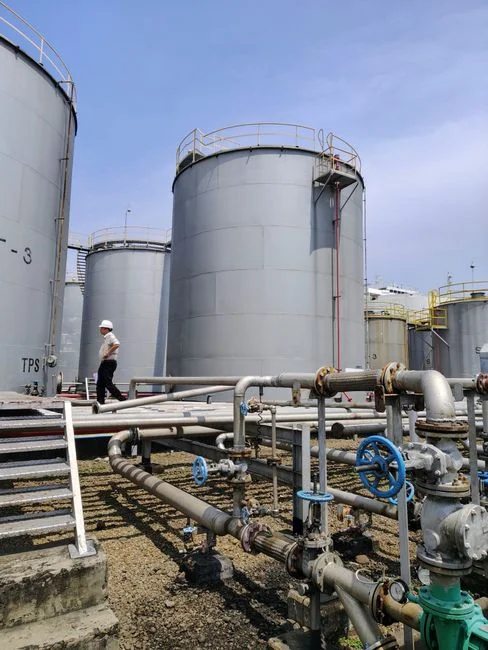
The treatment train below is a standard sequence for metal-bearing mining and metals-processing wastewater, mapped to the Auburn NY numeric limits. The same chemistry applies in Alabama, but the final polishing targets are set by the site-specific permit rather than a public table.
| Step | Unit Process | Design Function | Limit Addressed |
|---|---|---|---|
| 1 | Equalization & pH adjustment | Buffer flow and pH swings; raise to pH 8.5–9.5 | Sets conditions for hydroxide precipitation |
| 2 | Chemical precipitation | Lime/caustic for bulk Fe, Al, Mn; sulfide polish for Cd, Hg, Ag, Cu | Cd 0.5, Cu 1.5, Pb 1.0, Ni 5.0, Zn 5.0 mg/L (S2) |
| 3 | Solids separation | DAF systems for metals hydroxide/sulfide floc removal or lamella clarifiers for high-rate metal precipitate settling | Removes precipitated solids before filtration |
| 4 | Polishing filtration | Multimedia filter → hollow-fiber UF polishing for residual metals and TSS | Tightens TSS, residual metals, prepares for any reuse |
| 5 | Cyanide destruction (if applicable) | Alkaline chlorination or peroxide/UV | CN 1.0 mg/L (S2) |
| 6 | Sludge handling | Filter presses for dewatering metal hydroxide/sulfide sludge | Landfill-compliant cake at 25–35% solids |
Step 2 is where most of the design work happens. Lime raises pH and precipitates iron, aluminum, and manganese as hydroxides; copper, lead, zinc, and nickel precipitate at higher pH but with slower kinetics and finer floc. A sulfide polish stage using NaHS or FeS reliably drives cadmium, mercury, and silver below the NY limits (S2), but sulfide overdosing generates H2S risk and demands ORP-controlled dosing. DAF sizing and configuration for cyanide-bearing mining streams is a useful reference where the feed carries residual cyanide, because DAF air addition can strip volatile CN species. DAF vs clarifier selection guide for mining wastewater covers when lamella plates win on footprint for high-rate settling versus DAF for light floc. PLC-controlled chemical dosing for pH adjustment and coagulant injection ties the reagent feed to online pH, ORP, and TSS meters in a closed loop.
Permitting & Compliance Workflow — From Application to Routine Reporting
Article V §13-2000 (S2) prescribes the permitting sequence in concrete deadlines that a project manager can place on a Gantt chart:
- New source: Submit a baseline report at least 90 days prior to commencement of discharge, including flow, pollutant concentrations, proposed pretreatment method, and a compliance certification reviewed by an authorized representative and a qualified professional (S2).
- Existing categorical user: Submit the same baseline report within 180 days after the effective date of a categorical pretreatment standard or a final administrative category determination under 40 CFR (S2).
- Compliance schedule: If additional pretreatment is required, the report must include the shortest schedule by which the user will provide it, with progress increments as dates for hiring the engineer, completing preliminary and final plans, executing contracts, commencing and completing construction, and beginning routine operation (S2).
- Routine reporting: All significant industrial users submit self-monitoring reports at a frequency set by the Director, but no less than twice per year, in June and December, reporting pollutant concentrations limited by pretreatment standards and measured or estimated average and maximum daily flows (S2).
- Change triggers: Notify the Director of significant changes, defined to include flow increases of 20% or greater and the discharge of any previously unreported pollutant (S2).
- Inspections: The Director inspects and samples each significant industrial user at least once per year (S2).
For Alabama, the same general framework applies under 40 CFR 403 and the state NPDES program, but the application is routed through City of Auburn Water Resource Management and Veolia rather than a published ordinance, and the site-specific permit is the binding document.
Equipment Sizing Logic — Flow, Load, and Redundancy
Equalization basins should be sized for 4–8 hours of hydraulic retention at peak hourly flow, with submerged mixers to prevent settling of high-specific-gravity metal precipitates. Chemical dosing tanks and pumps are sized from stoichiometric metal load plus a 1.5–2.0× safety factor; lime consumption runs approximately 1.3× theoretical for hydroxide precipitation, while sulfide polishing is dosed at roughly 1.1× stoichiometric for the target residual metal. DAF systems for metals hydroxide/sulfide floc removal are rated on hydraulic loading rate (10–20 m/h) and solids loading rate from the expected metal-precipitate yield; lamella clarifiers for high-rate metal precipitate settling operate at 20–40 m/h equivalent surface loading and are favored for heavy flocs with low air-binding tendency. Hollow-fiber UF polishing for residual metals and TSS runs at 40–80 LMH flux with 0.03 µm PVDF membranes; the number of modules equals peak flow divided by the product of flux and membrane area per module, with at least one standby train for redundancy. Filter presses for dewatering metal hydroxide/sulfide sludge operate on 4–6 hour cycle times to a 25–35% solids cake, sized for daily sludge volume generated at peak metal load, not average load, so that a high-load day does not overflow the sludge holding tank.
Frequently Asked Questions
What is the typical CAPEX range for a 50 m³/h mining pretreatment system meeting Auburn NY limits?
No published CAPEX benchmark exists in the research. A buyer should request itemized vendor quotes covering equalization basin, lime/caustic and sulfide dosing skids, DAF systems for metals hydroxide/sulfide floc removal, multimedia filtration, hollow-fiber UF polishing for residual metals and TSS, and filter presses for dewatering metal hydroxide/sulfide sludge. The largest cost drivers are chemical consumption, sludge disposal, and membrane replacement frequency, all of which depend on site-specific influent characterization.
How long does the Auburn NY pretreatment permit process take from application to discharge authorization?
Article V §13-2000 requires a baseline report at least 90 days before discharge for new sources (S2), with the Director of Municipal Utilities authorized to require a schedule of compliance that adds engineering, construction, and startup milestones if additional pretreatment is needed. In practice, projects with no major construction often receive authorization within the 90–180 day window; projects requiring new pretreatment equipment extend the timeline to align with the construction increments the Director approves (S2).
Can I use the same treatment train for both Auburn NY and AL if my company has facilities in both?
Process chemistry is similar for both jurisdictions, but Auburn NY enforces fixed numeric local limits under §13-2000 (S2) while Auburn AL issues site-specific permit limits derived from the H.C. Morgan WPCF's waste load allocation, with no public local-limits table (S4). The equipment train transfers, but the final design targets and the self-monitoring schedule must be re-validated against each site's permit letter before procurement.
What happens if my discharge exceeds a local limit during startup?
Under Auburn NY Article V §13-2000 (S2), the discharger is subject to a compliance schedule with enforceable milestones, potential denial or conditioning of the discharge permit, and the full enforcement remedies available to the Director of Municipal Utilities, including but not limited to fines and termination of discharge authorization. Immediate notification to the pretreatment coordinator is required, and grab samples may be requested in addition to the routine composite sampling to demonstrate return to compliance.