What an Effluent Treatment Plant in Hurghada Must Handle in 2026
Hurghada's tourism economy pushes wastewater far outside a typical municipal profile. Resort laundry and kitchen grease generate FOG peaks that conventional biological units cannot ride out, while desert urban zones raise both intake salinity and summer temperature. The Egyptian Environmental Affairs Agency framework governing Red Sea coastal discharges and the practical benchmarks of a hypersaline, seasonal-load catchment mean an ETP must be sized and selected against peak-day conditions, not annual averages.
Discharge to the Red Sea is ecologically sensitive because of the receiving water's low dilution and the proximity of fringing reef systems. Buyers should plan for nutrient (N/P) reduction and a disinfection stage even where Egyptian regulatorily-set numeric limits are looser than EU norms, because resort operators face reputational and licensing risk if nutrients or surfactants accumulate in the coastal outfall zone.
The American Institute of Chemical Engineers, cited by Al Khabeer (alkhabeerwt.com), defines advanced effluent treatment as any process that can reduce impurities in wastewater below what conventional secondary or biological treatment attains. That is the practical benchmark a Hurghada buyer should target when reuse for irrigation or toilet flushing is a stated project goal.
Core Process Train: From Screening to Polishing
A Hurghada ETP in 2026 is built as a sequence of independent stages, each removing a class of contaminant the next stage cannot handle. The buyer who understands the train can interrogate any supplier's proposal against a fixed reference.
Primary stage. Bar screening and grit removal protect downstream pumps, blowers, and membranes from ragging and abrasion. For hotel and resort flows, an upstream DAF or grease trap is the most common configuration because FOG peaks would otherwise coat biological media and foul membranes within weeks.
Biological stage. Aerobic MBR or sequencing batch reactor (SBR) configurations are standard for municipal and hotel-strength wastewater. Anaerobic options such as UASB are reserved for high-strength industrial streams; Al Khabeer notes that anaerobic conversion produces biogas usable as fuel, which can offset aeration energy on food-processing or aquaculture loads.
Chemical dosing. Coagulants, flocculants, and pH adjusters target contaminants biological stages cannot break down. Al Khabeer emphasises that dose must be optimised to minimise chemical waste and environmental load — a poorly tuned dosing loop can double operating cost without improving effluent quality.
Polishing. University of Twente research (Schrader, PhD thesis, graduation UT) confirms that nanofiltration is a suitable technology to polish WWTP effluent to EU Water Framework Directive standards and produce water suitable for agricultural or indirect potable reuse. Wageningen University work (Lei, 2022) demonstrates constructed wetlands as a low-energy option for removing micropollutants, including pharmaceutical residues, from WWTP effluent — a useful fit for resorts near wastewater reuse zones where trace organics are a concern.
Disinfection. Chlorine dioxide, UV, or ozone are selected to match the discharge environment. UV is effective against chlorine-resistant organisms and produces no disinfectant by-products, which matters when the outfall sits on a coral-sensitive coastline.
Matching the Train to Your Influent Type
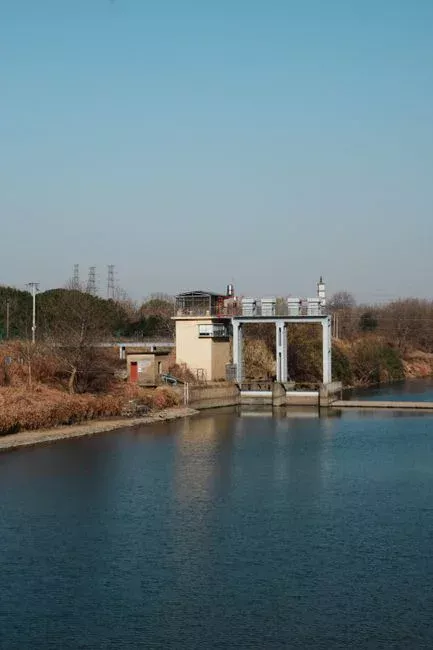
Train configuration is driven by influent type, not by the brand on the skid. Use the table below to self-locate before approaching suppliers, and verify each row against the specific FOG, salinity, and flow profile you actually measure on site.
| Influent Profile | Recommended Train | Why It Fits Hurghada |
|---|---|---|
| Hotel/resort (high FOG, laundry surfactants, seasonal flow) | Packaged MBR with upstream DAF system | Compact footprint, automated, tolerates peak-day swings typical of tourism occupancy |
| Mixed domestic + light industrial (workshops, small factories) | SBR or MBBR with chemical dosing and DAF polishing | Balances simplicity against effluent quality when flows are moderate |
| Heavy industrial (food processing, aquaculture, desalination reject) | Anaerobic + MBR + RO polishing, with nutrient recovery | Aligns with circular-economy objectives and high-strength contaminant loads |
| Remote or small developments (≤50 m³/day) | Containerized or skid-mounted integrated MBR system | Shortest lead time, lowest on-site civil work |
| Buried/landscaping-restricted sites | Underground packaged unit | Above-grade equipment would disrupt resort landscaping |
Where land is available and the energy budget is tight, a constructed-wetland polishing stage (Lei, 2022) can replace or augment membrane polishing for micropollutant reduction. The decision is hydrology-driven: wetlands win on energy and trace organics, membranes win on footprint and reuse-grade certainty.
Sizing, Footprint, and Energy: Hurghada-Specific Numbers
Buyers should brief suppliers on order-of-magnitude parameters before asking for a proposal. The table below summarises the equipment envelopes a 2026 RFQ should request, but the operating numbers (kW/m³, chemical kg/m³, membrane life in years) must come from the supplier against your specific influent.
| Equipment | Capacity Envelope | Footprint / Loading Signal | RFQ Input to Request |
|---|---|---|---|
| MBR system (packaged) | 10–2,000 m³/day | Sub-1 μm filtration in roughly 60% of conventional activated-sludge footprint | kW/m³ at design load AND at peak load; membrane replacement interval |
| DAF system | 4–300 m³/h across 13 standard models | Flexible FOG and suspended-solids add-on to biological trains | Air-to-solids ratio, polymer dose kg/t dry solids |
| High-efficiency sedimentation tank (lamella clarifier) | Surface loading 20–40 m/h | Reduces coagulant consumption versus conventional settling; check supplier-claimed reduction against your jar tests | Plate pack material, sludge solids % from jar test |
| Underground packaged sewage unit (WSZ series) | 1–80 m³/h | Buried installation for landscaping-restricted resort sites | Soil load, ventilation, access for membrane swap |
Hurghada buyers should request kW/m³ at both design load and peak load, because hot-climate derating and peak-day sizing materially change operating cost. The difference between average-day and peak-day kW/m³ on a tourism-driven catchment can be 30% or more. The MBR capacity and sizing guide details the calculation.
Cost Framework and Lifecycle Economics for 2026
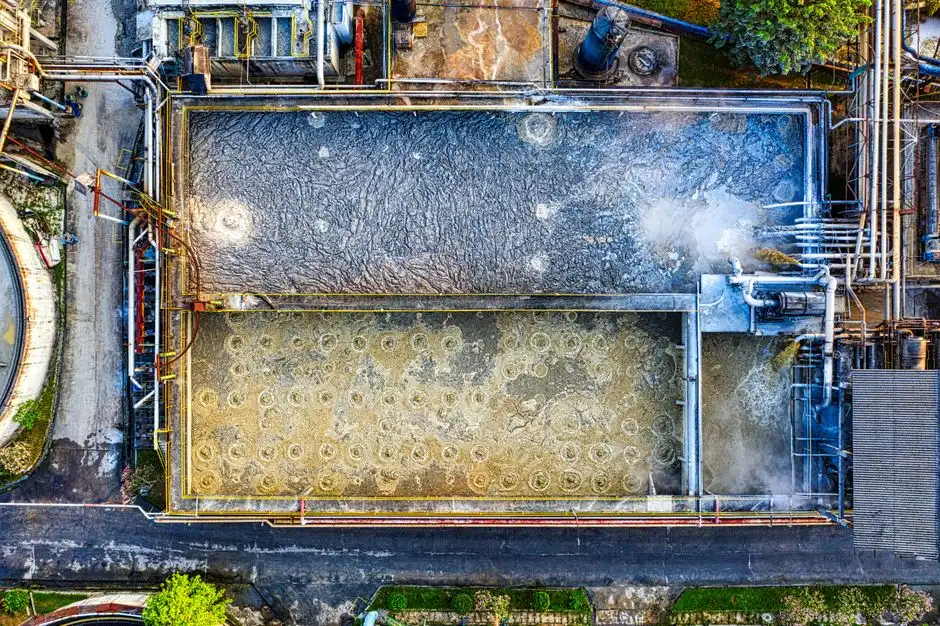
Translate the technical choice into a budget procurement can act on. Lifecycle cost per m³ is the only number that survives a value-engineering review.
CAPEX is dominated by membrane modules, stainless tanks, and automation. OPEX is dominated by energy, membrane replacement, chemical dosing, and sludge handling. Request both numbers per m³ treated in every quotation, never headline CAPEX alone — a low-CAPEX bid with high membrane replacement cost is a worse buy than the reverse over a 10-year horizon.
Industry guidance for a 1,000 m³/day industrial plant places annual O&M in a planning range referenced by the industrial wastewater O&M cost guide (2026). The exact figure for a Hurghada plant must be obtained from the supplier against your load profile.
Long-term O&M contracts are the lever most likely to hold actual plant efficiency close to design efficiency, per Emvees' framing of the O&M-as-efficiency-lever argument (emveestech.com, 2026). Plants run under a multi-year O&M contract consistently outperform plants handed over with a manual and a training week.
Sludge dewatering should be budgeted from day one. A plate-and-frame filter press sized to expected dry-solids output avoids downstream handling cost overruns, and an automatic chemical dosing system locks polymer dose against drift that drives both chemical waste and cake solids losses.
Buyers should request a 5-year lifecycle cost table — CAPEX plus energy plus chemicals plus membranes plus sludge handling plus labor — before signing.
Choosing an ETP Supplier in Hurghada: A 10-Point Scorecard
The difference between a working plant and a five-year headache is set at the RFQ stage. Use this scorecard as a procurement tool — paste it into your tender and weight each item against your project priorities.
- Verify the supplier has a documented process train matching your influent type, not a generic brochure.
- Request reference plants of similar capacity and climate — Hurghada's salinity and heat are unforgiving test conditions.
- Ask for membrane warranty terms, expected replacement interval, and local stock of spares.
- Confirm local service presence or an authorized partner in Egypt, with a defined response time in the contract.
- Require factory acceptance test (FAT) reports and site acceptance test (SAT) protocols to be appended to the contract.
- Check compliance documentation: CE/ISO 9001, electrical conformity, and any Egyptian accreditations relevant to your discharge permit.
- Insist on a long-term O&M option or training plan — Emvees flags this as the lever that protects efficiency over the plant's life.
- Compare automation level (PLC/SCADA, remote monitoring) against your available operator skill; do not over-automate an under-staffed site.
- Request chemical-consumption targets (kg/m³), not just dose rates, so you can budget OPEX honestly.
- Validate sludge handling — what is produced, how it is dewatered, and how it is disposed — before signing.
For a regional comparison that benchmarks Red Sea coastal procurement against a comparable Gulf context, the ETP buyer's guide for Al Ain provides a parallel framework.
Frequently Asked Questions
How much does an effluent treatment plant in Hurghada cost per m³ in 2026?
Lifecycle cost is the primary metric. Request a 5-year table covering CAPEX, energy, chemicals, membrane replacement, sludge handling, and labor. The industrial wastewater O&M cost guide frames the planning structure a buyer should require a supplier to populate against your load profile.
What process train should a hotel or resort in Hurghada specify?
For FOG-heavy, seasonally variable flows, packaged MBR with an upstream DAF is the dominant 2026 configuration because it tolerates peak-day swings and produces near-reuse-quality effluent in a compact footprint. Confirm membrane swap access, polymer dose targets, and disinfection stage in writing before signing.
Is nanofiltration or a constructed wetland better for polishing ETP effluent?
University of Twente research (Schrader, PhD thesis, graduation UT) confirms nanofiltration is suitable for polishing WWTP effluent to EU Water Framework Directive standards for agricultural or indirect potable reuse. Wageningen University work (Lei, 2022) confirms constructed wetlands are a low-energy option for micropollutant removal. Choose nanofiltration for footprint and reuse certainty; choose wetlands for energy economy and trace-organic removal where land is available.
How do I vet an ETP supplier in Egypt before paying a deposit?
Use the 10-point scorecard above as your RFQ attachment. Ask for reference plants of similar capacity in hot, saline climates, request FAT/SAT protocols, confirm local service presence, and require a long-term O&M option. A supplier who cannot answer these points in writing has not engineered the plant they are offering.