What DAO 2016-08 Actually Regulates and Why It Exists
DAO 2016-08 is the Philippine administrative order that sets the Water Quality Guidelines (WQG) for classifying freshwater and marine water bodies and the General Effluent Standards (GES) that limit what point sources may discharge into them. Issued under RA 9275 (the Philippine Clean Water Act of 2004), it covers every water body in the country and every point source regardless of industry. The WQG assigns Class AA–D for freshwater and SA–SD for marine waters based on beneficial use, then sets primary-parameter ceilings — BOD, DO, Fecal Coliform, pH, Chloride, Color, Nitrate, Phosphate, Temperature, TSS — that the receiving body must sustain. Effluent must meet GES values keyed to the receiving water's classification, with monitoring under EMB Memorandum Circular 2008-008.
Per Section 2 of the order, the regulation exists to classify water bodies, determine time trends, evaluate stages of deterioration or enhancement, support pollution-control action, designate Water Quality Management Areas (WQMA), and set the General Effluent Standards (S5). It updates and consolidates the older DAO 2004-25 framework, which Filipino practitioners will recognise from prior discharge-permit submissions.
Scope under Section 3 is deliberately broad. The WQG applies to every water body in the Philippines, and the GES applies to all point sources of pollution regardless of volume or industry category (S5). That breadth matters operationally: a small food-beverage discharger and a large textile mill discharging to the same Class C river are bound by the same numerical ceiling.
Several definitions in Section 4 are worth internalising before any design conversation. Freshwater contains less than 500 ppm dissolved NaCl. Marine water has salinity ≥30 parts per thousand at least 95% of the time. Strong Wastewater is influent BOD ≥3,000 mg/L — the trigger for the stricter industrial pre-treatment regime. A Point Source is any identifiable, confined discharge. Effluent is the discharge from a known source passed into a water body or land. Water Quality Management Areas are designated using physiographic units such as watersheds or river basins, so multiple discharges inside one WQMA are assessed as a combined load rather than individually.
Water Body Classifications: Class AA to D Freshwater and SA to SD Marine
Beneficial use drives the class, and the class drives every GES number downstream. Getting the receiving-water class wrong in a permit application is one of the most expensive compliance mistakes a 2026 ETP project can make, because the wrong class selects the wrong discharge ceiling before any process equipment is even specified.
Under Table 1 of DAO 2016-08, freshwater is divided into four classes. Class AA covers uninhabited or forested watersheds and protected areas, intended as Public Water Supply Class I — water that only requires approved disinfection to meet the latest Philippine National Standards for Drinking Water (PNSDW). Class A is Public Water Supply Class II, requiring full conventional treatment (coagulation, sedimentation, filtration, disinfection) to PNSDW. Class B is Recreational Water Class I — primary contact recreation such as bathing and swimming. Class C bundles three beneficial uses: Fishery Water for fish propagation and growth of other aquatic resources, Recreational Water Class II (boating, fishing, similar activities), and Agriculture, irrigation, and livestock watering. Class D is reserved for navigable waters (S5).
Under Table 2, marine water is divided into four classes. Class SA covers Protected Waters — national or local marine parks, reserves, sanctuaries, and areas declared by appropriate government agencies — plus Fishery Water Class I for shellfish harvesting for direct human consumption. Class SB is Fishery Water Class II (commercial propagation of shellfish, milkfish spawning), Tourist Zones, and Recreational Water Class I (primary contact recreation). Class SC is Fishery Water Class III (commercial and sustenance fishing), Recreational Water Class II (boating, fishing), and declared fish and wildlife sanctuaries. Class SD is navigable waters (S5).
Unclassified water bodies are not exempt. Per the table notes, an unclassified water body is assigned a beneficial use by the Environmental Management Bureau, so the EMB determines which GES schedule applies (S5). ETP designers cannot assume "no class" means "no limit."
Primary parameters are the minimum monitoring set for any classified water body; secondary parameters belong in Environmental Impact Assessment baselines and other monitoring purposes as defined in EMB Memorandum Circular 2008-008 (S5). For design work, the practical message is that primary parameters set the floor of the monitoring plan, not the ceiling.
| Class | Freshwater Beneficial Use | Marine Equivalent |
|---|---|---|
| AA / SA | Public Water Supply Class I; protected/forested watersheds; disinfection to PNSDW | Protected waters, marine parks, reserves; Fishery Water Class I (shellfish for direct consumption) |
| A / SB | Public Water Supply Class II; conventional treatment to PNSDW | Fishery Water Class II; tourist zones; primary-contact recreation |
| B / SC | Recreational Water Class I (bathing, swimming) | Fishery Water Class III; boating; declared fish/wildlife sanctuaries |
| C / — | Fishery propagation; boating/fishing; agriculture, irrigation, livestock watering | No direct marine equivalent at this tier |
| D / SD | Navigable waters | Navigable waters |
Primary Parameter Limits Under the Water Quality Guidelines

Table 3 of DAO 2016-08 sets the numerical ceilings the receiving water must sustain. The columns most ETP designers reach for first are BOD, Dissolved Oxygen, and Fecal Coliform, because those three typically drive both the biological treatment selection and the disinfection stage.
Biochemical Oxygen Demand ceilings are 1 mg/L for Class AA, 3 mg/L for Class A, 5 mg/L for Class B, 7 mg/L for Class C, 15 mg/L for Class D, and 5 mg/L for Class SA (S5). A Class AA discharge effectively demands near-complete biological oxidation; a Class D navigable-water discharge leaves significant assimilative headroom. Dissolved Oxygen minimum is 5 mg/L across AA, A, B, C, D, and SA (S5), so the effluent cannot depress the receiving water's DO below this floor — a binding constraint for high-temperature or high-BOD discharges in warm Philippine receiving waters.
Fecal Coliform ceilings are 5 MPN/100mL for Class AA and Class SA, 50 MPN/100mL for Class A and B, 100 MPN/100mL for Class C, and 200 MPN/100mL for Class D (S5). The 5 MPN/100mL band is essentially near-potable microbial quality; reaching it consistently requires tertiary disinfection, not just chlorination of secondary effluent. Chloride ceilings of 250 mg/L (AA, A, B), 350 mg/L (C), and 400 mg/L (D) constrain RO concentrate disposal and seawater-mixing scenarios where the receiving water is not naturally saline (S5). Color is 5 TCU (AA), 50 TCU (A, B), 75 TCU (C), and 150 TCU (D); Nitrate as NO3-N is 7 mg/L (AA) and 50 mg/L (A, B, C, D, SA); pH range is 6.5–8.5 across all classes (S5).
Secondary parameters and the Recommended Parameters list — ammonia, heavy metals, surfactants, oil and grease — are scheduled in EMB MC 2008-008 and must be added to the monitoring plan based on the establishment's Significant Effluent Quality Parameters. A practitioner who stops at Table 3 will miss the parameters that drive permit conditions for most industrial discharges.
| Parameter | AA | A | B | C | D | SA |
|---|---|---|---|---|---|---|
| BOD (mg/L) | 1 | 3 | 5 | 7 | 15 | 5 |
| Dissolved Oxygen, min (mg/L) | 5 | 5 | 5 | 5 | 5 | 5 |
| Fecal Coliform (MPN/100mL) | 5 | 50 | 50 | 100 | 200 | 5 |
| Chloride (mg/L) | 250 | 250 | 250 | 350 | 400 | — |
| Color (TCU) | 5 | 50 | 50 | 75 | 150 | — |
| Nitrate as NO3-N (mg/L) | 7 | 50 | 50 | 50 | 50 | 50 |
| pH range | 6.5–8.5 | 6.5–8.5 | 6.5–8.5 | 6.5–8.5 | 6.5–8.5 | 6.5–8.5 |
General Effluent Standards: How GES Differs from WQG
The single most common conceptual error in DAO 2016-08 interpretation is treating the Water Quality Guidelines and the General Effluent Standards as the same number. They are not. The WQG is the level of a constituent that classifies and protects a water resource's beneficial use; the GES is the legal restriction on quantities, rates, or concentrations an effluent may discharge, set per the receiving-water classification (S5). The WQG describes the water; the GES describes the pipe.
Because the GES applies to all point sources regardless of industry, a bottling plant and a textile mill discharging to the same Class C river must both meet the same Class C GES values (S5). The GES value is keyed to the receiving water — discharging a "good" effluent into a more sensitive class still fails if the GES ceiling for that class is tighter. Under RA 9275, exceeding the GES values constitutes a violation regardless of the receiving water's apparent condition, so monitoring and self-reporting against the GES schedule is mandatory, not optional (S5).
A defensible compliance file therefore needs three artefacts together: the WQG target for the receiving water, the GES ceiling applied to the discharge point, and the monitoring plan that proves both. A 2026 discharge-permit application that omits any of the three is the kind of gap an EMB reviewer will flag in the first round of comments.
| Aspect | WQG | GES |
|---|---|---|
| What it describes | The condition the water body must sustain | The ceiling the discharge pipe must meet |
| Set against | Receiving-water beneficial use class | Receiving-water beneficial use class |
| Applies to | All classified water bodies | All point sources regardless of industry |
| Function in a permit | Sets the receiving-water target the discharge must protect | Sets the legal numerical limit on the effluent itself |
| Monitoring linkage | Receiving-water monitoring under EMB MC 2008-008 | Effluent self-monitoring under EMB MC 2008-008 |
Mapping Parameter Limits to Treatment-Train Equipment
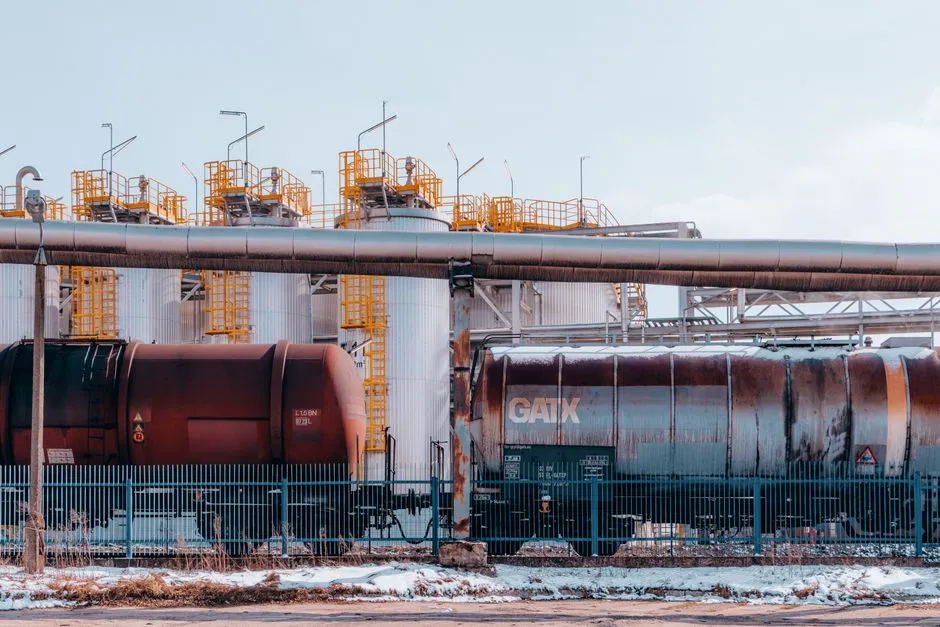
For Class AA freshwater and Class SA marine protected-water discharges, the BOD ceiling of 1–5 mg/L and the Fecal Coliform ceiling of 5 MPN/100mL (S5) cannot be reached with primary-plus-secondary treatment alone. A defensible process train pairs biological oxidation with a solids-separation polishing step and tertiary disinfection. The unit operation that bridges secondary clarifier effluent to those ceilings most reliably is an MBR membrane bioreactor for Class AA and SA discharges, followed by either a chlorine dioxide generator for the 5–50 MPN/100mL Fecal Coliform band or a UV sterilizer for chemical-free disinfection. The receiving water in these cases is a protected watershed, marine park, or shellfish harvesting zone, so disinfection reliability is the gating design decision.
For Class A and B discharges (BOD 3–5 mg/L, Fecal Coliform 50 MPN/100mL), a well-operated activated-sludge plant with secondary clarification and a chlorination stage is generally sufficient. Where footprint is constrained — a common condition in Philippine industrial parks retrofitting existing structures — an MBR is preferred over conventional activated sludge because of the higher mixed-liquor concentration and smaller clarifier footprint. For Class C discharges (BOD 7 mg/L, Fecal Coliform 100 MPN/100mL), the most common configuration is a packaged A/O sewage plant for Class B and C discharges with primary clarification and chlorination.
Class D navigable-water discharges (BOD 15 mg/L, Fecal Coliform 200 MPN/100mL) are the least stringent tier and can be met by primary-plus-secondary biological treatment with basic screening, sedimentation, and biological oxidation; disinfection is not required where the receiving use is navigation only.
Front-end screening and grit removal protect every downstream unit, and a rotary bar screen for headworks protection is the standard first step regardless of receiving-water class. A DAF for FOG, TSS, and colloidal load reduction is added where the influent carries fats, oils and grease, colloids, or high TSS — typical for food-beverage, dairy, and slaughterhouse discharges. Where the WQG or GES schedule includes pH or phosphorus limits, an automatic chemical dosing for pH and phosphorus control completes the train. The complete effluent treatment plant design and costing for 2026 integrates these unit operations into a single process flow, while the choice between DAF and a clarifier at the head of the train for high-TSS streams is laid out in the DAF vs clarifier selection for high-TSS industrial wastewater guide. For mining and heavy-metal discharges, the additional pre-treatment considerations are covered in the industrial pretreatment compliance for mining and heavy metals reference. Continuous GES reporting against the Fecal Coliform and BOD columns benefits from online COD/BOD analyzers for continuous GES compliance reporting.
Monitoring, Sampling, and the EMB MC 2008-008 Linkage
Section 6 of DAO 2016-08 explicitly defers the Recommended Parameters list, sampling frequency, duration, QA/QC, and the water-quality monitoring plan format to EMB Memorandum Circular 2008-008 (S5). A compliance file built only from the WQG and GES tables is incomplete: both instruments must be on the desk, and the monitoring plan must reconcile the two.
Primary parameters are the minimum set monitored in every classified water body; secondary parameters are added for EIA baselines and special-purpose monitoring (S5). Discharge points must follow GES regardless of receiving-water beneficial use, so a self-monitoring plan typically reports both influent and effluent values to demonstrate the compliance margin the plant is actually running at, not just the discharge number.
The order defines the statistical method that applies to wide-range parameters: Geometric Mean is used for parameters covering a wide value range, which in practice means Fecal Coliform and most bacteriological reporting (S5). Annual average, maximum allowable limit, and natural background concentration are also defined terms in Section 4 (S5), and all three appear routinely in discharge-permit conditions — a permit that fails to cite the correct statistical basis is a permit that invites a finding of non-compliance during an EMB audit.
Frequently Asked Questions
What is the difference between WQG and GES under DAO 2016-08?
The Water Quality Guidelines describe the condition the receiving water body must sustain, while the General Effluent Standards set the numerical ceiling on what the discharge pipe may emit; both are keyed to the receiving water's beneficial-use class (S5). A complete compliance submission addresses both — the WQG target for the receiving body and the GES ceiling for the discharge — and reconciles them through the monitoring plan.
How do I choose a treatment train that will hit a Class C freshwater BOD ceiling of 7 mg/L and Fecal Coliform of 100 MPN/100mL?
A packaged activated-sludge or biofilm plant with primary clarification and chlorination is the standard configuration for Class C discharges (S5). Buyers should request the supplier's expected effluent BOD and Fecal Coliform at the design loading, plus the basis of design (influent BOD, flow, peak factor) used to size the biological stage, before pricing the equipment.
What does it cost to build a DAO 2016-08 compliant effluent treatment plant in 2026?
Equipment and installation cost depends on influent characteristics, receiving-water class, target flow, and the disinfection tier required to meet the Fecal Coliform ceiling. Buyers should request a process guarantee and an itemised bill of materials tied to the influent basis of design, rather than rely on a generic per-cubic-metre figure, because the gap between a Class C and a Class AA train is large and driven by the polishing and disinfection stages.
How do I evaluate an ETP supplier against DAO 2016-08 compliance risk?
Ask the supplier to map each receiving-water class their proposed train is designed for against the Table 3 primary parameters, and to confirm the basis of design used for the biological and disinfection stages. A supplier that can quote expected BOD and Fecal Coliform at the discharge point, identify which EMB MC 2008-008 secondary parameters their train will report against, and reference the receiving-water class the train was designed for has the engineering depth to support a 2026 discharge-permit application.