What 'Domestic Sewage' Means in a Qatari Context
Domestic sewage in Doha is the combined blackwater and greywater stream from residential, commercial and institutional users, and it is the dominant feed at the country's municipal STPs. The 1992 Qatar University study of the Doha South plant describes exactly this profile: the raw sewage is characterised by high dissolved solids, medium-strength BOD, a low COD/BOD ratio, and high concentrations of chloride, sulphate and sulfide caused by septic sewage, and these are described in the paper as "typical characteristics of the sewage in this region" (Shadid and Ahmed, Qatar University QSpace, 1992).
Long retention in a hot, anaerobic collection network drives sulfide generation and depresses the COD/BOD ratio, so the influent that arrives at the headworks behaves differently from a temperate-climate default. High dissolved solids and chloride push designers toward corrosion-resistant materials and tolerant biology; high sulphate and sulfide drive aeration demand, odour control and concrete protection.
Flow scales a Doha buyer can be sizing against range from a few cubic metres per hour for a labour camp to the 245,000 m³/day design capacity of the Doha North Sewage Treatment Works, which reached 46,000 m³/day at startup in December 2015 and was sized to serve a projected population of over 900,000 people by 2020 (WaterWorld, 2015). That range matters because a definition of "domestic sewage" written for a European plant will understate the salinity, septicity and dissolved-solids load a Qatari buyer will actually have to treat.
How Doha Treats Domestic Sewage: The Reference Train
The Doha South STP has long applied primary, secondary and tertiary units in sequence to treat predominantly domestic sewage, with the treated effluent reused for fodder and landscape irrigation and the stabilised sludge used as a soil conditioner (Shadid and Ahmed, Qatar University QSpace, 1992). Following this established precedent, Doha North STW serves as the newer benchmark: it was the first facility in Qatar to apply ultraviolet (UV) and ultrafiltration (UF) to polish effluent for irrigation reuse, with a design capacity of 245,000 m³/day and a startup flow of around 46,000 m³/day from December 2015 (WaterWorld, 2015). The contract was awarded to Keppel Seghers Engineering Singapore on a design-build-operate basis, with a total project value of approximately 3.63 billion QAR (US$988.6m) split between a design-build portion of about 2.49 billion QAR (US$683.8m) and a 10-year operate-and-maintain portion of about 1.14 billion QAR (US$31.3m as reported by WaterWorld, 2015).
For a 2026 buyer, the realistic reference train reads: screening → grit removal → biological stage (anoxic/aerobic, MBR or conventional activated sludge) → clarification or membrane solids separation → UF + UV polishing → reuse storage, or discharge to the Ashghal sewer where reuse is not viable. The polishing block is no longer an upgrade; the Doha North precedent and the Doha South reuse record together have made UF + UV the de facto national benchmark for any new project that wants to claim irrigation reuse. For smaller sites, the same logic is captured in a buried WSZ A/O package plant or a submerged MBR with PVDF membranes, both of which integrate the biological and clarification stages into a single factory-built unit.
Reuse, Discharge or Both? The 2026 Doha Decision
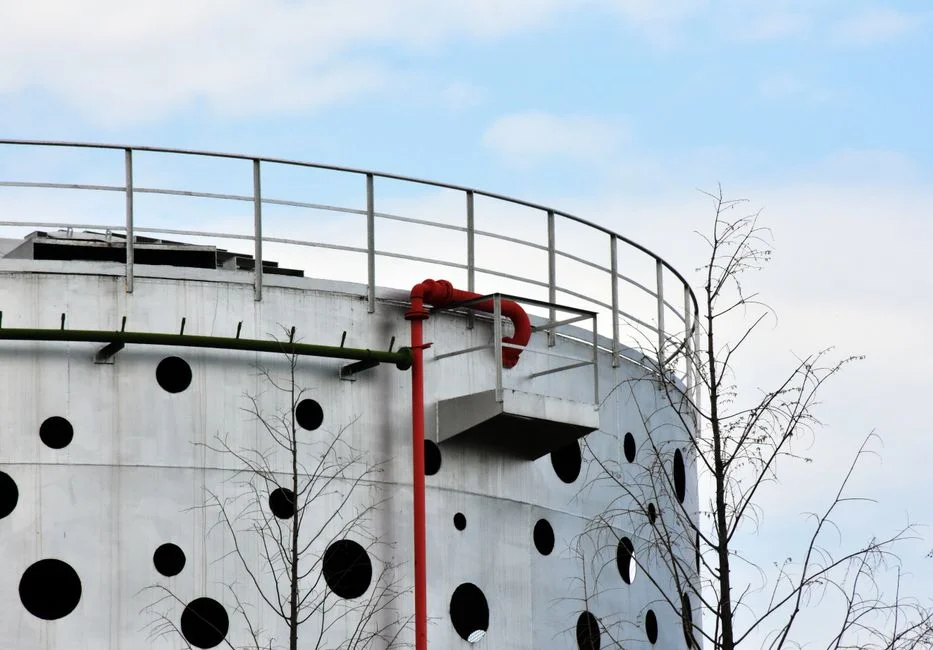
The first question a Doha buyer should answer is not "which reactor" but "where does the effluent go?" The two existing precedents point in the same direction. Doha South's reclaimed water has met international standards and guidelines for landscape irrigation and farming, and no evidence of disease among workers or the public from water reuse has been observed (Shadid and Ahmed, Qatar University QSpace, 1992). Doha North STW explicitly targets irrigation reuse, which is why UV + UF polishing was specified as the first such installation in Qatar (WaterWorld, 2015).
For a Doha project in 2026, the practical effluent routes are: (a) irrigation reuse for landscape or fodder within the project boundary, (b) discharge to the Ashghal sewer under trade-effluent limits, or (c) both, with a treated-effluent tank arbitrating between the two. Reuse carries a higher bar on polishing and disinfection but removes the volume risk of a sewer discharge rejection. Where irrigation reuse is the target, the items a buyer should put on the supplier's desk are: target BOD, COD, TSS and turbidity; target microbiological indicators (E. coli, total coliforms); the intended irrigation end-use; and any local authority or Ashghal acceptance criteria that apply. Numeric reuse limits are not in the supplied research and must be requested from the supplier and confirmed against the latest Ashghal guidance before sizing.
Choosing the Right Treatment Train for a Doha Project
Three realistic 2026 options cover almost every Doha site: a buried WSZ-style A/O package, an MBR with submerged PVDF membranes, and a conventional activated-sludge train with UF polishing. Each maps to a different flow scale, footprint and reuse target.
A WSZ-series underground package combines anoxic/aerobic biological contact oxidation with sedimentation and disinfection in a single buried unit; it is fully automated with no operator required and handles 1–80 m³/h for residential communities, hotels, hospitals, factories and rural areas, and can be installed below grade with landscaping above or mounted on a trailer for mobile deployment (HydropureWater product catalog). An MBR adds submerged membrane filtration to activated sludge, delivering near-reuse-quality effluent with sub-micron solids capture at roughly 60% less footprint than a conventional clarifier-based system, and is offered in the 10–2,000 m³/day range (HydropureWater product catalog). Conventional activated sludge with UF polishing is closest to the Doha North STW precedent and remains the right answer for centralised, municipal-scale flows.
Before any selection, the inputs a buyer must gather are: average and peak daily flow, influent BOD/COD/TSS/salinity, site elevation (for buried installation), power availability, and the reuse end-use. The selection itself is then driven by flow scale, effluent quality target, available footprint, automation level and whether the site has the hydraulic headroom for a buried unit. The table below summarises the trade-offs.
| Criterion | WSZ A/O package (buried) | Submerged MBR (PVDF) | Conventional AS + UF polishing |
|---|---|---|---|
| Typical flow range | 1–80 m³/h (≈24–1,920 m³/day) | 10–2,000 m³/day per skid, scaling by cassette count | Municipal scale; DNSTW reference at 245,000 m³/day design, 46,000 m³/day startup |
| Footprint | Small; buried, landscaping above | Compact; ~60% smaller than conventional AS with clarifier | Large; dedicated civil structures |
| Reuse readiness | Discharge by default; reuse with add-on disinfection | Near-reuse-quality effluent from the bioreactor | Best fit for full UF + UV reuse train (DNSTW precedent) |
| Salinity / septicity tolerance | A/O biology; depends on configuration | PVDF membrane chemistry tolerates Qatari feed; biology still needs design margin | Proven at DNSTW scale on septic Doha sewage |
| Automation | Fully automated, no operator (catalog) | High; membrane backwash and aeration controlled | Plant-level SCADA; higher operating skill |
| Membrane reference | None internal; relies on disinfection stage | DF-series 0.1 μm PVDF flat sheet membrane modules, 80–225 m² per cassette producing 32–135 m³/day | UF polishing skid sized to plant flow |
Sizing, Pre-Treatment and Sludge Handling for Doha Conditions
The Qatari influent profile raises the cost of getting pre-treatment wrong. A rotary mechanical bar screen at the inlet is the standard first step to protect downstream pumps and biological stages from the rags, plastics and grit that come with a septic collection network (HydropureWater product catalog, GX-series). For an MBR, sizing should be framed in terms of the DF-series envelope of 80–225 m² of membrane area producing 32–135 m³/day per cassette, with the final configuration selected by the supplier against measured flow and load; the buyer should not commit to a cassette count before the influent and reuse target are fixed.
Sludge handling is the other half of the train. The Doha North project includes a Thermal Drying Plant (TDP) receiving sludge from Doha North and from other STWs across Qatar, with four thermal dryers being commissioned on sludge from Doha North and Doha West (WaterWorld, 2015). That regional infrastructure tells a Doha buyer to plan for sludge dewatering and drying rather than liquid disposal. For decentralised sites where a TDP contract is not an option, a plate-and-frame filter press for sludge dewatering paired with a high-efficiency sedimentation tank for sludge thickening is the more common, lower-CAPEX alternative (HydropureWater product catalog). Headworks screening with a GX-series rotary mechanical bar screen remains the first unit operation in either case.
2026 Buyer's Checklist: Selecting a Doha Sewage Treatment Supplier
Use the checklist below in supplier meetings. It is built so the supplier has to provide the numbers, not the engineer.
| Check | What to ask the supplier | Why it matters in Doha |
|---|---|---|
| Qatari / GCC reference | Documented domestic sewage references in Qatar or the Gulf, with influent and effluent data | The saline, septic, medium-BOD profile is materially different from temperate defaults (Qatar University QSpace, 1992) |
| Treatment train and effluent targets | Proposed train with explicit BOD, COD, TSS, turbidity and any reuse indicator; whether UF + UV polishing is included where reuse is intended | Matches the DNSTW precedent (WaterWorld, 2015) |
| Scope of supply | Headworks, biological stage, membrane or clarification, disinfection, sludge handling, control panel, installation and commissioning | Prevents gaps in the BoQ that later show up as variation orders |
| CAPEX / OPEX split | CAPEX, OPEX and 10-year lifecycle assumptions, with a clear note that 2026 package-plant CAPEX is project-specific | The DNSTW benchmark of ~3.63 billion QAR (US$988.6m) (WaterWorld, 2015) is a municipal DBO contract, not a small-plant price |
| Warranty and local service | Warranty terms, local service presence in Qatar, and availability of membrane spares (e.g. DF-series replacement elements) | Reduces lifecycle risk on membrane-based trains |
| Compliance route | Route to Ashghal acceptance, including any pre-commissioning sampling plan and reuse end-use sign-off | Aligns with the irrigation-reuse precedents at Doha South and Doha North |
Pair the checklist with a short ROI lens: in Qatar, the binding cost is water, and the binding constraint is reuse acceptance. A train that produces reuse-grade effluent reduces the project's potable water bill, while a train that only produces sewer-discharge quality leaves the buyer exposed to both the trade-effluent charge and the volume cap. A second useful anchor is the 2026 package sewage treatment plant design criteria engineering guide, which covers the design parameters behind the WSZ and MBR selections above.
Frequently Asked Questions
What does domestic sewage in Doha actually look like, and why does it matter for equipment selection?
It is high in dissolved solids, medium-strength in BOD with a low COD/BOD ratio, and elevated in chloride, sulphate and sulfide because the sewage goes septic in the collection network — described as "typical characteristics of the sewage in this region" by Shadid and Ahmed (Qatar University QSpace, 1992). That pushes designers toward corrosion-resistant materials, robust aeration, and biological stages with real tolerance for variable, saline loads. It also means a temperate-climate default
Frequently Asked Questions
How much does a domestic sewage treatment plant cost in Doha in 2026?
For a standard domestic residential or commercial project in Doha, capital expenditure for a package sewage treatment plant typically ranges from QAR 150,000 to QAR 850,000, depending on the daily flow capacity and treatment technology. This estimate excludes site civil works, specialized pumping stations, and the mandatory connection fees associated with Ashghal’s utility network.
Operational costs, including electricity, chemical dosing, and periodic sludge removal by authorized tankers, generally average between QAR 0.80 and QAR 1.50 per cubic meter of treated water. Prices remain subject to fluctuations based on the import costs of mechanical components like blowers, fine bubble diffusers, and PLC control systems.
Which sewage treatment equipment suppliers serve Qatar and how do I shortlist them?
Major international players with established local presence in Doha include Veolia, Metito, and WTE, alongside regional specialized engineering firms. When shortlisting, prioritize vendors who hold valid registration with the Public Works Authority (Ashghal) and possess a proven track record of local installations that have successfully passed the Qatar General Organization for Standards and Metrology (QS) testing protocols.
Verify that the supplier provides a dedicated local maintenance team capable of 24/7 emergency response. Request a list of active local projects to inspect, and ensure the supplier can provide comprehensive documentation regarding spare parts availability, as reliance on imported components without local stock can lead to extended system downtime.
Do I need MBR or a buried package plant for a Doha compound or hotel project?
The choice depends on the final effluent quality requirements and space constraints. Membrane Bioreactor (MBR) technology is recommended for high-density hotel projects where land is limited and the treated water is intended for high-grade irrigation or toilet flushing, as it consistently produces high-quality effluent with low turbidity and near-zero suspended solids.
Buried package plants utilizing Moving Bed Biofilm Reactor (MBBR) or extended aeration are often sufficient for residential compounds where the effluent is destined for basic subsurface landscape irrigation. MBR systems carry a higher initial investment and operational complexity but offer a smaller physical footprint and superior effluent safety compared to conventional buried package systems.
Is treated sewage water reuse for landscape irrigation permitted and proven in Doha?
Yes, the reuse of Treated Sewage Effluent (TSE) for landscape irrigation is not only permitted but actively encouraged by the Ministry of Municipality and Ashghal to conserve potable water. All projects must strictly adhere to the Qatar National Construction Standards (QCS 2014 or subsequent updates), which mandate specific bacteriological and chemical parameters for TSE.
The practice is well-proven across Doha’s major developments, including The Pearl and Lusail City, where centralized and decentralized plants provide water for public parks and private landscaping. Systems must be clearly labeled as non-potable, and irrigation must utilize subsurface or low-spray methods to prevent human contact with aerosolized treated water.
What is the typical sizing for a Doha domestic sewage plant, and what data do I give the supplier?
Typical domestic sizing is calculated based on an average generation rate of 200 to 250 liters per person per day, with an additional safety factor of 1.5 for peak flow variations. For a standard residential compound, systems are usually sized between 50 and 500 cubic meters per day, depending on the total unit count and occupancy density.
When contacting a supplier, provide the following data: the total number of bedrooms or expected occupancy, the peak daily hydraulic flow rate (m³/day), the biological oxygen demand (BOD) load, and the specific intended use for the treated effluent. Additionally, provide a site plan indicating available footprint, invert levels of the incoming sewage network, and soil report data to determine foundation requirements.