Why a Containerized MBR Fits Residential and Camp Projects in Montevideo
A membrane bioreactor (MBR) combines biological treatment with membrane filtration, giving a smaller footprint and better effluent quality than conventional activated sludge (MENA-Water, mena-water.com). The biological step runs at higher mixed-liquor suspended solids (MLSS) than a conventional aeration tank, and the ultrafiltration step replaces the secondary clarifier entirely, so the civil footprint is small and the plant fits inside a standardized ISO container (HUBER/MENA-Water, huber-se.com).
For a Montevideo residential block or a temporary camp, that footprint matters. Sites near the coast or in established neighbourhoods rarely have room for large aeration basins or settling tanks, and an OSE-aligned effluent target is easier to hit when a packaged unit is pre-commissioned at the factory. MENA-Water offers containerized MBR plants in standardized ISO sizes with stainless internal tanks for Plug & Play site installation, and a fully integrated I-Version for mobile or relocatable deployments where the camp will be moved (mena-water.com). For a Uruguayan camp manager, that means the package arrives, is craned into position, and is commissioned by a small local crew rather than built in concrete on-site.
Step 1: Define the Population and the Per-Capita Flow
The most common sizing error is to multiply nominal bedrooms by a textbook per-capita flow and call that the design flow. Two corrections are needed up front. First, for a residential project use the design population (units × expected occupancy), not the maximum theoretical occupancy. Second, for a camp use the peak-shift roster, not the nominal bed count, because the canteen, showers and laundry spike together at shift change.
The only per-capita figure in the supplied research is Pure Aqua's published reference of 50 gpd per capita for its MBR-C (Pure Aqua, pureaqua.com), which is roughly 189 L/person/day. Use it as a starting anchor; if the client or OSE can supply a local per-capita figure, replace it. The diurnal profile also matters: a residential block produces a relatively uniform curve across morning and evening, while a construction or mining camp concentrates 60–80% of its daily flow into two short windows around shift change, meals and shower blocks. The camp curve drives bigger equalization, not a bigger average flow.
Inputs the engineer must request from the client before locking the population number: design population and occupancy profile, whether a canteen and laundry are included (these add per-capita load beyond domestic), any process-water streams (vehicle wash, workshop drainage), and the expected seasonal swing. With those in hand, multiply population by per-capita flow to get the average daily flow (ADF). For the equipment selection, work the example in our containerized MBR system datasheet against the ADF before moving to peaking.
Step 2: Apply a Peaking Factor and Set the Design Flow
Average daily flow multiplied by a peaking factor gives the design flow that the MBR hydraulics, the equalization tank, and the membrane train must all handle. The supplied research does not publish a numeric peaking factor, so use a qualitative band: residential developments commonly sit in the 1.5–2.0 range, while camps and institutional facilities with concentrated shift-change demand often fall in the 2.0–2.5 range, and may exceed it for short surges. Confirm the chosen number with the supplier's project engineer, since the peaking factor they assumed when sizing the internal pumps and equalization must match yours.
Equalization is the practical way to keep a small container from being overwhelmed. MENA-Water's U-Version places aeration and buffering in underground water tanks, which decouples the MBR's steady-state treatment rate from the instantaneous hydraulic surge at the head of the plant (mena-water.com). The design point to check with the supplier is not just the 24-hour average but the peak instantaneous flow rate during the worst shift-change window, expressed in m³/h, so that the feed pump, the drum screen, and the membrane tank inlet can all accept it without bypass.
Inputs the supplier needs from you to size the buffer and hydraulics correctly: peak shift size, assumed simultaneity of fixture use (showers, basins, kitchen prep), and any one-off surge events such as a weekly wash cycle or a planned drain-down.
Step 3: Check the Loads — Hydraulic, Organic and Membrane Flux
Flow alone does not pick a container. The MBR's biological and membrane limits must be able to handle the project's organic load, and the only way to know that is to compare your load against the supplier's published flux, MLSS, and HRT/SRT at the design flow. Pure Aqua's MBR-C uses 0.04 µm hollow-fiber PVDF ultrafiltration and a 1.5 mm perforation drum screen upstream to protect the membrane surface (Pure Aqua, pureaqua.com). MENA-Water notes that the membrane filtration reduces virus and bacteria by 99.9999% and that the membranes need only one or two maintenance cleanings per year (mena-water.com). HUBER/MENA-Water puts the general UF pore-size range at 2–100 nm, with sludge flocs and the smallest solids retained on the membrane surface (huber-se.com).
Request from the supplier, in writing, the design flux (L/m²·h), the MLSS operating window, and the HRT and SRT at your project's design flow and load. These are the parameters that decide how many submerged membrane modules and how much aeration tank volume you need, and they are the numbers that distinguish a 20-ft HC from a 40-ft HC. The qualitative checks for a Montevideo site are influent BOD/COD/TSS assumptions (camp canteens and laundries push these well above purely domestic levels), the temperature envelope, and salinity if the suction line sits close to the Río de la Plata and there is any risk of ingress at high tide.
| Parameter | Value (per supplied research) | Source |
|---|---|---|
| Membrane type | Hollow-fiber PVDF UF, thermally induced phase separation | Pure Aqua |
| Nominal pore size (MBR-C) | 0.04 µm | Pure Aqua |
| General UF pore-size range | 2–100 nm | HUBER/MENA-Water |
| Pre-treatment | Drum screen, 1.5 mm perforation | Pure Aqua |
| Virus/bacteria log reduction | 99.9999% | MENA-Water |
| Membrane cleanings | 1–2 maintenance cleanings per year | MENA-Water |
| MLSS | Higher than conventional activated sludge (qualitative) | MENA-Water, HUBER |
Step 4: Map the Flow to a 20-ft or 40-ft ISO Container
With the design flow fixed, the container count is a single lookup against the supplier's published capacity table. Pure Aqua offers MBR-C in 40' and 20' high-cube (HC) containers depending on capacity (Pure Aqua, pureaqua.com), and MENA-Water states that more than 1200 m³/day can be filtered in one 40-ft ISO container, with the broader range covering a few m³/day to thousands, custom-fit (mena-water.com; huber-se.com). Those two numbers bracket the envelope: a Montevideo residential block typically sits well below the 1200 m³/day ceiling, while a large multi-shift camp may approach it.
For relocatable phases, request the I-Version so the unit can be moved when the camp relocates (MENA-Water, mena-water.com). The choice between 20-ft HC and 40-ft HC at a given design flow is driven less by the headline m³/day figure than by three qualitative factors: organic load (BOD/COD/TSS), peak instantaneous flow versus the 24-hour average, and the future expansion margin the client wants. For a small Montevideo residential scheme, a 20-ft HC is often the right starting point with a parallel 20-ft HC held as the expansion unit. Confirm the chosen configuration against the HydropureWater containerized MBR system datasheet before issuing the enquiry.
| Container format | Indicative capacity envelope (per supplied research) | Source |
|---|---|---|
| 20' high-cube ISO | Small flows, lower envelope; supplied format option | Pure Aqua |
| 40' high-cube ISO | More than 1200 m³/day in a single 40-ft ISO (MENA-Water); Pure Aqua offers 40' HC for higher capacities | MENA-Water; Pure Aqua |
| Custom multi-container | Few m³/day to thousands, custom-fit | HUBER/MENA-Water |
Environmental, Electrical and Site Constraints in Montevideo
Pure Aqua's MBR-C is published for an operating temperature range of 20–30°C with a design temperature of 20°C (Pure Aqua, pureaqua.com). Montevideo's sub-tropical climate sits inside that window for most of the year, so the standard container is suitable without special cooling in the typical case. If the site is in a coastal industrial pocket where summer ambient routinely exceeds the upper bound, that is a conversation to have with the supplier before ordering, not after.
Electrical supply is the second constraint that bites late. Pure Aqua publishes 460V/3Ph/60Hz for the MBR-C (Pure Aqua, pureaqua.com). Confirm whether the Montevideo site can supply this directly or whether a transformer or adaptation is required; Uruguayan industrial sites often run 380V or 400V three-phase, so this is rarely a "yes" by default. Pre-engineered Plug & Play units (MENA-Water, mena-water.com) reduce civil works and commissioning time on Uruguayan sites where specialist commissioning crews are scarce. Pure Aqua also notes insulated container walls, zero water leakage, and a seaworthy container structure (Pure Aqua, pureaqua.com), which is useful for exposed coastal sites. For headworks protection, a rotary mechanical bar screen for headworks sized ahead of the MBR drum screen will reduce ragging and extend membrane life.
| Constraint | Value or note (per supplied research) | Source |
|---|---|---|
| Operating temperature | 20–30°C | Pure Aqua |
| Design temperature | 20°C | Pure Aqua |
| Electrical supply | 460V/3Ph/60Hz | Pure Aqua |
| Container build | Insulated walls, zero water leakage, seaworthy structure | Pure Aqua |
| Installation model | Pre-engineered Plug & Play, factory quality testing | MENA-Water |
Worked Example: Sizing a 300-Person Construction Camp in Montevideo
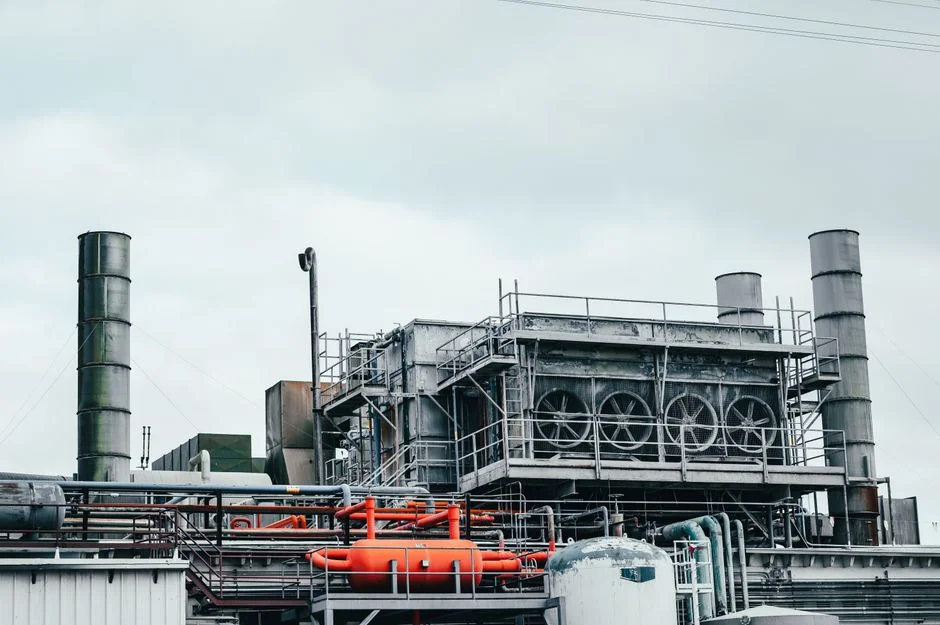
Take a 300-person peak-shift construction camp on the outskirts of Montevideo, with a canteen, shared showers, and an on-site laundry. The inputs the engineer needs to lock first are population (300 at peak shift), occupancy profile (two shifts with concentrated morning and evening demand), and inclusions (canteen and laundry are both in scope, so the per-capita flow and load will sit above a purely domestic figure).
Using Pure Aqua's published reference of 50 gpd per capita (Pure Aqua, pureaqua.com) as the starting per-capita flow, the average daily flow works out to 300 × 50 gpd = 15,000 gpd, which is roughly 57 m³/day. If the client or OSE can supply a local per-capita figure, swap it in at this step. Apply a peaking factor in the qualitative 1.5–2.5 range for camp hydraulics; the resulting design flow still falls well below MENA-Water's published ceiling of more than 1200 m³/day in a single 40-ft ISO container (MENA-Water, mena-water.com). At this scale, one 20-ft HC unit is the realistic envelope, and a 40-ft HC is selected only if the client wants expansion margin or if the canteen and laundry push the organic load into a range that needs the larger aeration volume.
What you must confirm with the supplier in writing, before signing: the membrane area and number of modules at your design flow, the MLSS operating window, the HRT and SRT, whether a single 20-ft HC suffices or a 40-ft HC is needed, and whether the camp is on a phase plan that justifies buying the larger unit now. The qualitative point worth keeping in front of the client is that a 300-person camp is small relative to a 40-ft ISO's published capacity, so the container choice here is driven by organic load, peak flow, and future expansion margin, not by the headline m³/day figure.
| Input | Value (per supplied research) | Source |
|---|---|---|
| Population | 300 peak-shift occupants (project input) | Project-specific |
| Per-capita flow | 50 gpd per capita (≈ 189 L/person/day) | Pure Aqua |
| Average daily flow | 15,000 gpd (≈ 57 m³/day) | Derived from inputs above |
| Peaking factor | Qualitative 1.5–2.5 range; confirm with supplier | Not in supplied research |
| Bracketing ceiling | More than 1200 m³/day in one 40-ft ISO | MENA-Water |
| Realistic container | Single 20-ft HC; 40-ft HC if organic load or expansion margin demands it | Engineering judgement against Pure Aqua format options |
Supplier Selection Checklist for a Montevideo Project
Run a like-for-like comparison between bidders on the same lines, in the same units, and against the same published data points. First, confirm the container format offered (20-ft HC versus 40-ft HC) and whether an I-Version mobile configuration is available if the camp is expected to relocate (MENA-Water, mena-water.com; Pure Aqua, pureaqua.com). Second, confirm the membrane specification: 0.04 µm hollow-fiber PVDF UF as published for Pure Aqua's MBR-C, or 2–100 nm UF in the general range cited by HUBER/MENA-Water (huber-se.com). Third, benchmark the maintenance interval: MENA-Water states membranes need only one or two maintenance cleanings per year (mena-water.com), so any bidder quoting substantially more frequent cleaning needs to explain why.
Fourth, confirm remote-monitoring capability, since MENA-Water offers remote monitoring from back office (huber-se.com) and that matters when the nearest service engineer is in Montevideo rather than on-site. Fifth, request factory witness testing and a Plug & Play commissioning scope to reduce on-site labour in Uruguay (MENA-Water, mena-water.com). Items the bid must list explicitly: spare-membrane allowance, a chemical-cleaning kit sized for the published cleaning interval, and the local after-sales support footprint. For a deeper worked calculation, the MBR capacity and sizing engineering guide walks the same chain in more detail.
Frequently Asked Questions
What per-capita wastewater flow should I use to size a containerized MBR in Montevideo?
Pure Aqua's published reference is 50 gpd per capita for its MBR-C, which is roughly 189 L/person/day (Pure Aqua, pureaqua.com). Use it as a starting anchor and request a local OSE or project-specific per-capita figure; if the camp includes a canteen and laundry, expect the effective figure to sit above the residential-only baseline.
How many m³ per day can a single 40-ft ISO containerized MBR handle?
MENA-Water states that more than 1200 m³/day can be filtered in one 40-ft ISO container, and the broader product range covers a few m³/day to thousands, custom-fit (MENA-Water, mena-water.com; HUBER/MENA-Water, huber-se.com). For bidding purposes, treat the 1200 m³/day figure as a ceiling and ask each bidder for the specific model number and its rated capacity at your peaking factor and load.
Will a standard containerized MBR handle Montevideo's climate without special cooling?
Pure Aqua's MBR-C is published for an operating temperature range of 20–30°C with a design temperature of 20°C (Pure Aqua, pureaqua.com), and Montevideo's sub-tropical climate fits this window for most of the year. If the site is in a coastal industrial pocket where ambient routinely exceeds the upper bound, raise that with the supplier before ordering.
How do I choose between suppliers for a Montevideo camp or residential project?
Benchmark each bidder against the same published data points: container format and I-Version availability for relocatable camps (MENA-Water, mena-water.com), membrane specification (Pure Aqua's 0.04 µm hollow-fiber PVDF UF or the 2–100 nm UF range in HUBER/MENA-Water, huber-se.com), maintenance interval (one to two cleanings per year per MENA-Water), and remote-monitoring capability. Ask each bidder for the local after-sales support footprint, factory witness testing, and Plug & Play commissioning scope in writing, since Uruguayan sites rarely have specialist commissioning crews on hand.
Related Equipment
- DF series PVDF flat sheet MBR module — specifications, capacity range, and technical data