
Why the "number of STPs in Tamil Nadu 2024-25" question has no single answer
No stand-alone 2024-25 census of sewage treatment plants specific to Tamil Nadu is in the indexed public record. Any STP count cited for the state for 2024-25 must therefore be read as a derived figure, not an audited one. The most recent named national reference for plant numbers is the Central Pollution Control Board's National Inventory of Sewage Treatment Plants, March 2021, which pre-dates the 2024-25 policy window (S4). The March 2021 edition is the document engineers, municipal planners and compliance leads use when answering a "how many STPs in Tamil Nadu" question today, because no successor inventory has been published.
For 2024-25, the working method is to treat the CPCB March 2021 inventory as the baseline, then overlay Tamil Nadu Pollution Control Board (TNPCB) consent registers and Urban Local Body (ULB) disclosures for any incremental plant additions. The CPCB inventory itself estimates sewage generation at 80% of a 185 lpcd water supply, which means a "number of STPs" figure is only meaningful when paired with that capacity assumption and the population each plant serves (S4). Two STPs rarely serve identical catchments, so the headcount alone is a planning indicator rather than a compliance certificate — a board memo, tender, or audit defence still needs the consent number and the inventory edition each plant was first reported in.
The policy stack every Tamil Nadu STP must satisfy in 2024-25
Three regulatory layers govern any sewage treatment plant operating in Tamil Nadu in 2024-25, and reading them in the right order separates a defensible count from a guessed one. Layer 1 is the National Green Tribunal order dated 30.04.2019 in O.A. No. 1069/2018, which sets the discharge standards for Mega and Metropolitan cities; TNPCB has explicitly directed all relevant departments to follow those standards (S3). Layer 2 is TNPCB's own design parameters, per-capita sewage flow band, BOD/COD ceilings and sludge handling rules, which apply across the state (S3). Layer 3 is the CPCB National Inventory of Sewage Treatment Plants, March 2021, the harmonised national reference list that TNPCB aligns its monitoring framework with (S3, S4).
Every STP operator must hold a valid Consent to Establish (CTE) and Consent to Operate (CTO) from TNPCB, with specific standards layering onto this framework (S3). TNPCB requires effluent monitoring at minimum monthly intervals, and select facilities run continuous online monitoring that streams real-time data to the board (S3). Non-compliant treated-sewage discharge or improper sludge handling can attract monetary penalties or closure orders under Tamil Nadu's environmental legislation, so consent status is the legal proof of operational status that any state-level "count" must be reconciled against (S3).
| Layer | Governing instrument | What it controls for a Tamil Nadu STP |
|---|---|---|
| 1. National tribunal | NGT order dated 30.04.2019 in O.A. No. 1069/2018 | Discharge standards for Mega and Metropolitan cities; binding on relevant TN departments (S3) |
| 2. State board | TNPCB guidelines for STPs | Design parameters, per-capita flow, BOD/COD ceilings, sludge handling, monitoring frequency, consent gating (S3) |
| 3. National reference | CPCB National Inventory of Sewage Treatment Plants, March 2021 | Harmonised plant count, installed capacity, sewage-generation assumption (S4) |
| Cross-cutting | Consent to Establish / Consent to Operate | Legal proof an STP is permitted to exist and run; the field a state-level count must reconcile against (S3) |
TNPCB design and discharge parameters that drive plant capacity
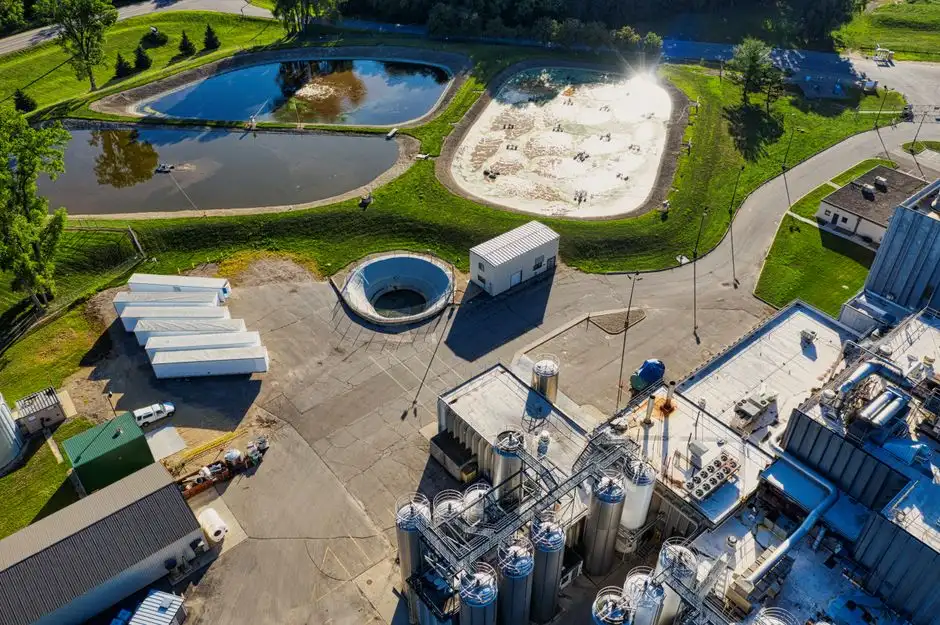
The TNPCB parameter set determines plant capacity, and any quoted Tamil Nadu STP count should reflect the treatment capacity these parameters imply. Per-capita sewage flow is standardised by TNPCB at 135-150 litres per person per day, and that band is the starting point for sizing any new or upgraded plant (S3). Treated-sewage BOD must remain under 30 mg/L, with stricter conditions when the receiving water body is a pond or a lake where phosphorus-total limits apply (S3). Treated-sewage COD must stay below 250 mg/L across the standard discharge envelope (S3).
TNPCB accepts Activated Sludge Process (ASP), Sequential Batch Reactor (SBR), Membrane Bioreactor (MBR) and equivalent advanced technologies, provided each meets the same effluent quality bar — which is why an MBR membrane bioreactor system is a defensible specification choice for new tenders where the receiving water body is sensitive. Sludge handling must follow TNPCB's two named pathways — agricultural reuse as fertiliser, or disposal in environmentally compliant designated landfills — and the chosen path must appear in annual compliance reports (S3). Facilities near water bodies, wildlife sanctuaries or dense populations may need a full Environmental Impact Assessment before expansion, which can change the practical "count" of operational STPs at any given date (S3). Energy and odour controls, such as solar power and biogas recovery, are listed as best-practice layers rather than baseline TNPCB conditions (S3).
| Parameter | TNPCB requirement | Source |
|---|---|---|
| Per-capita sewage flow | 135-150 L/person/day | S3 |
| Treated-sewage BOD | Under 30 mg/L (stricter for discharge into ponds/lakes, with phosphorus-total limits) | S3 |
| Treated-sewage COD | Below 250 mg/L | S3 |
| Accepted treatment processes | ASP, SBR, MBR, or equivalent advanced technologies meeting TNPCB effluent quality | S3 |
| Sludge handling | Agricultural reuse as fertiliser, or disposal in environmentally compliant designated landfills | S3 |
| Effluent monitoring frequency | Minimum monthly; select facilities run continuous online monitoring to the board | S3 |
What the CPCB inventory actually tells Tamil Nadu planners
The CPCB National Inventory of Sewage Treatment Plants, March 2021 is the only national reference list in the public record that consolidates STP counts, installed capacity and a generation assumption into a single document (S4). It is organised around three working fields: the number of STPs, total installed capacity, and sewage generation computed at 80% of a 185 lpcd water supply (S4). Total state-level sewage generation in the inventory is the sum of the serial-numbered city blocks plus the totals for serial numbers 4 and 5 (S4).
Because the March 2021 edition is the named baseline, any Tamil Nadu "2024-25 count" cited in the public domain should be cross-checked against CPCB updates or TNPCB annual reports rather than presented as a stand-alone figure. For industrial estates, the same inventory logic applies, but the governing effluent rules switch from TNPCB's domestic STP standards to TNPCB's industrial consent regime under the Water Act, 1974 (S3).
How to build a defensible Tamil Nadu STP figure for 2024-25
The defensible method is a five-step reconciliation, not a round number. Step 1: start with the CPCB National Inventory of Sewage Treatment Plants, March 2021 as the baseline count and capacity figure (S4). Step 2: layer in TNPCB-issued Consent to Operate registers for the 2022-2025 window to capture new plants and de-commissioned ones, as those registers are the legal proof of operational status (S3). Step 3: reconcile against the NGT 30.04.2019 compliance status for Mega and Metropolitan city STPs, since that order is the trigger for many of the capacity upgrades in the state (S3). Step 4: apply the CPCB 80%-of-185-lpcd generation assumption to check that reported installed capacity matches the population served, flagging under-sized plants for retrofit (S4). Step 5: document the result with source citations rather than presenting a rounded number, so any later audit can re-run the same calculation. For new plant specifications inside a tender, pairing that count with an underground package sewage treatment plant selection should be cross-checked against the per-capita flow band and the BOD/COD ceilings in the table above; broader context on the centralised STP scale debate in India and on decentralised wastewater treatment and reuse in India is also useful for board-level discussion.
Frequently Asked Questions
What is the actual 2024-25 count of STPs in Tamil Nadu?
No stand-alone 2024-25 Tamil Nadu STP census is in the public record. The defensible method is to start with the CPCB National Inventory of Sewage Treatment Plants, March 2021 as the baseline and overlay TNPCB-issued Consent to Operate registers for the 2022-2025 window to capture new plants and de-commissioned ones (S3, S4). The audit-defensible output is a documented reconciliation, not a rounded headcount.
Which NGT order controls Mega and Metro city discharge standards in Tamil Nadu?
The NGT order dated 30.04.2019 in O.A. No. 1069/2018 sets the discharge standards for Mega and Metropolitan cities, and TNPCB has directed all relevant departments to follow those standards (S3). Plants outside the Mega/Metro bracket must meet TNPCB's own BOD/COD and per-capita flow rules, but the NGT order is the binding instrument for larger catchments.
What inputs do I need to size a new Tamil Nadu STP correctly?
You need the population to be served, the per-capita sewage flow band of 135-150 L/person/day set by TNPCB, and the target treated-sewage envelope of BOD under 30 mg/L and COD below 250 mg/L (S3). From those three inputs the installed capacity in MLD is determined; from there, confirm the process train (ASP, SBR, MBR or equivalent) and the sludge pathway (agricultural reuse or designated landfill) before the tender is finalised (S3).
How do I check a Tamil Nadu STP supplier against TNPCB and NGT requirements before purchase?
Ask the supplier for documented compliance of the proposed process train with the NGT 30.04.2019 discharge standards in O.A. No. 1069/2018, and for written confirmation that the design meets the TNPCB per-capita flow, BOD and COD limits listed above (S3). Separately, request the lead time in writing, since the consent gating, EIA scope and online monitoring scope set by TNPCB determine how quickly a plant can be commissioned.