Why Hospital Wastewater in Cuenca Requires Specialized Treatment
Hospital wastewater in Cuenca requires specialized treatment to comply with Ecuador’s TULSMA regulations and protect the Andean water supply. With 90.7% of Cuenca’s population connected to sewer systems (per 2023 national data), hospitals must address pharmaceutical residues, pathogens, and heavy metals in effluent. Decentralized systems like MBR (Membrane Bioreactors) achieve 99%+ pathogen removal and are ideal for Cuenca’s high-altitude conditions (2,500+ meters), while dissolved air flotation (DAF) systems excel at removing suspended solids (95%+ TSS reduction). This guide provides 2025 cost benchmarks, regulatory compliance checklists, and equipment selection frameworks tailored to Cuenca’s unique environmental and operational challenges.
Ecuador’s TULSMA regulations (Decree 3516) mandate that hospital effluent must meet stringent discharge limits, including E. coli concentrations below 1,000 CFU/100mL and a Chemical Oxygen Demand (COD) under 250 mg/L. For facility managers in Cuenca, the primary challenge is the city’s high-altitude geography. At 2,500+ meters above sea level, oxygen solubility in water is 15-20% lower than at sea level. This physical constraint directly impacts biological treatment efficiency, requiring engineers to adjust aeration rates and retention times to prevent system failure. Standard "off-the-shelf" designs often fail in the Andes because they do not account for these atmospheric pressure variances.
While ETAPA Cuenca’s Guangarcucho plant provides robust municipal treatment, it is not engineered to neutralize hospital-specific contaminants such as antibiotics, iodine, or cytotoxic drugs. When these substances enter the municipal sewer untreated, they risk bypassing secondary treatment and entering the Tomebamba or Yanuncay rivers. hospitals in Cuenca’s rural outskirts often lack direct sewer access. A 2017 IWA study highlighted that decentralized systems in these areas are critical to preventing the contamination of irrigation water used for local agriculture, where untreated pathogens can enter the food chain.
Contaminant Profile: What’s in Hospital Wastewater and How It Affects Treatment
Hospital effluent in the Azuay province contains a complex mixture of biological and chemical agents that exceed the concentrations found in standard municipal sewage. Pharmaceutical residues are a primary concern; local studies using LC-MS/MS detection have identified antibiotics like amoxicillin and ciprofloxacin at concentrations ranging from 10 to 500 μg/L. These compounds are often resistant to traditional activated sludge processes and require advanced oxidation or membrane filtration to achieve safe discharge levels.
Pathogenic risks are heightened in hospital environments due to the presence of multi-drug-resistant bacteria, such as MRSA and VRE. The World Health Organization (WHO) 2024 guidelines emphasize that hospital disinfection must achieve a 4-log reduction (99.99%) of viruses and bacteria. In Cuenca, heavy metal loads also fluctuate based on department activity. Dental clinics contribute mercury (1-10 mg/L), while radiology departments may discharge silver (0.1-5 mg/L). These metals are toxic to the nitrifying bacteria used in biological treatment systems, necessitating pre-treatment via adsorption or chemical precipitation.
| Contaminant Type | Typical Hospital Concentration | TULSMA Limit (Decree 3516) | Treatment Requirement |
|---|---|---|---|
| BOD5 | 300–600 mg/L | < 250 mg/L | Extended Aeration / MBR |
| COD | 500–1,200 mg/L | < 500 mg/L | Biological + Advanced Oxidation |
| Total Suspended Solids (TSS) | 200–500 mg/L | < 350 mg/L | DAF or Membrane Filtration |
| E. coli | 10^6–10^8 CFU/100mL | < 1,000 CFU/100mL | Chlorine Dioxide / UV / MBR |
| Mercury (Hg) | 0.01–0.1 mg/L | < 0.005 mg/L | Ion Exchange / Precipitation |
Organic loads in hospital wastewater are significantly higher than domestic averages. While municipal BOD5 levels in Cuenca typically hover around 200 mg/L, medical facilities can reach 600 mg/L. This higher strength wastewater requires longer hydraulic retention times (HRT) and specialized biomass management to ensure that the effluent does not trigger regulatory fines from the Cuenca Environmental Secretariat.
Treatment Technologies Compared: MBR vs. DAF vs. Chlorine Dioxide for Cuenca Hospitals

Selecting the appropriate technology for a Cuenca-based hospital requires balancing technical performance with altitude-specific operational requirements. MBR membrane bioreactor systems for hospital wastewater are widely considered the gold standard for urban hospitals with limited space. These systems utilize submerged PVDF membranes with a 0.1 μm pore size, providing a physical barrier to pathogens. At Cuenca’s 2,500m altitude, flux rates must be derated to 15-25 LMH to account for lower atmospheric pressure, but the resulting effluent quality is often high enough for non-potable reuse.
For private clinics or hospitals with extensive cafeteria services, DAF systems for high-efficiency solids removal in hospital effluent are highly effective. DAF technology uses micro-bubbles (25-50 μm) to float fats, oils, and grease (FOG) and suspended solids to the surface for mechanical removal. In the thin air of the Andes, DAF saturators must be precisely calibrated, as the solubility of air in water changes with pressure. Properly tuned DAF systems can achieve 95%+ TSS reduction, which is essential for protecting downstream biological units from clogging.
Disinfection remains the final critical step. While many facilities use simple liquid bleach, on-site chlorine dioxide generators for hospital wastewater disinfection offer superior efficacy against resistant pathogens and biofilms. Unlike chlorine, chlorine dioxide (ClO₂) does not form carcinogenic trihalomethanes (THMs) when reacting with organic matter. These generators are particularly effective for rural clinics where chemical supply chains are inconsistent, as ClO₂ is generated on-demand from precursor chemicals.
| Technology | Primary Strength | Pathogen Removal | Altitude Sensitivity |
|---|---|---|---|
| MBR | Highest effluent quality; small footprint | 99.99% | High (requires +25% aeration) |
| DAF | FOG and TSS removal | Moderate | Medium (bubble buoyancy changes) |
| ClO₂ Generator | Superior disinfection; no THMs | 99.999% | Low (chemical reaction based) |
Engineering for altitude means adjusting the Dissolved Oxygen (DO) setpoints. While a sea-level system might operate at 2.0 mg/L DO, a system in Cuenca requires 2.4 to 2.6 mg/L to achieve the same biological oxidation rate. This necessitates larger blowers and more robust diffusers to ensure the biomass remains healthy and productive despite the lower partial pressure of oxygen.
Regulatory Compliance Checklist for Hospital Wastewater in Cuenca
Compliance in Cuenca is governed by a dual framework: the national TULSMA standards and the Cuenca Municipal Ordinance 012-2020. This ordinance is particularly strict regarding pre-treatment, requiring all medical facilities to prove that their effluent will not damage ETAPA’s municipal infrastructure. Failure to provide quarterly lab reports from certified third-party laboratories can result in immediate administrative sanctions.
Facility managers must maintain a compliance binder that includes daily flow logs, pH monitoring data, and chemical consumption records. The Cuenca Environmental Secretariat frequently audits these records during unannounced inspections. To ensure your facility remains compliant, follow this standardized checklist:
| Requirement | Standard / Limit | Frequency |
|---|---|---|
| pH Adjustment | 6.0 – 9.0 | Continuous Monitoring |
| BOD5 Testing | < 250 mg/L | Monthly |
| Total Suspended Solids | < 350 mg/L | Monthly |
| Fecal Coliforms | < 1,000 CFU/100mL | Monthly |
| Pharmaceutical Scan | Amoxicillin, Carbamazepine | Annual (Ordinance 012-2020) |
| Heavy Metal Scan | Hg, Ag, Pb | Semi-Annual |
When discharging to ETAPA's sewers, hospitals must also ensure that their grease traps are serviced monthly and that the temperature of the effluent does not exceed 35°C. For hospitals looking to optimize their compliance strategy, how to select the best medical wastewater treatment system for your facility provides a deeper look at aligning equipment specs with local legal mandates.
Cost Benchmarks: Hospital Wastewater Treatment in Cuenca (2025)
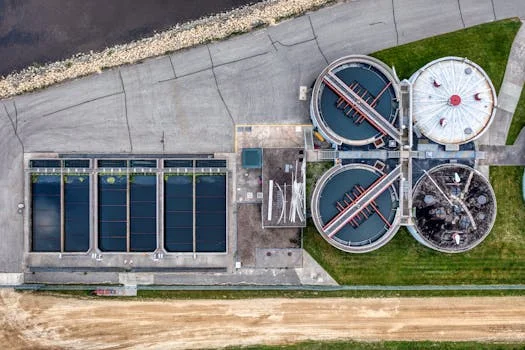
Budgeting for wastewater treatment in Cuenca involves both Capital Expenditure (CAPEX) and Operational Expenditure (OPEX). As of 2025, MBR systems for hospital applications range from $1,200 to $1,800 per cubic meter of daily capacity. This price includes a "Cuenca premium" of approximately 15% to account for the larger blowers and specialized aeration diffusers required for high-altitude operation. In contrast, DAF systems are more economical for primary treatment, costing between $800 and $1,500 per m³/day.
OPEX is heavily influenced by local electricity rates and chemical availability. In Cuenca, energy costs can be up to 20% higher for wastewater treatment compared to lower-altitude cities like Guayaquil due to the increased power required for aeration. However, the ROI for these systems is often realized through the avoidance of fines. With penalties for non-compliance ranging from $2,000 to $10,000 per violation, a well-maintained system can pay for itself within 5 to 7 years.
| System Type | CAPEX (per m³/day) | OPEX (per m³) | Key Cost Driver |
|---|---|---|---|
| MBR System | $1,200 – $1,800 | $0.40 – $0.70 | Membrane replacement & Aeration |
| DAF System | $800 – $1,500 | $0.20 – $0.50 | Coagulant/Flocculant chemicals |
| ClO₂ Generator | $5,000 – $50,000* | $0.10 – $0.30 | Precursor chemicals (NaClO₂/HCl) |
*ClO₂ generator cost is based on total unit capacity (g/h), not per m³.
Labor costs for skilled operators in Cuenca typically range from $800 to $1,200 per month. Because hospital systems are complex, it is recommended to invest in automated controls and remote monitoring to reduce the need for constant manual intervention. When evaluating long-term costs, comparing chlorine dioxide generators with ozone, UV, and chlorine for hospital wastewater can help procurement officers identify the most cost-effective disinfection method for their specific flow rates.
How to Choose the Right System for Your Cuenca Hospital
Choosing the right treatment system requires a structured engineering approach that considers the hospital’s location, size, and specific contaminant load. For an urban hospital in Cuenca’s historic center, space is the primary constraint. In this scenario, compact medical wastewater treatment systems for clinics and small hospitals that utilize integrated MBR technology are often the only viable option due to their small footprint and high-quality output.
For rural clinics or larger hospitals with available land, a decentralized approach using a combination of DAF for primary solids removal and a compact biological unit is more resilient. The following framework should guide your selection process:
- Step 1: Flow and Load Assessment. Calculate the Average Daily Flow (ADF). A 50-bed hospital typically generates 20 m³/day. Test the raw influent for BOD, TSS, and FOG.
- Step 2: Technology Matching. If FOG levels are >50 mg/L, a DAF unit is mandatory. If pathogen removal is the priority for reuse, MBR is the preferred choice.
- Step 3: Altitude Engineering. Ensure all biological units are sized with a 25% safety factor for aeration to compensate for Cuenca’s 2,500m elevation.
- Step 4: TCO Analysis. Use a 10-year Total Cost of Ownership (TCO) model. While MBR has higher CAPEX, its ability to produce reuse-quality water can offset costs through reduced municipal water purchases.
- Step 5: Support and Maintenance. Prioritize suppliers that offer remote diagnostic capabilities. Given the limited number of specialized membrane technicians in the Azuay province, 24-hour remote troubleshooting is a critical feature.
| Facility Type | Primary Challenge | Recommended Configuration | Footprint |
|---|---|---|---|
| Urban Private Clinic | Limited Space / FOG | DAF + Compact MBR | Minimal |
| Public General Hospital | High Pathogen Load | MBR + ClO₂ Disinfection | Moderate |
| Rural Health Center | Low Maintenance / Remote | Integrated Packaged System + UV | Large |
For facility managers looking to benchmark their designs against international standards, reviewing hospital wastewater treatment best practices in tropical climates can provide insights into managing high organic loads, though the altitude adjustments remain unique to the Andean context.
Frequently Asked Questions
Q: Do hospitals in Cuenca need to treat wastewater on-site, or can they discharge to the municipal sewer?
A: Cuenca’s Municipal Ordinance 012-2020 requires hospitals to pre-treat effluent before discharge to ETAPA’s sewers, even if connected to the municipal system. Pre-treatment must remove FOG, adjust pH, and reduce TSS to <350 mg/L. On-site treatment is mandatory for rural hospitals without sewer access.
Q: What are the penalties for non-compliance with hospital wastewater regulations in Cuenca?
A: Fines range from $2,000 to $10,000 per violation, depending on severity and repeat offenses (Cuenca Environmental Secretariat, 2024). Chronic non-compliance can lead to facility shutdowns. For example, a Cuenca clinic was fined $8,000 in 2023 for exceeding E. coli limits in their discharge.
Q: How does Cuenca’s high altitude affect wastewater treatment system design?
A: At 2,500+ meters, oxygen solubility is 20-30% lower than at sea level, requiring higher aeration rates for biological systems like MBR. Dissolved oxygen (DO) setpoints must be increased from 2.0 mg/L to 2.4-2.6 mg/L. DAF systems may also require larger air saturation tanks to compensate for reduced bubble buoyancy.
Q: What maintenance is required for a hospital wastewater treatment system in Cuenca?
A: MBR systems require monthly membrane cleaning (citric acid wash) and annual integrity testing. DAF systems require weekly skimmer adjustments and monthly chemical calibration. Chlorine dioxide generators require daily chemical precursor checks and quarterly sensor calibration to ensure disinfection efficacy.
Q: Can treated hospital wastewater be reused in Cuenca?
A: Yes, but only for non-potable uses like landscape irrigation or toilet flushing. The system must achieve WHO Category A reuse standards, which include <10 CFU/100mL E. coli and <10 mg/L BOD5. Local permits from ETAPA and the Ministry of Environment are required for any reuse project.