Industrial Wastewater Treatment in Wyoming USA: 2025 Engineering Guide with Costs, Compliance & Equipment Selection
Industrial wastewater treatment in Wyoming requires compliance with EPA’s Pretreatment Program and WDEQ standards, with key parameters including TSS <30 mg/L, BOD <25 mg/L, and oil/grease <10 mg/L for direct discharge (EPA 2024). Wyoming’s oil/gas, mining, and food processing sectors face unique challenges: high salinity (up to 150,000 mg/L TDS in oilfield wastewater), cold-climate biological treatment limitations, and seasonal flow variations. Proven solutions include dissolved air flotation (DAF) for FOG removal (95%+ efficiency), integrated MBR systems for space-constrained sites (60% smaller footprint than conventional systems), and aerated lagoons for rural facilities (operating costs as low as $0.15/m³). This guide provides 2025 engineering specs, cost benchmarks, and a decision framework for selecting the right system for industrial wastewater treatment in Wyoming USA.Wyoming’s Industrial Wastewater Regulations: EPA Pretreatment Program & WDEQ Standards
Compliance with federal and state regulations is paramount for industrial facilities managing wastewater in Wyoming. The EPA’s Pretreatment Program, outlined in 40 CFR Part 403, mandates specific requirements for industrial users discharging into Publicly Owned Treatment Works (POTWs), establishing categorical limits for over 30 industries, including oil/gas, metal finishing, and food processing operations. Local limits, often more stringent, are enforced by municipalities like Laramie, Jackson, and Gillette, which manage their own EPA-approved Pretreatment Programs to protect their municipal wastewater infrastructure and receiving waters (City of Laramie, Top 1; City of Jackson, Top 4). The Wyoming Department of Environmental Quality (WDEQ) Water Quality Rules, specifically Chapter 8, establish comprehensive discharge limits for both direct and indirect dischargers. For direct discharges to state waters, common WDEQ wastewater permits specify limits such as Total Suspended Solids (TSS) <30 mg/L, Biochemical Oxygen Demand (BOD) <25 mg/L, a pH range of 6.0-9.0, and oil/grease <10 mg/L. Heavy metal limits are typically benchmarked against EPA 2024 standards, adjusted for local conditions. The permitting process for new or modified industrial wastewater systems in Wyoming typically takes 90-120 days, with fees ranging from $500 to $5,000 depending on flow rate and complexity. Annual reporting requirements include Discharge Monitoring Reports (DMRs) and self-monitoring data. Wyoming industrial facilities frequently encounter specific compliance challenges. In 2023, oil/grease exceedances in oilfield wastewater accounted for 58% of WDEQ enforcement actions, highlighting the need for robust oil and grease removal systems. pH fluctuations in mining effluent contributed to 22% of violations, while TSS exceedances in food processing wastewater constituted 15%. Proactive measures, such as those implemented by Laramie’s Pretreatment Program, have shown tangible results, reducing industrial violations by 42% since 2020 through mandatory pretreatment audits and improved oversight (City of Laramie, Top 1). For facilities seeking to compare Wyoming’s regulations with other regions, exploring industrial wastewater treatment in New Hampshire USA can offer a broader perspective.| Parameter | WDEQ Direct Discharge Limit | Common Violation Type (2023 WDEQ) |
|---|---|---|
| TSS | <30 mg/L | Food Processing (15%) |
| BOD | <25 mg/L | General Industrial |
| pH | 6.0-9.0 | Mining Effluent (22%) |
| Oil/Grease | <10 mg/L | Oilfield Wastewater (58%) |
| Heavy Metals | Per EPA 2024 Benchmarks | Mining/Metal Finishing |
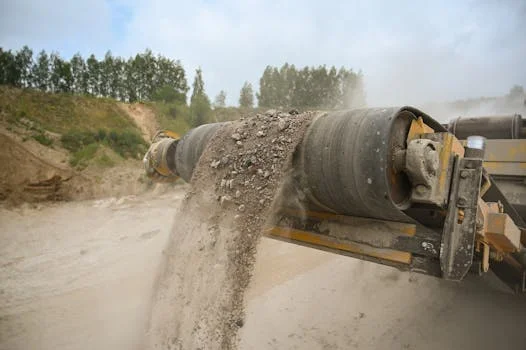
Wyoming’s Industrial Sectors & Their Wastewater Challenges
Treatment Technologies for Wyoming’s Industrial Wastewater: Engineering Specs & Performance Data
Selecting the optimal industrial wastewater treatment system in Wyoming requires a detailed understanding of each technology's engineering specifications and performance capabilities, especially when contending with cold climates and specific industrial pollutants. Dissolved Air Flotation (DAF) systems are highly effective for removing suspended solids, fats, oils, and grease (FOG). HydropureWater's DAF systems for Wyoming oilfield and food processing wastewater typically achieve 95%+ TSS removal, 90%+ FOG removal, and 60-80% BOD reduction. These units are designed for flow rates ranging from 4 to 300 m³/h. Optimal performance requires influent pH adjustment to 6.5-8.5 and chemical dosing with coagulants and flocculants to enhance particle aggregation. DAF is particularly well-suited for oil and gas facilities treating produced water and frac flowback, as well as food processing plants managing high FOG loads. For a deeper dive, compare DAF vs. oil-water separators: which is better for Wyoming’s oilfield wastewater? Membrane Bioreactors (MBR) combine conventional biological treatment with advanced membrane filtration, delivering superior effluent quality. Integrated MBR systems for space-constrained Wyoming facilities, like HydropureWater's DF series, utilize PVDF membranes with a 0.1 μm pore size, producing effluent suitable for near-reuse applications with typically <1 mg/L TSS and <5 mg/L BOD. MBR systems handle flow rates from 10 to 2,000 m³/day and offer a significant advantage in footprint, requiring up to 60% less space than conventional activated sludge systems. This makes them ideal for sites with limited land availability or those requiring high-quality effluent for discharge or reuse. To ensure optimal performance in cold conditions, consider how to select the best MBR system for Wyoming’s cold-climate industrial wastewater. Aerated Lagoons represent a low-cost biological treatment option, particularly for rural facilities in Wyoming, such as the system serving Dubois (Nelson Engineering, Top 2). Operating costs for aerated lagoons can be as low as $0.10-$0.25/m³. However, they require substantial land, typically 3-5 acres for a 0.5 MGD facility, and are highly susceptible to cold-climate limitations. Ice cover in winter can reduce biological treatment efficiency by as much as 40%, necessitating careful design considerations for oxygen transfer and mixing. Mechanical Bar Screens are crucial for preliminary treatment, removing large debris such as rags, plastics, and coarse solids. Systems with 2-6 mm spacing, like those used in Gillette's wastewater treatment facility (City of Gillette, Top 5), achieve 99% removal efficiency for particles greater than 5 mm. These self-cleaning brush discharge units protect downstream equipment from damage and blockages, ensuring operational continuity. Chlorine Dioxide Disinfection offers an effective solution for microbial control in process water and final effluent. HydropureWater's on-site ClO₂ generators provide capacities ranging from 50 to 20,000 g/h. Chlorine dioxide is an EPA-approved disinfectant for drinking water and has the advantage of not forming harmful trihalomethanes (THMs), unlike traditional chlorine, making it a safer and environmentally conscious choice for Wyoming’s industrial effluent disinfection.| Technology | TSS Removal | BOD Removal | FOG Removal | Metals Removal | TDS Reduction | Typical Flow Range | Relative Footprint |
|---|---|---|---|---|---|---|---|
| DAF | 95%+ | 60-80% | 90%+ | Moderate (with coagulants) | Minimal | 4-300 m³/h | Medium |
| MBR (DF Series) | >99% (<1 mg/L effluent) | >95% (<5 mg/L effluent) | High (biological degradation) | High (with chemical pretreatment) | Minimal | 10-2,000 m³/day | Small (60% less than conventional) |
| Aerated Lagoons | 70-90% | 80-90% | Moderate | Low | Minimal | 0.5-5 MGD | Very Large |
| Mechanical Bar Screens | 99% (>5mm particles) | N/A | N/A | N/A | N/A | Up to 10,000 m³/h | Very Small |
Cost Breakdown: CAPEX, OPEX, and ROI for Wyoming Industrial Wastewater Systems
| Technology | Typical CAPEX (2025) | Typical OPEX per m³ | Relative Footprint | Key Removal Efficiencies |
|---|---|---|---|---|
| DAF (4-300 m³/h) | $50,000 - $500,000 | $0.20 - $0.50 | Medium | 95%+ TSS, 90%+ FOG |
| MBR (10-2,000 m³/day) | $200,000 - $2,000,000 | $0.30 - $0.80 | Small (60% smaller) | >99% TSS, >95% BOD |
| Aerated Lagoons (0.5-5 MGD) | $1,000,000 - $5,000,000 | $0.10 - $0.25 | Very Large | 70-90% TSS, 80-90% BOD |
Equipment Selection Framework: How to Choose the Right System for Your Wyoming Facility
Selecting the most cost-effective and compliant industrial wastewater treatment system for a Wyoming facility is a multi-step process that integrates technical requirements, site constraints, and regulatory mandates. A structured decision framework helps streamline this complex evaluation. Step 1: Define Influent Characteristics and Discharge Requirements. Begin by thoroughly characterizing your wastewater influent. This includes average and peak flow rates, concentrations of key pollutants (TSS, BOD, FOG, pH, heavy metals, TDS, hydrocarbons), temperature, and any specific contaminants relevant to your industry (e.g., salinity for oilfield wastewater). Simultaneously, identify your discharge requirements: whether you are a direct discharger to state waters (requiring a WDEQ Water Quality Permit) or an indirect discharger to a municipal POTW (subject to EPA Pretreatment Program and local limits). Step 2: Evaluate Site Constraints. Assess your facility’s physical and operational limitations. Consider available footprint for the treatment system, power availability and reliability, the average and extreme climate conditions (especially cold temperatures), and the skill level of your operating personnel. For instance, space-constrained urban facilities might favor compact MBR systems, while rural sites with ample land could consider aerated lagoons. Step 3: Compare Technologies Using the Cost-Performance Matrix. Utilize the detailed engineering specifications, removal efficiencies, CAPEX, and OPEX benchmarks from the previous sections to create a cost-performance matrix. This allows for a direct comparison of DAF, MBR, and aerated lagoons against your specific influent characteristics and discharge goals. For example, if high FOG removal is critical for a food processing plant, DAF systems excel. If ultra-pure effluent for reuse is needed, MBRs are the superior choice. This step is crucial in determining the best submerged MBR for industrial use in cold climates like Wyoming. Step 4: Pilot Testing. For facilities with complex influent streams or flow rates exceeding 50 m³/h, pilot testing is highly recommended. A pilot program allows for real-world validation of technology performance under specific site conditions, optimizing chemical dosages, and confirming removal efficiencies before full-scale investment. An MBR pilot in Alpine, WY, for instance, demonstrated 99% TSS removal, providing critical data for the final system design (Nelson Engineering, Top 2). Step 5: Permitting and Compliance. Engage with the WDEQ and/or your local POTW early in the selection process. This ensures that the chosen technology aligns with all regulatory requirements and that the permitting timeline is factored into your project schedule. Categorical industries may be subject to mandatory pretreatment audits, requiring specific design considerations. The decision tree below outlines a general path for equipment selection:Decision Tree for Wyoming Industrial Wastewater Treatment System Selection:
-
Start: Define Influent & Discharge Needs
- Is FOG >500 mg/L or Oil & Grease >50 mg/L a primary concern?
- YES: Consider DAF
- Is high BOD/COD reduction (60-80%) sufficient?
- YES: DAF is a strong candidate.
- NO: Consider DAF as pretreatment, then MBR.
- Is high BOD/COD reduction (60-80%) sufficient?
- NO: Proceed to next question.
- YES: Consider DAF
- Is near-reuse quality effluent (<1 mg/L TSS, <5 mg/L BOD) required, or is footprint highly constrained?
- YES: Consider MBR (DF Series)
- Is CAPEX/OPEX within budget for advanced treatment?
- YES: MBR is a strong candidate.
- NO: Re-evaluate discharge requirements or explore phased implementation.
- Is CAPEX/OPEX within budget for advanced treatment?
- NO: Proceed to next question.
- YES: Consider MBR (DF Series)
- Is land availability abundant, and are CAPEX/OPEX minimization (lowest) the absolute top priorities for biological treatment?
- YES: Consider Aerated Lagoons
- Can cold-climate efficiency reductions (up to 40%) be managed with design/insulation?
- YES: Aerated Lagoons are a strong candidate.
- NO: Re-evaluate MBR or DAF + secondary treatment.
- Can cold-climate efficiency reductions (up to 40%) be managed with design/insulation?
- NO: Re-evaluate DAF or MBR.
- YES: Consider Aerated Lagoons
- Are large solids/debris a primary concern for protecting downstream equipment?
- YES: Implement Mechanical Bar Screens (e.g., GX Series) as primary treatment.
- Is disinfection required for microbial control in effluent or process water?
- YES: Consider Chlorine Dioxide Disinfection.
- Is FOG >500 mg/L or Oil & Grease >50 mg/L a primary concern?
- End: Final System Design & Permitting (with WDEQ/Local POTW)
Compliance Checklist: Permits, Monitoring, and Reporting for Wyoming Industrial Facilities
Frequently Asked Questions
What are the penalties for non-compliance with Wyoming’s wastewater regulations?
Penalties for non-compliance with Wyoming’s WDEQ and EPA regulations can range from civil penalties of $10,000 to $100,000 per violation per day, depending on severity and duration. Criminal charges may also apply for willful violations, leading to significant fines and potential imprisonment for individuals.
How much does it cost to treat 1,000 gallons of oilfield wastewater in Wyoming?
The cost to treat 1,000 gallons (approximately 3.785 m³) of oilfield wastewater in Wyoming varies significantly based on influent characteristics and treatment technology. Using typical OPEX benchmarks, this could range from $3.78 to $18.93 per 1,000 gallons, not including CAPEX amortization or specialized high-salinity treatments. Water reuse and reduced disposal costs can offset these expenses.
What are the best wastewater treatment options for cold climates like Wyoming?
For cold climates, robust mechanical and chemical-physical systems like DAF are less affected by temperature fluctuations. Biological systems like MBRs can be effective but require insulated tanks, heat tracing, or specialized cold-climate designs to maintain optimal biological activity. Aerated lagoons are cost-effective but see significant efficiency reductions (up to 40%) in winter due to ice cover and slower biological rates.
Do I need a permit for discharging industrial wastewater into a municipal sewer system in Wyoming?
Yes, if your facility is an industrial user discharging into a municipal sewer system (Publicly Owned Treatment Works, POTW) in Wyoming, you likely need a permit. This is typically an EPA Pretreatment Permit (for categorical industries or significant industrial users) and/or a local Industrial User Permit issued by the municipality (e.g., Laramie, Jackson, Gillette) to ensure compliance with local limits and protect the POTW.
What are the most common industrial wastewater violations in Wyoming, and how can I avoid them?
The most common violations in Wyoming's industrial wastewater sector are oil/grease exceedances (especially in oilfield wastewater), pH fluctuations (mining effluent), and TSS exceedances (food processing). To avoid these, implement appropriate treatment technologies (e.g., DAF for FOG, pH neutralization for mining), conduct regular monitoring, maintain meticulous record-keeping, and ensure proper training for operators. Proactive consultation with WDEQ and adherence to permit conditions are crucial.
Related Equipment
- DAF systems for Wyoming oilfield and food processing wastewater — view specifications, capacity range, and technical data
- Integrated MBR systems for space-constrained Wyoming facilities — view specifications, capacity range, and technical data
- On-site ClO₂ generators for Wyoming’s industrial effluent disinfection — view specifications, capacity range, and technical data
Need a customized solution? Request a free quote with your specific flow rate and pollutant parameters.