The Tomball Regulatory Hook: Which Control Authority and Which CFR Subcategory Apply
Plastics, resin, and synthetic resin manufacturers discharging from the Tomball/Houston area fall under 40 CFR Part 414, which divides the industry into subcategories such as contact cooling and process water (414.11) and emulsion process wastewater (414.21), among other resin-specific subparts. Rubber manufacturers fall under 40 CFR Part 463, with subcategories for tire production, latex-based processes, and general rubber products covering mechanical, molded, and extruded goods. Both sit under the general framework of 40 CFR Part 403, which the U.S. EPA publishes on eCFR.gov (per hydropurewater.com, retrieved 2026-02).
The Control Authority is the agency that issues and enforces the binding permit. Per the EPA National Pretreatment Program overview (epa.gov/npdes/national-pretreatment-program, retrieved 2026-02), the Control Authority is typically the POTW holding an EPA-approved pretreatment program—in the Tomball/Houston area this is normally a regional authority such as a West Harris County MUD or the City of Houston's system. The Control Authority issues the individual permit, sets site-specific limits, conducts compliance sampling at the designated sampling point, and reviews DMRs. The most stringent applicable limit always controls, so a categorical standard lower than the local limit does not automatically give the discharger relief.
Mis-identifying the subcategory, rather than undersized equipment, is the most common root cause of permit-defense failures. A plant preparing for a 2026 renewal should map every waste stream to the correct subcategory, identify the receiving Control Authority, and pull the current individual permit to confirm which numerical limits, sampling frequencies, and reporting deadlines are written into the enforceable document. Categorical standards on the eCFR are a starting point, not the end of the search.
What the Permit Actually Limits: The Six Parameter Families Driving 2026 DMR Excursions
DMR excursions in plastics and rubber plants cluster around six parameter families: total suspended solids, oil and grease, BOD and COD, pH, polymerization-specific priority pollutants (benzene, styrene, vinyl chloride, acrylonitrile), and—increasingly in 2026—PFAS where fluoropolymer processing or PFAS-treated feedstocks are present (per the EPA Introduction to the National Pretreatment Program, 2023, as cited by hydropurewater.com, retrieved 2026-02). Each parameter has a specific biological or chemical meaning to the receiving POTW: TSS and O&G smother biomass and clog aeration diffusers, BOD/COD load the secondary treatment train, pH outside the operating window kills nitrifiers, and priority pollutants can pass through into biosolids or effluent even when conventional parameters look clean.
Priority pollutant scans should at minimum include the volatile organics listed in 40 CFR Part 122 Appendix D that are relevant to polymerization (styrene, acrylonitrile, vinyl chloride, benzene, ethylbenzene), the semi-volatile anthracene and phenanthrene, and any metal catalysts used in the process—zinc, chromium, and lead from stabilizers (per hydropurewater.com, retrieved 2026-02). State-level PFAS screening, including for 1,4-dioxane as a fluoropolymer breakdown product, has expanded sharply in 2025–2026 even where federal categorical limits remain silent. A 2024 report from thenewlede.org notes that EPA has been criticized for failing to update wastewater limits for plastics plants, explaining why 2026 renewals are likely to be tighter than the historical baseline.
The table below translates typical categorical and local permit limits into the design basis engineers use to size each unit process. Limits are illustrative; local Control Authority limits always govern, so verify against the current permit before final design (per hydropurewater.com, retrieved 2026-02).
| Parameter | Typical plastics/rubber categorical or local limit (illustrative, mg/L unless noted) | Target removal / design approach |
|---|---|---|
| TSS | 30–60 (monthly avg.); 100–150 (daily max) | DAF + biological + multi-media or UF polish. DAF 50–80%, MBR 95–99%, polish to <5 mg/L |
| Oil & Grease | 10–50 (monthly avg.); 100 (daily max) | 60–90% on DAF; combined train >95% |
| BOD | 25–50 (monthly avg.); 100–200 (daily max) | Equalization + activated sludge or MBR. Activated sludge 85–95%; MBR 95–98% |
| pH | 5.0–10.0 (instantaneous) or 6.0–9.0 in stricter local permits | In-line pH adjustment with NaOH/H₂SO₄ dosing; maintain 6.5–8.5 to biological stage |
| Priority organics (styrene, acrylonitrile, vinyl chloride, benzene) | Permit-specific; priority pollutant scan | Stripping (air or steam) + GAC adsorption |
| Metals (zinc, chromium, lead from stabilizers) | Permit-specific | Hydroxide precipitation + DAF or ion exchange |
| PFAS (state-level screening, 2026) | Action levels vary; 4–10 ng/L for PFOA/PFOS in leading states | GAC + ion exchange or reverse osmosis. No federal categorical PFAS limit under 40 CFR 414 or 463 as of 2026 |
A safety factor of 1.2–1.5× is standard practice to keep margin against hydraulic and load spikes. The difference between a clean DMR month and a Notice of Violation often comes down to whether the plant was designed with that cushion.
The Standard Unit-Operation Train, In P&ID Order
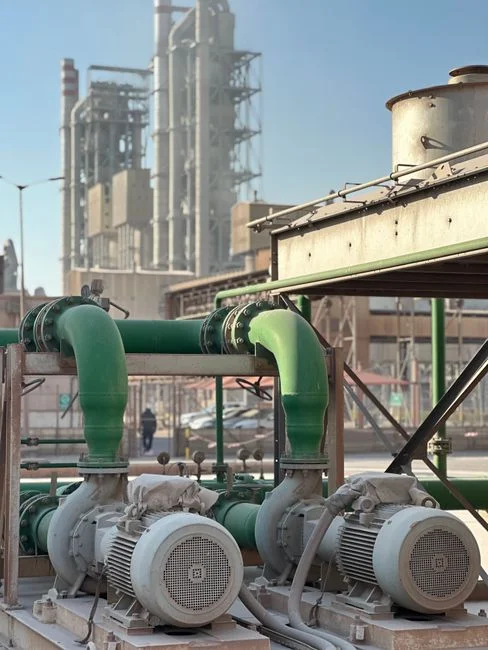
Equalization basins absorb intermittent batch discharges from rubber molding and polymer kettle cleaning. A basin that is undersized or bypassed is a common root cause of NOV findings because the resulting load spikes propagate straight into the biological stage (per hydropurewater.com, retrieved 2026-02). From equalization, the stream flows to dissolved air flotation.
DAF is the primary oil-and-grease and emulsified-solids removal step. Coagulant dosing destabilizes the emulsion, recycle-water pressurization generates the microbubble cloud, and the floated layer is skimmed to sludge handling. On polymer-bearing streams, DAF typically achieves 60–90% oil and grease removal and 50–80% TSS removal on a single pass (per hydropurewater.com, retrieved 2026-02). For facilities comparing dissolved air flotation to conventional gravity separation, polymer-coagulant emulsions, mold-release agents, and latex finishing residues carry droplet sizes commonly below 100 µm and are mechanically and chemically stabilized by surfactants, so a DAF unit for emulsified polymer and latex streams is the standard workhorse; gravity separation will not remove them. A related head-to-head on this problem is captured in the DAF vs clarifier comparison for plastics and rubber wastewater.
Downstream of DAF, biological treatment removes the soluble BOD/COD load. Activated sludge typically delivers 85–95% BOD removal; an MBR system for tight TSS and BOD ceilings tightens that to 95–98% with a much cleaner effluent because the membrane retains biomass and particulates that would otherwise carry through a clarifier. Multi-media or UF polish brings TSS below 5 mg/L where reuse or tight local limits require it, and in-line pH adjustment with NaOH or H₂SO₄ holds the biological stage inside its 6.5–8.5 operating window. For metals, hydroxide precipitation plus DAF, or ion exchange, is the standard branch. For priority organics, air or steam stripping followed by GAC adsorption handles the volatile and semi-volatile fractions. For state-level PFAS in 2026, the train extends to GAC plus ion exchange or reverse osmosis; for a deeper methodology on selecting that step, see the 2026 buyer's guide to evaluating PFAS treatment technology firms.
Proving Compliance: The Sampling Point, the DMR, and the Documentation Chain
The "sampling point" (also called the "sampling location" or "discharge point") is the representative point in the wastestream where the Control Authority collects samples to determine compliance with the permit under 40 CFR Part 403. For most categorical industrial users, the sampling point is downstream of all in-plant treatment but upstream of any recycle or zero-discharge return, so that the sample represents the actual discharge to the POTW (per hydropurewater.com, retrieved 2026-02, citing 40 CFR Part 403).
Sampling frequency is set by the individual permit, but categorical industrial users typically collect 24-hour flow-proportional composite samples at minimum twice per year for routine parameters, with monthly sampling common during permit-renewal monitoring windows; priority pollutant scans are usually annual. Online TSS, pH, and conductivity probes tied to plant SCADA give continuous trend visibility and reduce the chance that a single bad shift shows up unannounced in a quarterly composite. For priority pollutant scans, use a third-party lab holding state and NELAP accreditation, and document the chain of custody on every sample.
Three 2026 enforcement trends are emerging. First, EPA and state PFAS action levels for PFOA, PFOS, and HFPO-DA are tightening, and fluoropolymer processors—PTFE, PVDF, fluoroelastomer molding—are the most exposed. Second, microplastics in POTW influent are under active study, and several large POTWs are now requesting voluntary or required monitoring from upstream plastics manufacturers. Third, intermittent batch discharges from rubber molding and polymer kettle cleaning are receiving closer scrutiny because they create the load spikes the equalization basin is designed to absorb.
CAPEX, OPEX, and the 2026 Decision Framework for a Permit-Renewal Upgrade
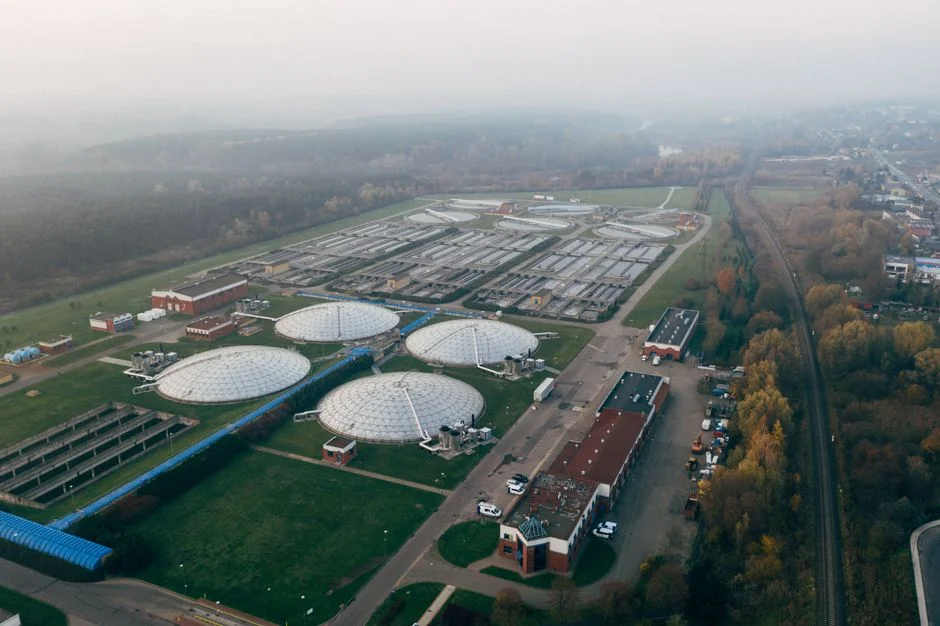
Pretreatment capital cost is most usefully framed as US dollars per cubic meter of treated flow, with the membrane-based train (MBR + UF) typically 20–40% higher in CAPEX than conventional activated sludge plus multi-media but 15–25% lower in annual OPEX because of lower sludge yield, tighter effluent, and reduced chemical consumption (per hydropurewater.com, retrieved 2026-02). Where the local utility accepts reclaimed water for cooling-tower make-up or process rinse reuse, the reuse offset can bring effective water cost down by 50–80% relative to fresh purchase, which on a 50 m³/h plant translates to a payback window of roughly 2–4 years for the membrane upgrade. The request for a per-m³ CAPEX figure should be part of any supplier proposal package, because the absolute number depends on influent characterization, discharge limits, reuse targets, and site civil work—variables only the buyer can supply.
Plants preparing for permit renewal should map every waste stream to the correct CFR subcategory, identify the local Control Authority, and pull the current permit to confirm which numerical limits, sampling frequencies, and reporting deadlines are written into the enforceable document. Categorical standards on the eCFR are a starting point, not the end of the search—local Control Authority limits always govern, and the binding permit overrides any general guidance. Sites with fluoropolymer processing or PFAS-treated feedstocks should also request current state PFAS action levels and confirm whether PFAS monitoring is being written into the renewal, as it already is in Michigan, North Carolina, and several New England states.
Before signing a proposal, the engineering checklist is short and unforgiving: confirm the subcategory and the binding permit, confirm the influent characterization, confirm the sampling-point location and DMR frequency, confirm state-level PFAS and 1,4-dioxane action levels, confirm the reuse offset if the local utility accepts reclaimed water, and request a per-m³ treated-flow CAPEX number tied to the same influent basis. Skipping any one of those items is how plants end up defending a DMR they thought the equipment had already solved.
Frequently Asked Questions
Which CFR subcategory applies to a plastics or rubber plant near Tomball?
Plastics, resin, and synthetic resin manufacturers discharging to
Frequently Asked Questions
Which 40 CFR subcategory applies to a plastics or rubber plant near Tomball, Texas in 2026?
Plants in the Tomball area typically fall under 40 CFR Part 463 (Plastics Molding and Forming Point Source Category) or 40 CFR Part 414 (Organic Chemicals, Plastics, and Synthetic Fibers). Facilities specifically engaged in injection molding, extrusion, or blow molding are regulated under Part 463, while those involved in the polymerization or synthesis of resins must comply with the more stringent effluent guidelines defined in Part 414.
What CAPEX and OPEX should we expect for an MBR plus UF pretreatment train versus conventional activated sludge at a 50 m³/h plastics facility?
For a 50 m³/h capacity, a Membrane Bioreactor (MBR) combined with Ultrafiltration (UF) typically requires a CAPEX of $2.5 million to $4.5 million, compared to $1.5 million to $2.5 million for conventional activated sludge. While CAPEX is higher, the MBR/UF train significantly reduces OPEX associated with sludge disposal and surcharge fees, often yielding a 30-40% reduction in discharge costs due to superior removal of Total Suspended Solids (TSS) and Chemical Oxygen Demand (COD).
Is there a federal categorical PFAS limit under 40 CFR Part 414 or 463 in 2026, and which states are writing PFAS monitoring into permit renewals?
As of 2026, there are no federal categorical effluent limits for PFAS under 40 CFR Part 414 or 463. However, the EPA has initiated a multi-year effluent guidelines program to study PFAS discharges. States including Texas, Michigan, New Jersey, and North Carolina are increasingly incorporating PFAS monitoring requirements—often utilizing EPA Method 1633—into NPDES permit renewals and pretreatment program oversight for industrial users.
Where is the designated sampling point for a categorical industrial user, and how often must we collect 24-hour flow-proportional composite samples?
The designated sampling point must be located downstream of any pretreatment process but prior to discharge into the Publicly Owned Treatment Works (POTW) collection system, ensuring the sample is representative of the regulated process wastewater. Under 40 CFR 403.12(g), categorical industrial users are generally required to collect 24-hour flow-proportional composite samples at a minimum frequency of once per month, though local limits in the Tomball/Harris County service area may mandate more frequent intervals.
What questions should we put to a wastewater equipment supplier before signing a proposal for a plastics or rubber pretreatment upgrade?
You must ask for documentation verifying the equipment's ability to handle high-temperature process streams and variable COD loading common in plastics manufacturing. Specifically, request a performance guarantee based on the 2026 compliance limits, an itemized list of proprietary spare parts with pricing locks for three years, and evidence of successful installations in facilities with similar influent characteristics to ensure the system can manage potential plasticizer or resin additive carryover.