Why Hospital Wastewater Treatment in the Northern Territory is Different
Hospitals in the Northern Territory generate approximately 750 L of wastewater per bed per day, containing elevated levels of pathogens, pharmaceuticals, and disinfectants. NT EPA compliance requires treatment to meet EU Urban Waste Water Directive 91/271/EEC standards before discharge to municipal sewers or the environment. Package sewage treatment plants (STPs) with advanced disinfection (e.g., chlorine dioxide or MBR) are the most common solution, delivering 99%+ pathogen kill rates in a compact, automated footprint suitable for remote clinics and urban hospitals alike.
Hospital effluent in the NT carries a chemical and biological signature significantly more complex than standard municipal sewage. Beyond high Biological Oxygen Demand (BOD) and Chemical Oxygen Demand (COD), medical facilities contribute a steady stream of recalcitrant organic compounds, including antibiotics (sulfonamides, fluoroquinolones), hormones, and contrast media. Disinfectants like quaternary ammonium compounds and chlorine-based cleaners used for infection control can inhibit the biological activity in standard STPs, leading to process instability. heavy metals such as mercury and silver, though declining in use, remain persistent in older facility pipelines (HydropureWater field data, 2025).
The Northern Territory’s regulatory environment presents a unique challenge for facilities managers. While the NT EPA Waste Management Strategy often aligns with the EU Directive 91/271/EEC, enforcement is increasingly stringent due to the environmental sensitivity of the region. Discharge into the Timor Sea or near Indigenous lands requires near-zero pathogen counts to protect local biodiversity and community health. Generic STPs designed for residential use often fail to neutralize the high concentrations of E. coli and enterococci found in hospital waste, necessitating specialized medical-grade treatment systems.
Geography further complicates equipment selection. In the Top End, Darwin’s extreme humidity and salt-laden air accelerate the corrosion of mechanical components. Conversely, in Central Australia, Alice Springs facilities must contend with extreme temperature fluctuations that can shock biological treatment cultures. Remote deployment also means limited access to specialist operators, requiring systems that can function autonomously with minimal maintenance windows (per NT EPA guidelines).
Northern Territory EPA Compliance: Discharge Limits for Hospital Wastewater
NT EPA discharge limits for hospital effluent are designed to prevent the leaching of pathogens and pharmaceutical residues into groundwater or sensitive marine ecosystems. For facilities discharging directly to the environment or into high-sensitivity catchment areas, the parameters typically match or exceed the EU Urban Waste Water Directive. Compliance is not merely about meeting BOD/COD caps; it involves rigorous monitoring of Total Suspended Solids (TSS) and nutrient levels (Nitrogen and Phosphorus) to prevent eutrophication in local waterways.
When discharging to municipal sewers, hospitals must still perform significant pre-treatment. Power and Water Corporation (the NT’s primary utility provider) requires pH adjustment to between 6.0 and 10.0 and the removal of Fats, Oils, and Grease (FOG), particularly from large hospital kitchens and pathology labs. Failure to pre-treat can lead to "fatbergs" and corrosive damage to municipal infrastructure, resulting in heavy fines. Real-time telemetry is increasingly mandated for remote sites to ensure that any breach of discharge limits is reported instantly to the NT EPA.
| Parameter | NT EPA Discharge Limit (Environmental) | Typical Raw Hospital Effluent | Required Reduction % |
|---|---|---|---|
| Chemical Oxygen Demand (COD) | <125 mg/L | 600–1,200 mg/L | 80–90% |
| Biochemical Oxygen Demand (BOD₅) | <25 mg/L | 250–450 mg/L | 90–95% |
| Total Suspended Solids (TSS) | <35 mg/L | 200–500 mg/L | 85–93% |
| E. coli | <100 CFU/100 mL | 10⁶–10⁸ CFU/100 mL | 99.99% |
| Total Nitrogen (TN) | <15 mg/L | 40–80 mg/L | 60–80% |
| Total Phosphorus (TP) | <2 mg/L | 8–15 mg/L | 75–85% |
Monitoring requirements in the NT often include monthly grab samples and annual comprehensive audits. For facilities in remote regions, the NT EPA may allow for remote monitoring via 4G/5G telemetry, provided the equipment has a proven track record of stability. Understanding how hospital wastewater treatment compliance varies by region can help NT engineers anticipate future shifts in Australian federal standards toward even tighter pharmaceutical residue limits.
Hospital Wastewater Treatment Technologies: How They Work and Which to Choose

Selecting the correct technology depends on the facility's size, discharge point, and available footprint. In the Northern Territory, where space in urban Darwin is at a premium and labor in remote areas is scarce, the industry has shifted toward high-automation "package" systems. These systems integrate multiple treatment stages into a single, modular unit that can be shipped and installed with minimal site works.
Membrane Bioreactor (MBR) Technology: This is the gold standard for hospital effluent. An MBR system for near-reuse-quality hospital effluent treatment combines biological degradation with ultrafiltration. Using submerged PVDF membranes with a 0.1 μm pore size, MBRs physically block pathogens and microplastics, delivering effluent that often exceeds NT EPA standards. The MBR footprint is typically 60% smaller than conventional activated sludge plants because it eliminates the need for secondary clarifiers. (HydropureWater field data, 2025).
Dissolved Air Flotation (DAF): Often used as a primary treatment stage, DAF systems are essential for hospitals with large catering facilities or high-volume pathology labs. By injecting micro-bubbles into the wastewater, the system forces FOG and TSS to the surface for mechanical skimming. A high-efficiency DAF unit can remove 92–97% of TSS, significantly reducing the organic load on downstream biological processes.
Chlorine Dioxide (ClO₂) Disinfection: For remote NT clinics, an on-site chlorine dioxide generator for hospital effluent disinfection is often preferred over traditional chlorine gas or liquid bleach. ClO₂ is a more powerful oxidant that remains effective across a wider pH range and does not produce harmful chlorinated by-products (THMs). It is highly effective at neutralizing antibiotic-resistant bacteria often found in hospital wards.
Ozone Disinfection: For facilities requiring the highest possible sterilization, a compact, fully automated hospital wastewater treatment system with ozone disinfection provides a chemical-free alternative. Ozone (O₃) breaks down complex pharmaceutical chains that biological processes might miss, though it requires a higher initial capital investment and more stable power supply than chemical dosing.
| Technology | Pathogen Kill Rate | Footprint | Operator Skill Level | NT Suitability |
|---|---|---|---|---|
| MBR | 99.9% | Very Small | Moderate (Automated) | High (Urban/Space-constrained) |
| DAF + Chlorine | 99.0% | Medium | Moderate | High (Pre-treatment focus) |
| Chlorine Dioxide | 99.9% | Small | Low | Very High (Remote clinics) |
| Ozone | 99.99% | Small | High | Moderate (High-budget urban) |
Cost Benchmarks for Hospital Wastewater Treatment Systems in the Northern Territory
Capital expenditure (CAPEX) for hospital STPs in the Northern Territory is influenced heavily by logistics and the need for robust, corrosion-resistant materials. A standard package STP for a 50-bed facility (approx. 40 m³/day) typically ranges from $80,000 to $150,000 AUD, depending on the level of disinfection required. For larger regional hospitals requiring MBR technology (100–500 m³/day), CAPEX can range from $250,000 to over $1M. These figures include the cost of PLC-based automation, which is non-negotiable for NT facilities due to high local labor costs.
Operational expenditure (OPEX) is dominated by power consumption and chemical consumables. MBR systems, while providing superior effluent, have higher power requirements for membrane scouring (approx. 1.0–2.5 kWh/m³). In contrast, chlorine dioxide systems have lower power needs but require a steady supply of precursor chemicals. Facilities managers should also factor in a "Remote Area Premium" of 20–50% for equipment destined for sites outside of Darwin or Alice Springs, covering specialized transport and the mobilization of installation teams.
| System Type | Capacity (m³/day) | Estimated CAPEX (AUD) | OPEX (per m³) | Remote Premium |
|---|---|---|---|---|
| Package STP (Basic) | 10–50 | $50k – $120k | $0.50 – $1.50 | +25% |
| MBR System | 50–200 | $200k – $500k | $1.50 – $3.50 | +30% |
| ClO₂ Disinfection | Up to 500 | $60k – $150k | $0.20 – $0.80 | +15% |
| Mobile/Containerized | 20–100 | $120k – $300k | $1.00 – $2.50 | Included |
The Return on Investment (ROI) for advanced on-site treatment is primarily driven by the avoidance of NT EPA fines and reduced trade waste surcharges. Trade waste fees in the NT can exceed $2.00 per kL if BOD and TSS levels are high. By treating on-site to a high standard, hospitals can often reduce these fees by 70–80%. For a detailed comparison of cost-efficiency, facilities managers can review how to choose between package and conventional STPs for hospitals to determine which model fits their 10-year financial plan.
Remote-Area Deployment Considerations for Hospital STPs in the Northern Territory
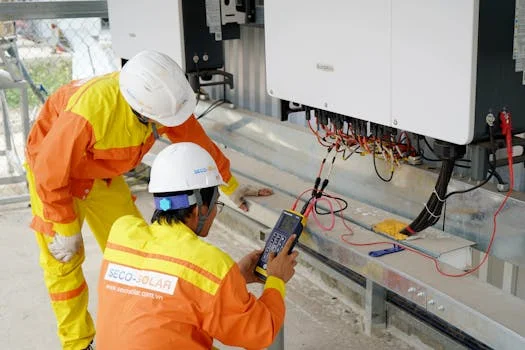
Deploying wastewater equipment in the Northern Territory requires engineering for "worst-case" scenarios. Off-grid power is a primary consideration for remote clinics. Small STPs (under 50 m³/day) can often be powered by a dedicated solar array with battery backup, provided the system uses low-energy aeration and gravity-fed disinfection. For larger facilities, hybrid diesel-solar systems are required to ensure the biological culture does not die off during power interruptions, which can take weeks to recover.
Automation is the second pillar of remote success. Systems must be designed for minimal human intervention, utilizing self-cleaning mechanisms such as automated membrane backwashing and air scouring in MBRs. PLC controllers should feature "fail-safe" modes that divert untreated water to an emergency holding tank rather than allowing a non-compliant discharge during a component failure. This level of autonomy is similar to remote-area hospital wastewater treatment solutions in cold climates, where site access is restricted for months at a time.
Climate adaptation is the final critical factor. In the humid Top End, all electrical enclosures must be IP66-rated and constructed from 316L stainless steel or UV-stabilized HDPE to prevent corrosion. In the arid Red Centre, chemical dosing tanks for chlorine dioxide systems must be temperature-controlled or insulated to prevent chemical degradation in 45°C+ heat. Without these adaptations, equipment life cycles in the NT are often halved compared to southern Australian states (HydropureWater field data, 2025).
How to Select the Right Hospital Wastewater Treatment System for Your NT Facility
The selection process should begin with a comprehensive audit of the hospital’s effluent profile and the local NT EPA requirements for the specific discharge zone. A decision framework based on the following criteria will ensure long-term compliance and operational stability:
- Discharge Requirement: If discharging to a sensitive environment (e.g., near a national park), MBR is mandatory for pathogen and nutrient removal. If discharging to a municipal sewer, a combination of DAF and Chlorine Dioxide may suffice.
- Footprint Constraints: Urban facilities in Darwin should prioritize integrated MBR systems which consolidate multiple stages into a small footprint.
- Staffing Capabilities: Facilities without a dedicated environmental engineer should opt for fully automated package STPs with remote monitoring contracts.
- Climate & Location: Remote sites require containerized, "plug-and-play" units that are pre-tested at the factory to minimize on-site installation errors.
Vendor selection is as critical as the technology itself. Ensure the manufacturer has a track record of compliance with NT EPA or equivalent international standards (ISO 9001, CE). Local support is essential; a vendor must be able to provide a service contract that includes quarterly visits and 24/7 remote technical support. This is particularly vital in the NT, where the "Fly-In Fly-Out" (FIFO) nature of maintenance means that systems must be robust enough to wait for the next scheduled service window without failing.
Frequently Asked Questions

Does hospital wastewater in the NT require specialized disinfection?Yes. Due to the high concentration of antibiotic-resistant bacteria and pathogens, standard chlorination is often insufficient. NT EPA guidelines and Power and Water trade waste policies typically require advanced disinfection like Chlorine Dioxide or Ozone to achieve a 99.99% pathogen kill rate before discharge.
What are the penalties for non-compliance with NT EPA wastewater standards?Fines for environmental "pollution incidents" in the Northern Territory can exceed $150,000 for corporations, with additional daily penalties for ongoing breaches. Beyond financial costs, non-compliance can lead to the suspension of operating licenses for medical facilities.
Can hospital wastewater be reused for irrigation in the Northern Territory?Reuse is possible but requires Class A+ recycled water standards. This typically necessitates an MBR system followed by UV sterilization and chlorine residual dosing to ensure the water is safe for non-potable uses like landscape irrigation or toilet flushing.
How often does a hospital STP need maintenance in a remote NT location?Most automated package STPs require a major service every 6 to 12 months. However, remote monitoring allows for daily performance checks, and local staff only need to perform basic tasks like checking chemical levels once a month.