Why Maine Hospitals Need Specialized Wastewater Treatment
In 2025, Maine hospitals must treat wastewater to meet EPA and Maine DEP standards, including Title 38 MRSA Section 412-B discharge requirements. While nearly all Maine hospitals currently use a centralized medical waste treatment plant in Pittsfield, on-site systems like MBR (Membrane Bioreactor) and DAF (Dissolved Air Flotation) are gaining traction due to stricter effluent limits. Key parameters: TSS < 30 mg/L, BOD < 20 mg/L, fecal coliform < 200 CFU/100mL, and pharmaceutical compound removal. On-site systems offer flexibility but require Maine DEP Waste Discharge License approval, with costs ranging from $250,000 to $1.2M depending on capacity and technology.
The centralized facility in Pittsfield has served as the primary destination for medical waste since the mid-2000s, but its capacity to handle the increasing volume of liquid effluent and the complexity of modern pharmaceutical residues is reaching its limit. Maine's regulatory environment is shifting. In 2023, a mid-sized hospital in the Midcoast region faced a Maine DEP violation when its effluent, discharged to a municipal sewer, was found to contain pharmaceutical concentrations that inhibited the biological activity of the local Publicly Owned Treatment Works (POTW). The hospital was required to implement a pre-treatment system within 12 months or face daily fines of up to $10,000.
Hospital wastewater is significantly more complex than standard municipal sewage. Typical influent parameters for Maine facilities include a BOD of 200-600 mg/L, COD of 400-1200 mg/L, and TSS of 150-400 mg/L. Beyond these standard metrics, the presence of antibiotics, endocrine disruptors, and radioisotopes presents a unique challenge. Standard biological treatments often fail to break down these recalcitrant compounds, leading to their persistence in the environment and the potential for antibiotic resistance development in local Maine waterways. Specialized compact medical wastewater treatment systems for Maine hospitals are now engineered to address these specific medical-grade contaminants through advanced oxidation and membrane filtration.
Maine DEP Wastewater Permits: Step-by-Step Compliance Guide
Title 38 MRSA Section 412-B dictates that any new sewage treatment or industrial waste disposal into Maine waters requires the submission of detailed engineering plans. For hospital facility managers, this means the path to on-site treatment begins with a Maine DEP Waste Discharge License. This process is rigorous, often requiring a 6-12 month lead time for review and public comment before approval is granted. The application must include detailed engineering specifications, an environmental impact assessment, and a site-specific monitoring plan.
Compliance does not end with the permit issuance. Maine DEP utilizes the NetDMR (Network Discharge Monitoring Report) system, requiring hospitals to report effluent quality electronically. Monitoring frequency is typically weekly for standard parameters like TSS and BOD, while pharmaceutical and emerging contaminants like PFAS may require monthly or quarterly testing depending on the hospital's proximity to sensitive watersheds. Failure to maintain these reporting standards can lead to administrative orders and significant financial penalties.
| Requirement Type | Specification / Metric | Maine DEP Submission Detail |
|---|---|---|
| Permit Application | Title 38 MRSA Section 412-B | Engineering plans, hydraulic capacity, and site location review. |
| Application Fees | $500 to $5,000 | Variable based on discharge volume (GPD). |
| Effluent BOD5 | < 20 mg/L (Monthly Avg) | Measured via 24-hour composite sampling. |
| Effluent TSS | < 30 mg/L (Monthly Avg) | Required for both direct and indirect discharge. |
| Pathogen Control | < 200 CFU/100mL | Fecal coliform limits apply year-round. |
| Reporting | NetDMR System | Electronic submission of monthly monitoring reports. |
A common pitfall for Maine hospitals is the failure to account for seasonal temperature fluctuations in their treatment design. Maine’s cold winters can significantly slow biological treatment processes. Engineering consultants must ensure that systems are either subterranean or adequately insulated to maintain a minimum process temperature of 10-15°C. For technical assistance during the planning phase, facility managers should contact Judy Bruenjes at the Maine DEP (207-287-7806), who provides specialized support for municipal and industrial wastewater infrastructure.
Hospital Wastewater Treatment Technologies: Engineering Specs and Performance Data
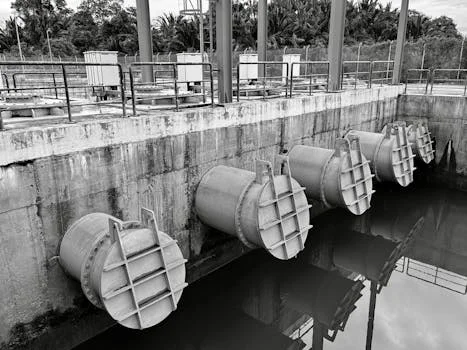
Selecting the appropriate technology requires a comparison of effluent quality against capital and operational constraints. In 2025, three technologies dominate the landscape for Maine hospitals: Membrane Bioreactors (MBR), Dissolved Air Flotation (DAF), and Chlorine Dioxide (ClO2) disinfection. Each serves a specific role in the treatment train, often used in combination to meet the strictest hospital wastewater treatment standards in other regions and Maine-specific requirements.
Membrane Bioreactor (MBR): MBR systems combine biological degradation with membrane filtration. Utilizing PVDF flat sheet membranes with a 0.1 µm pore size, MBR systems for hospital wastewater treatment in Maine achieve 99% pathogen removal and 95%+ BOD/COD reduction. The footprint is up to 60% smaller than conventional activated sludge systems because the secondary clarifier is replaced by the membrane module. Engineering specs typically target an MLSS (Mixed Liquor Suspended Solids) concentration of 8,000 to 12,000 mg/L, with energy consumption ranging from 0.8 to 1.2 kWh/m³.
Dissolved Air Flotation (DAF): DAF is primarily used for the removal of TSS, fats, oils, and grease (FOG). DAF units utilize micro-bubble technology (30-50 µm diameter) to lift suspended solids to the surface for skimming. This technology is highly effective for hospitals with high-volume laundry or kitchen facilities. DAF systems typically require chemical dosing, including 20-50 mg/L of coagulant and 1-3 mg/L of polymer, to achieve optimal flocculation. The hydraulic loading rate is generally maintained between 5 and 10 m/h.
Chlorine Dioxide (ClO₂) Disinfection: For final pathogen inactivation, chlorine dioxide generators for hospital wastewater disinfection in Maine offer a superior alternative to traditional chlorine. ClO₂ is a more potent oxidant and does not produce harmful trihalomethanes (THMs). ClO₂ generators can produce between 50 and 20,000 g/h of ClO₂. For hospital effluent, a dosing rate of 1-3 mg/L is standard to achieve a 99.9% pathogen kill rate. Maine DEP requires residual monitoring to ensure ClO₂ levels do not exceed the EPA limit of 0.8 mg/L at the point of discharge.
| Feature | MBR (Membrane Bioreactor) | DAF (Dissolved Air Flotation) | Chlorine Dioxide (ClO₂) |
|---|---|---|---|
| Target Pollutant | BOD, COD, Pathogens, Pharmaceuticals | TSS, FOG, Colloidal Matter | Bacteria, Viruses, Protozoa |
| Effluent TSS | < 1 mg/L | < 20 mg/L | N/A |
| Pathogen Removal | 99.9% (Physical Barrier) | 30-50% (Incidental) | 99.99% (Oxidation) |
| Footprint | Compact (Integrated) | Moderate | Minimal (Generator only) |
| Maine Climate Suitability | Requires insulation/heating | High (Indoor installation common) | High (Chemical stability) |
Cost Breakdown: Hospital Wastewater Treatment Systems in Maine (2025 Data)
Budgeting for a hospital wastewater system in Maine involves more than the initial purchase price. Capital expenditures (CAPEX) for a system capable of treating 50 to 500 m³/day range from $250,000 to $1.2 million. MBR systems are at the higher end of this spectrum ($3,000-$5,000 per m³/day capacity) due to the cost of membranes and advanced control systems. DAF systems are more cost-effective for primary treatment, ranging from $1,500 to $3,000 per m³/day. Chlorine dioxide generators represent a smaller capital investment of $50,000 to $200,000 but focus solely on disinfection.
Operating and Maintenance (O&M) costs typically fall between $0.50 and $2.00 per cubic meter of treated water. MBR O&M costs are driven by energy for membrane scouring and the eventual replacement of membrane modules every 5 to 8 years. DAF O&M is dominated by chemical consumption and the disposal of thickened sludge. For Maine hospitals, sludge disposal can be a significant line item, with costs varying based on the distance to the nearest composting or landfill facility. Additionally, the Maine DEP requires annual PFAS monitoring for certain facilities, which can add $10,000 per year in laboratory fees.
| Cost Category | MBR System | DAF System | ClO₂ Generator |
|---|---|---|---|
| Capital Cost (CAPEX) | $400k - $1.2M | $250k - $600k | $50k - $200k |
| O&M Cost (per m³) | $0.80 - $1.50 | $0.50 - $1.20 | $0.30 - $0.80 |
| Permitting & Legal | $10k - $25k | $5k - $15k | $2k - $10k |
| Cold Climate Add-ons | $30k - $50k | $10k - $20k | $5k - $10k |
| Payback Period (ROI) | 6 - 10 Years | 4 - 7 Years | 2 - 4 Years |
The Return on Investment (ROI) is realized through the avoidance of DEP fines and the reduction of municipal sewer surcharges. Many Maine municipalities charge "high-strength" surcharges for effluent that exceeds standard domestic BOD and TSS levels. By treating on-site to high standards, hospitals can save between $20,000 and $100,000 annually in sewer fees. package wastewater treatment plants for Maine hospitals can be configured for water reuse, providing non-potable water for cooling towers or landscape irrigation, further reducing utility costs. Funding for these projects may be available through the Maine DEP Clean Water State Revolving Fund, which offers low-interest loans for water quality improvement projects.
Selecting the Right System: Decision Framework for Maine Hospitals
Choosing a treatment system is a multi-variable engineering decision that must balance regulatory compliance with long-term operational viability. The first step is a comprehensive influent characterization. Maine hospitals should collect data over a 30-day period to understand peak loading events, particularly during high-occupancy periods or after major surgical schedules. If the goal is direct discharge into a Maine waterway, MBR is almost always the required technology due to its ability to meet ultra-low effluent limits.
Site constraints also play a major role. Maine’s older hospital campuses often have limited space for new infrastructure. In these cases, the compact nature of MBR systems—which can often be housed in a single shipping-container-sized enclosure—is a decisive advantage. If the hospital is primarily concerned with reducing sewer surcharges and removing heavy solids before discharge to a municipal plant, a DAF system may provide the best balance of performance and cost. For facilities that already meet BOD/TSS limits but struggle with pathogen compliance, a ClO₂ generator is the most logical and least invasive solution.
| If your priority is... | And your constraint is... | The recommended system is... |
|---|---|---|
| Direct Discharge to Stream | Strict EPA/DEP Limits | MBR + ClO₂ |
| Sewer Surcharge Reduction | High TSS/FOG from Kitchens | DAF |
| Pathogen Inactivation | Limited Space / Low Budget | Chlorine Dioxide Generator |
| Water Reuse (Cooling Towers) | Sustainability Goals | MBR + Advanced Oxidation |
| Low Operational Complexity | Limited Maintenance Staff | Integrated Package Plant (MBR) |
Finally, the decision must account for Maine’s specific environmental risks. For hospitals located in coastal areas, salt air corrosion must be mitigated by using stainless steel (304 or 316L) for all exposed components. For inland hospitals, the design must prioritize freeze protection for all external piping and chemical storage tanks. A decision framework that incorporates these local variables ensures that the selected system remains compliant and operational for its 20-year design life.
Frequently Asked Questions
Do hospitals in Maine have to treat their wastewater on-site?
While most Maine hospitals currently utilize the centralized medical waste plant in Pittsfield, on-site treatment is increasingly required for new hospital expansions or when a facility’s discharge exceeds the capacity or biological limits of the local municipal sewer system. Under Title 38 MRSA Section 412-B, any new or modified discharge must be approved by the Maine DEP, which often necessitates on-site pre-treatment or full treatment systems.
What is the most effective method for disinfecting hospital wastewater in Maine?
Chlorine dioxide (ClO₂) is widely considered the most effective disinfection method for Maine hospital wastewater. It provides a 99.9% pathogen kill rate and is more effective than chlorine at penetrating biofilms and inactivating viruses and protozoa common in medical effluent. Unlike chlorine, ClO₂ does not produce significant disinfection byproducts (DBPs) that are strictly regulated by the Maine DEP.
How much does a hospital wastewater treatment system cost in Maine?
Capital costs typically range from $250,000 for a basic DAF or disinfection system to over $1.2 million for a full-scale MBR plant. Operational costs range from $0.50 to $2.00 per cubic meter. These costs include chemicals, energy, and maintenance. Maine hospitals can often offset these costs through reduced municipal sewer surcharges and by avoiding DEP non-compliance fines.
What are the Maine DEP requirements for hospital wastewater discharge?
Maine DEP requires effluent to meet specific limits: TSS < 30 mg/L, BOD < 20 mg/L, and fecal coliform < 200 CFU/100mL. Hospitals must also monitor for pharmaceuticals and, increasingly, PFAS. A Waste Discharge License is mandatory, requiring a 6-12 month application process and electronic reporting via the NetDMR system.
Can hospital wastewater be reused in Maine?
Yes. Wastewater treated with MBR technology is of high enough quality for non-potable reuse, such as in cooling towers, toilet flushing, or landscape irrigation. However, reuse applications require additional Maine DEP permitting and must include strict cross-connection controls and residual disinfectant monitoring to ensure public health and safety.