What a Digital Twin Actually Is — and What It Is Not
A digital twin is a bidirectional virtual replica of a physical wastewater system, while SCADA is a supervisory control layer that historically exchanges one-way data from the plant. The Kritzinger taxonomy — widely cited in the academic literature on civil infrastructure digital twins — draws a hard line between three levels: a digital model has no automatic data exchange, a digital shadow has one-way flow from physical to digital, and a true digital twin has bidirectional exchange in both directions (source: Kritzinger et al., reviewed in Sustainability 13:11549, 2021-10). A SCADA HMI is, at best, a digital shadow with alarms; calling it a "twin" is the single most common misrepresentation in vendor pitches.
For energy manufacturing wastewater in 2026, SCADA remains the operational backbone because the PLC control layer must stay deterministic — interlock response, toxic-gas trips, and emergency shutdowns cannot tolerate cloud-roundtrip latency. A digital twin platform layers on top to run predictive models, scenario simulation, and cross-asset analytics, consuming tags from the SCADA historian via OPC UA. ISO 23247 (the underlying document BSI publishes as BS ISO 23247) defines the framework for digital twin composition in manufacturing and identifies three composition types: integrated, unified, and federated (source: BSI, 2024). The federated model — where multiple vendor twins interoperate without a master data lake — is the practical choice for most plants.
Gartner's 2017 forecast — that by 2021 half of large industrial companies would use digital twins and gain a 10% effectiveness improvement — has materially held in process industries (source: Sustainability 13:11549, citing Gartner 2017). The catch is that "effectiveness" depends entirely on whether the implementation reaches the bidirectional level, not the dashboard level.
Why Energy Manufacturing Wastewater Is a Different Problem
Energy-sector influent characteristics break generic municipal wastewater models in predictable ways. Refinery and petrochemical wastewater carries high and variable COD (often 500–5,000 mg/L with swings of 2–3× within a shift), hydrocarbon spikes from process upsets, elevated temperature (40–60 °C at the inlet of biological treatment), and intermittent slugs of fats, oils, and grease. Power plant wastewater adds heavy metals, cooling-tower blowdown chemistry, and pH excursions from FGD scrubber drains. A digital twin calibrated on domestic sewage will not converge on these dynamics without retraining.
The peer-reviewed evidence base is thinner than vendors imply. A 2021 review of digital twin research across civil infrastructure systems counted 223 search hits for "energy" but only 54 for "water" — the energy-water intersection has roughly a quarter of the published case studies that pure energy or pure water work has (source: Sustainability 13:11549). Translating municipal case studies to refinery duty without localized calibration is a known failure mode.
Two operational constraints make SCADA-layer determinism non-negotiable. First, safety interlocks and toxic-gas monitoring on hazardous-influent sites cannot accept the 200–500 ms latency of a cloud-roundtrip recommendation. Second, brownfield energy sites carry legacy PLCs (Allen-Bradley SLC-500, Siemens S5, Modicon 984) and proprietary RTUs that complicate the OPC UA integration path — OPC Classic will not bridge cleanly to a modern twin platform without gateway hardware. These constraints dictate the architecture, not the other way around.
Architecture Comparison: SCADA, Digital Shadow, and Digital Twin
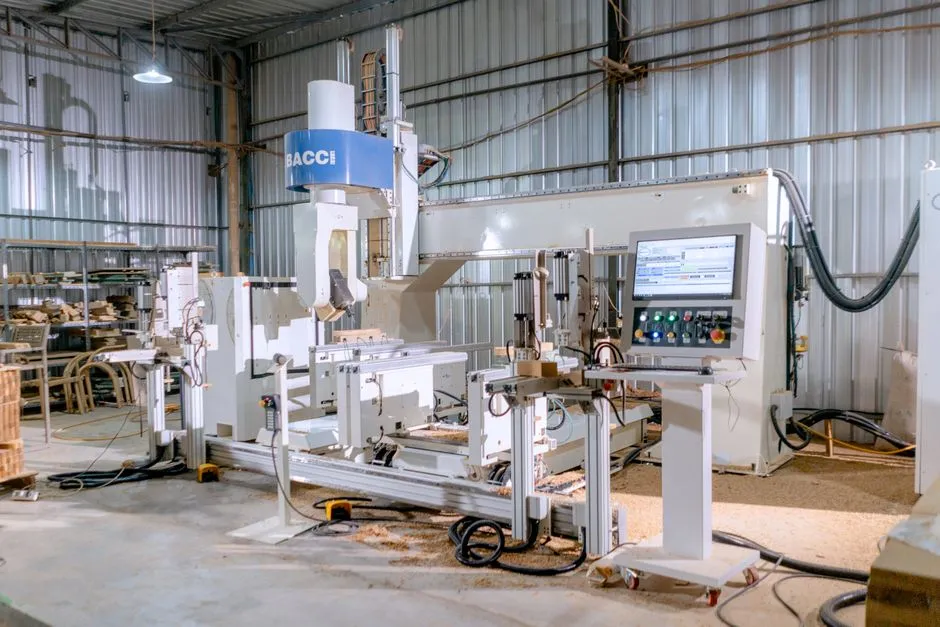
The practical architecture is a stack: physical sensors and instruments feed PLCs and RTUs, which drive the SCADA HMI and historian, which can optionally feed a digital shadow (one-way analytics) or a digital twin (bidirectional, with simulation and ML). A modern digital twin platform built on a microservices reference architecture adds an edge computing tier, API gateways, a models-and-algorithms layer (ASM1 biological models, hydraulic models, LSTM-based predictive maintenance), and an analysis layer (source: Sensors 24:1568, 2024-03). Decisions can be made at three points: in the PLC (deterministic, sub-100 ms), in the SCADA (operator-driven, seconds), or in the digital twin (advisory or closed-loop, minutes to hours).
OPC UA is the de facto integration bridge. A federated digital twin reads SCADA tags via OPC UA without replacing the control layer, which preserves the deterministic guarantees the PLC provides. Cloud-only deployment is rarely appropriate for critical water and wastewater infrastructure; the Sensors 24:1568 paper makes the case for edge-first deployment on five grounds: real-time data processing without latency, efficient bandwidth use through on-site preprocessing, scalable microservices at the plant level, reduced off-premises data exposure (a cybersecurity gain), and autonomous operation during network disruption. Energy plants with hazardous influent should treat edge processing as a baseline requirement, not an optimization.
| Architecture Layer | SCADA Only | Digital Shadow | Digital Twin (Federated) |
|---|---|---|---|
| Data flow direction | One-way (field → HMI) | One-way (SCADA → analytics) | Bidirectional (twin ↔ SCADA/PLC) |
| Latency tolerance | < 100 ms (deterministic) | Seconds (advisory) | Minutes to hours (advisory); seconds if edge-hosted |
| Analytics depth | Alarms, trending | KPI dashboards, reporting | Predictive models, simulation, scenario testing |
| Setpoint write-back | Operator-driven only | None | Optional closed-loop with operator override |
| Standards anchor | IEC 62443, ISA-95 | ISA-95, OPC UA | ISO 23247 (Parts 1–5), BSI composition types |
Five Criteria a Plant Manager Should Score Against
Criterion 1 — Data flow directionality. Ask the vendor point-blank whether the platform writes back to setpoints or only displays. A system that only displays is a digital shadow, regardless of branding. The Kritzinger taxonomy treats this as the defining attribute of a true twin (source: Sustainability 13:11549).
Criterion 2 — Time-to-value. A SCADA tag alarm is live in days. A digital twin predictive model needs 6–12 months of cleaned historical data for supervised training, plus another 2–3 months of shadow-mode validation before recommendations are trusted. Budget accordingly.
Criterion 3 — Cybersecurity attack surface. Every bidirectional channel is a new ingress path into the control network. ISO 23247 and IEC 62443 both require explicit treatment of the data plane between twin and SCADA; an edge-first deployment reduces the off-premises data exposure (source: Sensors 24:1568). Score vendors on whether they support ISA-95/Purdue-compliant network segmentation, not on whether they offer "secure cloud."
Criterion 4 — Skills and change management. SCADA is supported by existing instrumentation staff. Digital twins require data engineering, ML operations, and process engineering collaboration. If the plant does not have a data engineer on staff, the platform will be underused. Factor 1–2 FTE into OPEX.
Criterion 5 — Compliance traceability. ISO 23247 and the related BSI digital thread standard specify audit-friendly composition records that ad-hoc SCADA upgrades cannot produce (source: BSI, 2024). For plants subject to environmental consent decrees or process safety management audits, this traceability is the single strongest argument for an ISO 23247-aligned platform over a bespoke SCADA add-on.
Decision Matrix: Which Architecture Fits Your Plant
Four plant profiles cover the majority of energy-sector procurement scenarios. Match your site to the closest profile before engaging vendors — this prevents the most common failure mode, which is buying a federated-twin platform for a site that only needs historian analytics.
| Plant Profile | Recommended Architecture | Composition Type (ISO 23247) | Primary Driver |
|---|---|---|---|
| Greenfield energy plant with EPC budget | Integrated digital twin designed in from FEED | Type 1 (integrated) | Lower lifetime integration cost; vendor lock-in accepted |
| Brownfield refinery with working SCADA, limited OPEX | Federated digital twin reading OPC UA tags | Type 3 (federated) | No PLC replacement; preserves determinism |
| Mature site with historian but minimal analytics | Digital shadow upgrade (one-way historian to analytics) | Type 2 (unified) deferred | Lowest CAPEX; builds data-cleaning muscle first |
| Hazardous-influent site (petrochemical FOG, metal finishing) | Edge-first federated twin | Type 3 (federated), edge-hosted | Cybersecurity, latency, offline operation |
For brownfield sites, the federated option is the default. A digital twin for an existing aeration basin or a HydropureWater integrated MBR membrane bioreactor system can be commissioned without disturbing the PLC layer that keeps the plant in compliance. Greenfield sites with EPC budget can absorb the higher Type 1 integration cost because they avoid retrofit risk entirely.
2026 Cost Ranges and Where the ROI Comes From
Frame the digital twin platform CAPEX as 1.5–4× a comparable SCADA expansion, with wide variance driven by scope (single-asset vs plant-wide), ML model development effort, and the brownfield integration cost. Vendor license models have shifted toward subscription, with per-tag or per-asset pricing that scales with historian size. The broader DT market was forecast to exceed USD 35 billion by 2025 (source: Sustainability 13:11549), and that vendor maturation is driving per-seat licensing costs down through 2026.
Three ROI buckets have documented precedent. Energy optimization on aeration blowers and high-head pumping typically returns 8–15% kWh reduction in the first year. Avoided non-compliance events — where predictive alarming catches a discharge excursion hours before a SCADA high-high trip — is the strongest single business case for hazardous-influent sites. Predictive maintenance on blowers, membranes, and pumps (including upstream DAF system skimmers and decanter centrifuges covered in the Decanter Centrifuge Working Principle: 2026 Engineering Guide) reduces unplanned downtime by 20–35% in well-instrumented plants.
The Gothenburg sewer digital twin — referenced in Sensors 24:1568 — cut untreated discharges by up to 50%, totaling 1.5 billion liters, by using weather forecasts and hydraulic network models to pre-position pumping. The same mechanism applies to an energy plant's effluent equalization basin: predictive routing of slug loads into surge capacity before a process upset arrives. Translating that mechanism to refinery duty typically shows 30–60% reduction in effluent quality excursions within 18 months.
Integration Checklist Before You Sign a Contract
- Audit existing SCADA tag naming, historian retention, and network segmentation before vendor selection. A digital twin cannot fix inconsistent tag conventions — it will only expose them.
- Confirm OPC UA server availability on every PLC that will feed the twin. OPC Classic (DA/HDA) will not bridge cleanly to modern platforms without dedicated gateway hardware, which adds 10–20% to integration cost.
- Define data quality SLAs (sample rate, missing-data tolerance, calibration cadence) with the operations team before the twin goes live. The best ML models are garbage-in-garbage-out.
- Plan a parallel run period where the digital twin's recommendations are advisory only, with operator override authority retained in the SCADA HMI. 90 days is a reasonable minimum.
- Require the vendor to support the BSI/ISO 23247 federated composition model (source: BSI, 2024) so future vendor swaps do not lock the plant into a proprietary data schema.
For cross-checking physical-process design parameters against the digital twin's hydraulic and biological models, the 2026 RO system design parameters guide and the 2026 sludge dryer commissioning guide provide the underlying engineering references the twin should be calibrated against.
Frequently Asked Questions
Does a digital twin replace SCADA in a wastewater plant?
No. A digital twin layers on top of SCADA and consumes its tags via OPC UA; the SCADA layer remains the deterministic control backbone for interlocks, trips, and operator-driven setpoint changes. Replacing the SCADA layer with a digital twin would violate IEC 62443 network architecture and is not practiced in any documented energy-sector deployment.
What is the cybersecurity risk of adding a digital twin to a working SCADA?
Every bidirectional channel between the twin and the SCADA/PLC layer is a new ingress path and must be treated under IEC 62443 zoning. An edge-first federated twin, with on-premises preprocessing and minimal off-premises data exposure, reduces the attack surface compared with a cloud-only deployment (source: Sensors 24:1568).
How long does it take to get predictive value from a digital twin?
Plan 9–15 months from contract signature to trusted predictive recommendations: 3–6 months for historian cleanup and OPC UA integration, 3–6 months for model training on cleaned historical data, and 2–3 months of shadow-mode validation before any setpoint write-back is enabled. SCADA tag alarms remain live within days, not months.
What standards should a digital twin platform comply with?
ISO 23247 (Parts 1–5) is the foundational framework for digital twin composition in manufacturing; BSI publishes the British adoption of the same document (source: BSI, 2024). For composition type, the federated model (Type 3) is the most common choice for brownfield sites. Pair ISO 23247 with IEC 62443 for cybersecurity zoning and ISA-95 for the SCADA integration boundary.