What 'Overloaded' Actually Means and Why It Matters Now
An overloaded lagoon is one that has exceeded its design capacity, either from too much influent flow or too much BOD, leaving wastewater insufficiently treated. As EPA defines it, "organic overload is normally caused by influent organic shock loads or increased organic load with no corresponding increase in treatment plant capacity" (per EPA Principles of Design and Operations of Wastewater Treatment Pond Systems, cited in lagoons.com). That single sentence is the diagnostic anchor: if your influent has changed but your pond footprint has not, you are overloaded by definition, regardless of what the surface looks like today.
Seven warning signs appear in a predictable order, and the earliest ones are the cheapest to act on. In sequence: (1) excessive bottom sludge, (2) sulfurous odors from anaerobic digestion, (3) color shift away from clear blue, green, or brown, (4) dissolved oxygen below 0.5 mg/L, (5) rising effluent BOD, (6) high ammonia from benthal feedback as trapped nutrients release from disturbed sludge, and (7) pH drifting outside the 6.5–9 microbe range. By the time operators notice color and odor, the DO collapse behind them is typically already a week old.
Scale matters: EPA's Lagoon Inventory Dataset tracks more than 4,500 NPDES-permitted discharging lagoon systems across the U.S., and the Lagoon Action Plan is funded through 2026 to help small, rural, and Tribal communities address exactly this failure mode (EPA.gov, S1). For a single plant, the math is brutal: a low-DO alarm today means sludge accumulation tomorrow, which means ammonia spikes next week, which means an effluent excursion the week after. Time-to-action is the dominant cost driver, and operators should evaluate the following three well-understood paths.
Three Desludging Options, Side by Side
Every overloaded lagoon gets fixed one of three ways, and each trades cost, time, and permit risk differently. The three options are in-situ biological sludge reduction (aerate and mix to digest accumulated solids in place), mechanical dredging with on-site dewatering in geotextile tubes, and an aeration-only retrofit that slows future accumulation but does not remove historical sludge. Most plants end up combining two of the three; the table below shows how they compare on the six dimensions operators weigh.
| Dimension | In-situ biological reduction | Mechanical dredging + geotextile tubes | Aeration-only retrofit |
|---|---|---|---|
| Relative capital cost band | Low–medium | Medium–high | Low–medium |
| Downtime required | None (lagoon stays in service) | Partial or full drawdown (weeks) | None |
| NPDES permit risk during work | Low | Medium–high (discharge during drawdown) | Low |
| Time to compliance recovery | 3–9 months | 1–3 months visible, full recovery 6+ months | Weeks for DO, no sludge removal |
| Historical sludge volume handled | Partial, gradual | Full, in one campaign | None removed |
| Best-fit scenario | Sludge blanket under ~2 ft, no consent decree | Sludge blanket 2 ft or more, consent decree, TMDL pressure | Rising BOD/DO trend but no major accumulation yet |
Match the option to the warning signs you are actually seeing. Surface sludge plus odors points to Option 1 or Option 2; just rising BOD and falling DO with a thin blanket points to Option 3 first, with Option 1 or 2 added if accumulation is already measurable. A standalone aeration retrofit on a lagoon with two feet of compacted bottom sludge will not fix the problem; it will only mask the symptoms until the next turnover event.
How to Choose: A Five-Question Decision Framework
The following questions turn the comparison table into a decision your engineer, finance lead, and state permit contact can sign off on in a single meeting. Run them in order, and stop at the first one that gives a hard "no" — that answer usually disqualifies two of the three options immediately.
- How thick is the sludge blanket? A bathymetric survey or a sludge judge reading at multiple points gives the answer. A few inches across the bottom points to an aeration retrofit or in-situ reduction; feet of compacted sludge require mechanical dredging, because aerobic digestion cannot keep up with that mass.
- Can the plant be taken off-line for weeks? If the answer is no — and for most small municipalities it is — Option 2 is off the table unless a portable treatment train or interconnections with a neighboring utility exist.
- Is the receiving water body already in a TMDL or consent decree? High regulatory pressure pushes you toward the fastest visible result, which is mechanical dredging, because consent decrees typically have calendar milestones that biological reduction cannot meet.
- What is the ultimate sludge disposal route? Any solids that leave the site trigger 40 CFR Part 503 compliance planning — the regulation was published February 19, 1993 at 58 FR 9248 and covers land application, surface disposal, and incineration (EPA.gov, S1). If the disposal route is land application, plan for pollutant concentration limits and pathogen reduction requirements before mobilization, not after.
- What is the 5-year influent forecast? A growing service area means an aeration retrofit alone is not enough — combine it with a scheduled future mechanical removal, because you will not stop the accumulation, only slow it.
Mechanical Dredging With Geotextile Tubes: The Field Sequence
Mechanical dredging into geotextile tubes is the most common full-removal path, and the schedule slips predictably when any step is under-scoped. Walk the sequence with your contractor before mobilization so each handoff has a written trigger and an acceptance criterion.
- Pre-project. Run a sludge-depth survey across a grid of points; convert it to a bathymetric map with volume estimates. Notify your NPDES permitting authority of the planned process change and confirm whether a permit modification is required. Lock in a 40 CFR Part 503 disposal plan (land application, surface disposal, or haul to a permitted facility) before mobilizing. For polymer-conditioned dewatering, confirm dose and mix with your Screw Press Operating Cost in 2026: Energy, Polymer & Maintenance OPEX Breakdown budget — polymer is typically the largest variable OPEX line on a tube dewatering job.
- Drawdown. Lower the lagoon level in coordination with discharge permit limits to expose working areas. Decant water goes to the head of the plant or to a holding cell, not to the receiving stream unless the permit specifically allows it.
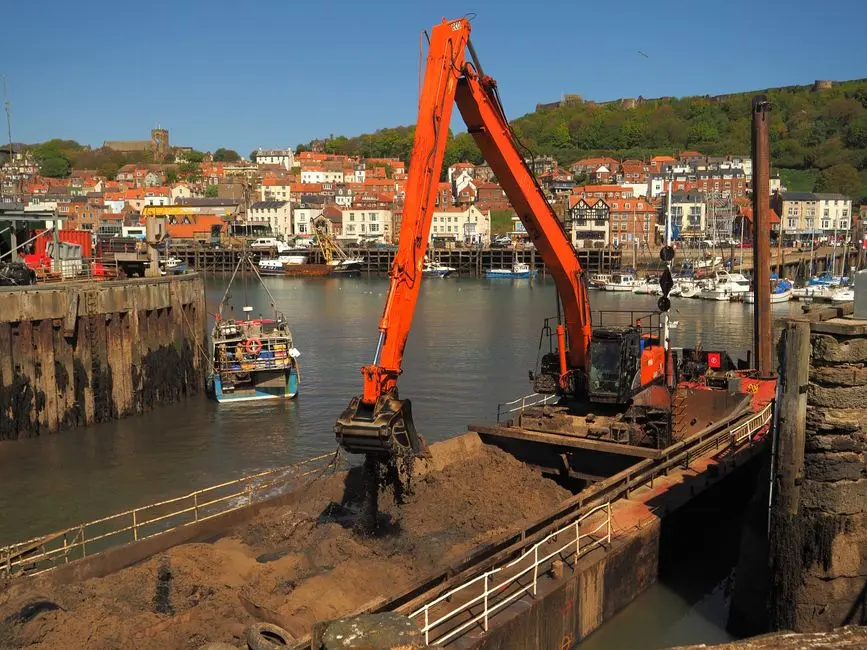
- Dredging. Hydraulic dredges move more material per day but produce a high-water-content slurry that stresses the geotextile tubes; mechanical dredges (excavator on a barge, long-reach excavator from the dike) produce a thicker slurry that dewaters faster. Pick the trade-off that matches your tube footprint.
- Dewatering in geotextile tubes. Polymer-conditioned slurry is pumped into permeable tubes; water passes through the fabric and returns to the lagoon or head of the plant; solids consolidate over 2–6 weeks. For a deeper dive on dewatering equipment trade-offs, see the Decanter Centrifuge Working Principle: 2026 Engineering Guide and the Sludge Dryer Installation and Commissioning: 2026 Engineering Guide.
- Haul-out and land application. Dewatered cake must meet 40 CFR Part 503 pollutant concentration limits and pathogen reduction requirements before land application; document the lab results in a file the regulator can audit (EPA.gov, S1).
- Restart and commission. Refill, re-seed if biotreatment was disrupted, restore aeration, and confirm DO recovery to ≥0.5 mg/L across the cell before returning to normal discharge.
Aeration Retrofits: Sizing to Stop the Problem Coming Back

Whatever desludging path you pick, an aeration upgrade is almost always part of the long-term fix. EPA guidance is explicit: "The immediate solution [to overloading] is to increase organic treatment capacity by increasing aeration" (per EPA Principles of Design and Operations of Wastewater Treatment Pond Systems, cited in lagoons.com). The retrofit has two jobs: deliver dissolved oxygen to the bulk liquid, and keep solids in suspension so they do not form a new anaerobic layer. Specifying only one of the two is the most common reason a "new" aeration system underperforms in year two.
| Parameter | Target / range | Notes |
|---|---|---|
| Dissolved oxygen (bulk liquid) | ≥0.5 mg/L minimum; 1–2 mg/L preferred | Below 0.5 mg/L, microbes shift to inefficient anaerobic pathways |
| pH | 6.5–9 | Outside this range, both aerobic and anaerobic treatment slow |
| Mixing energy | ~1–2 hp per million gallons of lagoon volume (typical range) | Confirm with CFD or tracer study for cells larger than ~5 MG |
| Diffuser selection | Fine-bubble for oxygen transfer efficiency; coarse-bubble for mixing | Combined systems use both |
| BOD loading check | Re-rate to current and 5-year projected BOD | Original design basis is almost never current basis |
| Pre-treatment consideration | High-strength side streams should be handled upstream | Reduces aeration demand and improves compliance margin |
For plants with high-strength side streams (food processing, dairy, rendering, leachate), a DAF pre-treatment system and an automatic polymer dosing system upstream of the lagoon reduce the organic load that the aeration system has to handle. For solids handling downstream of the lagoon, a sludge dewatering filter press is the mechanical counterpart to the geotextile tube workflow covered in the previous section.
Keeping Your NPDES Permit Safe During Desludging
The single biggest fear for any operator running this project is that the act of fixing the lagoon triggers a permit violation. That risk is real but manageable if five compliance steps are written into the contract before mobilization. EPA's First Stop Toolbox and Lagoon Troubleshooting diagnostic resources are available free to operators and circuit riders, and they should be on the desk of whoever is running point (EPA.gov, S1).
- Notify the permitting authority in writing before drawdown. Most NPDES permits require advance notice of any process change that could affect discharge quality; verbal notice is not a defense in an enforcement action.
- Route decanted water from geotextile tubes back through the treatment process, not to the receiving stream, unless your permit expressly allows otherwise.
- Confirm 40 CFR Part 503 compliance for any sludge that leaves the site (land application, surface disposal, or incineration) before the first truck rolls (EPA.gov, S1).
- Document baseline and post-project BOD, TSS, ammonia, DO, and pH so the regulator sees improvement over a measured starting point, not a new violation against an old baseline.
- Use the Lagoon Action Plan resources (funded through 2026) for free technical assistance — they exist because EPA knows this is the failure mode most small communities cannot staff for internally (EPA.gov, S1).
Frequently Asked Questions
What is the most affordable way to desludge an overloaded wastewater lagoon?
In-situ biological sludge reduction with a temporary or permanent aeration retrofit is the lowest mobilization cost because the lagoon stays in service. It is, however, the slowest path to compliance and works best when the sludge blanket is under approximately 2 feet.
How does EPA define an overloaded wastewater lagoon?
EPA defines organic overload as "influent organic shock loads or increased organic load with no corresponding increase in treatment plant capacity" (per EPA Principles of Design and Operations of Wastewater Treatment Pond Systems). The first measurable symptom is dissolved oxygen below 0.5 mg/L, which triggers a cascade of sludge buildup, odors, and rising effluent BOD.
Do I need a 40 CFR Part 503 permit to land-apply removed lagoon sludge?
Part 503 is a regulation, not a permit; you do not apply for it, but you must meet its pollutant concentration limits and pathogen reduction requirements before any solids leave the site for land application (40 CFR Part 503, published 58 FR 9248,