Delhi's Domestic Sewage Profile: 2026 Generation, Capacity and the Yamuna Gap
Domestic sewage treatment in Delhi in 2026 is defined by a capacity gap: the city generates 792 million gallons per day (mgd) of wastewater, routed to 21 centralised sewage treatment plants with a combined installed capacity of 667 mgd (per ORF Issue Brief, "Water and Sewage Quality in Delhi," citing DJB). Actual treatment reaches 566.9 mgd—about 72% of the load—because the plants run at roughly 84.9% utilisation. Headroom is thin, and peak-hour load shedding at trunk pumping stations is a routine operational constraint for any facility planning a connection to the DJB wastewater treatment network.
The untreated remainder—about 225 mgd—travels through roughly 44 urban drains, with the Najafgarh drain alone carrying around 450 mgd of dry-weather flow towards the Yamuna. This untreated flow represents the primary ecological pressure point for new Delhi developments. A useful comparison is the drinking-water balance sheet: DJB operates 10 water treatment plants with 946 mgd of installed capacity against a raw-water draw of 1,005 mgd, meaning the city treats more drinking water than it treats sewage. That asymmetry explains why reuse—currently 89 mgd (16% of treated flow) for horticulture, construction, irrigation, and power-plant cooling—sits high on the regulatory agenda and matters to a B2B site sizing its own plant.
DPCC Discharge Standards and Sewage Quality Parameters Delhi Monitors
DPCC effluent discharge standards and DJB's reuse-quality expectations define the compliance envelope a B2B site must hit. The Delhi Pollution Control Committee monitors eight core sewage parameters: total suspended solids (TSS), biochemical oxygen demand (BOD), chemical oxygen demand (COD), ammoniacal nitrogen, phosphate, sulphide, pH, and faecal coliform (per the ORF/DPCC framework). Eight quality-control labs across the city run a Laboratory Information Management System (LIMS) with remote-controlled auto-samplers; enforcement is data-driven, so a single non-compliant grab sample can trigger a show-cause notice.
Design basis for a typical Indian domestic-sewage inlet feeding a package STP is BOD 200–300 mg/L, COD 400–600 mg/L, and TSS 300–500 mg/L; these ranges set the load any decentralised unit must handle to meet DPCC discharge numbers. A B2B operator has two compliance paths: discharge to the DJB sewer or drain at DPCC limits, or recycle on-site for non-potable reuse at DJB's reuse-quality threshold (tighter on faecal coliform and residual chlorine). The choice dictates whether you need secondary treatment alone or tertiary polishing plus disinfection.
| Parameter | Typical domestic inlet (India) | DPCC discharge target | Reuse-quality target (horticulture/irrigation) |
|---|---|---|---|
| BOD (mg/L) | 200–300 | ≤ 30 | ≤ 10 |
| COD (mg/L) | 400–600 | ≤ 100 | ≤ 50 |
| TSS (mg/L) | 300–500 | ≤ 50 | ≤ 10 |
| Ammoniacal N (mg/L) | 20–40 | ≤ 10 | ≤ 5 |
| Phosphate (mg/L) | 5–10 | ≤ 2 | ≤ 1 |
| pH | 6.5–8.0 | 6.5–9.0 | 6.5–8.5 |
| Faecal coliform (MPN/100 mL) | 10⁶–10⁷ | ≤ 1,000 | ≤ 200 (irrigation); absent (cooling) |
Technologies Already Proven in Delhi's 21 Centralised STPs
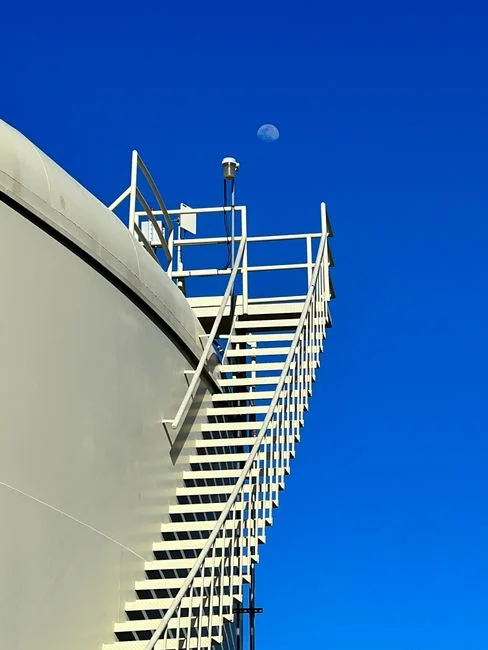
The process families with a track record in Delhi's centralised fleet are mature, biologically driven, and tolerant of the city's mixed-strength domestic sewage and moderate winter temperatures. The ORF/DPCC brief lists six deployed options: Activated Sludge Process (ASP), Sequencing Batch Reactor (SBR), Membrane Bioreactor (MBR), Extended Aeration, BioFor (a fixed-film biological process), and DensaDeg (a high-rate clarification/densification step often used as pre-treatment).
Two reference points matter for a B2B buyer evaluating these technologies. First, the Nilothi 20 mgd plant in west Delhi was built by Veolia under a 2012 DJB contract and uses the Azenit process—a biological process based on the activated-sludge principle, configured for BOD, COD, suspended solids, nitrogen, and phosphorus removal. Second, the rest of the fleet uses these same building blocks, which is why biological processes remain the default for any rural sewage treatment in India: 2026 engineering guide to decentralized STPs and for urban Delhi sites. Partial-nitritation/anammox for nitrogen removal is still lab-scale for low-strength domestic sewage; the February 2026 review by Khan et al. in Biodegradation confirms that enrichment, growth, and retention of AnAOB on weak effluents remain unresolved, so it is a watch-list item rather than a 2026 procurement choice.
| Process | Configuration | Typical removal (BOD/COD/N) | Delhi applicability |
|---|---|---|---|
| ASP (incl. Azenit) | Aeration tank + clarifier; continuous flow | 90–95% BOD; 80–90% COD; limited N without nitrification step | Proven at Nilothi (20 mgd) and across the centralised fleet |
| SBR | Fill-react-settle-decant in single tank | 95% BOD; 90% COD; biological N/P possible | Common in mid-size plants; small footprint, good for variable loads |
| MBR | Activated sludge + UF membrane | 99% BOD; 95% COD; near-zero SS; reliable nitrification | Highest effluent quality; suited to reuse and tight sites |
| Extended Aeration | Long SRT, low F/M | 95% BOD; 90% COD; partial nitrification | Package-plant standard for small communities |
| BioFor | Upflow biological aerated filter | 85–90% BOD; combined carbon/nitrification | Used in Delhi for tertiary polishing |
| DensaDeg | High-rate ballasted clarification | Pre-treatment, TSS and P reduction | Front-end step before biological reactors |
Centralised DJB Network vs Decentralised Package STPs: Choosing the Right Path for a B2B Site
For a B2B site in Delhi NCR, the procurement question is binary: connect to the DJB trunk sewer, or build a decentralised package plant. The decision is anchored in three operational realities. First, the centralised network treats 566.9 mgd against 792 mgd generated, so trunk capacity near a site may already be committed. Second, only 16% of treated flow is currently reused (89 mgd) for non-potable purposes, so on-site reuse remains a viable third path for a self-supplying facility. Third, the 44 drains feeding the Najafgarh and Yamuna mean any failure of the upstream network during monsoon will degrade the inlet quality a package plant must handle.
The decision framework is straightforward: if the site sits inside the DJB sewerage zone with available trunk capacity and no reuse requirement, connect. If the site is outside the trunk, or requires reuse for landscape irrigation, cooling, or toilet flushing, deploy a package plant. Typical package envelopes for residential communities and small hotels fall in the 1–80 m³/h range—covered by an underground package sewage treatment plant built on A/O biological contact oxidation with buried installation. Larger hospitals and factories typically need MBR-scale systems in the 10–2,000 m³/day range to hit reuse-quality targets consistently; an MBR membrane bioreactor system delivers the effluent quality and footprint that lets a facility bypass the trunk-sewer question. For hospitality loads, sizing and pretreatment decisions are covered in our hotel and resort wastewater treatment in India 2026 sizing, technology and compliance guide. Operational realities apply: every package plant needs reliable power (typically 0.5–1.0 kW per m³/day for fine-bubble aeration), scheduled sludge removal, and a maintenance contract to prevent compliance drift.
| B2B use case | Typical flow | Recommended path | Process class | Key risk |
|---|---|---|---|---|
| Gated residential community (500–2,000 dwelling units) | 150–600 m³/day | Package STP (reuse for landscaping) or DJB connection | WSZ A/O or SBR | Power outages; sludge handling |
| Hotel / resort (100–400 keys) | 80–300 m³/day | Package MBR for reuse or DJB connection | MBR | Highly variable load; grease |
| Hospital / clinic (100–500 beds) | 100–500 m³/day | MBR (mandatory disinfection) | MBR + UV/RO polishing | Biohazard handling; BOD spikes |
| Industrial park / factory | 200–2,000 m³/day | DJB connection if available; else MBR with pre-treatment | MBR with equalisation | Trade-effluent cross-contamination |
Emerging Options to Watch: Anammox, Vermifiltration, Constructed Wetlands and MFC Coupling

Three process families sit on the 2027–2030 horizon for UASB reactor installation and commissioning 2026 engineering guide readers and for low-strength domestic flows. Anammox is the most-hyped: a 2026 state-of-the-art review by Khan et al. (Biodegradation, 37(2):28) confirms partial nitritation/anammox on anaerobically treated domestic sewage remains in the lab-scale phase, with the central unsolved problem being enrichment and retention of AnAOB on weak effluents. Vermifiltration—earthworm-assisted filter beds—has been demonstrated on septic-tank effluents in semi-arid contexts (IntechOpen case, Zimbabwe) as a low-cost, decentralised option, but Delhi winter temperatures (down to ~2–5 °C night minima) limit its applicability and published data for this climate is thin. Constructed-wetland + microbial fuel cell (CW-MFC) integration is a research-stage concept that co-treats sewage and generates electricity, with IntechOpen documenting laboratory work but no commercial STPs in 2026. B2B buyers should stay with proven ASP, SBR, and MBR for the next 3–5 years, and budget for retrofit rather than first-of-kind risk.
2026–2030 Outlook: Yamuna Remediation, Reuse Mandates and B2B Opportunities
Three trends will shape domestic sewage treatment in Delhi through 2030. First, the untreated 225 mgd flowing to the Yamuna via the Najafgarh drain is the political pressure point; expect tighter DPCC enforcement, accelerated STP capacity additions, and stronger penalties. Second, the current 16% reuse rate (89 mgd) is widely viewed as insufficient; expect DJB and DPCC to push the share higher, opening decentralised reuse plants for commercial sites that today are forced to discharge. Third, sites installing compliant STPs in 2026 will be best positioned for future reuse contracts, lower freshwater draws, and cleaner ESG disclosure—the practical payoff of designing against the numbers above, not against a brochure.
Frequently Asked Questions
How much sewage does Delhi generate per day in 2026?
Delhi generates an estimated 792 mgd of domestic sewage, with 667 mgd of installed STP capacity spread across 21 centralised plants
Frequently Asked Questions
How much sewage does Delhi generate per day?
As of 2026, Delhi generates approximately 3,800 to 4,000 million liters per day (MLD) of sewage. This volume is calculated based on the water supply levels managed by the Delhi Jal Board and the estimated per capita wastewater discharge rate of 80% of the total water consumed across the National Capital Territory.
What percentage of Delhi's sewage is treated?
Approximately 75% to 78% of the generated sewage is currently processed through the city's network of Sewage Treatment Plants (STPs). While the total installed capacity has expanded to over 3,200 MLD, the effective utilization rate fluctuates due to incomplete sewer network connectivity in unauthorized colonies and peripheral areas.
Which sewage treatment technology is used in Delhi STPs?
Delhi utilizes a mix of conventional and advanced treatment technologies. The primary methods include Activated Sludge Process (ASP), Sequential Batch Reactors (SBR), and Moving Bed Biofilm Reactors (MBBR). Many newer plants commissioned or upgraded by 2026 incorporate Tertiary Treatment Units (TTU) with membrane filtration to meet stringent effluent standards of BOD < 10 mg/l and TSS < 10 mg/l.
Do I need a package STP for my building in Delhi?
Yes, under current Delhi Pollution Control Committee (DPCC) regulations, residential complexes, group housing societies, and commercial buildings generating more than 10,000 liters of sewage per day or having a plot size exceeding 2,000 square meters are mandated to install a decentralized or package STP. These systems must ensure treated water is reused for flushing, horticulture, or cooling towers to comply with the city's zero-liquid discharge directives.
Is anammox nitrogen removal available for domestic sewage in 2026?
Anammox technology is currently utilized primarily in specialized industrial wastewater treatment and high-strength side-stream treatment in Delhi. While it is technically available, it is not yet the standard for mainstream domestic sewage treatment due to the low carbon-to-nitrogen ratios typical of municipal wastewater, which generally favor conventional nitrification-denitrification processes over the autotrophic Anammox pathway.