Why the Vietnam Plant Changes GM's Water Compliance Footprint Overnight
When General Motors acquires a Vietnam plant, the transaction automatically activates Vietnam's 2020 Law on Environmental Protection (72/2020/QH14), Decree 08/2022/ND-CP, and the national industrial effluent standard QCVN 40:2011/BTNMT. GM must obtain an Environmental Impact Assessment approval from MONRE, secure an Environmental Permit from the provincial Department of Natural Resources and Environment, and meet QCVN 40 column A or B limits for COD, BOD, TSS, pH, oil and grease, and heavy metals before discharge.
Asset transfer under Vietnam's 2020 Law on Environmental Protection (No. 72/2020/QH14) is not a soft event: once the share purchase closes and the buyer exercises operational control, environmental liability migrates from seller to buyer, and the seller's existing Environmental Permit does not grandfather across. The new operator must file a change-of-operator notification with the provincial DONRE and, if process water volumes or discharge characteristics have shifted, commission a revised EIA before the new permit can be issued. There is no transitional amnesty for non-compliance discovered at the seller site after closing.
The disclosure footprint changes just as abruptly. GM's 2022 Water Security CDP filing (W0.3) lists 19 countries of operation, and Vietnam is not among them; the major non-U.S. facilities explicitly identified are in Brazil, Canada, China, Mexico, and South Korea. A Vietnam acquisition triggers a first-time country-level water disclosure and activates GM's 2021 commitment under the UN Global Compact CEO Water Mandate for a new jurisdiction. The scale is non-trivial: a single 150,000-vehicle-per-year assembly plant typically withdraws on the order of 250–400 ML/yr when paint pretreatment, weld cooling, machining, and powerhouse demand are aggregated, and the Vietnam facility will have to feed that volume into GM's existing global utility database on the same monthly cadence used elsewhere in the network (CDP W1.2, 2022).
The Vietnamese Legal Cascade That Activates at Closing
Vietnamese environmental compliance for a manufacturing acquisition is a four-layer stack, and each layer triggers a different owner inside GM and a different timeline on the integration Gantt. This regulatory framework dictates the immediate operational requirements for the incoming facility.
Layer 1 — Law on Environmental Protection 2020 (No. 72/2020/QH14). This is the umbrella statute that took effect on 1 January 2022 and replaced the 2014 law. It mandates an Environmental Impact Assessment plus an Environmental Permit for almost all manufacturing projects above the project-size thresholds defined in Appendix II of Decree 08/2022/ND-CP. An automotive assembly plant producing more than 30,000 vehicles per year falls squarely inside the full-EIA category, not the simplified environmental registration track.
Layer 2 — Decree 08/2022/ND-CP. This decree details the EIA appraisal process and the Environmental Permit process. For an automotive project, the EIA report is submitted to MONRE (or its provincial delegated authority) and the appraisal period runs 30–45 working days from receipt of a complete dossier, excluding clock stops for resubmission. The Environmental Permit application runs on a separate but parallel track and is issued by the provincial DONRE; a project cannot discharge lawfully until both documents are in hand.
Layer 3 — QCVN 40:2011/BTNMT. This is the national technical regulation on industrial wastewater. It defines two compliance columns: column A applies when the receiving water body is used for domestic water supply downstream, and column B applies for other receiving waters (industrial park internal drainage, rivers not used for abstraction, coastal waters). The receiving-water classification is decided by the provincial DONRE during permit review, and the tighter of the two columns is applied automatically once a domestic-supply catchment is in play.
Layer 4 — Provincial issuance. Ho Chi Minh City, Hai Phong, Bac Ninh, and Hanoi all have supplementary rules on top of the national framework, including local sewer-connection consents for industrial parks and stricter residual monitoring for heavy metals in some zones. The provincial DONRE is the actual permit issuer, and the integration team should identify the specific province in week one of due diligence.
QCVN 40:2011 Effluent Limits Translated for an Automotive Plant

For a GM integration team, the legal cascade only matters once it is translated into the parameters their paint shop, weld cooling, and machining effluent will actually be tested against. The table below sets QCVN 40:2011/BTNMT column A against column B for the parameters an automotive plant hits hardest, with the values in force in 2026.
| Parameter | QCVN 40 Column A (mg/L unless stated) | QCVN 40 Column B (mg/L unless stated) |
|---|---|---|
| Temperature | ≤ 40 °C | ≤ 40 °C |
| pH | 5.5–9.0 | 5.5–9.0 |
| COD | ≤ 75 | ≤ 150 |
| BOD₅ | ≤ 30 | ≤ 50 |
| TSS | ≤ 50 | ≤ 100 |
| Oil and grease | ≤ 5 | ≤ 10 |
| Total nitrogen | ≤ 20 | ≤ 40 |
| Total phosphorus | ≤ 4 | ≤ 6 |
| Sulphide | ≤ 0.2 | ≤ 0.5 |
| Lead (Pb) | ≤ 0.1 | ≤ 0.2 |
| Copper (Cu) | ≤ 0.5 | ≤ 1.0 |
| Zinc (Zn) | ≤ 1.0 | ≤ 2.0 |
| Nickel (Ni) | ≤ 0.1 | ≤ 0.2 |
Paint-shop pretreatment is the single biggest engineering challenge. Electrophoretic dip and phosphate conversion generate the COD and zinc loads that most easily breach column A, and the standard configuration on a Vietnam-scope project is a DAF system for paint-shop overspray and phosphate-stage pretreatment ahead of biological polishing. Downstream, an MBR membrane bioreactor for automotive final biological treatment gives the effluent the low TSS and tight COD envelope column A requires without the footprint of a conventional clarifier.
The implicit benchmark a foreign-owned industrial discharger must not undercut is the municipal plants now coming online. Ho Chi Minh City is delivering a $1.3B wastewater expansion programme and the Thu Duc plant — Southeast Asia's largest at 1.1 million m³/day, using MBBR technology at a $524M capital cost — sets a discharge-quality envelope that provincial DONREs will reference when reviewing new industrial permits (trade.gov, Vietnam Water and Wastewater Management, accessed 2026). An automotive permit reviewer will read a column A application against the performance a modern municipal plant can already demonstrate.
A 12-Month Compliance Timeline From Signing to First Discharge
Months 0–2 (pre-closing due diligence). Audit the seller's existing Environmental Permit, the EIA decision letter, at least 24 months of discharge monitoring data, and any outstanding non-compliance notices from the provincial DONRE. Identify the receiving-water classification so the engineering team knows whether column A or column B applies from day one.
Months 2–6 (post-closing transition). File the change-of-operator notification with DONRE; if process water volumes are shifting (paint-shop capacity change, new EV line, different phosphate chemistry), commission an updated EIA and submit through MONRE's appraisal queue (30–45 working days per Decree 08/2022/ND-CP). In parallel, complete process design for pretreatment upgrades to QCVN 40 column A or B.
Months 6–10 (construction and commissioning). Install influent and effluent flow meters, automatic 24-hour composite samplers, and contract a Vietnam lab accredited by VILAS or an equivalent MRA partner for the heavy-metal panel (Pb, Cu, Zn, Ni). Tie the discharge-quality data feed into GM's existing global utility database — per CDP W1.2 (2022), GM already tracks 100% of major-facility water data on a monthly basis, so the integration is a connector, not a new platform.
Months 10–12 (handover and trial discharge). Run the treatment train on synthetic and then live wastewater, validate that the composite sampler and the third-party lab agree within method tolerance, file the operational Environmental Permit application, and submit the first round of quarterly self-monitoring reports in the format MONRE expects. Only after the operational permit is issued can the plant discharge lawfully under the new operator's name.
Reusing GM's CDP Water Data Architecture in a New Jurisdiction
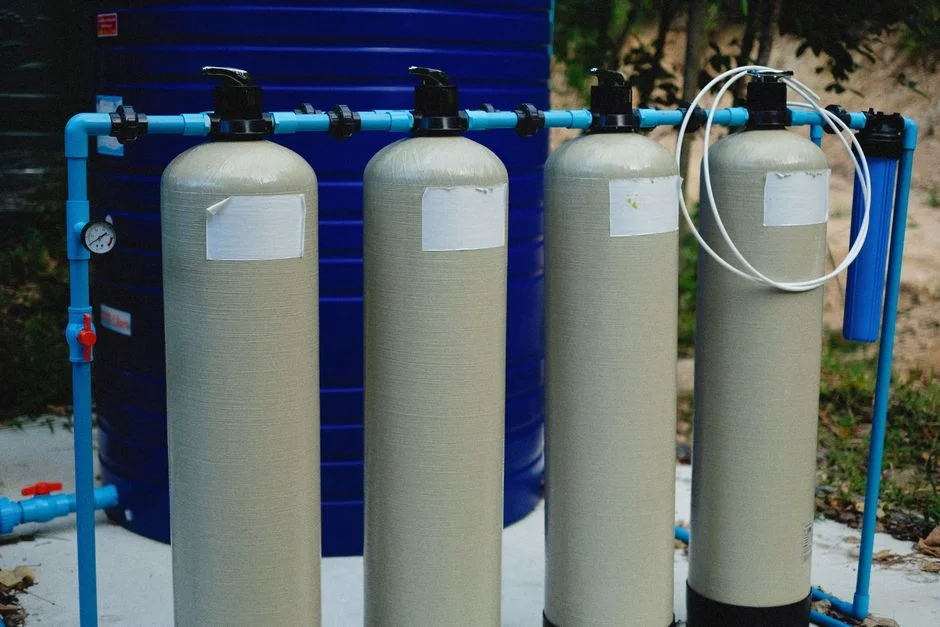
The hardware and the database are already built for international integration. GM's 2022 CDP W1.2 disclosure states that 100% of major facilities already track total withdrawals, withdrawals by source, discharge volumes, discharge by destination, and discharge by treatment method on a monthly basis, with third-party-verified data feeding a global utility database. Porting that architecture to a Vietnam site is a configuration exercise — setting up the meter tags, the source-code mapping, and the destination register in Vietnamese — not a build.
The real gap is cadence and language. QCVN 40:2011/BTNMT requires 24-hour composite samples and self-monitoring reports at least once per quarter, with heavy-metal analysis on a frequency set by the permit, whereas GM's U.S. practice under 40 CFR 136 (referenced in CDP W1.2) follows a different sampling window. The Vietnam lab contract has to be written to the local rule, with sample preservation, chain of custody, and reporting templates aligned to MONRE's expected format, or the quarterly self-monitoring report will be rejected on technical grounds.
The Vietnam site also slots into GM's existing water-stress portfolio strategy. GM's 2022 CDP W1.1 response notes that five facilities in water-stressed areas already operate Zero Liquid Discharge, including for paint pre-treatment of vehicle bodies, and that the company has signed the UN CEO Water Mandate (CDP W0.1, 2022). If the acquired sub-basin is classified as water-stressed under WRI's Aqueduct tool, the integration team should evaluate ZLD as the design baseline rather than retrofitting it later; if the basin is not stressed, a conventional biological-plus-DAF train meeting QCVN 40 column B is the cost-effective choice. For a broader engineering reference, our 2026 effluent treatment plant buyer's engineering guide covers the design choices in detail, and the parallel M&A path for another OEM is laid out in our Ford's Malaysia plant acquisition compliance pathway. For the downstream solids side, our industrial wastewater sludge treatment process guide covers dewatering of the biological sludge this train will generate.
Frequently Asked Questions
Which Vietnamese law first binds GM once the acquisition closes?
The Law on Environmental Protection 2020 (No. 72/2020/QH14) binds GM at closing because operational control transfers environmental liability to the buyer, with no grandfathering of the seller's existing permit. GM must then file a change-of-operator notice with the provincial DONRE and, if required, commission a revised EIA under Decree 08/2022/ND-CP before an Environmental Permit can be issued in its name.
What is the difference between QCVN 40 column A and column B?
Column A applies
Frequently Asked Questions
What permits does a foreign company need to discharge industrial wastewater in Vietnam?
To discharge industrial wastewater, a facility must obtain an Environmental Permit issued by the relevant provincial or district authority. This permit consolidates previous discharge licenses and specifies the volume, quality, and point of discharge for all treated effluent.
Additionally, if the plant operates within an industrial zone, it must enter into a contract with the zone’s centralized wastewater treatment plant (CWTP) and adhere to the specific discharge standards set forth in the zone’s own environmental infrastructure agreement.
What are the COD and BOD limits for industrial wastewater under QCVN 40:2011?
Under QCVN 40:2011/BTNMT, limits are categorized by Class A and Class B. For Class A (suitable for water supply sources), the Chemical Oxygen Demand (COD) limit is 75 mg/L, and the Biochemical Oxygen Demand (BOD5) limit is 30 mg/L. For Class B (discharged into water bodies not used for domestic supply), the COD limit is 150 mg/L, and the BOD5 limit is 50 mg/L.
Note that these values are subject to a Kq (receiving water source) and Kf (flow rate) coefficient calculation, which may further tighten these limits depending on the specific location and capacity of the receiving water body.
Does a Vietnam plant acquisition require a new Environmental Impact Assessment?
A new Environmental Impact Assessment (EIA) is required if the acquisition involves a change in the project scope, an expansion of production capacity by 10% or more, or a change in technology that results in increased pollutant loads. If the plant continues operations without structural or technological modifications, the existing EIA remains valid, though it must be transferred to the new owner.
However, if the facility is reclassified under higher risk categories due to new production lines or increased hazardous waste output, a new or supplementary EIA may be mandated by the Ministry of Natural Resources and Environment (MONRE) or provincial authorities.
How long does it take to get an Environmental Permit from DONRE?
By law, the Department of Natural Resources and Environment (DONRE) is required to process an Environmental Permit application within 30 to 45 working days from the date of receiving a complete and valid dossier. This timeframe includes the technical review period and the site inspection process.
In practice, timelines can extend if the application is deemed incomplete, requiring requests for additional data or technical clarifications. Companies should budget for an additional 15 to 30 days for administrative back-and-forth and potential site audit scheduling.
Can GM reuse its existing global water monitoring system at a Vietnam plant?
GM can integrate its global monitoring software, but the hardware must be compatible with the mandatory Automatic Wastewater Monitoring System (AWMS) requirements in Vietnam. Under Decree 08/2022/ND-CP, industrial facilities with large discharge volumes are required to transmit data in real-time (via FTP or API) directly to the local DONRE monitoring center.
The monitoring sensors must be certified for compliance with Vietnamese technical regulations and undergo regular calibration by an accredited local laboratory. While the data management layer can be global, the physical sensors and data transmission protocols must meet specific Vietnamese standards for connectivity and reporting frequency.