
Wastewater Treatment Plant Cost in Alberta Canada: 2025 Engineering Breakdown & ROI Calculator
The cost of a wastewater treatment plant in Alberta, Canada, ranges from $1.5M for a 50 m³/day package plant to over $640M for large municipal upgrades like Calgary’s Bonnybrook expansion. In 2025, Alberta projects average $3.2M–$5.8M per 1,000 m³/day capacity for municipal plants, with industrial facilities facing 20–40% higher costs due to specialized pretreatment for oil sands, agricultural, or food processing effluent. Key cost drivers include treatment technology (MBR vs conventional), climate-adapted infrastructure, and Alberta’s stringent effluent standards (e.g., <10 mg/L TSS, <5 mg/L TP).Why Alberta’s Wastewater Treatment Costs Are Rising in 2025
Alberta’s unique environmental conditions and regulatory landscape significantly elevate wastewater treatment project costs in 2025, with recent projects experiencing 30–50% cost increases. The province's cold climate, for instance, adds 15–25% to the capital expenditure (CAPEX) for infrastructure such as insulated tanks, buried piping, and frost protection systems, as seen in the $114M Airdrie wastewater upgrade project. This climate adaptation is critical to prevent freezing and maintain biological activity during harsh winters. Alberta’s stringent effluent standards, particularly the Alberta Tier 2 for phosphorus (<0.5 mg/L in sensitive receiving waters), necessitate advanced tertiary treatment processes. These requirements can add 30–40% to overall project costs compared to facilities designed to meet only federal minimums, demanding more sophisticated chemical dosing or membrane technologies. Industrial demand also plays a substantial role; facilities in sectors like oil sands, food processing, and meatpacking generate complex effluents requiring specialized pretreatment. This includes dissolved air flotation (DAF) for fats, oils, and grease (FOG) or chemical coagulation for heavy metals, which typically increases industrial wastewater treatment costs by 20–40% over standard municipal plants. HydropureWater offers robust DAF systems for Alberta’s industrial wastewater pretreatment challenges. Recent cost escalations are also attributed to broader economic factors. Major projects like Calgary’s Bonnybrook expansion ($640M), the North Shore plant (whose estimated cost ballooned from $700M to $3.86B), and Airdrie’s $114M upgrade reflect significant inflation, persistent labor shortages, and supply chain delays that have impacted the construction sector post-2020. These factors collectively create a challenging yet essential environment for wastewater infrastructure development in Alberta.Wastewater Treatment Plant Cost Breakdown: CAPEX by Treatment Stage

| Treatment Stage | CAPEX Range ($/m³/day capacity) | Key Considerations/Drivers in Alberta |
|---|---|---|
| Primary Treatment (Screening, Grit) | $200 – $500 | Basic physical separation, robust design for cold weather. |
| Secondary Treatment (Biological) | $1,200 – $2,500 | Activated sludge, SBR, or MBR (MBR +40% cost for higher quality). |
| Tertiary Treatment (Filtration, Disinfection, Nutrient Removal) | $800 – $1,500 | Required for stringent Alberta Tier 2 standards (phosphorus adds $300–$500/m³/day). |
| Sludge Handling (Dewatering, Digestion, Disposal) | $500 – $1,200 | Includes mechanical dewatering, digestion (aerobic/anaerobic), disposal fees ($120/tonne landfill). |
| Civil/Structural (Tanks, Buildings, Site Prep) | $1,000 – $2,500 | Foundation, building enclosures, buried tanks (+20% for excavation/insulation). |
| Electrical/Instrumentation (Automation, Controls) | $300 – $800 | SCADA systems, motor controls; automation increases CAPEX (10-15%) but reduces OPEX. |
| Contingency (10-15% of Total CAPEX) | Varies by project size | Essential for unforeseen site conditions, material cost fluctuations. |
OPEX Costs: Energy, Chemicals, and Labor for Alberta Plants
Annual operating expenditure (OPEX) is a critical factor in the long-term financial viability of wastewater treatment plants, particularly when comparing different technologies in Alberta. Energy costs typically range from $0.15–$0.30 per m³ of treated wastewater. Notably, high-efficiency MBR systems, while offering superior effluent quality, consume 2–3 times more energy than conventional activated sludge processes due to membrane aeration and permeate pumping. Chemical costs, vital for nutrient removal and disinfection, are usually $0.05–$0.20 per m³. For instance, meeting Alberta’s strict phosphorus limits often necessitates the use of ferric chloride or alum, adding an estimated $0.08–$0.15 per m³ specifically for chemical precipitation. HydropureWater provides precise chemical dosing for Alberta’s phosphorus removal requirements to optimize these costs. Labor costs typically fall between $0.10–$0.25 per m³. Fully automated package plants can significantly reduce this component, often cutting labor requirements by 60% compared to custom-built facilities that demand more manual oversight. Sludge disposal costs, another substantial OPEX item, range from $0.05–$0.15 per m³. Alberta’s landfill fees average $120/tonne, while more advanced disposal methods like incineration can reach $200–$300/tonne. Maintenance is an ongoing cost, generally estimated at 2–5% of the initial CAPEX annually. For MBR systems, membrane replacement is a significant periodic expense, required every 5–7 years at a cost of $50–$100 per m² of membrane surface. Finally, cold climate adjustments, such as heating and insulation for facilities and buried piping, add an additional $0.03–$0.08 per m³ to OPEX. The provincial funding of $50M for Airdrie’s upgrade highlights the importance of climate resilience in managing these ongoing operational costs.| Cost Category | OPEX Range ($/m³ treated) | Key Drivers/Impact in Alberta |
|---|---|---|
| Energy Costs | $0.15 – $0.30 | MBR systems (2-3x higher than conventional activated sludge), aeration, pumping, heating. |
| Chemical Costs | $0.05 – $0.20 | Phosphorus removal (ferric chloride/alum adds $0.08–$0.15/m³), disinfection (chlorine dioxide generator). |
| Labor Costs | $0.10 – $0.25 | Automation in package plants reduces labor by 60%; operator wages. |
| Sludge Disposal | $0.05 – $0.15 | Landfill fees ($120/tonne), dewatering (plate and frame filter press), transport. |
| Maintenance | 2-5% of CAPEX annually | Routine upkeep, equipment repair, MBR membrane replacement ($50–$100/m² every 5-7 years). |
| Cold Climate Adjustments | $0.03 – $0.08 | Heating, ventilation, insulation for buildings and buried infrastructure. |
Package vs Custom Wastewater Treatment Plants: Cost Comparison for Alberta
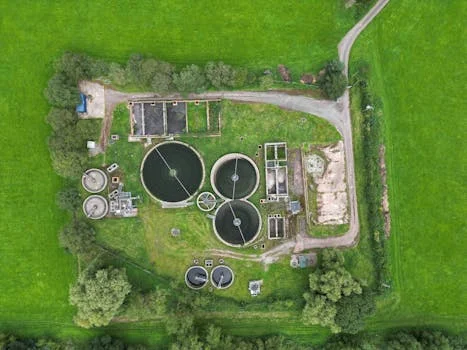
| Feature | Package Plant (e.g., WSZ Series) | Custom-Built Plant |
|---|---|---|
| Capacity Range | 50 – 500 m³/day | 500 – 50,000+ m³/day |
| CAPEX | $1.5M – $5M (30-50% lower for comparable capacity) | $5M – $640M+ |
| Lead Time | 6 – 12 months | 2 – 3 years |
| Scalability | Limited, modular expansion possible | Highly scalable for future growth |
| Civil Costs | Up to 40% lower (pre-fabricated tanks) | Higher (extensive on-site construction) |
| Electrical/Automation Costs | Up to 25% lower (standardized) | Higher (custom integration) |
| Energy OPEX | 10-20% higher (compact design, continuous operation) | Generally lower (optimized for scale) |
| Labor OPEX | 30-40% lower (fully automated) | Higher (more manual oversight) |
| Alberta Climate Considerations | May require 10-15% cost for climate hardening (insulation, buried piping) | Integrated climate design from inception |
Alberta Funding and Financing Options for Wastewater Projects
Securing adequate funding is often the most critical hurdle for new wastewater treatment projects in Alberta, with several provincial and federal programs designed to alleviate the financial burden. Alberta’s Water for Life program is a primary source of provincial grants, often funding up to 50% of eligible municipal project costs. A notable example is the $50M grant received by Airdrie for its $114M wastewater system upgrade, significantly reducing the financial strain on the city council. Federally, the Canada Infrastructure Bank (CIB) offers low-interest loans for large-scale infrastructure projects exceeding $10M, providing a viable financing avenue for significant upgrades like the $105.9M Central Peace Regional Water Project. Public-private partnerships (P3s) are another attractive model, where technology providers may cover initial construction costs in exchange for long-term operation and maintenance (O&M) contracts. The $11.5M Sundre wastewater facility, for instance, utilized a P3 model, demonstrating how municipalities can leverage private sector expertise and capital to accelerate project delivery. For municipalities, the Alberta Municipal Financing Corporation (AMFC) provides accessible long-term borrowing options, offering 20-year loans at competitive interest rates (typically 3–4%) specifically for essential infrastructure like wastewater projects. Industrial facilities also have incentives; the Alberta’s Industrial Heartland Association, for example, offers various tax credits and support programs for businesses investing in water reuse systems and other environmental technologies, potentially covering up to 15% of CAPEX. These diverse funding and financing mechanisms are essential for making critical wastewater infrastructure projects financially feasible across Alberta.ROI Calculator: How to Justify Your Wastewater Treatment Investment
| Metric | Formula/Description | Typical Range/Example in Alberta |
|---|---|---|
| Payback Period | Total CAPEX / (Annual OPEX Savings + Water Reuse Revenue + Avoided Fines) | 10-20 years (municipal), 5-15 years (industrial with reuse). $5M plant, $300K annual benefit = 16.7 years. |
| Annual OPEX Savings | Reduction in existing operational costs (e.g., hauling, chemical purchases) | $0.10 - $0.30 per m³ treated. Cold climate designs reduce heating/insulation OPEX. |
| Water Reuse Revenue/Savings | Value of treated effluent sold or used internally, reducing potable water consumption. | Industrial reuse: $0.50 - $1.50 per m³. Potable water offset: $2.00 - $3.00 per m³. |
| Avoided Fines/Penalties | Cost savings from complying with Alberta's Environmental Protection and Enhancement Act. | $10K - $100K+ per violation. Can justify 10-20% of CAPEX. |
| Return on Investment (ROI) | (Net Benefits / Total CAPEX) x 100% | Highly variable; influenced by grants (up to 50% of CAPEX) and industrial tax credits. |
Frequently Asked Questions
Wastewater treatment projects in Alberta raise common questions regarding costs, compliance, and financial strategies for municipal engineers and industrial facility managers.Q: How much does a small wastewater treatment plant cost in Alberta?
A: A 50 m³/day package plant costs $1.5M–$2.5M, while a 500 m³/day custom plant typically ranges from $5M–$10M. Costs vary significantly based on the chosen treatment technology (e.g., MBR vs conventional activated sludge) and essential climate adaptations like insulation and buried tanks, which can add 10–15% to CAPEX.
Q: What are Alberta’s effluent standards for wastewater treatment plants?
A: Alberta Tier 2 standards generally require treated effluent to meet stringent limits such as <10 mg/L Total Suspended Solids (TSS), <5 mg/L Total Phosphorus (TP), <10 mg/L Biochemical Oxygen Demand (BOD), and <1 mg/L ammonia for most municipal facilities. Industrial plants often face even stricter limits, particularly for specific contaminants, such as <0.5 mg/L TP for phosphorus in sensitive receiving environments.
Q: How can I reduce wastewater treatment plant costs in Alberta?
A: To reduce costs, consider using package plants for projects under 1,000 m³/day, which offer lower initial CAPEX and faster deployment. Actively apply for provincial and federal grants, as these can cover up to 50% of capital expenditures. Additionally, designing for water reuse can offset operational costs by generating revenue or reducing potable water consumption. Incorporating climate-adapted designs, such as buried tanks, can increase CAPEX by 10–15% but significantly reduces long-term OPEX for heating and maintenance in Alberta’s cold climate.
Q: What is the payback period for a wastewater treatment plant in Alberta?
A: The payback period for wastewater treatment plants in Alberta typically ranges from 10–20 years for municipal projects and a shorter 5–15 years for industrial facilities that can leverage water reuse or significant avoided costs. Alberta’s various funding programs, including grants and low-interest loans, can substantially reduce the effective payback period by 30–50%.
Q: Are there financing options for wastewater treatment projects in Alberta?
A: Yes, Alberta offers several robust financing options. These include provincial grants that can cover up to 50% of CAPEX, low-interest loans from organizations like the Alberta Municipal Financing Corporation (typically 3–4% over 20 years), and Public-Private Partnership (P3) models. P3s allow technology providers to cover construction costs in exchange for long-term operation and maintenance contracts, offering a flexible approach to financing large-scale projects.
Related Equipment
- Alberta-ready package wastewater treatment plants — view specifications, capacity range, and technical data
- high-efficiency MBR systems for Alberta’s stringent effluent standards — view specifications, capacity range, and technical data
- DAF systems for Alberta’s industrial wastewater pretreatment — view specifications, capacity range, and technical data
- precise chemical dosing for Alberta’s phosphorus removal requirements — view specifications, capacity range, and technical data
Need a customized solution? Request a free quote with your specific flow rate and pollutant parameters.


