australia industrial wastewater discharge licence limits
australia industrial wastewater discharge licence limits are written into each site environment protection licence, not into one national table. State EPAs use receiving-water sensitivity and the Australian and New Zealand Guidelines for Fresh and Marine Water Quality. Illustrative freshwater TSS of 5 - 30 mg/L is not the enforceable number. The licence schedule fixes the figure for that outfall.
Australia's industrial waste water discharge requirements still split by state and by the receiving environment. TSS, BOD, COD, nutrients, pH, metals, and pathogens are the usual families on a licence. Sensitive waters need tighter treatment before release. Site licences decide the final number for each outfall.
An industrial wastewater discharge to a river is judged on the licence, not on a company template. Key bodies cited in Australian practice include state EPAs, ANZECC, and ARMCANZ. Intended uses of the receiving water range from recreation and drinking-water abstraction to aquatic ecosystems and agriculture. The same factory can face a tighter cap on a small creek than on a coastal outfall.
state epa wastewater discharge limits australia
State and territory EPAs each publish the discharge limits that apply inside their borders, and those limits change with the receiving water. Freshwater rivers, marine outfalls, and land application areas do not share one expectation. National guidelines give a shared framework, yet each state sets the precise effluent limits. The table below shows common parameters and illustrative ranges only, and site approvals remain essential where COD and TSS sit at the low end.
| Parameter | Description | Typical Australian Discharge Limits (Illustrative Ranges) | Notes |
|---|---|---|---|
| Total Suspended Solids (TSS) | Solid particles suspended in the wastewater that can be removed by filtration. High TSS can reduce light penetration in water bodies, affecting aquatic life, and can carry other pollutants. | 5 - 30 mg/L (freshwater) 15 - 50 mg/L (marine) |
Limits can be stricter for sensitive receiving waters. Effective removal is crucial for managing high turbidity. |
| Biochemical Oxygen Demand (BOD) | The amount of dissolved oxygen needed by aerobic biological organisms to break down organic material present in the wastewater. High BOD depletes oxygen in receiving waters, harming aquatic life. | 5 - 20 mg/L (freshwater) 10 - 30 mg/L (marine) |
Indicates the organic load. |
| Chemical Oxygen Demand (COD) | The amount of oxygen required to chemically oxidise all organic compounds in wastewater. COD is generally higher than BOD and provides a measure of the total organic content, including non-biodegradable substances. | 20 - 100 mg/L (freshwater) 50 - 150 mg/L (marine) |
Reducing COD in industrial wastewater is a key challenge for many industries. |
| pH | A measure of the acidity or alkalinity of the wastewater. Extreme pH values can be toxic to aquatic life and affect water chemistry. | 6.0 - 8.5 (general) | Must be within a neutral range. |
| Temperature | The temperature of the discharged wastewater. Significant temperature increases can reduce dissolved oxygen levels and stress aquatic organisms. | Typically within 3°C of receiving water, not exceeding 35°C. | Impacts dissolved oxygen. |
| Nutrients (Nitrogen & Phosphorus) | Nitrogen and phosphorus compounds can cause eutrophication (algal blooms) in receiving waters, leading to oxygen depletion. | Limits vary significantly based on receiving water sensitivity. N: 1 - 10 mg/L P: 0.1 - 2 mg/L |
Critical for preventing eutrophication. |
| Heavy Metals | Metals like lead, mercury, cadmium, chromium, and zinc can be toxic to aquatic life and accumulate in the food chain. | Extremely low limits, often in the µg/L range, highly dependent on the specific metal and receiving environment. | Strictly regulated due to toxicity and persistence. |
| Pathogens (e.g., E. coli) | Microbial contaminants that pose a risk to human and animal health, particularly in waters used for recreation or drinking. | Limits vary by use of receiving water. Recreational: e.g., < 150 CFU/100mL (median) Drinking water source: much stricter |
Essential for public health protection. MBR effluent quality standards often address these. |
Which parameter band applies to this outfall?
The parameter band that applies is the number on the licence for that outfall, not the wide illustrative range in the table. In New South Wales, the EPA sets limits from receiving-water class and discharge character. Victoria's EPA publishes detailed guidelines for the same purpose. Western Australia's Department of Health also lists relevant legislation and guidance.
Always check the state rules and the conditions on the environmental licence for that site. State industrial effluent discharge guidelines describe how an authority wants the science applied. A standard discharge number in a brochure is not the limit on your outfall. The sampler is checked against the licence condition.
Plants chasing the lower BOD, COD, and TSS bands usually need advanced solids and organics removal. Dissolved Air Flotation (DAF) removes suspended solids, oil, and grease and cuts TSS directly. Membrane Bioreactors (MBRs) can exceed conventional BOD, COD, and pathogen performance when reuse or tight licences apply. For Sydney licence planning, see Industrial Wastewater Treatment in Sydney: 2026 Compliance Guide.
Most plants we size for food and metal finishing run at the lower end of the freshwater TSS band when the receiving creek is small. Marine upper bands are a poor design target for an inland factory.
anzecc guidelines for industrial effluent australia
Anzecc guidelines for industrial effluent australia supply the scientific base that state EPAs adapt into licence conditions, and they are not themselves a discharge statute. They support a risk-based view of water quality for surface water, groundwater, and soil. Intended uses include recreation, drinking-water abstraction, aquatic ecosystems, and agriculture. Default trigger values are adapted by the state EPA into the licence, which is why two creeks can carry different metal caps.
Heavy metals in the illustrative table sit in the µg/L range because the concern is toxicity and food-chain persistence, not oxygen demand. The table's nutrient band, N at 1 - 10 mg/L and P at 0.1 - 2 mg/L, is wide on purpose. Sensitive waters take the low end of that band. In design reviews we do not copy a trigger value onto a drawing until it appears in the draft licence.
nsw epa industrial discharge licence requirements
Nsw epa industrial discharge licence requirements come from the Protection of the Environment Operations Act 1997, which lists scheduled activities in Schedule 1 (NSW EPA, 2026). The NSW EPA licensing pages, updated 28 April 2026, state that a licence may set conditions for pollution prevention and control, monitoring, and reporting. Every holder must comply with those conditions, keep a pollution incident response management plan, pay the annual administrative fee, and notify at once if an incident causes or threatens material harm. Most holders must also publish or otherwise make pollution monitoring data available and submit non-compliances in real time.
Section 45 of the POEO Act requires the EPA, when licensing, to consider the environmental values of the affected water and the practical measures that can restore or maintain those values (NSW EPA, 2021). Licence conditions can cap how much of a pollutant may be discharged, require monitoring and reporting, and require pollution control equipment to run properly. Before we lock a flow sheet, we read Schedule 1 and the draft water conditions side by side. A limit that is missing from the draft is not a limit we can design to.
The EPA does not put a numeric cap on every substance in a discharge. Some are present at levels the EPA judges highly unlikely to pose a reasonable risk of harm to health or the environment (NSW EPA, 2021). Some licences add load-based licensing, which limits pollutant load and ties the fee to emissions, with an annual return for that data (NSW EPA, 2026). Concentration caps and load caps are different instruments, and a plant can carry both.
According to the NSW EPA (page updated 28 April 2026), climate rules phase in from 2027 for licensees emitting over 25,000 tonnes of carbon dioxide equivalent (CO2-e) a year. Those climate conditions are separate from effluent concentration limits on the same licence. Read together, these duties show how australia industrial wastewater discharge licence limits are enforced at a New South Wales outfall.
The Wastewater Discharge Assessment and Approval Process
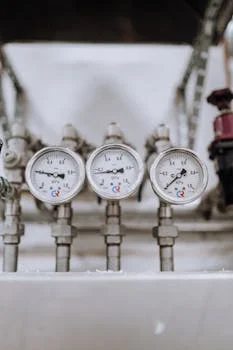
Approval for wastewater discharge in Australia follows a structured path under state or territory EPAs. Facilities that map composition, risk, and treatment early reduce licence delays. The steps below reflect how industrial waste water discharge requirements are applied in practice. Packages that arrive without a peak-flow number are the ones that sit in the queue.
- Understanding your wastewater composition and volume: Characterise every likely contaminant and quantify daily and peak flows. Cover organics, solids, metals, oils, greases, nutrients, pathogens, and process chemicals. Laboratory analysis is essential before design starts.
- Identifying the relevant regulatory authority and applicable standards: Confirm which state EPA or local authority holds jurisdiction. Collect their discharge guidelines, licensing rules, and local by-laws. Proximity to sensitive ecosystems or drinking-water catchments tightens the applicable standards.
- Developing a wastewater management plan, including treatment strategies: Match treatment trains to the measured load and the licence targets. Document operations, maintenance, and emergency response inside the same plan.
- Conducting environmental and human health risk assessments: Many jurisdictions require a formal risk assessment for surface-water discharges. National guidance on environmental and human health risk assessment of wastewater discharges to surface waters often shapes that work. In Victoria, EPA Publication 1287 (version 2, 108 pages, updated 4 June 2025) is the step-by-step guide for point-source discharges from prescribed permission activities under the Environment Protection Regulations 2021. EPA Victoria dates the current page 2 May 2025 and records the release as 16 May 2023.
- Submitting applications for discharge permits or licenses: File the licence application with lab results, system designs, and risk assessments attached. Incomplete packages are a common source of delay.
- Ongoing monitoring and reporting requirements: Approved licences set effluent quality and quantity monitoring plus reporting cycles. Non-compliance can bring fines or operational shutdowns.
How do Australian limits compare with CPCB effluent discharge standards?
Operators comparing Australian licences with wastewater effluent discharge standards used overseas still start from the same pollutant families. CPCB effluent discharge standards in India list BOD, COD, TSS, and sector-specific chemicals in a national schedule. Australian practice instead embeds numbers in state licences tied to receiving-water sensitivity. CETP discharge standards compliance in India is often checked at a shared plant outlet, while Australian sites usually hold site-specific EPA licences.
When teams search for effluent standards for industrial wastewaters, the Australian answer is the licence schedule, not a single national table. Cross-checks with CPCB schedules help global firms align monitoring suites, yet they do not replace state EPA conditions. We still build the sample plan from the Australian licence, even when a global template arrives with an overseas schedule.
Which treatment level meets final discharge standards—primary, secondary, or tertiary?
Primary clarification alone rarely meets Australian freshwater BOD or TSS bands in the table above. Secondary biological treatment typically addresses organic load, while tertiary steps such as filtration, disinfection, or membranes handle pathogens and low nutrient caps. Final Standard B style questions from Malaysia map to this same ladder: secondary for organics, tertiary when pathogen or reuse limits apply.
Food, petrochemical, and manufacturing plants that must control FOG and solids often add DAF before biological stages. Where licences demand near-reuse quality, MBR trains provide the tertiary barrier for BOD, COD, and microbes. Sites planning industrial waste discharge upgrades should size each stage against the licence numbers, not against a generic plant template.
daf systems for australian wastewater discharge compliance
Daf systems for australian wastewater discharge compliance remove oil, grease, and suspended solids by floating them on micro-bubbles for skimming. That pathway is aimed at TSS and FOG limits in food processing, petrochemicals, and manufacturing. On oily food streams we size, DAF sits ahead of biology so the reactor does not ingest the fat load. Dissolved Air Flotation (DAF) systems are built for high throughput on those streams.
mbr effluent quality for australian discharge standards
Mbr effluent quality for australian discharge standards is the reason plants add membranes when a clarifier cannot hold BOD, COD, solids, and pathogens together. Where effluent must support reuse or very tight pathogen caps, MBR Membrane Bioreactors combine biology with membrane filtration. They remove fine solids, bacteria, and viruses and support strict BOD and COD targets, as outlined for MBR effluent quality. Where the licence pathogen line is tight, we do not promise reuse quality from a clarifier alone.
Packaged plants for mixed domestic and light industrial flow
A packaged plant is the right whole train when domestic sewage and light industrial flow share one site. Integrated Sewage Treatment plants (like the WSZ Series) give automated, self-contained treatment for that mix. The Integrated Sewage Treatment plant packages the duty in one system, and automatic chemical dosing systems keep the coagulant dose steady so BOD, COD, and TSS stay inside the licence bands. We specify that dosing loop when jar tests show a narrow coagulant window.
Who this is for / Who should look elsewhere / Next step
Plant managers, EHS staff, and consultants sizing treatment against Australian EPA licences are the readers for this guide. Teams seeking only municipal sewage policy, or only overseas CETP schedules, should use those jurisdiction documents instead. Equipment choice follows a measured load and the licence table, not a generic flow sheet.
The cost drivers are peak flow, the parameter furthest past the licence, sludge and float disposal, aeration or membrane power, and the monitoring frequency. A tight nutrient cap costs more than a mid-band TSS cap because it adds tank volume or a tertiary step. Metal limits discussed in the µg/L range can force precipitation and filtration even when BOD is already comfortable. We size the train from the hardest parameter, not from the average one.
- Confirm the state authority and whether the activity is scheduled or prescribed.
- Characterise average flow, peak flow, and the contaminant list, including metals and FOG.
- Map the receiving water and the environmental values the licence must protect.
- Place each parameter on the illustrative band, then replace the band with the draft licence number.
- Match DAF, biological treatment, MBR, or a packaged plant to the parameter that fails.
- Set monitoring, a pollution incident plan, and the reporting cycle before commissioning.
Share the lab sheet and the draft limits when you request a process review. A useful package includes flow, peak factor, and the parameters the licence will actually police.
Frequently Asked Questions
The questions below cover state differences, where to read a limit, sensitive waters, sewage versus industrial wastewater discharge, and the role of ANZECC guidance.
What are the main differences in wastewater discharge standards between Australian states?
Each state and territory EPA writes its own licence rules, so BOD, COD, TSS, and nutrient caps are not identical across Australia. The shared base is national water-quality science, yet assessment methods and licence wording still differ. New South Wales uses an environment protection licence under the POEO Act 1997. Victoria uses permission conditions, and Publication 1287 where a surface-water risk assessment is required.
How can I find the specific discharge limits for my industry in Australia?
Open the state or territory EPA register and read the site environment protection licence, which lists the parameters, concentrations, or loads for that outfall. Industry type alone does not set the number. Receiving water, volume, and the activity schedule do. In New South Wales, scheduled activities are in Schedule 1 of the POEO Act 1997, and each granted licence is on the public register (NSW EPA, 2026).
What is considered a 'sensitive environmental area' in Australia for wastewater discharge purposes?
Sensitive areas are waters whose environmental values cannot absorb much load, so caps sit at the tight end of the illustrative bands. They include pristine freshwater, high-biodiversity zones, marine parks, drinking-water catchments, and strong recreational or cultural sites. The NSW EPA must consider those environmental values, and the practical measures to maintain them, when it sets licence conditions (NSW EPA, 2021). Plants we size beside a small creek usually design to the low end of the band.
Are there different standards for treated sewage effluent versus industrial wastewater discharge in Australia?
Yes, treated sewage rules focus on pathogens, BOD, and nutrients that drive eutrophication. Industrial wastewater licences also name process chemicals, heavy metals, and other hazardous substances from that process. ANZECC guidance frames the water-quality science for both, but it is not the licence. In New South Wales the same POEO Act can cover a sewage plant or a factory, yet the conditions on each licence are written for that discharge.
What is the role of ANZECC guidelines in Australian wastewater discharge regulations?
The Australian and New Zealand Guidelines for Fresh and Marine Water Quality are a foundational reference, not a statute by themselves. State EPAs adapt their science and default trigger values into legislation and licence conditions. ANZECC and ARMCANZ remain the names on that national scientific base for surface water, groundwater, and soil. On design jobs we treat the guideline as the reason and the licence as the number we must hit.