Oregon’s Industrial Wastewater Regulations: DEQ, NPDES, and Pretreatment Rules
Industrial wastewater treatment in Oregon USA requires compliance with DEQ’s NPDES permits and 40 CFR Part 403 pretreatment standards. High-efficiency DAF systems achieve 90–98% TSS and FOG removal, while MBR systems deliver <1 μm effluent quality—both critical for meeting Oregon’s strict discharge limits into the Tualatin and Willamette rivers. The Oregon Department of Environmental Quality (DEQ) maintains primary jurisdiction over water quality, enforcing the federal Clean Water Act through the National Pollutant Discharge Elimination System (NPDES). For manufacturing facilities, this means that any point-source discharge into state waters must be authorized by a permit that defines specific effluent limitations based on both technology-based standards and water quality-based standards.
Beyond direct discharge, 40 CFR Part 403 mandates a National Pretreatment Program. This regulation requires industrial users to treat their wastewater before it enters a Publicly Owned Treatment Works (POTW). The goal is threefold: to prevent the "pass-through" of pollutants that the municipal plant cannot treat, to prevent "interference" with the biological processes of the POTW, and to protect the quality of the biosolids produced by the municipality. In Oregon, local authorities often act as the Control Authority. For instance, Clean Water Services in Washington County enforces Ordinance 42, which regulates nondomestic discharges to protect the Tualatin River watershed. This ordinance imposes strict local limits on pH, heavy metals, and organic loading that often exceed federal minimums.
Compliance for Oregon industries involves rigorous monitoring and reporting. Facilities must typically track Total Suspended Solids (TSS), Biochemical Oxygen Demand (BOD), and Fats, Oils, and Grease (FOG). In specific sectors like metal finishing or chemical manufacturing, monitoring extends to cadmium, chromium, copper, lead, nickel, silver, and zinc. Failure to meet these limits results in significant fines and potential "Significant Non-Compliance" (SNC) status, which triggers mandatory publication of the violation in local newspapers and increased oversight. Implementing a robust industrial wastewater treatment in Oregon USA strategy is therefore not merely an operational choice but a core requirement for legal and financial risk management.
How DAF Systems Solve Industrial Wastewater Challenges in Oregon
Dissolved Air Flotation (DAF) systems utilize micro-bubbles ranging from 20 to 50 microns to achieve 90–98% removal of Total Suspended Solids (TSS) and Fats, Oils, and Grease (FOG) in industrial influent. This technology is particularly effective for Oregon’s diverse agricultural and food processing sectors, including dairies, meatpacking facilities, and the state’s high-density craft brewery industry. By injecting air into the wastewater under pressure and then releasing it at atmospheric pressure, the resulting micro-bubbles attach to flocculated particles, lifting them to the surface for mechanical skimming. This process is significantly faster than gravity sedimentation, allowing for a smaller equipment footprint.
The high-efficiency DAF system for industrial wastewater in Oregon is engineered to handle flow rates from 4 to 300 m³/h. These systems are designed with integrated saturation tanks and high-efficiency dissolution pumps that ensure a consistent air-to-solids ratio, which is critical for handling the variable loading common in food processing. For facilities discharging to municipal sewers, a DAF system serves as the primary pretreatment step, ensuring that high-strength organic waste does not trigger surcharges or permit violations. According to how DAF systems achieve 90–98% TSS and FOG removal in industrial applications, the addition of chemical coagulants and flocculants can further enhance the removal of colloidal particles that would otherwise remain in suspension.
In Oregon’s manufacturing landscape, space is often at a premium. Modern DAF units are frequently provided as skid-mounted solutions, pre-piped and pre-wired for rapid integration into existing production lines. The DAF line also features automatic sludge thickening and skimming, which can reduce the volume of waste sludge by up to 50%. This volume reduction is a major cost-saver in Oregon, where hauling and disposal fees for industrial sludge continue to rise. By stabilizing the influent before it reaches the municipal sewer, DAF systems allow plants to remain compliant with Clean Water Services’ Ordinance 42 and similar local regulations across the Willamette Valley.
MBR Membrane Bioreactors for High-Quality Effluent and Water Reuse
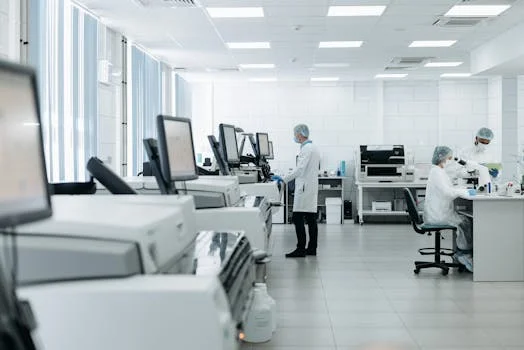
Membrane Bioreactor (MBR) technology integrates biological treatment with ultrafiltration to produce effluent with turbidity consistently below 0.2 NTU and Biological Oxygen Demand (BOD) levels under 5 mg/L. For Oregon industrial facilities aiming for water reuse or those facing the most stringent DEQ discharge limits, MBR represents the gold standard in treatment. Unlike conventional activated sludge (CAS) systems that rely on secondary clarifiers for solids separation, MBR systems use physical membrane barriers, typically made of Polyvinylidene Fluoride (PVDF), to separate treated water from the biomass. This ensures that no "bulking" sludge or suspended solids escape into the final effluent.
The DF series compact MBR system for high-quality effluent and reuse utilizes reinforced hollow fiber membranes with a nominal pore size of 0.1 μm. This level of filtration effectively removes bacteria and most viruses, producing water that often meets Oregon DEQ’s Class A reclaimed water standards. This is particularly valuable for facilities in water-stressed regions or those looking to reduce their municipal water intake by recycling treated wastewater for cooling towers, boiler feed, or landscape irrigation. The MBR integrated wastewater treatment package allows for a Mixed Liquor Suspended Solids (MLSS) concentration of 8,000 to 12,000 mg/L, which is 3–4 times higher than conventional systems, resulting in a 60% smaller footprint.
When comparing MBR vs MBBR and CAS: efficiency, footprint, and OPEX comparison, MBR consistently leads in effluent quality. In Oregon, where the protection of salmon-bearing streams like the Willamette River is a regulatory priority, the ability of MBR to virtually eliminate TSS and significantly reduce nutrient loading (nitrogen and phosphorus) is a major compliance advantage. The DF series modules are designed for individual replaceability and feature a high-flux design that operates at 10–20 times lower energy consumption than traditional cross-flow membrane systems, addressing the operational expense concerns of plant managers.
| Parameter | Conventional Activated Sludge (CAS) | MBR System (DF Series) | Oregon DEQ Reuse Standard (Class A) |
|---|---|---|---|
| Effluent BOD (mg/L) | 15–30 | <5 | <10 |
| Effluent TSS (mg/L) | 15–25 | <1 | <2 (Turbidity <2 NTU) |
| Pore Size (μm) | N/A (Gravity) | 0.03–0.1 | N/A |
| Footprint Requirement | 100% (Baseline) | 40% | N/A |
| MLSS Concentration (mg/L) | 2,000–4,000 | 8,000–12,000 | N/A |
Chemical Dosing and Pretreatment for DEQ Compliance
Automated chemical dosing systems reduce coagulant consumption by up to 30% while maintaining the precise pH range of 6.0 to 9.0 required for most Oregon municipal sewer discharge permits. In industrial wastewater treatment, chemical pretreatment is often the first line of defense. By introducing inorganic coagulants like aluminum sulfate (alum) or polyaluminum chloride (PAC), and organic flocculants (polymers), operators can aggregate fine particles into larger "flocs" that are easily removed by DAF or filtration systems. Without precise dosing, facilities risk either permit violations due to under-treatment or excessive operational costs due to over-treatment.
The industrial chemical dosing system utilizes PLC-controlled pumps and sensors to monitor real-time flow and water chemistry. This automation ensures that pH adjusters—such as sodium hydroxide (NaOH) for acidic waste or sulfuric acid (H₂SO₄) for alkaline waste—are injected in exact proportions. For Oregon manufacturers, this level of control is essential for meeting the strict heavy metal limits imposed by DEQ. Metals are most effectively precipitated at specific pH setpoints; for example, nickel precipitates most efficiently at a pH of approximately 10.5, while copper requires a pH of 9.0. Automated systems can manage these multi-stage adjustments without manual intervention.
To protect downstream equipment like DAF units and MBR membranes, primary screening is required. The rotary mechanical bar screen removes large debris, plastics, and coarse solids that could damage pumps or clog membrane fibers. Integrating these screens with an automated dosing skid creates a comprehensive pretreatment train. Following industrial chemical dosing system maintenance best practices—such as regular calibration of pH probes and inspection of metering pump diaphragms—is vital for ensuring long-term reliability and compliance with DEQ’s rigorous reporting requirements.
Comparison of Wastewater Treatment Systems for Oregon Industries
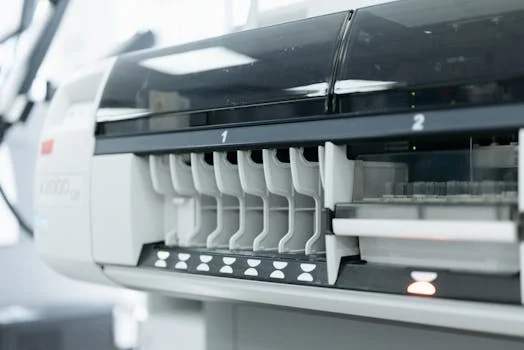
DAF and MBR systems serve different treatment objectives based on influent characteristics and compliance goals. DAF excels in primary solids removal, while MBR provides tertiary-level treatment suitable for direct discharge or reuse. For a food processing plant in the Willamette Valley with high FOG and TSS, a DAF system is the most cost-effective solution for reducing municipal surcharges. Conversely, a chemical facility or a high-tech manufacturing plant in the Silicon Forest (Washington County) that requires water recycling for cooling processes would benefit more from the superior filtration of an MBR system.
In rural or remote Oregon locations where municipal sewer access is unavailable, integrated underground systems like the WSZ series integrated treatment system offer a low-maintenance alternative. These systems combine biological treatment and sedimentation in a single buried tank, preserving the site's aesthetics and reducing noise. While the capital expenditure (CAPEX) for MBR is generally higher than DAF—ranging from $200,000 to $300,000 for a 100 m³/day system compared to $120,000 to $180,000 for a DAF system of similar capacity—the operational benefits of MBR in terms of water reuse and lower discharge fees often result in a faster return on investment (ROI).
| System Type | Primary Application | Removal Efficiency (TSS/BOD) | Compliance Alignment | Estimated CAPEX (Small/Med Scale) |
|---|---|---|---|---|
| DAF | Food/Dairy, Oil/Grease removal | 90–98% TSS / 40–60% BOD | Pretreatment for POTW (Ordinance 42) | $120k – $180k |
| MBR (DF Series) | High-tech, Chemical, Water Reuse | >99% TSS / >95% BOD | Direct Discharge (NP
Get a Free Quote — Tell Us About Your Project
Contact Us
|