Why RO Membrane Maintenance Prevents Costly Downtime
Unmaintained industrial reverse osmosis (RO) systems lose 10–15% permeate flow annually, directly increasing energy use by 25–30% due to the higher pressure required to achieve target production rates. This performance degradation translates into significant operational expenditure increases for facilities in pharmaceutical, food & beverage, and power generation sectors. Neglecting routine RO membrane cleaning procedures and monitoring can lead to premature membrane failure. The cost of replacing membranes in a typical industrial RO system ranges from $20,000 to $100,000 per system, an expense largely avoidable through scheduled Clean-In-Place (CIP) operations. Beyond direct replacement costs, unplanned downtime for emergency cleaning or component replacement averages 8–12 hours, disrupting critical production schedules and incurring substantial financial penalties from lost output and potential batch spoilage. Proactive RO membrane system maintenance is an economic imperative that safeguards asset longevity and operational continuity.Daily and Weekly Monitoring Tasks for RO Operators
RO operators must perform daily and weekly monitoring tasks to detect early signs of fouling, scaling, or sensor drift.- Daily Flow Rate Recording: Operators must record feed, permeate, and concentrate flow rates every day. A consistent drop of more than 10% in permeate flow, when normalized for temperature and pressure, is a primary indicator of membrane fouling or scaling.
- Differential Pressure (ΔP) Monitoring: The pressure drop across each RO vessel should be monitored daily. A ΔP increase exceeding 15 psi across the first stage, or a 10-15% increase over baseline values, strongly signals the onset of scaling (inorganic fouling) or biofouling.
- Silt Density Index (SDI) Check: Daily measurement of the feedwater's Silt Density Index (SDI) is crucial for preventing particulate fouling. Maintaining the SDI of feedwater below 5, and ideally below 3, protects membranes from colloidal and particulate buildup.
- Conductivity Sensor Calibration: Weekly calibration of conductivity sensors for both feed and permeate streams ensures accurate Total Dissolved Solids (TDS) rejection calculations. Targeting >98% salt rejection for brackish water systems and >99% for seawater systems is standard; deviations indicate membrane damage or scaling.
- Temperature Compensation: Record and compensate for feedwater temperature daily, as permeate flow varies approximately 3% for every degree Celsius change. This normalization ensures accurate comparison of flow rates over time.
- Visual Inspection: Conduct daily visual checks of the entire RO system for leaks, unusual noises, or visible signs of scaling in transparent piping.
Quarterly Cleaning-In-Place (CIP) Procedures and Chemical Selection
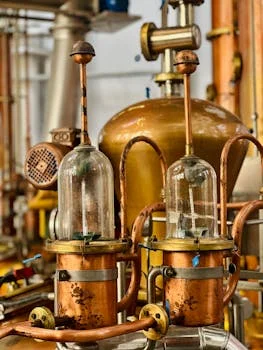
- Pre-CIP Flush: Before introducing cleaning chemicals, flush the RO system with good quality permeate or dechlorinated feed water at low pressure for 15-30 minutes to remove loose debris and displace concentrate.
- Low pH Cleaning (Acidic): Utilize low pH cleaning agents (pH 2–3) such as citric acid or nitric acid to dissolve inorganic scales like calcium carbonate (CaCO₃), iron (Fe), and barium sulfate (BaSO₄). The typical protocol involves a 2-hour soak at 30–40°C, followed by circulation.
- High pH Cleaning (Alkaline): Follow acid cleaning with high pH cleaning (pH 11–12) using agents like sodium hydroxide (NaOH) combined with a surfactant. This process is highly effective against organic fouling, biofilm, and colloidal particles. A common approach is 1-hour circulation followed by a 1-hour soak.
- CIP Flow Rate Management: Maintain the CIP flow rate at 50–70% of the normal feed flow during circulation. This ensures adequate turbulence for cleaning without exceeding membrane pressure limits or causing cross-flow erosion.
- Chemical Concentration and Temperature: Adhere strictly to manufacturer-recommended chemical concentrations and temperatures. Elevated temperatures (up to 40°C) enhance cleaning efficacy but must not exceed the membrane's maximum temperature rating.
- Post-CIP Rinse: After chemical cleaning, thoroughly rinse the system with permeate or dechlorinated water until the pH returns to the normal operating range and conductivity levels stabilize.
| Parameter | Low pH Cleaning (Acidic) | High pH Cleaning (Alkaline + Surfactant) |
|---|---|---|
| Target Fouling | Inorganic scale (CaCO₃, Fe, BaSO₄, SiO₂) | Organic fouling, biofouling, colloids |
| pH Range | 2.0 – 3.0 | 11.0 – 12.0 |
| Common Chemicals | Citric Acid, Nitric Acid, HCl | NaOH (Caustic Soda) + SDS/EDTA |
| Concentration Range | 1-2% (Citric), 0.5-1% (Nitric) | 0.5-1% (NaOH) |
| Temperature Range | 30 – 40°C (86 – 104°F) | 30 – 40°C (86 – 104°F) |
| Circulation Time | 60 – 90 minutes | 60 – 90 minutes |
| Soak Time | 60 – 120 minutes | 60 – 120 minutes |
| CIP Flow Rate | 50-70% of normal feed flow | 50-70% of normal feed flow |
| Recovery Benchmark (Post-CIP) | Permeate flow 85-90% of baseline | Permeate flow 85-90% of baseline |
Performance Validation After Maintenance
Performance validation after a Clean-In-Place (CIP) procedure confirms cleaning effectiveness and ensures optimal RO system operation. Immediately following the post-CIP rinse, the system must be brought back online and its performance meticulously monitored to confirm that the RO membrane cleaning procedure was successful. Post-CIP, normalize permeate flow to 85–90% of the initial baseline value, accounting for the natural 1–2% annual aging of membranes. This normalization helps to accurately assess the recovery of flow capacity. Salt rejection rates should return to their expected levels, typically greater than 98% for seawater systems or above 99% for brackish water applications, indicating that the membrane's selectivity has been restored. To comprehensively validate the cleaning's impact, conduct a detailed 24-hour performance log, meticulously comparing pre- and post-cleaning differential pressure (ΔP), permeate flow, and operating pressure data. Significant reductions in ΔP and a return to acceptable flow and rejection rates confirm successful fouling removal. Persistent deviations may indicate incomplete cleaning or irreversible membrane damage, necessitating further investigation or a specialized maintenance for brackish water RO systems. Ensuring efficient RO pretreatment with a multi-media filter for RO pretreatment and SDI reduction can significantly reduce the frequency of such extensive cleaning.Frequently Asked Questions
Related Equipment
- industrial RO system with automated CIP integration — view specifications, capacity range, and technical data
- multi-media filter for RO pretreatment and SDI reduction — view specifications, capacity range, and technical data
Need a customized solution? Request a free quote with your specific flow rate and pollutant parameters.
Further Reading

Explore these in-depth articles on related wastewater treatment topics: