An industrial reverse osmosis water treatment maintenance guide built around a 12-step protocol covers pre-filter replacement every 6–12 months, membrane cleaning when differential pressure exceeds 10–15 psi (0.7–1.0 bar), and Silt Density Index (SDI) held below 5.0 (target below 3.0). Recovery rates should be sustained at 75–85% for surface water and 80–95% for brackish feeds, with continuous monitoring of normalized flux, salt passage, and interstage pressure drops.
What Does an Industrial RO Maintenance Protocol Cover?
An industrial RO maintenance protocol covers daily logging, weekly SDI testing, Clean-In-Place (CIP) scheduling, chemical dosing calibration, high-pressure pump servicing, and monthly trend analysis. The 12 steps below cover the full operational cycle for systems running 10–2,000 m³/day, from cartridge filters and antiscalant pumps to PLC alarm verification.
Why Industrial RO Maintenance Differs from Residential Systems
Industrial RO systems operate continuously at 10–2,000 m³/day, while residential units typically process less than 1 m³/day. A residential setting can tolerate a minor decline in flow; in an industrial facility, even a 4-hour shutdown can halt a production line. Downtime costs often exceed $5,000 per hour in semiconductor or pharmaceutical plants, making a reactive approach financially untenable (industry benchmark data, 2024).
Industrial feedwater adds another layer of difficulty. Brackish water, high-TDS process water, and recycled wastewater streams all raise the risk of scaling and biofouling. These systems use high-pressure pumps and sophisticated Industrial Reverse Osmosis (RO) Water Treatment System packages that require precise calibration. A failure in an upstream flocculation or multi-media filtration stage immediately translates into fouling on the RO membranes. Without a structured protocol, the lifespan of expensive membrane elements—which can cost tens of thousands of dollars per rack—drops from the expected 5–7 years to less than 24 months. A documented protocol is what moves a maintenance team from reactive repairs to predictive optimization.
The 12-Step Industrial RO Maintenance Protocol
A structured O&M cycle for industrial RO systems follows ISO 24510 standards to keep permeate quality and membrane longevity consistent through repeatable technical actions. The 12 steps are:
- Daily Log Review: Record feed pressure, concentrate pressure, permeate flow, and conductivity. Compare these to start-up values to identify immediate deviations.
- Prefilter Inspection: Check the differential pressure across cartridge filters. A rise in ΔP indicates the prefilters are doing their job but are nearing capacity.
- Silt Density Index (SDI) Testing: Conduct SDI tests at least weekly. Maintaining an SDI below 5.0 is non-negotiable for preventing colloidal fouling.
- Pressure Drop Monitoring: Track the ΔP between the feed and concentrate headers. This is the primary indicator of internal membrane fouling.
- Permeate Flow Calibration: Ensure flow meters are accurate. False readings can mask a decline in membrane permeability.
- Conductivity and Salt Rejection Checks: Calculate salt rejection daily. A drop below 98–99% for most industrial membranes indicates potential scaling or physical damage.
- Clean-In-Place (CIP) Scheduling: Do not wait for failure. Schedule CIP based on the 15/15/10 rule: 15% flux drop, 15% ΔP increase, or 10% salt passage increase.
- Chemical Inventory Audit: Verify levels of antiscalants, biocides, and pH adjusters. Pump calibration on the dosing skid should be checked at the same time.
- Pump and Valve Inspection: Listen for cavitation in high-pressure pumps and check for leaks in pneumatic or motorized valves.
- Automation System Test: Verify that PLC alarms and emergency shutdown (ESD) triggers are functional to prevent dry-running or over-pressurization.
- Data Trend Analysis: Use software to normalize data for temperature and pressure. Raw data is often misleading due to seasonal water temperature shifts.
- Preventive Action Update: Adjust the maintenance schedule based on the previous month's findings to account for changes in feedwater quality.
Implementing all 12 steps helps keep an industrial RO train within design recovery and salt-rejection limits.
Step-by-Step Maintenance Procedures with Performance Benchmarks
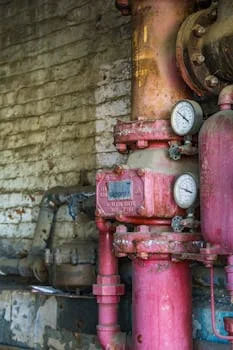
Operators must replace 5-micron cartridge filters every 6–12 months or when the differential pressure (ΔP) exceeds 10–12 psi (0.7–0.8 bar). Once particulates reach the RO elements, they become trapped in the feed spacer and cause irreversible damage. A multi-media filter for SDI reduction and RO membrane protection on the pretreatment skid can extend cartridge life by cutting feed turbidity upstream.
Membrane cleaning, or CIP, is the most technically demanding part of any industrial RO maintenance guide. According to DuPont FilmTec guidelines, cleaning should occur when normalized permeate flux drops by 15%. A standard CIP sequence is a two-stage approach: a low-pH wash (pH 2–3) using citric acid to remove inorganic scales like calcium carbonate, followed by a high-pH wash (pH 11–12) using sodium hydroxide (NaOH) or specialized detergents.
The following benchmarks apply to most brackish-water RO trains (HydropureWater technical standards, 2025):
| Maintenance Task | Industrial Benchmark / Threshold | Corrective Action |
|---|---|---|
| Cartridge Filter Change | ΔP > 10–12 psi | Replace with 5-micron spun-bonded elements |
| SDI 15-Minute Test | SDI < 5.0 (Target < 3.0) | Optimize upstream coagulant dosing or backwash filters |
| Membrane CIP (Chemical) | Normalized Flow Drop > 15% | Conduct high/low pH soak and flush cycle |
| High-Pressure Pump Service | 2,000–4,000 Operating Hours | Check seals, oil levels, and vibration specs |
| Antiscalant Dosing | LSI > 0 (Saturation Index) | Verify automatic chemical dosing system pump stroke/speed |
A multi-media filter train is particularly effective where HydropureWater JY Series equipment achieves an SDI below 3 from feedwater with turbidity as high as 3,000 mg/L.
Critical Monitoring Parameters and Alarm Thresholds
Tracking normalized permeate flow is the most reliable method for detecting early-stage fouling. Alarm thresholds should be set at 85% of the design recovery rate to avoid concentration polarization at the membrane wall. PLC-based SCADA systems should be programmed to calculate these values in real time. For most plants we size for surface-water duty, the four parameters below are the ones operators actually trip on:
| Parameter | Normal Range | Critical Alarm Setpoint | Operational Impact |
|---|---|---|---|
| Salt Passage | 0.5% – 2.0% | > 3.0% (or 15% increase) | Product water out of spec; membrane damage |
| Interstage ΔP | 5 – 12 psi | > 15 psi | Severe fouling; risk of membrane telescoping |
| Recovery Rate | 75% – 85% (Surface) | > 90% (unless brackish design) | Irreversible scaling on tail-end elements |
| Feed SDI | 1.0 – 3.0 | > 5.0 | Rapid fouling; daily CIP requirement |
The automatic chemical dosing system must be integrated with the RO's main control panel so antiscalant, biocide, and pH trim all respond to the same alarm setpoints listed above. For detailed maintenance of chemical dosing systems used in RO pretreatment, including pump calibration, tubing replacement, and antiscalant inventory management, refer to the linked 12-step protocol guide.
Troubleshooting Common RO System Failures

Low permeate flow accompanied by high differential pressure (ΔP) typically indicates particulate fouling or biological growth within the lead-end membrane elements. Low salt rejection with a normal ΔP suggests mechanical leakage, O-ring failure, or chemical degradation of the polyamide layer. Intermittent flow or erratic pressure readings often point to the high-pressure pump's Net Positive Suction Head (NPSH)—suction-side restriction, vortexing in the feed tank, or a partially closed block valve.
Who This Guide Is For and Next Step
This guide is for plant engineers, EPC contractors, and O&M supervisors running brackish-water RO trains of 10 m³/day and up in pharmaceutical, semiconductor, power, or food and beverage duty. Teams operating residential point-of-use units under 1 m³/day, or seawater RO with multi-stage energy recovery, should look at site-specific guides for those duty classes. The next step is to map your current log sheets against the 12 steps above and identify the gaps in SDI trending and CIP trigger logic, then request a maintenance audit and ROI quote for your train.
Frequently Asked Questions
How often should I flush my reverse osmosis system?
Perform a 5–15 minute low-pressure flush with permeate after each shutdown to remove concentrated brine from the membrane surface. For high-recovery brackish trains, an automatic flush on every stop prevents scaling on the tail-end elements.
Can plant personnel service an industrial RO purifier themselves?
Yes. Trained plant personnel can handle routine maintenance such as 5-micron cartridge filter changes, CIP chemical mixing and circulation, and sensor calibration on the permeate and concentrate lines. High-pressure pump rebuilds and membrane replacement are usually contracted.
What is the preventive maintenance checklist for RO water?
Daily: log feed and concentrate pressure, permeate flow, and conductivity. Monthly: inspect chemical dosing pumps and check for leaks at the high-pressure piping. Quarterly: perform normalized data analysis and schedule CIP when the 15/15/10 rule is met.
What causes RO membrane fouling in industrial systems?
The four primary causes are particulates (SDI above 5.0), inorganic scaling (exceeding LSI limits on the concentrate stream), biofouling (bacteria growth in the feed or biofilm on the membrane), and organic adsorption (ef and greases from process leaks).
How can I extend RO membrane lifespan beyond five years?
To maximize lifespan, maintain a consistent SDI below 5.0 (target below 3.0), ensure antiscalant dosing is never interrupted, and trigger CIP as soon as the 15% normalized performance drop is reached. Most membrane warranties above five years are voided by missed CIP events, not by age.