Industrial Waste Discharge Management in Germany: Load and Treatment Mandate
Industrial wastewater treatment in Germany follows federal water law that ties every discharge permit to Best Available Techniques and sector annex limits. According to Germany's Federal Environment Ministry (BMUKN), more than five billion cubic metres of wastewater arise each year from households, industry, and commercial sites. According to the Umweltbundesamt (UBA), public plants treated about 8.33 billion m³ in 2022.
That 2022 public volume included roughly 4.82 billion m³ of foul sewage (Schmutzwasser) carrying industrial and commercial flows into municipal networks. Direct dischargers need a water-law permit before any release to surface water. Indirect dischargers still face on-site pre-treatment rules set by the receiving utility and the state authority. Plant engineers size trains for the annex that matches their process family, not for a single national COD number.
Municipal sewage plants handle more uniform domestic loads. Industrial streams need tailored physical-chemical and biological steps before they join that network or before a direct outfall. The rest of this page maps the 2026 regulatory stack, unit operations, sector challenges, and cost drivers that decide CAPEX and OPEX.
What Wastewater Treatment Regulations Apply in Germany in 2026?
Wastewater treatment regulations in Germany in 2026 still rest on the Federal Water Resources Act (Wasserhaushaltsgesetz, WHG) and the Wastewater Ordinance (Abwasserverordnung, AbwV), last amended on 17 April 2024 (BGBl. 2024 I Nr. 132). WHG Section 57 requires that wastewater discharged to waters meet the lowest pollution level achievable with Best Available Techniques. AbwV turns that duty into numeric annex limits for COD, BOD5, nutrients, metals, AOX, and related parameters.
Around 97 percent of the German population is connected to public sewerage, according to BMUKN, so many factories discharge indirectly after on-site pre-treatment. Direct industrial outfalls remain common where salinity, toxic fractions, or peak loads exceed what a municipal works can accept. State water authorities issue permits, set monitoring programmes, and enforce them. Non-compliance can raise Abwasserabgabe fees, force upgrade orders, or stop production until the plant returns to permit conditions.
Micropollutants form the next compliance layer. BMUKN notes that conventional secondary treatment does not fully remove pharmaceutical residues and similar traces. EU rules require selected plants to add advanced removal stages such as membranes or oxidation by 2045. Sites that already polish for reuse sit ahead of that schedule and often find the same hardware useful for annex polishing today.
How Do WHG and AbwV Set Industrial Discharge Limits?
WHG and AbwV set industrial discharge limits by pairing a technology-based BAT duty with annex-specific concentration or load values. AbwV carries dozens of numbered annexes for metal finishing, food production, chemicals, textiles, pulp, and other origin areas; earlier summaries often describe this set as 57 annexes. Each annex lists the parameters that matter for that process family and where they apply—at the plant outfall, before mixing, or at the point of generation.
Permits translate annex values into site monitoring, sampling frequencies, and reporting. Dilution cannot be used to meet concentration limits against the state of the art. Streams that fall under different annexes need a mixing calculation before joint treatment. Most plants we size for German indirect discharge run toward the lower end of the annex table for metals or FOG because the municipal acceptance contract sits on top of AbwV.
Operators should keep a plant wastewater register (Abwasserkataster) and an operating log that document water-saving measures, chemical use, and self-monitoring results. Those records support both the permit file and routine inspections. When production recipes change, the annex mapping and the equalisation strategy should be reviewed in the same week, not after the next compliance sample fails.
Key Technologies for Industrial Wastewater Treatment in Germany
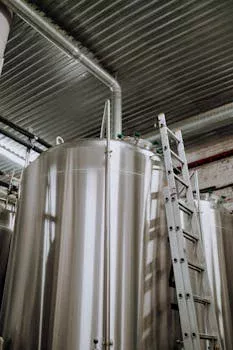
German industrial plants usually combine physical-chemical, biological, and polishing stages so one train can hit both AbwV annex limits and any reuse target. Technology choice follows the pollutant matrix: free oil and TSS favour flotation; biodegradable organics favour activated sludge or MBR; dissolved salts and micropollutants favour RO or evaporation. Hydraulic peaks from cleaning shifts often decide tank volumes more than the weekday average flow.
Physical-chemical treatment removes suspended solids, oils, greases, and precipitated metals before biology. Coagulation and flocculation aggregate colloids; dissolved air flotation then lifts the floc. High-efficiency DAF systems typically achieve over 90% removal of TSS and FOG under design loading (HydropureWater field data, 2025). Food, metal-finishing, and oily workshop streams rely on this step to protect downstream biology from FOG blankets and toxic metal spikes.
Biological treatment cuts BOD and COD. Conventional activated sludge still serves many German sites with stable organic loads and available land. Where footprint is tight or reuse follows, an integrated MBR membrane bioreactor system couples sludge with membrane filtration that typically retains particles below 1 μm. Advanced submerged MBR designs often use 10-20 times less energy than external cross-flow membranes for equivalent filtration duty (HydropureWater MBR product description). Anaerobic digestion remains the first choice for high-strength organics when biogas recovery offsets digester heat demand.
Advanced treatment and water reuse close the loop when annex limits or process-water specs demand polishing. Ultrafiltration, nanofiltration, and industrial RO water treatment systems strip dissolved salts and small molecules for recycle. Vacuum evaporators handle high-salt or complex organics where zero or near-zero liquid discharge is the permit goal, recovering distillate and concentrating brine for disposal. RO concentrate management must be designed with the same care as the permeate line, or the plant simply moves the compliance problem downstream.
Sludge treatment is mandatory on every industrial train. Mechanical dewatering with a plate and frame filter press can cut sludge volume by up to 80% versus thin slurry, which lowers haulage and gate fees. Selection always includes spare-parts access and a written wastewater equipment maintenance plan, because downtime on dewatering quickly fills buffer tanks and forces expensive tanker haul-away.
| Technology Type | Primary Function | Key Pollutants Removed | Typical Application | Advantages |
|---|---|---|---|---|
| Physical-Chemical (e.g., DAF) | Pre-treatment, Solids/Oil Removal | TSS, FOG, Heavy Metals, Colloidal Particles | Food & Beverage, Metal Finishing, Oil & Gas | Rapid separation, effective for emulsions, compact footprint for selecting an MBR wastewater treatment system. |
| Biological (e.g., Activated Sludge, MBR) | Organic Pollutant Degradation | BOD, COD, Nitrogen, Phosphorus | Municipal, Food & Beverage, Chemical, Pharmaceutical | Cost-effective for organics, MBR offers high effluent quality and compact design. |
| Advanced Membrane (e.g., RO) | Specific Contaminant Removal, Desalination | Dissolved Salts, Heavy Metals, Micro-pollutants | High-purity water for reuse, Pharmaceutical, Electronics | High water recovery, superior effluent quality for industrial DAF systems. |
| Vacuum Evaporator | High-Concentration Waste Treatment | Salts, Complex Organics, Heavy Metals (for zero liquid discharge) | Metal Processing, Chemical, Automotive | Achieves high concentration factors, enables ZLD, recovers water. |
| Sludge Treatment (e.g., Filter Press) | Sludge Dewatering | Solid Waste from all treatment stages | All industries generating sludge | Reduces sludge volume, lowers disposal costs, produces dry cake. |
Sector-Specific Effluent Challenges Across German Industry
Metal processing and automotive plants discharge chromium, nickel, zinc, cutting oils, and spent baths. Multi-stage precipitation, oil separation, and polishing filtration are the usual path before sewer or river discharge. Batch dumps of concentrated baths need equalisation so the continuous train is not shocked by a single tank drain. Cyanide-bearing streams require dedicated detoxification before they meet the metals train.
Food and beverage sites produce high BOD, COD, TSS, and FOG. Screening, primary clarification, and DAF ahead of biology keep FOG from coating aerators. Many German dairies and meat plants we review run DAF at the lower hydraulic end of the catalogue range so retention time covers night cleaning peaks. Seasonal campaigns—fruit harvest or campaign brewing—need temporary storage or rental flotation capacity rather than oversized permanent iron that sits idle most of the year.
Chemical and pharmaceutical manufacturing send variable organics, toxic intermediates, and wide pH swings. Physical-chemical conditioning, advanced oxidation, and specialised biology for recalcitrant COD are common. Chemical-industry annex rules often drive TOC or AOX limits that biology alone cannot meet, so oxidation or activated carbon appears early in the block-flow diagram.
Pulp and paper mills generate high TSS, BOD/COD, colour, and sometimes chlorinated organics. Primary clarification, secondary biology, and tertiary colour or AOX polishing form the backbone. Textile mills add intense colour and auxiliary chemicals; coagulation, oxidation, and specialised biology are typical before discharge or reuse. In both sectors, colour removal without creating a hazardous sludge stream is a recurring design constraint on German sites.
Cost Drivers for CAPEX, OPEX, and Discharge Fees

Capital cost scales with process complexity and hydraulic capacity. A compact integrated purification package in the 10-200 m³/h band costs less civil work than a large DAF train rated 4-300 m³/h with separate sludge handling, but membrane trains raise mechanical CAPEX. Automation, ATEX zoning, covered tanks for odour control, and heated buildings for outdoor German winters add further capital in industrial parks.
Operating cost is dominated by energy, chemicals, sludge disposal, labour, and spare membranes or press cloths. Some MBR layouts use more aeration energy than conventional sludge, yet advanced submerged MBRs can run 10-20 times lower filtration energy than external cross-flow at the same flux. Optimised lamella clarification can cut coagulant use by up to 30% when solids loading is stable. Planned maintenance prevents the overtime and rental dewatering that erase those savings within a single unplanned week.
Discharge fees and penalties matter under German water law. Exceeding permit or annex limits raises Abwasserabgabe exposure and can trigger upgrade orders. Water reuse reduces both freshwater purchase and billed discharge volume, which often improves ROI faster than corporate-image arguments alone. Plate-and-frame filter press and flat-sheet MBR cost guides help procurement compare unit prices before a full FEED study locks the flowsheet.
Budget holders should separate once-off civil works from package equipment that can be relocated if production moves. They should also hold a contingency for permit-driven add-ons such as online TOC analysers or redundant pumps that appear late in the authority review. Those items are cheaper to design in than to bolt on after concrete is poured.
Procurement teams should treat annex limits, municipal acceptance contracts, and reuse specs as three separate design cases. A train that only meets sewer acceptance may still fail a later reuse upgrade if salinity or silica was never measured. Lock those end-use cases before equipment bids are issued, then keep the same cases in the commissioning checklist.
Selection Checklist Before You Commit to a Train
- Map every stream to the correct AbwV annex and note limits at outfall, before mixing, and at source.
- Confirm direct versus indirect discharge and the municipal acceptance contract if you sewer.
- Measure COD, BOD5, TSS, FOG, nutrients, metals, and salinity on production and cleaning campaigns.
- Decide whether the end point is annex compliance only or process-water reuse via UF/RO.
- Size equalisation for the worst cleaning shift, not the daily average flow.
- Budget sludge cake haulage and spare membrane or cloth sets in year-1 OPEX.
- Document BAT choices so the permit application matches WHG Section 57 expectations.
Who This Is For / Who Should Look Elsewhere / Next Step
Plant engineers, EPC contractors, and procurement managers sizing or upgrading German industrial effluent plants under WHG and AbwV are the primary readers for this guide. The page is not a substitute for a site permit application or a lab treatability study on a specific wastewater. Buyers who only need municipal package plants for domestic sewage should look at municipal references instead. If you already hold firm design data and need equipment sizing for DAF, MBR, or RO, share flow and pollutant figures through a project inquiry so a process engineer can check capacity bands against your annex limits.
Frequently Asked Questions
What are the main regulations for industrial wastewater discharge in Germany?
The Federal Water Resources Act (WHG) and the Wastewater Ordinance (AbwV) are the main federal rules. WHG Section 57 requires Best Available Techniques for discharges to waters. AbwV, last amended on 17 April 2024, sets annex-specific numeric limits by industry. State authorities write those rules into site permits and enforce sampling and reporting on the operating plant.
What are the most common industrial wastewater treatment methods used in Germany?
Most German industrial sites combine physical-chemical steps (coagulation, flocculation, DAF), biological treatment (activated sludge, MBR, or anaerobic digestion), and polishing with UF, NF, RO, or vacuum evaporation when reuse or ultra-low limits apply. Sludge dewatering closes every train. The exact sequence follows the AbwV annex pollutants, not a single standard flowsheet copied from another sector.
How do industrial wastewater treatment costs in Germany compare internationally?
German projects often cost more than plants in regions with looser limits because BAT-level technology, labour, and energy prices are higher. Those costs buy tighter compliance and more reuse options for process water. Fee savings and lower freshwater purchase can offset CAPEX when annex limits or municipal contracts are strict and enforced.
Which industries in Germany face the toughest wastewater treatment challenges?
Metal processing, chemicals and pharmaceuticals, food and beverage, pulp and paper, and textiles face the hardest loads. Heavy metals, toxic organics, FOG, colour, and salinity each need different unit operations. Multi-stage trains and careful equalisation are normal on these sites before discharge or reuse is approved.
Can treated industrial wastewater be reused in Germany, and what are the benefits?
Yes. RO and evaporator distillate commonly return as process, wash, or cooling make-up when quality specs allow. Benefits include lower freshwater intake, smaller billed discharge volumes, and reduced Abwasserabgabe exposure. Reuse also positions the site for future micropollutant polishing duties that EU rules phase in toward 2045.