Why Chandigarh Hospitals Must Treat Wastewater Now
Hospitals in Chandigarh are required to install effluent treatment plants (ETPs) to meet National Green Tribunal (NGT) and Chandigarh Pollution Control Committee (CPCC) norms. This regulatory push is a critical step towards safeguarding public health and the environment. The CPCC has mandated ETPs in all government and private hospitals under the Solid Waste Management Rules 2016, ensuring that medical wastewater undergoes appropriate treatment before discharge. The NGT directives reinforce the requirement for on-site treatment before any discharge into municipal drains or for potential reuse. Untreated hospital wastewater poses significant risks, containing a complex mix of pathogens, antibiotics, cytotoxic drugs, and other hazardous chemicals, thereby threatening the local ecosystem and public health if released without purification. The UT administration has allocated Rs 20 crore for ETPs in civil hospitals, underscoring the urgency and commitment to compliant wastewater management.
How Hospital Wastewater Differs from Municipal Sewage
Hospital wastewater has a unique composition that requires careful consideration when selecting treatment technology. Unlike domestic sewage, hospital effluent has a significantly higher and more complex contaminant profile. It frequently contains elevated levels of pharmaceutical residues, including antibiotics, antivirals, and cytotoxic drugs used in cancer treatment, which can persist in the environment and contribute to antimicrobial resistance. Pathogenic bacteria, viruses, and disinfectants are also present in higher concentrations, posing direct health risks. Biochemical Oxygen Demand (BOD) typically ranges from 200–400 mg/L, and Chemical Oxygen Demand (COD) can be as high as 400–800 mg/L, substantially exceeding the levels found in municipal sewage. Consequently, hospital wastewater treatment necessitates a multi-stage approach, often including preliminary screening, robust biological degradation processes, advanced disinfection methods, and sometimes tertiary treatment like advanced oxidation processes to neutralize recalcitrant compounds.
A bridge to the next section: Effective treatment of hospital wastewater is crucial to mitigate these risks and ensure environmental and public health safety.
Approved Treatment Technologies for Chandigarh Hospitals
Several technologies are suitable for hospital wastewater treatment in Chandigarh, particularly for urban environments with limited space. The underground package sewage treatment plant (WSZ Series) offers a compact and efficient solution, employing an A/O (Anaerobic-Anoxic-Oxic) biological contact oxidation process followed by sedimentation and disinfection. These systems are ideal for treating flows ranging from 1 to 80 m³/h and are designed for minimal footprint, often being installed underground. For sites with extreme space constraints or where exceptionally high effluent quality is desired, MBR (Membrane Bioreactor) technology is a leading option. MBR systems can achieve effluent quality with suspended solids below 1 μm, reducing the plant's footprint by up to 60% compared to conventional activated sludge processes. The Medical Wastewater Systems are specifically engineered for hospital applications, integrating advanced filtration with ozone disinfection. This approach achieves over 99% pathogen kill without the need for chemical dosing, minimizing operational complexity and environmental impact. The final effluent must consistently meet the Central Pollution Control Board (CPCB) standards, which stipulate a maximum BOD of 30 mg/L, a maximum COD of 250 mg/L, and a fecal coliform count not exceeding 1000 MPN/100mL.
| Technology Type | Key Features | Typical Application | Effluent Quality (CPCB Standards) |
|---|---|---|---|
| Underground Package STP (WSZ Series) | A/O biological process, integrated sedimentation & disinfection, compact design | 1–80 m³/h flows, space-constrained sites | BOD ≤ 30 mg/L, COD ≤ 250 mg/L, Fecal Coliform ≤ 1000 MPN/100mL |
| MBR Membrane Bioreactor | Superior effluent quality (<1 μm), 60% smaller footprint, high-level treatment | Space-critical urban hospitals, high-quality reuse applications | BOD ≤ 10 mg/L, COD ≤ 50 mg/L, Fecal Coliform ≤ 100 MPN/100mL (typical) |
| Medical Wastewater System | Filtration and ozone disinfection, zero chemical dosing, high pathogen kill rate | Small to medium hospitals, clinics, where chemical use is undesirable | BOD ≤ 30 mg/L, COD ≤ 250 mg/L, Fecal Coliform <100 MPN/100mL (typical) |
For detailed specifications and system capabilities, refer to the respective product pages: underground package sewage treatment plant for hospitals and compact ozone-based medical wastewater system.
Cost Breakdown of Hospital ETPs in Chandigarh
Procurement teams evaluating hospital ETPs must consider both capital investment and long-term operational costs. Recent project data from Chandigarh provides valuable benchmarks. The Government Multi-Speciality Hospital (GMSH)-16 ETP, with a capacity of 500 KLD (Kilo Litres per Day) and an estimated cost of Rs 6 crore, translates to approximately Rs 12,000 per KLD. These large-scale installations are designed for a substantial lifespan of 20–25 years, offering a long-term solution. For smaller to medium-sized facilities, compact underground package WSZ systems typically range from Rs 8,000 to Rs 10,000 per KLD for plants designed for 50–200 KLD capacities. While MBR systems represent a higher upfront capital investment, often 30–40% more than conventional technologies, their significantly smaller footprint can offset land acquisition costs in urban areas. The superior effluent quality from MBRs enables greater water reuse potential, leading to long-term savings on water procurement. Operational and Maintenance (O&M) costs for ETPs in Chandigarh are estimated to be between Rs 1.5 to Rs 2.5 per kL, with variations depending on the level of automation and the specific disinfection method employed.
| System Type | Capacity Range (KLD) | Estimated Capital Cost (per KLD) | Key Cost Factors | Estimated O&M Cost (per kL) |
|---|---|---|---|---|
| GMSH-16 (Large Scale Government Project) | 500 | ~Rs 12,000 | Civil works, advanced civil infrastructure | ~Rs 1.5 - 2.0 |
| Compact Underground WSZ Series | 50 - 200 | Rs 8,000 - 10,000 | Modular design, pre-fabricated components | Rs 1.8 - 2.5 |
| MBR Systems | Variable (Scalable) | Rs 11,000 - 14,000+ (30-40% higher than conventional) | Membrane modules, advanced automation | Rs 1.5 - 2.2 (Potentially lower due to higher automation) |
| Medical Wastewater System | 1 - 50 (Customizable) | Rs 9,000 - 12,000 | Ozone generation, advanced filtration | Rs 1.5 - 2.2 (Low chemical costs) |
These figures are indicative and subject to site-specific conditions, vendor quotes, and project scope. For precise financial planning, detailed engineering assessments are recommended.
Design Considerations for Underground and Space-Saving Systems
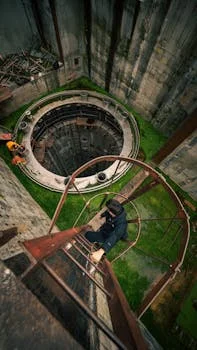
The successful implementation of an ETP in a hospital setting, particularly in dense urban areas like Chandigarh, hinges on thoughtful design and placement. Underground ETPs offer a significant advantage by reclaiming valuable surface area. This allows for landscaping, parking facilities, or other essential hospital infrastructure to be developed above the treatment plant, maximizing land utilization. The design must also prioritize ease of maintenance and accessibility. While many modern systems are highly automated, periodic inspections and servicing are inevitable. Access points, ventilation, and necessary clearances must be incorporated into the underground design. The trend towards fully automated systems significantly reduces the need for on-site operators, thereby lowering labor costs and minimizing the potential for human error in critical treatment processes. The integration of advanced control systems, such as Programmable Logic Controllers (PLCs), enables remote monitoring of plant performance in real-time.
Frequently Asked Questions
Do hospitals treat wastewater? Yes, all hospitals in Chandigarh are mandated to install Effluent Treatment Plants (ETPs) by the CPCC and NGT to treat their wastewater before discharge.
What is hospital sewage? Hospital sewage is wastewater generated from hospital operations, including wards, laboratories, pharmacies, and operating theatres. It contains a complex mix of pathogens, pharmaceutical residues, disinfectants, and organic matter requiring advanced treatment processes.
Which treatment system is best for small hospitals? For small hospitals and clinics treating 1–10 m³/day, the compact system is an excellent choice. It offers efficient treatment with ozone disinfection, eliminating the need for chemical dosing.
Further Reading
Explore these in-depth articles on related wastewater treatment topics: