
A lamella clarifier manufacturer for industrial wastewater builds plate tanks rated at 20–40 m/h surface loading with 10–15% sludge recirculation. Removal runs over 70% of suspended solids, and coagulant use falls by up to 30%.
What a Lamella Clarifier Manufacturer for Industrial Wastewater Ships
A lamella clarifier for industrial wastewater uses inclined plates and a sludge return loop to raise surface loading to 20–40 m/h. Most plants we size still hold hydraulic retention at 20–40 minutes. Suspended-solids removal stays over 70% when the coagulant dose and the return rate match the jar test.
Influent wastewater mixes with coagulant before it enters the flocculation zone, where settleable flocs form. Those flocs move into the lamella separation zone, settle onto the inclined plates, and slide to the sludge collection hopper. Clarified water overflows from the top of the unit into the effluent launder. A share of the underflow returns to the flocculation zone and seeds the next incoming particles.
Coagulation, flocculation, and continuous sludge recirculation sit in one tank, so the plant does not build three separate basins. Open conventional clarifiers operate near 1–2 m/h and need a long settling depth. The plate pack cuts that vertical distance from meters to centimeters. That is why the same footprint can carry 20–40 m/h instead of 1–2 m/h.
High Rate Clarifier with Sludge Recirculation
A high rate clarifier with sludge recirculation uses a 10–15% return rate of the underflow to seed poorly flocculating particles. High rate names the hydraulic loading. Lamella names the inclined plates that make the loading possible.
Some wastes still need a denser seed than return sludge alone. Designers then add fine media such as microsand in coagulation to raise floc density and settling speed on difficult waste. The separate mechanics page for a high-speed microsand concrete sedimentation tank covers that ballast case. This manufacturer note stays with plate area and a 10–15% sludge return.
Return sludge works because pre-formed, active flocs act as a seed for colloidal particles. That seeding increases floc size and density, which lifts settling velocity inside the pack. It also thickens the underflow internally, so the dewatering stage receives less water. On low-TSS influent the return is the difference between a floc that settles and one that drifts through.
Inclined Plate Sedimentation Tank Specifications
Inclined plate sedimentation tank specifications for this duty start at a surface loading of 20–40 m/h, against 1–2 m/h for a conventional primary clarifier. Hydraulic retention is 20–40 minutes here and 2–4 hours on the conventional basin in the table below. The source comparison calls that hydraulic result up to four times faster than a conventional primary clarifier. TSS removal is 85–95% when influent character, dose, and pretreatment line up, and effluent turbidity is held at less than 5 NTU with optimal dosing.

| Parameter | High-Efficiency Sedimentation Tank (HydropureWater Standard) | Conventional Primary Clarifier |
|---|---|---|
| Surface Loading Rate | 20–40 m/h | 1–2 m/h |
| Hydraulic Retention Time | 20–40 minutes | 2–4 hours |
| TSS Removal Efficiency | 85–95% | 50–70% |
| Effluent Turbidity | <5 NTU (with optimal dosing) | 10–30 NTU |
| Chemical Savings (Coagulant) | Up to 30% reduction | Standard consumption |
Published lamella practice brackets those catalog numbers. A standard design summary lists typical tube or plate spacing of 50 mm, with plates commonly spaced 50–80 mm once larger particles are screened out, and plate pitches between 45° and 70° to allow self-cleaning. The same summary puts a plain lamella surface loading rate between 10 and 25 m/h, with retention around 20 minutes or less. This catalog's 20–40 m/h rating rides on recirculation and dosing control, which is why both bands can be true at once.
The same summary adds two design ceilings worth quoting in a spec sheet. Loadings on plates should be limited to 2.9 m/h to keep laminar flow between the plates, and the unit usually requires only 65–80% of the area of clarifiers operating without inclined plates. Inclined plates let the clarifier run at overflow rates 2 to 4 times a traditional clarifier's. Read the table's 60–70% footprint cut as this package with recirculation, not as every plain plate pack on the market.
Catalog lamella plates on this duty are spaced 50–100 mm apart and angled at 55–60° from the horizontal, inside the self-cleaning band above. Packs we open after greasy service are usually nearer 80 mm than 50 mm. Plate geometry and the full duty numbers are published as High Efficiency Sedimentation Tank Specifications: 2026 Engineering Data. Use that page when you need the complete parameter set for a high-efficiency sedimentation tank.
Compact Sedimentation Tank for High TSS Wastewater
A compact sedimentation tank for high TSS wastewater has to settle dye, fiber, FOG, or metal hydroxide without a municipal-scale basin. Food and beverage waste carries high organic load plus fats, oils, and greases, and it is often paired with dissolved air flotation before the plate tank. Textile waste needs the floc step to catch dyestuffs and suspended fibers. Municipal plants use the same compact unit as a primary or tertiary clarifier where land is scarce.
Metalworking wastewater in this duty is usually emulsified oil and metal hydroxide after a pH swing. A city that receives the discharge can set local limits tighter than the federal floor. At 85–95% TSS removal, a 31 mg/L monthly cap is not automatic when influent TSS is high, so pair the tank with PLC-controlled chemical dosing for optimal coagulation so the feed tracks real-time flow.
Feed concentration sets the outer edge of the duty. The standard lamella design summary states the units can handle a maximum feed water concentration of 10000 mg/L of grease and 3000 mg/L of solids. Above that solids band, do not assume the 20–40 m/h rating still holds. Textile dye jobs we have sized needed a tighter dose more than extra plate area. Pilot the high-TSS case when the solids number sits near 3000 mg/L or the grease load is variable.
Footprint and Cost Versus a Conventional Basin
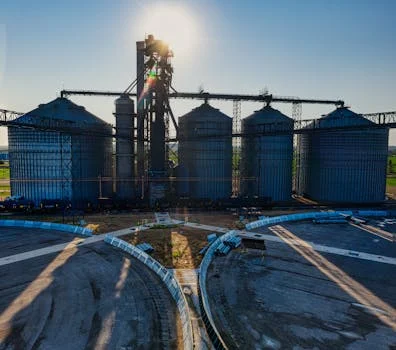
High efficiency sedimentation tanks cut the physical footprint by 60–70% versus conventional circular clarifiers at the same hydraulic capacity. Capital for the equipment can sit a step above a bare conventional tank. Civil work often offsets that gap through a smaller basin, smaller concrete works, and a smaller building enclosure. Modular bays also let a plant add flow without a new concrete tank, a flexibility fixed conventional clarifiers lack.
| Feature | High Efficiency Sedimentation Tank | Conventional Sedimentation Tank |
|---|---|---|
| Footprint Requirement | 60–70% less space for equivalent flow | Large, extensive land use |
| Initial Capital Cost | Moderate to High (offset by civil savings) | Low to Moderate (high civil works cost) |
| Operational Cost (Chemicals) | Lower (up to 30% reduction) | Higher (standard consumption) |
| Operational Cost (Sludge Volume) | Lower (reduced volume due to internal thickening) | Higher (larger sludge volumes) |
| Scalability | Modular design, easy incremental expansion | Limited, requires major new construction |
Chemical cost in the table is lower by up to 30% because recirculation improves agglomeration and internal solids thickening. Internal thickening cuts dewatered sludge volume and the haul cost that follows it. The design summary's 65–80% area figure applies to plain plate packs, while the table's 60–70% cut is this high-rate package with sludge recirculation. Quote both numbers with their base when a client compares bids.
Who Should Specify This Tank
Plant engineers and EPC contractors are the buyers for this industrial TSS, FOG, dye, or metal-hydroxide duty on a tight site. A plain primary basin that should stay at 1–2 m/h, or a secondary clarifier after activated sludge, is a poor fit for this catalog. If the jar-test floc still floats at 20 m/h, do not buy the 40 m/h end of the band.
- Measure influent TSS, FOG, pH, and peak flow before locking a surface loading inside 20–40 m/h.
- Run a jar test before locking coagulant dose or the 10–15% sludge return.
- Keep plate spacing inside 50–100 mm and plate angle at 55–60° from the horizontal.
- For a direct metal-finishing discharge, check 60 mg/L daily TSS and 31 mg/L monthly average under 40 CFR 433.13.
- Plan lamella cleaning every 6–12 months, and sooner when FOG or fibrous solids are high.
- Price the civil footprint, not only the steel. The comparison table shows 60–70% less space for equivalent flow.
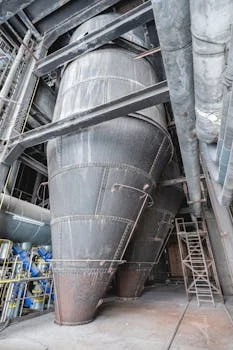
The loadings above refer to the High-Efficiency Sedimentation Tank (Lamella Clarifier) and to its published capacity range. Match the model to measured flow, not to the peak nameplate alone.
Send average flow, peak flow, influent TSS, FOG, pH, and the discharge limit with your quote request. A project quote is the next step when those numbers are in hand. Keep the requested surface loading inside 20–40 m/h unless a pilot says otherwise.
Frequently Asked Questions
Lamella clarifier buyers usually ask about loading, chemistry, metal limits, plate cleaning, and operator skill.
What is the difference between a high rate clarifier and a lamella clarifier?
Both terms describe sedimentation tanks that use inclined plates to multiply settling area. High rate emphasizes the hydraulic loading the geometry unlocks, while lamella names the inclined plate structure itself. In practice a lamella clarifier is one type of high-rate clarifier, and adding sludge recirculation pushes it toward the top of the 20–40 m/h band. The plates, not the marketing, are what separate it from a conventional basin.
Can high efficiency sedimentation tanks handle variable flow rates?
Yes, these systems carry buffer zones and adjustable flocculation and sludge recirculation rates, so peak flows and influent variability are absorbed without losing effluent quality. The return rate moves between 10% and 15% of underflow as load changes. Retention of 20–40 minutes responds faster than a 2–4 hour conventional basin. Most plants we watch ride storm dilution with a dose trim, not a bypass.
How often does the lamella pack need cleaning?
Clean the lamella pack every 6–12 months, because solids loading and grease set the interval more than the calendar does. Automated wash systems on many HydropureWater units cut manual plate pulls. Follow the industrial maintenance protocol for lamella plates for the step order. Most food-plant packs we open land nearer 6 months than 12 when FOG is high.
Do these tanks require skilled operators?
Daily operation does not require a full-time clarifier specialist. Initial setup and optimization still benefit from an engineer, then PLC control holds dose and return rate. Operators monitor turbidity and follow a comprehensive maintenance guide for clarifier systems on the scheduled rounds. Buffer zones plus adjustable flocculation cover variability without extra staff.
Is sludge recirculation mandatory?
No rule forces recirculation, but most high-efficiency designs ship with it because it boosts performance on low-solids or poorly flocculating influent. The 10–15% return seeds incoming particles with active floc and lifts TSS removal toward the 85–95% band. Some duties run acceptably without it, at the cost of dose and effluent margin. Most plants we audit keep it on after the first jar-test series.
What surface loading should you specify on a lamella clarifier?
Specify 20–40 m/h for this high-rate duty with sludge return, and 1–2 m/h for a conventional primary basin. A plain lamella pack without recirculation is usually quoted between 10 and 25 m/h, and plate loadings should stay at 2.9 m/h where laminar flow between plates is the design basis. Do not carry a catalog peak into a permit without a jar test behind it.
Can a lamella clarifier meet metal-finishing TSS limits on its own?
Not by percent removal alone. Under 40 CFR 433.13, direct metal-finishing dischargers must hold TSS at 60 mg/L daily and 31 mg/L monthly, oil and grease at 52 mg/L and 26 mg/L, and pH within 6.0 to 9.0. At 85–95% TSS removal, the 31 mg/L monthly cap still needs modest influent TSS or a polishing step. Local sewer limits can sit lower than the federal floor.