
Why Cleanroom CIP Wastewater Is a Reuse Problem, Not Just a Discharge
A submerged PVDF flat-sheet MBR with 0.1 μm pore size is the standard configuration for cleanroom CIP wastewater in 2026. It removes 95–99% of COD and TSS in a single step, producing effluent suitable for RO polishing to UPW-grade reuse or compliant discharge under China GB 8978 and EPA semiconductor guidelines — at 10–20× lower energy than sidestream cross-flow systems.
Cleanroom CIP wastewater is dominated by isopropyl alcohol (IPA) from solvent rinses, non-ionic and anionic surfactants from detergent cycles, trace HCl and HF from acid sanitization, and large volumes of DI water rinses. The composite stream carries high TOC, moderate COD in the 200–2,000 mg/L range, low TSS (typically <100 mg/L) but variable pH that swings between acid and base cycles. A 300 mm semiconductor fab consumes 5,000–10,000 m³/day of UPW, of which 40–60% exits the process train as CIP reject — too valuable to send to drain when fresh UPW make-up costs $1.50–$3.00/m³ and discharge surcharges keep climbing under the chemical wastewater discharge standard 2026 guide.
That is where the MBR earns its place: it is the biological workhorse between CIP equalization and RO/UPW polishing. A well-run MBR strips COD/BOD, retains biomass, and produces a clarified effluent with SDI low enough to protect downstream RO membranes from organic fouling. The Springer 2024 review on MBR for textile wastewater reuse (DOI: 10.1007/978-3-031-62054-6_15) confirms that MBR enables sustainable reuse in water-intensive industries — the same logic transfers directly to semiconductor and pharma cleanrooms where the water-quality bar is even higher.
CIP Wastewater Characteristics That Drive MBR Configuration Choice
CIP wastewater is biodegradable but chemically aggressive. The feed that arrives at the MBR headworks typically sits at COD 200–2,000 mg/L with a BOD/COD ratio of 0.3–0.5 once surfactants are pH-neutralized, meaning biology can do most of the work. Temperature is favorable — 25–45 °C from the heated rinse cycles falls inside the mesophilic range (20–40 °C) without supplemental heating, which is one of the few free wins in this stream.
The trouble is pH swing. Acid cycles from HCl/HF sanitization push pH to 2; alkaline detergent cycles push it to 11. Without equalization, biology collapses. A properly sized equalization tank at 8–24 h HRT with online pH probe and caustic/acid trim is mandatory — it is the single most common cause of MBR underperformance on CIP service.
IPA and other volatiles are partially stripped by the coarse-bubble aeration that any submerged MBR already uses for membrane scouring. That is a free air-stripping bonus, but it also means VOC load on the off-gas must be considered. Surfactant load of 50–500 mg/L is routine; above 200 mg/L, antifoam dosing and a FOG pre-stage such as a DAF system should be installed upstream of the bioreactor to prevent foam carryover and biomass washout.
| Parameter | Typical Range | MBR Design Implication |
|---|---|---|
| COD | 200–2,000 mg/L | Standard submerged MBR rated to 5,000 mg/L handles peak loads |
| BOD/COD ratio | 0.3–0.5 | Biology is viable after pH neutralization |
| Temperature | 25–45 °C | Mesophilic, no heating required |
| pH | 2–11 (raw), 6.5–8.5 (equalized) | 8–24 h equalization mandatory |
| TSS | <100 mg/L typical, surges to 300+ during detergent cycles | Submerged MBR tolerates surges; sidestream preferred if persistent >1,000 mg/L |
| Surfactants | 50–500 mg/L | >200 mg/L triggers DAF pre-stage + antifoam |
| IPA / VOCs | 50–300 mg/L | Stripped by scouring aeration; off-gas treatment may be required |
Submerged vs Sidestream MBR: Configuration Trade-Offs
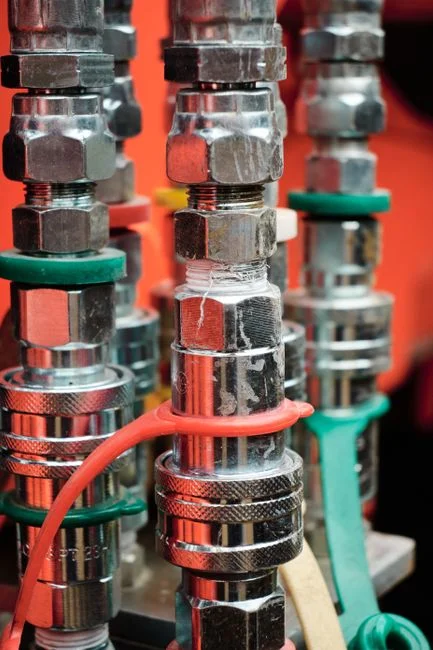
Submerged MBR is the default for cleanroom CIP. Modules sit immersed in the aeration tank, MLSS operates at 8,000–12,000 mg/L, flux runs 10–25 L/m²·h, and specific energy demand is 0.3–0.6 kWh/m³ (HydropureWater field data, 2026). The DF-series PVDF flat sheet membrane module at 0.1 μm pore size integrates the aeration box directly beneath the cassette, providing continuous coarse-bubble scouring that keeps fouling in check. Each element is individually replaceable, and a single 80–225 m² cassette delivers 32–135 m³/day — enough for most fab-side CIP trains without parallel redundancy.
Sidestream MBR runs an external cross-flow loop with tubular or multitube membranes. Flux is higher (30–80 L/m²·h) and the configuration tolerates higher TSS and oily feeds, but specific energy demand climbs to 2–5 kWh/m³ — 10–20× the submerged figure, per HydropureWater DF-series operating data. That energy penalty is hard to justify for cleanroom CIP, which is dilute, low-TSS, and flows at moderate temperature. Sidestream wins only in edge cases: feed COD >5,000 mg/L, abrasive slurry carryover, or sustained temperatures >45 °C that would damage polymeric flat-sheet membranes.
| Parameter | Submerged MBR (PVDF flat-sheet) | Sidestream MBR (tubular) |
|---|---|---|
| Flux | 10–25 L/m²·h | 30–80 L/m²·h |
| MLSS tolerance | 8,000–12,000 mg/L | 10,000–15,000 mg/L |
| Specific energy | 0.3–0.6 kWh/m³ | 2–5 kWh/m³ |
| Footprint | Compact (membrane in tank) | Larger (external loop + circulation pumps) |
| Best fit | Cleanroom CIP, RO feed, SDI <3 | High-TSS, oily, high-COD industrial streams |
| CAPEX indicator | Lower | Higher (pumps, piping, cross-flow skids) |
For a typical fab-side train, an integrated submerged MBR system is the right call. The sidestream option is reserved for the few cleanroom applications where the chemistry breaks out of the standard envelope.
How MBR Treats Cleanroom CIP: Process Flow Step by Step
Step 1 — Collection and equalization. CIP drains from tool-side collections enter an 8–24 h HRT equalization basin with online pH/temperature probes, antifoam dosing, and caustic/acid trim. This is the chemical shock absorber for everything downstream.
Step 2 — Coarse screening. A rotary mechanical bar screen at 2–5 mm aperture protects the feed pumps and the MBR cassette from wipes, gasket fragments, and packaging debris that periodically arrive in CIP streams.
Step 3 — Biological reactor. An anoxic zone (HRT 2–4 h) breaks surfactant chains and performs partial denitrification if nitrate is present; an aerobic zone (HRT 6–12 h) oxidizes BOD/COD. Dissolved oxygen is held at 1.5–2.5 mg/L in the aerobic basin.
Step 4 — Submerged MBR cassette. The PVDF flat-sheet module at 0.1 μm retains biomass and clarifies effluent. Continuous coarse-bubble aeration beneath the cassette scours the membrane surface, slowing fouling.
Step 5 — Optional DAF interstage. If FOG exceeds 200 mg/L, an interstage DAF removes emulsified oils before they blind the RO membrane downstream.
Step 6 — Polishing or disinfection. For reuse, the MBR effluent feeds a two-pass RO (often with a multi-media filter as RO guard) producing UPW-grade make-up. For discharge, a chlorine dioxide generator provides final disinfection to meet EPA and EU 91/271/EEC fecal coliform limits.
Reuse vs Discharge: Effluent Quality Thresholds for Cleanroom CIP
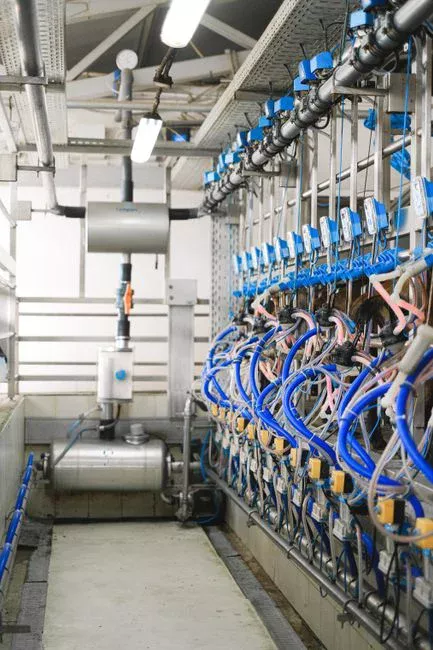
An MBR alone does not make UPW — but it makes RO feed. The decision is purely economic and depends on the fab's local cost of water and discharge surcharge. MBR effluent is consistent: COD ≤50 mg/L, BOD ≤5 mg/L, TSS ≤5 mg/L, turbidity ≤1 NTU. That meets China GB 8978-1996 second-class and most EPA industrial discharge limits for direct discharge after disinfection. For RO polishing, the MBR effluent typically delivers SDI <3 and TOC 5–15 mg/L — the RO membrane then strips TOC to <1 mg/L for UPW feed.
The decision rule is straightforward: if fab UPW make-up cost is above $2/m³, route MBR effluent to RO for reuse. If it is below $1/m³ and discharge capacity is unconstrained, MBR + ClO2 for discharge is the lower-CAPEX path. In between, run a hybrid — reuse during water-stressed seasons, discharge otherwise. The 99.9% recovery train documented in a recent hybrid ZLD system design for display panel wastewater case study follows exactly this MBR+RO architecture.
| Target | Required MBR Effluent | Downstream Step | Compliance Reference |
|---|---|---|---|
| RO feed (reuse) | SDI <3, TOC <10 mg/L, COD <50 mg/L | Two-pass RO → UPW | SEMI F63, ASTM D5127 |
| Direct discharge | COD ≤50 mg/L, TSS ≤5 mg/L, turbidity ≤1 NTU | ClO2 disinfection | China GB 8978-1996, EPA 40 CFR 133 |
| ZLD | Same as reuse, low silica & hardness | RO + evaporator/crystallizer | Local ZLD ordinance |
Cost of Water and Operating Economics in 2026
Submerged MBR OPEX runs $0.08–$0.18/m³, dominated by aeration energy and membrane replacement every 5–7 years. Sidestream MBR OPEX is $0.35–$0.60/m³ — the energy penalty alone kills reuse economics at sub-1,000 m³/day flows. RO polishing adds $0.20–$0.40/m³ but unlocks 95% recovery, dropping net reuse water cost to $0.30–$0.80/m³ versus $1.50–$3.00/m³ for fresh UPW. At a 300 mm fab processing 5,000 m³/day of CIP, MBR+RO reuse train payback typically lands between 2 and 4 years based on water-cost savings. Sludge from the MBR bioreactor is dewatered with a filter press; chemical cleaning of the MBR membrane itself uses citric acid (1–2%) and NaOCl (500–1,000 mg/L) in alternating maintenance and recovery CIPs.
Frequently Asked Questions
What MBR configuration treats cleanroom CIP for reuse or discharge?
A submerged PVDF flat-sheet MBR at 0.1 μm pore size. It pairs with RO polishing for UPW-grade reuse, or with ClO2 disinfection for compliant discharge. An integrated submerged MBR system is the standard 2026 selection.
Can cleanroom CIP go directly to MBR without pretreatment?
No. pH equalization (8–24 h HRT) and coarse screening are mandatory; high-FOG feeds need a DAF pre-stage. Skipping equalization is the most common cause of MBR biomass failure on CIP service.
What is the typical MBR effluent quality for cleanroom CIP?
COD ≤50 mg/L, BOD ≤5 mg/L, TSS ≤5 mg/L, turbidity ≤1 NTU, SDI <3 — suitable as RO feed and compliant with GB 8978-1996 second-class discharge limits after disinfection.
How often do MBR membranes need cleaning in cleanroom CIP service?
Maintenance wash (backwash + chemical) every 1–2 weeks; recovery CIP (soak with citric acid or NaOCl) every 3–6 months. The submerged PVDF flat-sheet geometry tolerates chemical cleaning better than hollow-fiber, which is one reason it is the default.
Is MBR alone enough for UPW-grade reuse?
No. MBR is the bio-pretreatment that protects the RO membrane from organic and particulate fouling. UPW-grade reuse (<1 mg/L TOC, >18.2 MΩ·cm) requires two-pass RO and typically a mixed-bed polisher downstream of the MBR.