Industrial wastewater treatment in Trujillo is critical due to a legacy of non-functional plants releasing untreated effluent. New P3 projects like PTAR Trujillo aim to treat 80% of wastewater by 2026, with industrial facilities required to pre-treat effluent to meet national discharge limits. Systems like DAF (90–97% TSS removal) and MBR (effluent <1 NTU) are proven for food, textile, and manufacturing sectors.
Why Industrial Wastewater Treatment Matters in Trujillo
The Trujillo wastewater treatment system historically failed to meet environmental standards, leading to the direct discharge of untreated industrial and municipal effluent into the Pacific Ocean and local irrigation channels. A 2020 report by KfW Entwicklungsbank confirmed that the majority of wastewater in the city remained untreated, particularly from industrial zones, posing severe risks to the region’s agricultural exports and coastal ecosystems. This legacy of non-compliance has triggered a regulatory shift, placing the burden of pre-treatment on industrial operators.
The upcoming PTAR Trujillo Public-Private Partnership (P3) project mandates that all industrial dischargers connecting to municipal collectors must meet specific influent quality standards. This ensures that the centralized municipal plant is not overwhelmed by high-strength industrial waste. Failure to comply with these pre-treatment requirements can lead to heavy fines, suspension of operating licenses, or exclusion from the municipal sewer network.
Compliance is governed by Peru’s Supreme Decree No. 004-2017-MINAM, which establishes strict Environmental Quality Standards (ECA) for water. For industrial effluent, the standard limits include a Biological Oxygen Demand (BOD5) of less than 100 mg/L and Total Suspended Solids (TSS) of less than 120 mg/L, with a pH range maintained between 6 and 9. As the Organismo de Evaluación y Fiscalización Ambiental (OEFA) increases its oversight, Trujillo factories must transition from legacy septic systems to engineered treatment solutions to maintain operational continuity.
Key Industries and Their Wastewater Challenges
Food processing facilities in Trujillo, particularly those focusing on asparagus, artichoke, and fruit exports, generate high-BOD wastewater often reaching concentrations between 500 and 2,000 mg/L. These streams are characterized by high levels of fats, oils, and grease (FOG) and organic suspended solids. Without effective primary treatment, these contaminants cause rapid clogging of municipal pipes and biological inhibition in downstream treatment processes (HydropureWater field data, 2025).
The textile and apparel sector in the region faces a different set of challenges. Dyeing and finishing processes produce effluent with high Chemical Oxygen Demand (COD), often ranging from 800 to 3,000 mg/L. This wastewater contains complex synthetic dyes and surfactants that are resistant to conventional biological treatment. Advanced oxidation or high-efficiency membrane filtration is typically required to remove color and toxic organic compounds before discharge or reuse.
Metalworking and agro-chemical industries in Trujillo’s industrial corridors produce wastewater laden with heavy metals, ammonia, and high acidity. These streams require precise pH adjustment and chemical precipitation to remove dissolved metals such as chrome, zinc, and copper. Average industrial flow rates in the region vary significantly; small workshops may only generate 5 m³/day, while large-scale agro-processing plants require systems capable of handling 200 m³/day or more.
Management of these diverse streams requires a technology-specific approach. For instance, high-strength organic loads from the dairy sector require robust anaerobic or aerobic biological stages, whereas the manufacturing sector may prioritize physical-chemical separation to manage inorganic solids and metallic residues.
Proven Wastewater Treatment Technologies for Trujillo Factories
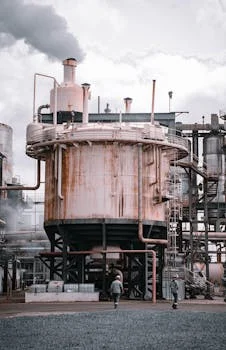
Dissolved Air Flotation (DAF) is the primary choice for Trujillo’s food and dairy sectors due to its ability to remove 90–97% of FOG and TSS. By injecting micro-bubbles into the wastewater, contaminants are lifted to the surface for mechanical skimming. A high-efficiency DAF system for industrial FOG and TSS removal can process between 4 and 300 m³/h, making it scalable for both small and large processors.
For factories aiming for water reuse or those facing the strictest discharge limits, Membrane Bioreactor (MBR) systems offer superior performance. MBR combines biological treatment with ultrafiltration, achieving over 99% removal of BOD and TSS. The resulting effluent typically has a turbidity of less than 1 NTU, suitable for non-potable reuse in cooling towers or irrigation. a compact MBR system for high-quality effluent and water reuse occupies a 60% smaller footprint than conventional activated sludge plants, a critical factor for urban factories in Trujillo with limited land.
Chemical dosing remains a cornerstone of effective clarification. Utilizing coagulants like Polyaluminum Chloride (PAC) and flocculants can improve the efficiency of solids removal by 30–50% in high-load industrial streams. When paired with lamella clarifiers, which handle surface loading rates of 20–40 m/h, these systems provide a high-throughput solution for removing heavy settleable solids in space-constrained environments.
| Technology | Primary Target Contaminants | Removal Efficiency (%) | Ideal Industry |
|---|---|---|---|
| DAF | FOG, TSS, Insoluble BOD | 90–97% | Food Processing, Dairy |
| MBR System | BOD, COD, Bacteria, TSS | >99% | Textiles, Industrial Reuse |
| Lamella Clarifier | Settleable Solids, Metals | 85–95% | Metalworking, Mining |
| Chemical Dosing | Colloidal Solids, Color | 30–50% (Improvement) | Pre-treatment (All) |
Treatment System Comparison: Performance, Cost, and ROI
Capital investment for industrial wastewater systems in Trujillo is often offset by the elimination of municipal surcharges and reduced water procurement costs. DAF systems generally cost between $50,000 and $300,000 for capacities of 10–100 m³/h. The Return on Investment (ROI) is typically realized within 2 to 3 years through lower sludge disposal fees and the avoidance of non-compliance penalties (HydropureWater field data, 2025).
MBR plants represent a higher initial capital expenditure, ranging from $150 to $400 per m³/day of capacity. However, the ability to reuse treated water provides a direct hedge against rising utility rates. In Trujillo, where industrial water costs can range from $0.50 to $1.20/m³, a high-recovery MBR system can significantly lower operational overhead. This is particularly relevant for high-volume users like textile mills.
Modular or package treatment units, such as the WSZ series, offer a strategic advantage for factories requiring rapid deployment. A 2025 industrial wastewater treatment cost breakdown by capacity shows that these package units reduce installation time by 60% compared to traditional reinforced concrete structures. Their modular design allows for future expansion as production capacity increases, preventing the need for a total system overhaul.
Operational costs are further optimized through automation. An automatic chemical dosing system utilizes PLC control to adjust chemical feed based on real-time flow and load variations, reducing chemical consumption by up to 25%. This precision ensures that the facility remains in compliance even during peak production shifts without wasting expensive reagents.
| System Type | Estimated CAPEX (USD) | Operational Cost | Est. ROI Period |
|---|---|---|---|
| Modular DAF | $50,000 - $180,000 | Moderate (Power/Chemicals) | 18 - 30 Months |
| Integrated MBR | $120,000 - $450,000 | High (Membrane/Power) | 24 - 48 Months |
| Package Plant (WSZ) | $30,000 - $150,000 | Low (Automated) | 12 - 24 Months |
How to Comply with Trujillo's Industrial Discharge Regulations
Compliance in Trujillo requires a multi-step alignment with national and local mandates. Industrial facilities must ensure their effluent meets the Maximum Permissible Limits (LMP) defined in Supreme Decree No. 004-2017-MINAM before discharging into municipal collectors managed by SEDALIB. Facilities with high organic loads (BOD5 > 300 mg/L) or toxic elements like heavy metals are legally required to operate on-site pre-treatment systems.
Regular monitoring is mandatory, with effluent quality reports submitted every three months to OEFA. These reports must be validated by accredited laboratories to ensure data integrity. Implementing a robust pre-treatment system not only avoids fines but also simplifies the industrial wastewater compliance strategies in emerging markets that are becoming standard globally. HydropureWater systems are engineered to meet EPA and EU Directive 91/271/EEC standards, providing a level of reliability that exceeds local requirements and eases the certification process for international export partners.
Frequently Asked Questions
What are the three types of industrial wastewater treatment?
Treatment is categorized into Primary (physical removal like screening and DAF), Secondary (biological processes like MBR or activated sludge), and Tertiary (advanced filtration, RO, or disinfection for reuse).Which technology removes oil and grease most effectively?
Dissolved Air Flotation (DAF) systems are the industry standard, achieving 90–98% removal of FOG by using micro-bubbles to float lipids to the surface for removal.How much does it cost to treat industrial wastewater in Trujillo?
Costs vary by flow and load, but a mid-size DAF or MBR system typically requires an investment of $50,000–$300,000. Many plants see a full ROI within 2–4 years. For more details, see the 2025 industrial wastewater treatment cost breakdown by capacity.Can small factories install compact treatment systems?
Yes, package plants like the WSZ series are designed for small footprints (often <10 m²) and can handle flows from 1 to 80 m³/h. Proper upkeep is essential, as detailed in our maintenance best practices for modular industrial systems.Is water reuse possible after treatment?
Yes, combining MBR with Reverse Osmosis (RO) produces high-purity water suitable for cooling, boiler feed, or agricultural irrigation, significantly reducing fresh water costs.