What Is a Package Wastewater Treatment Plant?
A package wastewater treatment plant is a factory-built, skid-mounted or containerized system designed for rapid deployment and minimal on-site construction work. Unlike large-scale municipal facilities constructed from concrete on-site, these compact, pre-engineered units are fully integrated with tanks, blowers, controls, and sometimes even membrane modules assembled within a single steel frame or shipping container. They are engineered for decentralized applications, typically handling flows between 1 and 2,000 m³/day, making them ideal for remote industrial sites, rural communities, seasonal tourist facilities, and smaller municipalities where space, budget, or staffing is limited.
Common technologies deployed in these systems include A/O (Anoxic/Oxic) for robust nutrient removal, MBR (Membrane Bioreactor) for superior effluent quality suitable for reuse, SBR (Sequencing Batch Reactor) for handling highly variable flows, and MBBR (Moving Bed Biofilm Reactor) for resilience against shock loads. A defining feature is their fully automated operation, managed by a programmable logic controller (PLC) with remote monitoring capabilities, eliminating the need for a full-time, on-site operator. This plug-and-play approach slashes installation time and reduces labor costs by up to 40% compared to traditional builds.
Why Finland Needs Compact Treatment Solutions
Finland’s stringent environmental regulations, dispersed population, and extreme climate drive demand for advanced package treatment solutions.Finland is governed by the EU Urban Wastewater Treatment Directive (91/271/EEC), which mandates secondary treatment for all agglomerations over 2,000 population equivalents (PE), and its own even stricter national standards enforced by the Finnish Environment Institute (SYKE), particularly for sensitive catchment areas surrounding its 188,000 lakes.
Geographically, countless remote industrial operations—from mining and forestry to food processing—along with scattered rural communities and seasonal tourism facilities in regions like Lapland are located far from centralized sewer networks. These sites require self-sufficient, off-grid treatment. The primary operational challenge is temperature; influent wastewater can drop below 5°C for extended periods during winter, drastically reducing microbial activity and treatment efficiency in conventional systems. Effective package plants for the Finnish market must therefore integrate specialized design features like enhanced insulation, submerged equipment, optional heating jackets, and sometimes even cold-adapted microbial cultures to maintain compliance down to -30°C ambient temperatures. Major national infrastructure projects, like the recent Blominmäki plant expansion and the upcoming Sulkavuori central sewage works, underscore the country's commitment to modern, efficient water protection.
Top Technologies for Finnish Package Plants
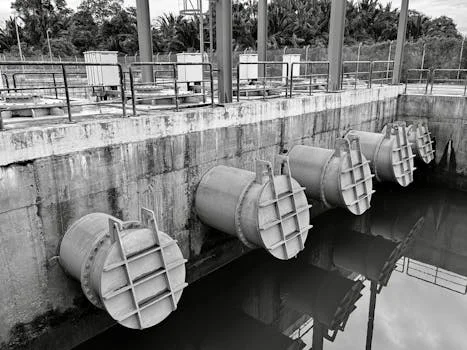
The most common and suitable processes for package plants in Finland are defined by their removal efficiency, footprint, and resilience to low temperatures.
A/O (Anoxic/Oxic): This biological process alternates between oxygen-free (anoxic) and oxygen-rich (oxic) zones to remove organic matter (BOD) and nutrients like nitrogen. It achieves 85–92% removal of BOD and TSS, is relatively low-energy (0.6–1.2 kWh/m³), and is a proven, robust technology for small communities and industrial applications. Its simplicity makes it highly resilient in cold climates.
MBR (Membrane Bioreactor): An MBR system combines biological treatment with microfiltration or ultrafiltration membranes, which act as a physical barrier replacing secondary clarifiers. This delivers exceptional effluent quality with 95–99% removal of BOD and TSS and produces water suitable for reuse. The trade-off is a higher energy demand (1.5–2.5 kWh/m³) for membrane scouring and the need for periodic chemical membrane cleaning. Its compact footprint is a major advantage where space is limited.
MBBR (Moving Bed Biofilm Reactor): In an MBBR system, thousands of plastic biofilm carriers move freely in an aerated tank, providing a large surface area for microorganisms to grow. This high biomass retention makes it highly resistant to shock loads and toxic inflows, and it maintains high treatment efficiency (90–96% COD removal) even at low temperatures of 5–15°C. It has a compact footprint and moderate energy use (0.8–1.4 kWh/m³).
| Technology | Best For | Key Advantage | Cold Climate Note |
|---|---|---|---|
| A/O (Anoxic/Oxic) | Small municipalities, industrial sewage | Low energy, proven reliability | High resilience; proven performance below 5°C |
| MBR (Membrane Bioreactor) | Water reuse, strict phosphorus limits | Smallest footprint, highest quality effluent | Requires tank heating or insulation to protect membranes |
| MBBR (Moving Bed Biofilm Reactor) | Industrial wastewater, shock loads | High stability, handles variable loading | Excellent; biofilm protects microbes from cold |
For a standard residential or light industrial application, a fully automated underground package wastewater treatment plant using A/O technology is often the most cost-effective choice. For projects where effluent quality is paramount or space is extremely limited, a high-efficiency MBR package wastewater treatment system is the superior technical solution.
Performance Comparison: A/O vs MBR vs MBBR
A direct comparison of A/O, MBR, and MBBR technologies is essential for justifying capital expenditure and ensuring long-term operational success. The following table breaks down critical performance and operational parameters.
| Parameter | A/O Process | MBR Process | MBBR Process |
|---|---|---|---|
| BOD Removal | 85–92% | 95–99% | 90–96% |
| TSS Removal | 88–92% | 98–99% | 90–95% |
| Footprint | Medium | Compact (~60% smaller than A/O) | Compact (High load rate) |
| Energy Use (kWh/m³) | 0.6 – 1.2 | 1.5 – 2.5 | 0.8 – 1.4 |
| Cold Climate Resilience (<5°C) | Excellent | Good (with heating) | Excellent |
| Maintenance Intensity | Low | Moderate (Membrane cleaning) | Low (Media replacement every ~10y) |
The decision framework is clear: choose A/O for low-cost, reliable compliance; MBR for space-constrained sites or reuse objectives, accepting higher OPEX; and MBBR for industrial applications with fluctuating or challenging wastewater characteristics. For demanding medical or pharmaceutical applications, an MBR system integrated with tertiary polishing may be required.
Cost, Lead Time & ROI in Finland
Justifying the investment in a package plant requires understanding the capital cost, total cost of ownership, and return on investment. Importing a CE-certified system from a specialized international OEM often presents significant savings over European-built alternatives without sacrificing quality.
| System Type (Capacity) | Capital Cost (FOB China) | Lead Time | Key ROI Drivers |
|---|---|---|---|
| WSZ Series (A/O, 10 m³/h) | €55,000 – €68,000 | 8–12 weeks | Avoided sewer connection fees, low sludge production, eliminated compliance fines. |
| MBR System (20 m³/h) | €120,000 – €150,000 | 12–16 weeks | Water reuse saves €2–€4/m³ on freshwater costs; ideal for water-intensive industries. |
Budgeting an additional 15–25% of the FOB cost for shipping to Finland, customs clearance, VAT, and local commissioning by a certified technician is critical. The skid-mounted design itself contributes to ROI by reducing on-site civil works and installation labor by approximately 40% compared to constructing a concrete plant. A typical A/O system for a remote hotel or small community can achieve a full ROI in 3–5 years through avoided penalties and operational savings. For detailed current pricing, consult our 2025 B2B pricing guide for skid-mounted systems.
Meeting Finnish & EU Wastewater Regulations
EU Urban Waste Water Treatment Directive 91/271/EEC mandates secondary treatment with effluent concentrations not exceeding 25 mg/L for both BOD and Total Suspended Solids (TSS) for discharges from plants serving >2,000 PE.
The Finnish Environment Institute (SYKE) frequently imposes stricter discharge permits, especially in sensitive catchment areas, often requiring BOD and TSS limits below 15 mg/L and stringent nutrient (N&P) removal. For industrial dischargers, emerging regulations concerning micropollutants, including PFAS (per- and polyfluoroalkyl substances), are a critical consideration. Future-proofing a new installation often means specifying an MBR system coupled with a tertiary treatment step like activated carbon adsorption. For medical facilities, ozone or UV disinfection is typically mandated to achieve a 99.99% pathogen kill rate; systems like the compact medical wastewater system are engineered for this purpose. Proactive due diligence is essential; our 2025 PFAS compliance guide for industrial dischargers provides a current overview of testing and treatment obligations.
Frequently Asked Questions
What is a package wastewater treatment plant?
A package wastewater treatment plant is a factory-built, modular system designed for decentralized sewage treatment. It is pre-assembled on a skid or within a container, handles flows between 1–80 m³/h, and operates fully automatically with remote monitoring.
Why is Finland's water so clean?
Finland's water quality results from strict EU and national regulations, nearly 100% treatment coverage of municipal wastewater, and significant ongoing investment in modern treatment infrastructure.
Can package plants work in cold climates?
Yes. Modern package plants are engineered for cold climates with features like insulated tanks, submerged equipment, and sometimes heating systems. Technologies like A/O and MBBR are particularly resilient and can maintain high treatment efficiency at sustained influent temperatures below 5°C.
Are there package plants made in Finland?
While major international suppliers have a presence, most package plants are imported. CE-certified systems from specialized Chinese OEMs offer equivalent performance and a 30–40% reduction in capital expenditure.
How long do package plants last?
The core structure of a well-maintained package plant has a service life of 15–20 years. Wear components like membranes in an MBR system typically require replacement every 5–7 years, while MBBR media may last up to 10 years.