California operates over 900 wastewater treatment plants, including major municipal facilities such as EBMUD (serving 740,000 people) and the Los Angeles County Sanitation Districts (processing wastewater for over 5 million residents daily). These plants typically run primary, secondary, and tertiary treatment stages, with rising adoption of Membrane Bioreactor (MBR) and Dissolved Air Flotation (DAF) systems to meet stringent water reuse rules. Modern modular trains cut footprints by up to 60% versus conventional activated sludge and support full automation for California's municipal sewage treatment plant upgrades.
California's Municipal Wastewater Infrastructure at a Glance
California operates approximately 900 publicly owned treatment works (POTWs), according to the EPA's 2024 inventory. These facilities form the backbone of municipal sewage treatment across urban and rural service areas. Scale and process trains vary with geography, population density, and permit limits. The East Bay Municipal Utility District (EBMUD) serves approximately 740,000 people along San Francisco Bay and runs one of the state's largest municipal plants for discharge and reuse. The Los Angeles County Sanitation Districts manage wastewater for over 5 million residents daily through a high-volume collection and treatment network built for resource recovery.
In dense cities, plants are highly specialized. San Francisco runs two 24/7 treatment plants for continuous flow, plus a wet-weather facility that activates during heavy rain to limit combined sewer overflows. Further south, the Western Municipal Water District runs a tertiary plant that produces recycled water for irrigation and groundwater recharge, with excess discharge to the Santa Ana River. These cases show how a municipal sewage treatment plant in California USA is sized to local demand, receiving-water limits, and reuse mandates.
Core Treatment Technologies in California's Plants
Conventional municipal wastewater treatment plants in California typically use primary sedimentation, activated sludge for secondary treatment, and chlorine or UV disinfection for effluent polishing. Primary treatment separates solids. Secondary treatment removes dissolved organics and suspended solids with biology. Tertiary treatment adds filtration and disinfection before discharge or reuse. With recurring drought and reuse targets, tertiary treatment is increasingly required so recycled water meets Title 22 standards.
Advanced unit processes address tougher influent and higher effluent specs. Dissolved Air Flotation (DAF) is often added as pre-treatment where food processors or commercial kitchens raise fats, oils, grease (FOG), or solids. DAF strips those loads and protects downstream biology. Membrane Bioreactor (MBR) trains suit tight urban sites and reuse projects because they couple biology with membrane filtration, typically delivering turbidity below 1 NTU and over 99% pathogen removal. Smaller communities that need nutrient control often keep anoxic/aerobic (A/O) trains for biological nutrient removal (BNR), which cut nitrogen with less complexity than more advanced configurations.
| Technology | Primary Application | Key Benefit/Purpose | Typical Effluent Quality (TSS/BOD) | Emerging Status in CA |
|---|---|---|---|---|
| Conventional (Activated Sludge) | Baseline secondary treatment for BOD/TSS removal | Cost-effective, well-understood | 10-30 mg/L | Standard |
| Dissolved Air Flotation (DAF) | Pre-treatment for FOG/high solids removal | Improves downstream process efficiency, reduces load | >90% FOG/SS removal | Increasing for pre-treatment |
| Membrance Bioreactor (MBR) | Integrated biological treatment & filtration | High effluent quality (<1 NTU), small footprint | <5 mg/L, >99% pathogen removal | Rapidly adopted, especially for reuse |
| Anoxic/Aerobic (A/O) | Biological nutrient removal (BNR) | Nitrogen removal, lower operational complexity | 10-20 mg/L | Common in smaller communities |
Advanced Modular Systems for Retrofit and Expansion
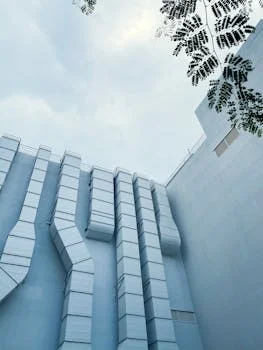
Integrated Membrane Bioreactor (MBR) systems can reduce the physical footprint of a wastewater treatment plant by up to 60% compared to conventional activated sludge while producing reuse-grade effluent. That land savings matters in urban California, where parcels are scarce and costly. HydropureWater's integrated MBR system for municipal sewage treatment provides ultrafiltration down to 0.1-0.4 μm, supporting effluent that meets or exceeds Title 22 requirements for unrestricted reuse.
For decentralized sites that need a low-profile install, the WSZ Series fully automated underground sewage treatment unit covers 1 to 80 m³/h. Package plants can sit below grade under landscaping at parks, housing tracts, or remote municipal lots. The high-efficiency DAF system for municipal pre-treatment, available skid-mounted for 4 to 300 m³/h, gives existing plants a plug-and-play FOG and solids upgrade. Lowering suspended solids and FOG into the biological stage stabilizes plant performance as recycled-water limits tighten.
Modular trains also support full automation without constant on-site staffing. That matters for rural or understaffed districts where labor is scarce and costly. Containerized systems can move from order to commissioning in about 8 weeks, which shortens California's typical environmental review and civil construction lag. Compact layout plus short lead time makes modular gear practical for both greenfield builds and brownfield retrofits.
Compliance Drivers Shaping California's Treatment Upgrades
California's Title 22 of the Code of Regulations sets some of the nation's strictest recycled-water production and use rules, and those rules steer municipal technology choices. Title 22 defines water-quality targets for uses from landscape irrigation to groundwater recharge, so plants add microfiltration, ultrafiltration, and UV disinfection. Beyond reuse, the State Water Resources Control Board (SWRCB) enforces nitrogen and phosphorus limits to limit eutrophication, which pushes biological nutrient removal (BNR) and chemical phosphorus precipitation.
Emerging contaminants add another compliance layer. New PFAS monitoring requirements are driving advanced oxidation processes (AOP), granular activated carbon (GAC), and reverse osmosis (RO) retrofits at municipal plants, especially where industrial streams co-treat with domestic sewage. For a deeper reading of those mandates, see our guide on 2025 PFAS compliance mandates affecting municipal co-treatment. In drought-prone Southern California, zero-liquid-discharge (ZLD) pilots aim to raise recovery and cut brine discharge. Odor and emissions controls such as biofilters and baghouse collectors are also common near residential buffers. Together, these drivers keep California municipal plants in a near-continuous upgrade cycle.
Technology Comparison: MBR vs DAF vs Conventional A/O
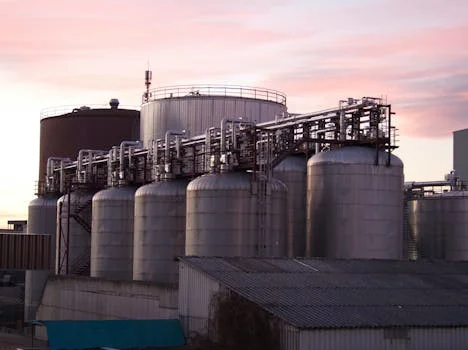
Membrane Bioreactor (MBR) systems consistently achieve 95–99% removal of Biochemical Oxygen Demand (BOD) and Total Suspended Solids (TSS), producing effluent suited to direct reuse. Modular MBR capacity for municipal sewage treatment plant work in the USA often spans 10 to 2,000 m³/day and can skip separate tertiary filters. Dissolved Air Flotation (DAF) serves mainly as pre-treatment, removing 90–95% of FOG and suspended solids and cutting the load on biology. Conventional Anoxic/Aerobic (A/O) systems reach about 85–90% BOD removal, need more land for clarifiers and tanks, and usually demand more manual oversight than automated MBR or DAF packages.
Energy use differs by process. MBR typically draws 1.8–2.5 kWh/m³ for aeration and membrane scour. DAF pre-treatment sits at 0.6–1.2 kWh/m³ for pumps and compressors. Conventional A/O falls between 0.8–1.5 kWh/m³ for aeration and pumping. Most plants we size for California's older urban districts choose MBR because land savings repay the membrane premium within 8–12 years. MBR capital cost is higher, yet lifecycle cost improves where reuse quality or expansion land is constrained. A modular MBR system for municipal use can offset upfront cost through lower land need, lower chemical use, and recycled-water revenue. A high-efficiency DAF system lifts existing biological trains without a full plant rebuild. For smaller communities, the WSZ Series underground package plant, often based on A/O biology, balances lower CAPEX with moderate operating complexity.
| Feature / System | MBR System | DAF System (Pre-treatment) | Conventional A/O System |
|---|---|---|---|
| Primary Function | Integrated BOD/TSS removal, ultrafiltration | Suspended solids & FOG removal (pre-treatment) | BOD/TSS removal, some nutrient removal (secondary) |
| Effluent Quality (BOD/TSS) | 95-99% removal, <5 mg/L BOD/TSS, <1 NTU | >90% FOG/SS removal (influent to biological) | 85-90% removal, 10-30 mg/L BOD/TSS |
| Footprint Reduction | Up to 60% smaller vs. conventional | Moderate (compact pre-treatment unit) | Largest footprint due to separate clarifiers |
| Typical Capacity Range | 10 – 2,000 m³/day (modular) | 4 – 300 m³/h (modular) | Larger scale, custom-built |
| Energy Consumption | 1.8 – 2.5 kWh/m³ (aeration + membrane scour) | 0.6 – 1.2 kWh/m³ (pump, compressor) | 0.8 – 1.5 kWh/m³ (aeration, pumping) |
| Capital Expenditure (CAPEX) | Higher upfront due to membranes | Moderate for pre-treatment, lower than full MBR | Lower than MBR, higher than DAF alone |
| Operational Complexity | Moderate (membrane cleaning, automation) | Relatively low (sludge management) | Moderate (process control, sludge return) |
| Suitability for Reuse (Title 22) | Excellent (direct reuse without further filtration) | Indirect (improves feed for tertiary processes) | Requires extensive tertiary treatment (filtration, disinfection) |
Who This Is For and How to Choose
This overview fits municipal engineers, EPC contractors, and procurement managers evaluating upgrades for California sewage infrastructure. It is less relevant for industrial-only facilities with no domestic load, or for plants in states with looser reuse rules where Title 22 does not apply. A short selection checklist: confirm Title 22 reuse target; map influent FOG and solids; benchmark footprint and energy (kWh/m³); check modular lead time against your construction schedule; verify Title 22 engineering report coverage for packaged systems. Send your influent data and target effluent to our engineers for a sized proposal and quote: request a municipal treatment plant quotation.
Frequently Asked Questions
How many municipal wastewater treatment plants operate in California?
California operates approximately 900 municipal wastewater treatment plants, as reported in the EPA's 2024 Inventory of Publicly Owned Treatment Works (POTWs). These range from small rural package plants serving a few hundred residents to large urban facilities processing hundreds of millions of gallons per day, including EBMUD and the Los Angeles County Sanitation Districts.
What is a municipal wastewater treatment plant?
A municipal wastewater treatment plant is a facility that treats domestic sewage, and sometimes industrial wastewater, using physical, biological, and chemical processes to remove pollutants and produce safe effluent for discharge or reuse. In California, tertiary stages are increasingly required to meet Title 22 recycled water standards for landscape irrigation, groundwater recharge, and industrial reuse.
Where does the largest California sewage treatment plant discharge its effluent?
Los Angeles plants discharge treated effluent to the Pacific Ocean through deep ocean outfalls under strict permits after secondary and often tertiary treatment. The Hyperion Treatment Plant, operated by LA Sanitation, is permitted to treat up to 450 million gallons per day (MGD). Earlier project language often treated 450 MGD as typical throughput; permit capacity is the verified figure.
What is the largest sewage treatment plant in California?
The largest sewage treatment plant in California is the Hyperion Treatment Plant in Los Angeles, permitted to treat up to 450 million gallons per day (MGD). It serves the greater Los Angeles area and includes advanced primary, secondary, and digestion processes for resource recovery.
Can modular treatment plants meet California regulations?
Yes, modular treatment plants can meet California regulations when certified MBR, DAF, and A/O package systems are engineered to Title 22 reuse standards and State Water Resources Control Board (SWRCB) discharge limits. Vendors should provide Title 22 engineering reports and influent/effluent guarantees backed by performance data from similar California installations.
Further Reading
Explore these in-depth articles on related wastewater treatment topics: