What Drives Anaerobic Digester Operating Cost in 2026
Anaerobic digester operating cost in 2026 ranges from $0.02 to $0.18 per m³ of wastewater treated for municipal systems and $15 to $80 per ton of COD removed for industrial applications. Energy (mixing + heating) accounts for 45–60% of OPEX, but biogas-to-CHP offsets can recover 30–70% of total energy spend, dropping net OPEX to $0.01–$0.06/m³. Per the US EPA, anaerobic digestion is the process by which microorganisms break down organic materials in the absence of oxygen, and that biochemical work is what the operator pays to keep running.
That bill is best expressed two ways. Municipal plants usually budget in $/m³ of wastewater treated because influent flow is the limiting parameter. Industrial plants — food, brewery, distillery, pulp & paper — budget in $/ton COD removed because the discharge limit is the limiting parameter. The two metrics are linked: at a typical municipal COD of 400–800 mg/L, $0.10/m³ gross OPEX equates to roughly $125–$250/ton COD removed before biogas offset.
Over a 20-year digester service life, OPEX dominates CAPEX by a wide margin. Industry lifecycle studies place 60–75% of lifetime cost in operating expense and only 25–40% in capital amortization, so the optimization payback math is overwhelmingly on the operations side. Four influent characteristics swing that OPEX band the most:
- COD concentration — 10,000–80,000 mg/L in industrial feed vs 400–800 mg/L in municipal primary sludge; higher COD means more biogas per m³ but also more heating demand per reactor volume.
- Temperature — mesophilic (35–37°C) or thermophilic (50–55°C) operation sets heating load directly.
- Total solids content — 2–8% TS in feed changes mixing energy and pump wear.
- Biodegradability (BOD/COD ratio) — ratios below 0.4 indicate recalcitrant feed and lower gas yield per kg COD fed.
OPEX Line-Item Breakdown: Where Every Dollar Goes
Energy for mixing and pumping consumes 30–40% of gross digester OPEX, and that share has hardened in 2026 because industrial electricity now runs $0.08–$0.14/kWh across most U.S. ISO regions. Typical digester mixing power sits between 5 and 15 W/m³ of digester volume, and VFD-controlled mixers cut that draw 20–35% by matching RPM to actual rheology. A 2,000 m³ digester at 8 W/m³ running 24/7 pulls roughly 1,150 kWh/d before any controls — a line item no procurement officer can ignore.
Heating is the second pillar at 15–25% of OPEX. Mesophilic reactors in cold-climate plants need 35–50 kWh/m³ of digester volume to hold 35°C, normally supplied by a steam boiler, a hot-water loop, or — at the high end of efficiency — CHP jacket-water recovery. Chemicals run leaner at 3–7%: trace nutrients (Fe, Ni, Co) for co-digestion, caustic or lime for pH trim, and anti-foam in foaming feeds, totaling roughly $2–$8 per dry ton of feed.
Labor takes 10–20% of OPEX and is highly automation-sensitive. A conventional plant runs 0.5–2.0 FTE per digester for feed prep, sampling, and gas-system checks; PLC/SCADA integration can halve that headcount while improving load stability. Maintenance and spares (mixer seals, gas-holder membranes, heat-exchanger tube cleaning) sit at 5–10%. Residuals handling — the cost of dewatering and hauling the digested cake — runs 10–20% and is where downstream equipment selection directly moves the digester's P&L. A high-pressure plate-and-frame filter press cuts polymer dose 20–30% and cake haul cost 15–25% versus belt presses, which is why the dewatering line is no longer a separate budget.
| OPEX Line Item | Share of Gross OPEX | Typical 2026 Range | Primary Cost Driver |
|---|---|---|---|
| Mixing + pumping energy | 30–40% | $0.008–$0.06/m³ | Mixer W/m³, electricity tariff |
| Heating energy | 15–25% | $0.004–$0.04/m³ | Climate, HRT, CHP heat recovery |
| Chemicals (nutrients, pH, anti-foam) | 3–7% | $2–$8/dry ton feed | Co-digestion loading, feed C:N:P |
| Labor | 10–20% | $0.005–$0.03/m³ | Automation level, FTE allocation |
| Maintenance & spares | 5–10% | $0.003–$0.015/m³ | Seals, membranes, exchanger fouling |
| Residuals (dewatering + haul) | 10–20% | $0.01–$0.05/m³ | Cake dryness, polymer dose, haul distance |
Biogas Revenue and Energy Recovery: The OPEX Offset Model
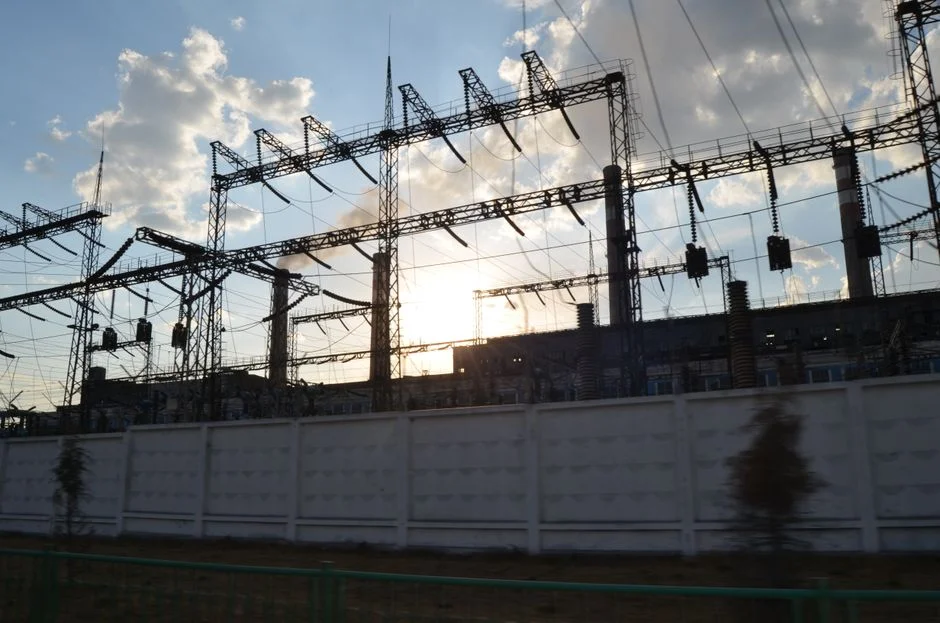
Biogas yield runs 0.3–0.5 m³ per kg of volatile solids destroyed, at 60–70% methane, so 1 m³ of raw biogas carries roughly 6 kWh thermal or about 2 kWh of electrical output through a CHP unit. Modern CHP packages hit 35–42% electrical efficiency plus 40–50% recoverable thermal — combined 80–90% energy utilization, which is the figure that decides whether the digester is a cost center or a profit center. EPA-reported beneficial-use of digester biogas is now established at more than 1,500 U.S. water resource recovery facilities, so on-site energy recovery is the 2026 baseline expectation rather than a green-field option.
The offset math is concrete. A 5,000 m³/d municipal plant producing 8,000 m³/d of biogas can run a 350–500 kWe CHP and offset $150,000–$400,000/year in grid electricity at current industrial rates, depending on operating hours and heat-recovery utilization. That offset is what pulls net OPEX into the $0.01–$0.06/m³ band cited in the opening. Three utilization paths exist, with sharply different economics:
| Utilization Path | 2026 CAPEX | Revenue / Offset | Best Fit |
|---|---|---|---|
| CHP (gas engine + generator) | $0.8–$1.5M installed (350–500 kWe) | $0.08–$0.14/kWh avoided grid cost | Plants >2,000 m³/d with steady thermal load |
| Boiler firing (thermal-only) | $0.1–$0.3M retrofit | Replaces $6–$12/MMBtu fuel | Small plants with strong heat demand, no grid offset |
| RNG upgrading + grid injection | $2–$4M upgrading skid | $18–$35/MMBtu (RIN-eligible) | Large plants with pipeline access and 10+ year payback horizon |
Mesophilic vs Thermophilic: How Temperature Choice Reshapes OPEX
Mesophilic operation at 35–37°C is the OPEX-friendly default: HRT 20–40 days, heating demand 20–35% lower than thermophilic, and 1-log pathogen kill — enough for Class B biosolids but not Class A. Thermophilic operation at 50–55°C cuts HRT to 12–20 days, shrinks digester volume (and CAPEX), and pushes pathogen kill to 3–4 log, which qualifies for Class A biosolids and unlocks land-application markets with higher tipping fees. The trade-off is roughly 25% more heating energy per m³ of digester and stricter mixing requirements to keep the faster biology suspended.
A two-stage hybrid — mesophilic first stage followed by a thermophilic post-digester — runs 10–15% higher on CAPEX but is documented in co-digestion plants to deliver 8–12% net OPEX reduction by combining high-rate acidification in the thermophilic stage with stable methanogenesis in the mesophilic stage. Decision rule for 2026: if heating fuel is expensive and footprint is unconstrained, choose mesophilic; if footprint is constrained or Class A biosolids are required, choose thermophilic; if both footprint and pathogen class are constraints, justify the hybrid with a co-digestion business case.
7 Proven Levers to Cut Anaerobic Digester OPEX in 2026

Every lever below is ranked by payback period, not by theoretical potential, because that is the metric a plant manager can sign off on.
- Install VFDs on mixers. 20–35% mixing energy cut, 1–2 year payback (Energy Services 2025 field data).
- Recover CHP jacket heat via spiral heat exchanger to warm feedstock. 15–25% heating energy cut, 2–3 year payback.
- Run co-digestion at 10–30% by volume with FOG, cheese whey, or crude glycerin. Gas yield rises 30–80%, OPEX per ton COD falls 20–40%, but watch receiving and pretreatment capacity.
- Deploy online pH, ORP, and VFA sensors. Prevents 1–2 digester failure events per year, each costing $50,000–$200,000 in lost gas production and emergency feed handling.
- Switch to PLC-based automated feed scheduling. Cuts labor 40–60% and stabilizes organic loading rate within ±5%.
- Optimize dewatering with a high-pressure plate-and-frame press and a PLC-controlled trace-nutrient dosing system. Polymer use falls 20–30%, cake haul cost falls 15–25%, and nutrient dosing for co-digestion becomes repeatable instead of operator-dependent.
- Negotiate a CHP power purchase agreement (PPA) or on-site beneficial-use permit. Locks in the revenue stream and shortens project payback to 3–5 years.
| Lever | OPEX Impact | CAPEX Class | Payback |
|---|---|---|---|
| VFDs on mixers | −20–35% mixing energy | $50–$150k | 1–2 yr |
| CHP heat recovery | −15–25% heating energy | $80–$250k | 2–3 yr |
| Co-digestion (10–30% vol) | −20–40% $/ton COD | $200–$800k receiving | 2–4 yr |
| Online VFA/ORP/pH sensors | Avoids 1–2 failures/yr | $30–$80k | <1 yr |
| PLC feed automation | −40–60% labor | $60–$200k | 1–3 yr |
| Plate-and-frame dewatering | −20–30% polymer, −15–25% haul | $300–$900k | 2–4 yr |
| CHP PPA / beneficial-use permit | Locks revenue stream | Permit + legal | 3–5 yr |
Total OPEX Envelope by Plant Size: 2026 Reference Numbers
Use the table below as a ballpark for budget meetings. Small plants pay a scale penalty on energy and labor; large plants with full CHP utilization can run net-negative OPEX when biogas revenue exceeds residual hauling.
| Plant Class | Flow Range | Gross OPEX | Net OPEX (after biogas offset) | Notes |
|---|---|---|---|---|
| Small municipal | 50–500 m³/d | $0.10–$0.18/m³ | $0.04–$0.08/m³ | Limited CHP; boiler firing typical |
| Medium municipal | 500–5,000 m³/d | $0.05–$0.12/m³ | $0.01–$0.05/m³ | CHP + heat recovery standard |
| Large municipal | >5,000 m³/d | $0.02–$0.07/m³ | Often net-negative | Full CHP, possibly RNG |
| Industrial high-strength | 10k–80k mg/L COD | $15–$80/ton COD removed | Varies with tipping & discharge | Food, brewery, distillery, pulp/paper |
Frequently Asked Questions
What is a typical 2026 OPEX range for an anaerobic digester? Municipal plants run $0.02–$0.18/m³ gross depending on size, dropping to $0.01–$0.06/m³ net of biogas offset. Industrial high-strength plants run $15–$80 per ton COD removed.
How do mesophilic and thermophilic operation compare on cost? Mesophilic (35–37°C) cuts heating energy 20–35% and is the OPEX default. Thermophilic (50–55°C) shrinks digester volume by roughly 40% via shorter HRT and achieves Class A biosolids, but burns ~25% more heating energy per m³.
What is the payback on a CHP or co-digestion retrofit? A 350–500 kWe CHP at a 5,000 m³/d plant offsets $150,000–$400,000/year in grid electricity and pays back in 3–5 years. Co-digestion retrofits pay back in 2–4 years through 30–80% higher gas yield and 20–40% lower OPEX per ton COD.
Which single lever gives the fastest ROI? VFDs on mixers combined with CHP heat recovery. Together they cut gross OPEX 25–40% with a blended payback under 3 years, and they require no permit or feed-stream change.
How should an industrial plant budget anaerobic digestion OPEX? Budget against discharge: $15–$80 per ton COD removed is the 2026 industrial envelope, with the lower end achievable at food or brewery plants running mesophilic co-digestion with full CHP utilization. For cross-plant context, see our industrial wastewater plant operating cost breakdown 2026, and for downstream solids handling, the sludge dryer maintenance cost breakdown and membrane replacement cost optimization guide.