What Drives Sludge Dryer Maintenance Cost in 2026
Sludge dryer maintenance cost in 2026 falls between $0.018 and $0.092 per kilogram of water evaporated, which translates to $8,500–$48,000 per year for a typical 5-ton-DS/day unit (HydropureWater field data, 2026). That range is wide because maintenance intensity tracks four independent cost categories, and the mix shifts dramatically with dryer technology, hours of operation, and feed solids concentration.
The four cost categories and their share of total maintenance OPEX are:
- Wear parts — 45–60%. Agitator blades, bearings, mechanical seals, belt media, refractory, and trunnion components fall in this bucket. Replacement is driven by hours of service, not by calendar time.
- Heat-source service — 15–25%. Burner tuning, refractory inspection, heat-exchanger descaling, and compressor servicing for heat-pump systems.
- Labor — 20–30%. Internal maintenance hours at a fully loaded rate of $45–$95/hour, plus specialty welders at $120–$180/hour when agitator shaft repair is required.
- Instrumentation and controls — 5–10%. Moisture probes, temperature transmitters, PLC I/O modules, and VFD servicing.
The CAPEX anchor matters because the maintenance-to-CAPEX ratio drives most replacement decisions. A Chinese-supplied horizontal sludge dryer lists at $30,000–$50,000 per piece on Made-in-China OEM/ODM listings (2026), and the standard 12-month warranty covers manufacturing defects only — wear-part consumption, burner refractory, and seal replacement fall outside that envelope. That puts post-warranty OPEX at 17–96% of original CAPEX per year, depending on technology, which is why a defensible 10-year cost model must be built before signing a PO. Pre-dewatering feed quality sets the upstream cost: a plate and frame filter press for sludge dewatering that delivers cake at 22–28% DS versus 18% DS can halve the water load a dryer must evaporate, and that single upstream choice reshapes the entire maintenance curve.
Maintenance Cost by Sludge Dryer Technology
Indirect-heat paddle dryers are the lowest-cost technology to maintain at $0.018–$0.045 per kg of water evaporated, while direct-fired rotary drum dryers run the highest at $0.052–$0.092 per kg — a 2.5–5× spread across the same job (HydropureWater field data, 2026). The cost gap is structural: indirect dryers isolate the heat source from the moving product, so the high-wear zone stays clean, while direct-fired units expose the burner, refractory, and product path to combined thermal and abrasive load.
For a 5-ton-DS/day plant, the technology choice swings the annual maintenance line by $25,000–$35,000 per year, which is larger than most operators estimate when they run a feature-based procurement. Cross-referencing the cost figures against the DAF system maintenance cost in 2026 breakdown also shows that thickening upstream has a compounding effect on dryer wear — higher DS cake reduces agitator blade hours by roughly 20% per 5-point DS gain.
| Technology | Maintenance cost ($/kg water evap.) | Primary wear items | Replacement cadence |
|---|---|---|---|
| Paddle (indirect) | $0.018–$0.045 | Agitator blades, shaft seals, rotor bearings | Blades 6,000–10,000 h; seals 12–18 mo |
| Indirect rotary drum | $0.028–$0.058 | Trunnion bearings, shell refractory, seals | Bearings 18,000–24,000 h; trunnion refacing 4–6 yr |
| Direct-fired rotary | $0.052–$0.092 | Burner refractory, drum shell, flights, dust collector bags | Refractory 2–3 yr; flights 12–24 mo |
| Heat-pump belt dryer | $0.024–$0.054 | Compressor, belt media, condenser coils | Belt media 18–36 mo; compressor service annual |
The ANDRITZ triple-pass drum sits at the high end of the indirect rotary category. It is engineered for pathogen-free, dust-free, low-odor output, which carries a higher unit cost but lower lifetime maintenance on trunnions and seals than direct-fired units. For a Class A biosolids project, the Veolia BioCo data confirms that drying above 80°C for over one hour removes pathogens to USEPA Class A standard — and achieving that temperature profile continuously is the reason indirect dryers dominate that compliance segment despite their CAPEX premium.
Annual Cost Breakdown: Spare Parts, Energy-Side Service, and Labor
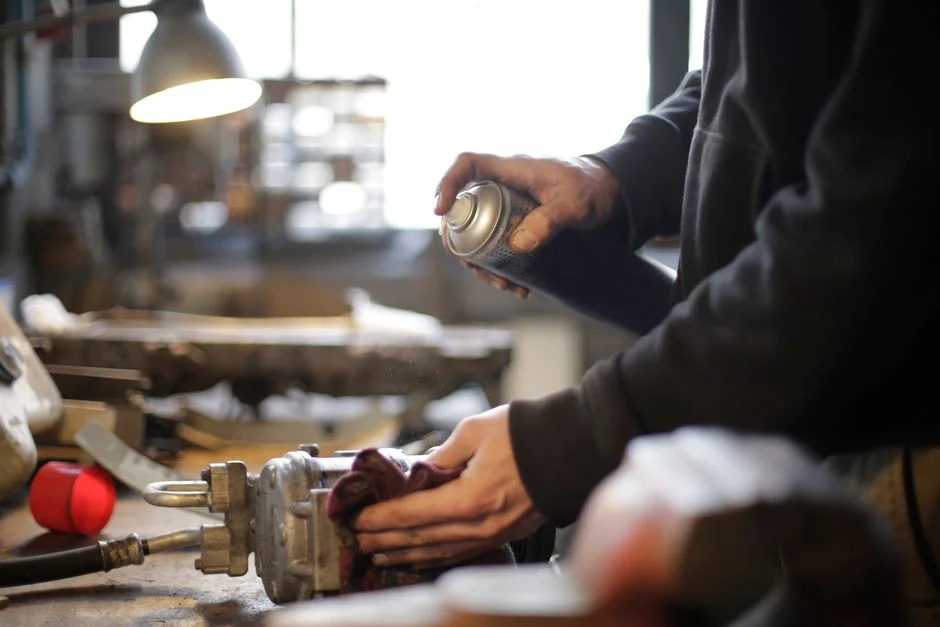
A line-item maintenance budget for a 5-ton-DS/day thermal sludge dryer runs $14,200–$19,800 per year on a paddle unit and $26,000–$42,000 on a direct-fired rotary, with wear parts consuming the largest single share (HydropureWater field data, 2026). The table below gives the unit prices a maintenance planner needs to build a defensible annual number — not a rule-of-thumb multiplier.
| Line item | Unit price / rate | Typical annual quantity (5 ton DS/day) |
|---|---|---|
| Agitator blades (paddle) | $1,200–$3,800 per set | 0.5–1 set |
| Bearings (all types) | $400–$1,500 each | 2–4 |
| Mechanical seals | $300–$900 each | 2–4 |
| Belt or filter media | $1.50–$4.20 per m² | 40–120 m² |
| Burner tune-up | $800–$1,600 per visit | 1 visit |
| Refractory inspection / patch | $1,200–$3,500 per event | 0.5 events (every 2 yr) |
| Heat-exchanger descaling (steam) | $600–$1,400 per service | 1 service |
| Maintenance labor | $45–$95 per hour loaded | 80–180 hours |
| Specialty welder (shaft repair) | $120–$180 per hour | 8–24 hours |
| Sensor calibration (moisture, temperature) | $300–$700 per visit | 1 visit |
| PLC I/O module replacement | $250–$800 per module | 0.1–0.2 modules (7–10 yr cycle) |
Worked example: a paddle dryer running at 80% uptime on 5 ton DS/day, evaporating 1.2 tons of water per ton of dry solids, processes roughly 4,380 tons of water per year. At the $0.018–$0.045/kg midpoint of $0.032/kg, annual maintenance lands at $14,000–$19,800. A direct-fired rotary on the same duty at $0.072/kg midpoint lands at $31,500 — that delta is the strongest financial argument for choosing an indirect technology in high-throughput municipal or food-processing applications. For plants already running a lamella clarifier for sludge thickening that delivers 4–6% DS to a decanter, the cake dryness entering the dryer is the single largest controllable variable on the maintenance line, and it ties back to the operating cost benchmarks we covered in the electroplating wastewater plant operating cost in 2026 breakdown as well.
One more cross-link for readers sizing a complete evaporation train: the choice between an upstream MVR or ME evaporator and a thermal dryer changes where maintenance OPEX sits in the cost stack. The MVR evaporator vs multiple effect evaporator comparison gives the energy-side numbers, and those figures bound the heat-source service line item above.
Preventive vs Corrective Maintenance: The 18–30% Lifetime Saving
Running a thermal sludge dryer on a corrective-only basis costs 1.8–2.4× as much as a structured PM program over a 10-year horizon, and unplanned downtime itself runs $4,500–$18,000 per day in lost sludge handling capacity plus emergency disposal (HydropureWater field data, 2026). The penalty is amplified by the fact that a single agitator shaft failure on a paddle dryer can take the unit offline for 3–7 days while a replacement shaft is fabricated, and a refractory collapse on a direct-fired rotary can extend to 2–4 weeks.
A defensible PM cadence for a mid-size thermal sludge drying system:
- Daily: visual inspection of seals, gland packing, and odor emissions; check bearing housings with handheld IR thermometer.
- Weekly: bearing and seal inspection including oil analysis on trunnion bearings; verify belt tension on belt dryer media.
- Monthly: belt tensioning and tracking; burner combustion analysis; PLC fault-log review.
- Quarterly: vibration analysis on rotating components; thermography of electrical cabinets and motor connections.
- Annual: full mechanical overhaul including agitator blade measurement, seal replacement assessment, refractory inspection, and instrument calibration.
Vibration analysis and thermography are the two predictive technologies with the shortest payback — both typically return their annual cost within 4–7 months by catching bearing failures 6–10 weeks before they cascade into shaft or housing damage. A typical mid-size plant avoids 1–2 unplanned events per year with these tools, which directly defends the 18–30% lifetime cost saving cited above.
When to Repair, Refurbish, or Replace: A 2026 Decision Framework
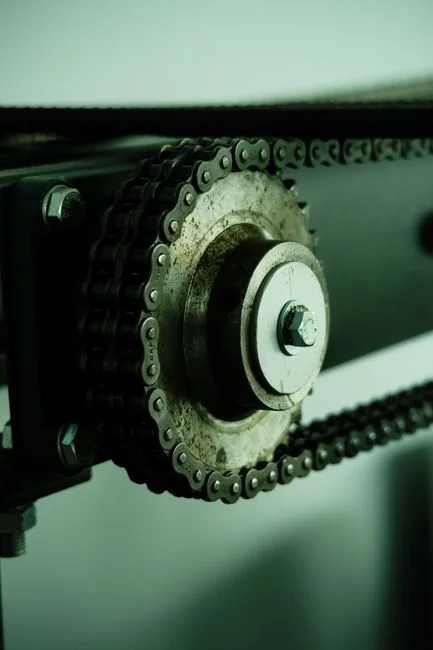
If annual maintenance spend exceeds 12–18% of replacement CAPEX, replacement wins on a 10-year cost model (HydropureWater field data, 2026). Below that threshold, a mid-life refurbishment at year 5–7 — agitator blade replacement, seal upgrade, bearing replacement, and refractory patch — runs 30–45% of full new CAPEX and extends service life 5–8 years. Going beyond mid-life on a unit that has crossed the 12–18% threshold is the most expensive error in fleet management because the maintenance curve is non-linear: spend doubles in the last 3 years of service life on most thermal dryer installations.
End-of-life signals to watch in 2026 operations:
- Throughput drop >15% at fixed energy input (typically agitator wear or heat-exchanger fouling)
- Wear-part replacement frequency exceeding 1.3× the original baseline cadence
- Energy intensity (kWh per kg water evaporated) rising more than 20% from nameplate
- Failure to meet USEPA Class A biosolids time-temperature profile (above 80°C for over one hour per Veolia BioCo data)
That last point is the regulatory driver behind many replacement decisions in 2026. Aging direct-fired rotary units often cannot hold the 80°C-plus profile for the full required residence time once heat transfer surfaces foul, and the path to compliance is either a heat-exchanger retrofit on the existing dryer or replacement with an indirect paddle or triple-pass drum. Plants evaluating this trade-off should pull the maintenance-to-CAPEX ratio from the previous section and the technology-cost table from the second section, then run a 10-year cumulative cost for both options before committing.
Frequently Asked Questions
What is the average annual maintenance cost for a 5-ton-DS/day sludge dryer in 2026?
Annual maintenance for a 5-ton-DS/day sludge dryer in 2026 runs $8,500–$48,000, or $0.018–$0.092 per kg of water evaporated (HydropureWater field data, 2026). Paddle and indirect rotary units sit at the low end; direct-fired rotary units sit at the high end. The plate and frame filter press for sludge dewatering upstream largely determines which end of that range applies because cake DS sets the water load.
Which sludge dryer technology has the lowest maintenance cost?
Indirect paddle dryers have the lowest maintenance cost at $0.018–$0.045 per kg of water evaporated, driven by isolated heat surfaces and replaceable agitator blades on a 6,000–10,000-hour cadence. Indirect rotary drum dryers run 25–40% higher than paddle but still below direct-fired units. Heat-pump belt dryers sit in the middle of the pack at $0.024–$0.054 per kg.
How much does unplanned sludge dryer downtime cost per day?
Unplanned sludge dryer downtime costs $4,500–$18,000 per day in lost sludge handling capacity and emergency disposal (HydropureWater field data, 2026). The wide range tracks whether the plant has redundancy: sites with no backup dewatering line land at the top of the range, while sites with a parallel centrifuge or DAF can absorb 12–24 hours of dryer outage at the bottom of the range. A preventive maintenance program cuts unplanned events by 60–80% per year on average.
When should a sludge dryer be replaced instead of repaired?
Replace a sludge dryer when annual maintenance exceeds 12–18% of replacement CAPEX, when throughput drops more than 15% at fixed energy input, or when the unit can no longer hold the USEPA Class A time-temperature profile (above 80°C for over one hour per Veolia BioCo data). Below that threshold, a mid-life refurbishment at 30–45% of new CAPEX extends service life 5–8 years and is the financially defensible choice.