How Much Does an Ultrasonic Level Sensor Cost in 2026?
Industrial ultrasonic level sensor cost in 2026 spans roughly $80 to $2,500 per unit, split across three practical procurement tiers. Compact OEM units with PVC housings and 0.2–3 m range run $80–$150, general-purpose 2-wire industrial transmitters with 0.5–8 m range and HART output run $400–$900, and heavy-duty 4-wire or explosion-proof models with integrated displays, Modbus/Profinet, and 0.5–15 m range run $1,200–$2,500. Entry-level catalog listings observed in current B2B search results sit at $399.99–$529.99 for 4-inch to 50-foot range sensors, which lines up with the general-purpose band. Total installed cost — cabling, brackets, surge protection, and commissioning labor — typically adds 30–60% on top of unit price, so a fully commissioned wastewater-tank measurement point lands between $500 and $3,800 depending on sensor class and site conditions. This article covers 2026 USD pricing for industrial B2B buyers, with municipal and industrial wastewater tanks, sumps, and clarifiers as the primary application frame.
What Drives Ultrasonic Level Sensor Price?
Four specification axes account for most of the 30x price spread between a $80 compact unit and a $2,500 hazardous-area transmitter. Measuring range is the first lever: compact sensors top out at 3–5 m because their transducer aperture and beam angle are tuned for short air gaps, while industrial 4-wire units reach 15 m, and long-range solids-measurement models stretch to 40 m using narrower beam cones and higher acoustic power. Accuracy class is the second lever — compact OEM units typically spec ±0.5% of range, while industrial 4-wire transmitters with integrated temperature compensation hold ±0.25% or better across the operating window. Output and wiring drives the third step: a 2-wire 4–20 mA loop with HART 7 is the cheapest industrial configuration because the same two conductors carry both power and signal, while a 4-wire unit with relay outputs, Modbus RTU, or Profinet adds a separate 24 VDC supply rail and more onboard processing, lifting the bill of materials. Housing and certification is the fourth and often largest adder: an IP67 PBT body for indoor service costs baseline, an IP68 stainless head for sumps adds 30–50%, and ATEX/IECEx Zone 1 explosion-proof certification adds 60–120% on top of the base industrial price because the flameproof enclosure, certified electronics, and factory acceptance testing are all cost-bearing line items. Process connection — 1-inch NPT thread, G2 hygienic tri-clamp, or flanged ANSI 150 fitting — is a smaller but real adder, typically $40–$200 depending on size and material.
2026 Price Breakdown by Sensor Type
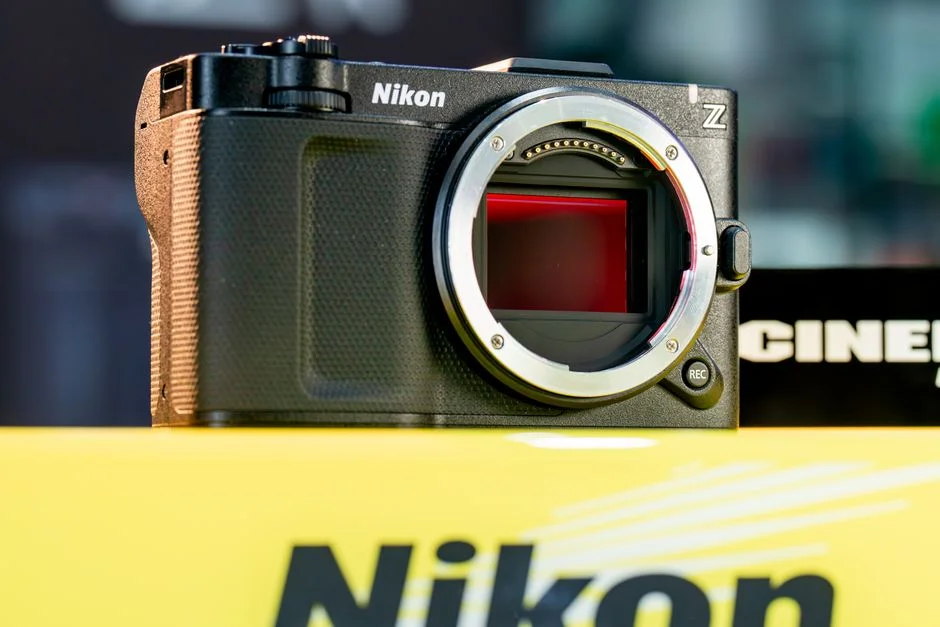
Compact and OEM units use a PVC or PBT body, G1 thread, and a 0.2–3 m measuring range with a basic 2-wire 4–20 mA output and no display. In 2026 these run $80–$150 per unit and are common in skid-mounted OEM panels and small chemical tanks where price per point matters more than accuracy. General-purpose 2-wire industrial sensors step up to a PBT or PP housing with IP67 protection, 0.5–8 m range, HART 7, and a basic display. The 2026 price band is $400–$900, anchored by entry-level catalog listings at $399.99–$529.99 for 4-inch to 50-foot range units. Heavy-duty industrial 4-wire transmitters use aluminum or 316L stainless housings, IP68 protection, 0.5–15 m range, Modbus RTU or Profinet, integrated display with keypad, and full temperature compensation. In 2026 these run $900–$1,800. Long-range and solids-measurement models push range to 25–40 m with automatic gain control, foam suppression firmware, and echo-tracking algorithms; 2026 pricing is $1,500–$2,500. Hygienic (3A, EHEDG) and explosion-proof (ATEX Zone 1, IECEx) variants add 40–100% to the base industrial price. Representative products in current supplier listings include the Pulsar dBi 2-wire solids/liquids transmitter and the ABB LST300 industrial quick-start unit.
| Sensor Class | Range | Output | Housing | 2026 USD / Unit |
|---|---|---|---|---|
| Compact / OEM | 0.2–3 m | 2-wire 4–20 mA | PVC / PBT, IP65 | $80–$150 |
| General-purpose industrial | 0.5–8 m | 2-wire 4–20 mA + HART | PBT / PP, IP67 | $400–$900 |
| Heavy-duty industrial 4-wire | 0.5–15 m | 4-wire, Modbus / Profinet | Aluminum or 316L SS, IP68 | $900–$1,800 |
| Long-range / solids | 10–40 m | 4-wire + HART | Aluminum, IP67 | $1,500–$2,500 |
| Hygienic (3A / EHEDG) | 0.5–8 m | 2-wire 4–20 mA + HART | 316L SS, IP69K | $1,000–$1,800 (base × 1.4–1.6) |
| Explosion-proof (ATEX Zone 1) | 0.5–15 m | 2-wire or 4-wire + HART | Cast aluminum, IP67 | $1,600–$4,000 (base × 1.6–2.2) |
Ultrasonic vs. Radar vs. Capacitive: 2026 Cost Comparison
Capacitive probes remain the cheapest option at $50–$300 per unit, but they are contact-based, drift with conductive coating buildup, and are limited to conductive liquids or specific dielectric solids. Ultrasonic sensors occupy the $80–$2,500 mid-band and are non-contact, which eliminates coating drift and keeps the media isolated from the electronics, but they need a clear vapor path between the transducer face and the surface to track reliably. Radar (FMCW 80 GHz) sits at the top of the price ladder — $1,800–$5,500 per unit — and tolerates heavy foam, steam, and aggressive vapor because the electromagnetic pulse penetrates conditions that scatter acoustic energy. The decision rule for a 2026 procurement: pick ultrasonic when the tank roof is open or well-vented, the surface is calm, and dust loading is light; pick radar when steam, foam, or turbulent vapor is present and acoustic performance would degrade. For municipal wastewater, ultrasonic handles 70–80% of tank-level applications cost-effectively; radar earns its premium on digesters, DAF effluent troughs, and chemical tanks with heated vapor space.
| Technology | 2026 USD / Unit | Contact Type | Foam / Vapor Tolerance | Typical Wastewater Use |
|---|---|---|---|---|
| Capacitive probe | $50–$300 | Contact | Poor (coating drift) | Conductive liquid day tanks, sump limits |
| Ultrasonic | $80–$2,500 | Non-contact | Moderate (clear vapor path needed) | EQ tanks, clarifiers, sumps, chemical day tanks |
| Radar (80 GHz FMCW) | $1,800–$5,500 | Non-contact | Excellent | Digesters, DAF troughs, heated chemical tanks |
Total Installed Cost: CAPEX and OPEX in 2026
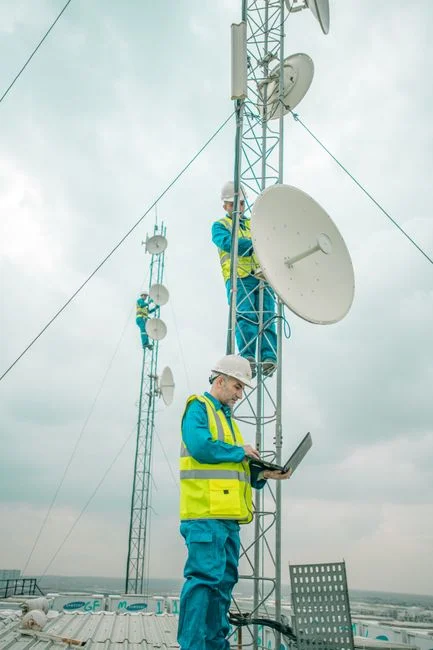
Sensor unit price is one line item; engineering, cabling, and lifecycle OPEX often double first-year cost on a wastewater project. CAPEX for a single measurement point bundles the sensor unit ($80–$2,500), a mounting bracket or standoff ($30–$120), shielded 2- or 4-conductor instrument cable at $3–$8 per meter, surge protection on the loop ($60–$150 per point), and PLC/SCADA integration labor at $300–$900 per point for greenfield sites. The installed-cost adder runs 30–60% on top of unit price for greenfield construction and closer to 20% on retrofits where conduit and cable tray already exist. OPEX for ultrasonic service is driven by transducer face cleaning (1–2 cycles per year for typical wastewater service, $80–$200 per visit per point), annual calibration verification, and the labor to chase false readings caused by foam, vapor, or condensate. Typical OPEX runs 3–7% of CAPEX per year for ultrasonic versus 1–3% for radar, so ultrasonic OPEX roughly doubles relative to radar on a percentage basis even though the absolute dollar number is small. The defensible justification: ultrasonic CAPEX savings of $1,000–$3,000 per point typically outweigh the added cleaning labor for non-foaming tanks.
| Cost Line | Typical 2026 Range (per point) | Notes |
|---|---|---|
| Sensor unit (general-purpose) | $400–$900 | HART 2-wire industrial |
| Mounting bracket / standoff | $30–$120 | Stainless or coated steel |
| Shielded instrument cable | $3–$8 / m | 20–60 m typical run |
| Surge protection | $60–$150 | Required for outdoor / tank farms |
| SCADA / PLC integration labor | $300–$900 | Per point, greenfield |
| Annual cleaning (OPEX) | $80–$200 / visit | 1–2 visits / year |
| Annual calibration check (OPEX) | $100–$250 | Reference target + cert |
How to Specify an Ultrasonic Level Sensor for a Wastewater Tank
Five steps move a tank dimension into a defensible sensor spec sheet. Step 1 — measure maximum tank height and subtract a 20–30 cm dead band from the sensor's nominal range; the dead band is the distance below the transducer face where the sensor is blind, and a properly sized unit leaves the operating range inside the dead-band ceiling. Step 2 — confirm process conditions: media temperature (most ultrasonic units are rated to 80°C, with high-temp variants reaching 150°C), vapor composition, foam presence, surface turbulence, and whether the surface is clear or covered with scum or oil. Step 3 — pick housing: IP68 316L stainless for sumps and aeration basins where splash and humidity are constant, ATEX/IECEx Zone 1 for digesters, methane zones, and chemical storage areas. Step 4 — match output to the control architecture: 4–20 mA + HART for single-loop retrofit into an existing analog card, Modbus RTU or Profinet for plant-wide SCADA rollouts where multidrop wiring cuts conduit cost. Step 5 — confirm power budget: 2-wire loop-powered sensors draw 3.6–22 mA from the PLC analog card and need no separate supply, while 4-wire units need a dedicated 24 VDC rail and draw 50–200 mA depending on display and relay options. For closed-loop level control on chemical day tanks, pair the level transmitter with a PLC-controlled chemical dosing skid so the dosing pump tracks the tank level rather than running on a fixed timer.
Application Fit: Where Ultrasonic Wins in Wastewater Treatment
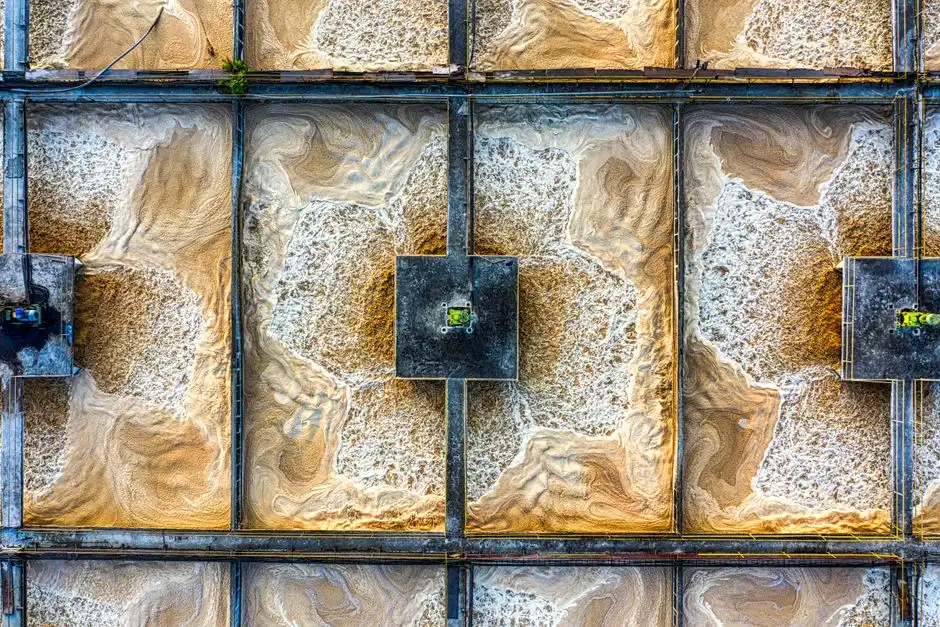
Open-top equalization tanks and neutralization basins are the cleanest application: calm surface, no foam, no vapor, and a $400–$900 general-purpose ultrasonic sensor covers the entire measurement loop without derating. Sludge storage tanks and DAF flotation cells run foamy, so a long-range unit with automatic gain control and foam suppression firmware is the right pick; mount the sensor off-center from any scraper or skimmer mechanism to avoid false echoes from moving parts. Chemical dosing day tanks — polymer, coagulant, caustic — pair naturally with a level transmitter feeding a PLC-controlled chemical dosing skid, which closes the loop and eliminates timer-based overfeed. Sumps and pump stations use submersible IP68 ultrasonic with a 2-wire output, but the dead band has to be sized so the pump volute or pump bracket never enters the echo zone at low level. For primary and secondary clarifiers, an ultrasonic sensor mounted on the launder cover delivers reliable sludge blanket detection, and pairing the reading with a lamella clarifier sludge blanket monitoring loop gives operators real-time insight into clarifier performance. DAF cells benefit from a dedicated non-contact level transmitter above the float zone to track the rising sludge blanket without disturbing it.
Frequently Asked Questions
How accurate is an ultrasonic level sensor in wastewater service? General-purpose industrial ultrasonic sensors hold ±0.25% to ±0.5% of measuring range in clean, well-vented tanks. Heavy foam, steam, or temperature gradients can degrade field accuracy to ±1–2% and force more frequent cleaning cycles.
What is the typical lifespan of an ultrasonic level sensor? Industrial ultrasonic transmitters carry a 10–15 year design life when installed away from direct UV exposure and cleaned 1–2 times per year. The transducer face is the wear part; electronics routinely run 10+ years in municipal wastewater service.
Can ultrasonic level sensors measure sludge and slurry? Yes, using long-range solids models with automatic gain control and echo-tracking firmware in the $1,500–$2,500 band. The sensor should be mounted above the thickest part of the sludge bed and angled to avoid scraper or rake arms.
Do ultrasonic sensors work in ATEX Zone 1 areas like digesters? ATEX/IECEx Zone 1-certified ultrasonic transmitters are available at a 60–120% price adder over standard industrial units. They use flameproof enclosures and certified electronics, and most major brands offer Zone 1 variants at the $1,600–$4,000 price point.
How does ultrasonic compare to submersible hydrostatic level sensors in cost? Submersible hydrostatic level sensors run $200–$800 in 2026 — cheaper than industrial ultrasonic — but they are in contact with the media, drift as coatings build on the diaphragm, and require periodic recalibration. Ultrasonic wins on lifecycle cost for non-foaming open-tank service where contact-based maintenance is undesirable.
What is the maximum measuring range for industrial ultrasonic sensors? Standard industrial 4-wire ultrasonic transmitters reach 15 m. Long-range solids-measurement models reach 25–40 m using higher acoustic power and narrower beam angles, and they sit in the $1,500–$2,500 band in 2026.
Related Equipment
- DAF flotation cell — specifications, capacity range, and technical data