What Hospital Wastewater in Bucharest Actually Contains in 2026
Banciu et al. (Water 16:245, DOI 10.3390/w16020245, January 2024) documented that the COVID-19 period drove a measurable rise in antibiotic-resistant bacteria loadings in Bucharest hospital effluent discharging to the Dâmbovița River, driven by excessive inpatient antibiotic and disinfectant use. That finding — the only peer-reviewed Bucharest-specific microbiological dataset — is the design anchor for any 2026 hospital discharge permit in the city. A 2019 Springer survey of five Slovak and Czech hospitals (Environ. Sci. Pollut. Res., doi 10.1007/s11356-019-06290-9) is the closest pharmaceutical benchmark for the region and measured cotinine at 6,700 ng/L, bisoprolol at 5,200 ng/L, metoprolol at 2,600 ng/L, tramadol at 2,400 ng/L, sulfamethoxazole at 1,500 ng/L, and ranitidine at 1,400 ng/L — drug classes that Bucharest tertiary hospitals discharge in comparable ranges given the shared central-European prescribing profile.
A Bucharest hospital engineer must therefore design against four effluent fractions, not one mixed stream. Black water (toilets) carries the highest pathogen and pharmaceutical load; grey water (sinks, showers, laundry) dominates by volume at 60–70% of total flow; pathology and laboratory waste contributes formaldehyde, xylene, and mercury from broken equipment; and imaging waste carries silver and developer/fixer chemicals from radiology. Pathology and imaging streams must be pre-treated at source (Hg-impregnated activated carbon for mercury, silver recovery units for fixer, chemical oxidation for formaldehyde) before they enter the main biological train — discharging them untreated will trip the heavy-metal and toxicity gates at the Apa Nova Bucharest pre-treatment acceptance point.
The receiving context matters: Glina WWTP serves approximately 1.4 million PE and operates close to hydraulic capacity during spring snowmelt, which is precisely why the local utility enforces strict pre-treatment acceptance rather than relying on dilution. This is the design driver, not an afterthought — it sets the floor on what biological and disinfection performance a hospital plant must guarantee on its own.
Romanian and EU Compliance Targets for Bucharest Hospital Effluent in 2026
NTPA 002/2002 (Normativ privind condițiile de evacuare a apelor uzate în rețelele de canalizare ale localităților) is the binding national norm when a Bucharest hospital discharges to the municipal sewer, and it sets the following ceilings at the connection point: COD 125 mg/L, BOD₅ 25 mg/L, TSS 60 mg/L, NH₄⁺ 2 mg/L in urban catchments, total phosphorus 2 mg/L, and total coliforms 2 MPN/100 mL. HG 188/2002 modified by HG 352/2005 is the umbrella Government Decision requiring all Romanian hospitals to treat effluent before discharge, with stricter parameter limits and additional pathogen controls for infectious disease wards. EU Urban Waste Water Treatment Directive 91/271/EEC becomes the relevant compliance ceiling for hospitals above 2,000 PE or those whose outfalls sit inside the Dâmbovița sensitive catchment — Bucharest facilities in sectors 1, 2, and 5 with direct river access must demonstrate alignment with both instruments.
Apa Nova Bucharest applies additional sewer-connection checks at the discharge point: pH 6.5–8.5, temperature below 40°C, free chlorine residual below 1 mg/L, no visible FOG, and toxicity screening on composite samples. This local gate is the most common rejection point for hospital submittals in the city — the design must pass NTPA 002 on paper and pass Apa Nova in practice.
| Parameter | NTPA 002/2002 limit (sewer discharge) | HG 188/2002 (infectious wards, indicative) | EU UWWTD 91/271/EEC (direct discharge reference) | Apa Nova Bucharest acceptance |
|---|---|---|---|---|
| COD | 125 mg/L | 100 mg/L | 125 mg/L | ≤ 125 mg/L |
| BOD₅ | 25 mg/L | 20 mg/L | 25 mg/L | ≤ 25 mg/L |
| TSS | 60 mg/L | 30 mg/L (proposed) | 35 mg/L (sensitive zones) | ≤ 60 mg/L |
| NH₄⁺ | 2 mg/L | 2 mg/L | — | ≤ 2 mg/L |
| Total phosphorus | 2 mg/L | 2 mg/L | 2 mg/L | ≤ 2 mg/L |
| Total coliforms | 2 × 10³ MPN/100 mL | Absent in 1,000 mL (pathogen-free) | — | Per NTPA 002 |
| pH | 6.5–8.5 | 6.5–8.5 | — | 6.5–8.5 |
| Temperature | 40°C | 40°C | — | < 40°C |
| Heavy metals (Hg, Ag, Cd, Pb) | Per NTPA 002 annex | Stricter per ward | Per EQS Directive 2008/105/EC | Site-specific acceptance |
The 2026 Process Train Bucharest Hospitals Are Specifying
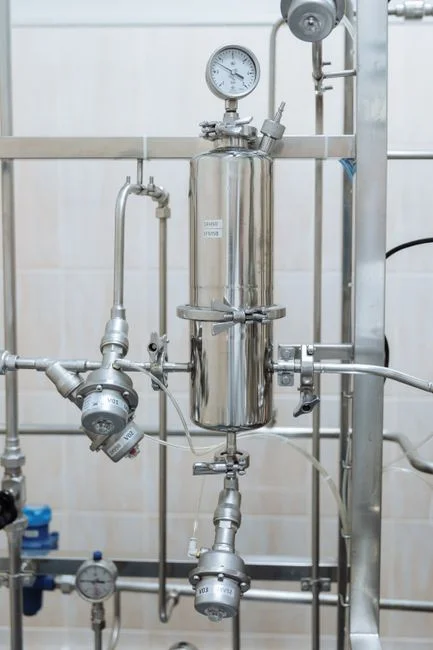
A defensible 2026 train for a Bucharest general or university hospital runs screening → grit removal → flow equalization → primary clarification → biological A/O → submerged MBR → ClO₂ disinfection, with sludge dewatered on a plate-and-frame press. Each step below is justified by a real European or Chinese reference plant, not by a vendor brochure.
Step 1 — Screening and grit removal. Rotary mechanical bar screen at 3–5 mm aperture protects downstream pumps and MBR membranes from surgical textile fibers, swab fragments, and grit carried in laundry effluent. Aperture tighter than 3 mm is not recommended for hospital duty because of rapid blinding with gauze and cotton; coarser than 5 mm will let fiber bundles reach the membrane tank.
Step 2 — Flow and load equalization. An 8–12 hour HRT buffer tank sized for 1.5× peak hourly flow absorbs diurnal peaks from operating theatres (morning turnover), laundry batches, and cafeteria flows. Without equalization, an MBR flux will sag and a ClO₂ contact tank will be bypassed at peak — a guaranteed NTPA 002 failure.
Step 3 — Primary treatment. A lamella clarifier for hospital pre-treatment operating at 20–40 m/h surface loading rate delivers 50–70% TSS and FOG removal upstream of the biological stage, which protects the MBR membrane from irreversible fouling by lipid-rich laundry wastewater.
Step 4 — Biological stage. An anoxic/aerobic (A/O) activated sludge train or biological contact oxidation at HRT ≥ 4 h is the proven workhorse. Bo Yu et al. (Scientific.Net) showed that biological contact oxidation at HRT > 4 h meets effluent BOD₅/COD for hospital wastewater, though SS polishing downstream is still required. For Bucharest, A/O is preferred over single-stage contact oxidation because the NH₄⁺ 2 mg/L limit in NTPA 002 demands reliable nitrification, and A/O supports denitrification in the same volume.
Step 5 — MBR. A submerged PVDF hollow-fiber MBR membrane bioreactor for hospital wastewater at 0.1 μm nominal pore size delivers the solid-liquid separation that the Yu Li 2009 reference plant (Scientific.Net) demonstrated at 200 m³/d, with effluent COD < 50 mg/L and NH₃-N < 10 mg/L, and no detectable total or fecal coliforms. MBR also gives roughly 60% footprint reduction versus conventional secondary clarification plus sand filtration — a decisive advantage for Bucharest hospital basements and tight urban sites.
Step 6 — Disinfection. A chlorine dioxide generator for hospital effluent disinfection dosed at 5–15 mg/L with 30-minute contact time is the preferred final step. Yu Li 2009 (Scientific.Net) compared chlorine, sodium hypochlorite, chlorine dioxide, ozone, and UV on combined efficacy, operational complexity, and cost and recommended ClO₂ as the practical disinfectant for hospital duty. Critically for Bucharest in 2026, ClO₂ is effective against the antibiotic-resistant bacteria documented by Banciu 2024 in Dâmbovița-impacting effluent, where chlorination at standard doses has been shown to select for resistant sub-populations. For small clinics under 50 beds where flow is intermittent and capital is constrained, an underground package sewage treatment plant for small Bucharest clinics integrating screening, biology, and disinfection in a buried skid is the standard Bucharest reference design.
| Stage | Equipment | Key design parameter | Reference value | Role in train |
|---|---|---|---|---|
| 1 | Rotary bar screen | Aperture | 3–5 mm | Protect downstream pumps and MBR |
| 2 | Equalization tank | HRT | 8–12 h, 1.5× peak flow | Smooth diurnal peaks |
| 3 | Lamella clarifier | Surface loading | 20–40 m/h | 50–70% TSS/FOG removal |
| 4 | A/O activated sludge | HRT | ≥ 4 h biological | Carbon and NH₄⁺ removal |
| 5 | Submerged MBR (PVDF, 0.1 μm) | Flux | 15–25 L/m²·h | Solid-liquid separation, partial disinfection |
| 6 | ClO₂ generator | Dose / contact | 5–15 mg/L, 30 min | Antibiotic-resistant bacteria inactivation |
AOP and Pharmaceutical Micropollutant Removal: When Bucharest Hospitals Need It
The standard MBR + ClO₂ train reliably meets NTPA 002 for COD, BOD₅, TSS, ammonia, and coliforms — but it does not target the dissolved pharmaceutical micropollutants that the 2019 Springer Slovakia/Czechia study measured at the concentrations cited above. For a general hospital with no oncology, infectious-disease, or research mandate, the standard train is sufficient and remains the cost-defensible choice.
For oncology centres, infectious-disease institutes (Matei Balș, Victor Babeș), and university research hospitals, the same study compared modified Fenton reaction, ferrate(VI), and boron-doped diamond electrode (BDDE) oxidation against 74 pharmaceutical micropollutants. Modified Fenton and BDDE both achieved > 90% removal across the full spectrum including sulfamethoxazole and bisoprolol; ferrate(VI) was less consistent and lower on a per-compound basis. AOP retrofit — typically a Fenton skid with H₂O₂/Fe²⁺ dosing or an electrochemical BDDE cell placed between MBR and ClO₂ — adds 15–25% to the CAPEX of the biological skid and is the trigger the engineer should use to decide whether to specify it.
Romania's Ministry of Environment watchlist of emerging contaminants (updated 2024–2025) is moving toward mandatory micropollutant monitoring at hospital outfalls, which means a 2026 CAPEX defense should frame an AOP skid as a future-proofing investment rather than a present compliance cost. The 2024–2025 watchlist update specifically adds diclofenac, sulfamethoxazole, and three beta-blockers to the monitoring list, which tracks exactly the compounds measured in the Slovak/Czech benchmark.
Design Parameters and CAPEX/OPEX Benchmarks for Bucharest Hospitals
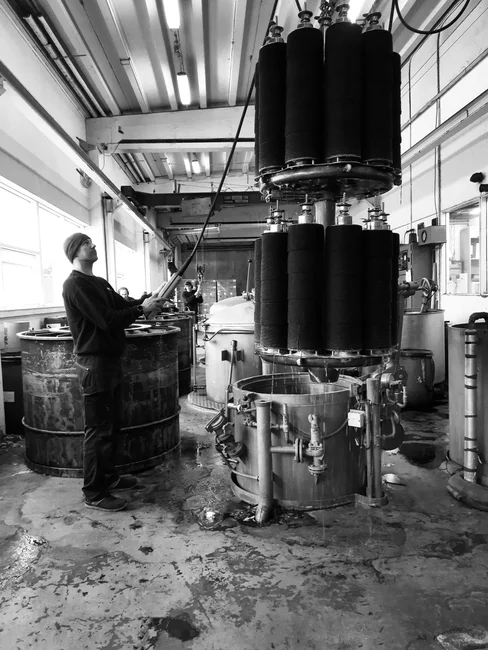
Romanian general hospitals generate 400–600 L/bed/day of wastewater, and university or teaching hospitals with on-site laundry, dialysis, and research laboratories reach 800–1,000 L/bed/day. That translates to plant sizing of roughly 150 m³/day for a 200-bed district hospital, 300 m³/day for a 500-bed regional hospital, and 600 m³/day for a 1,000-bed university hospital. The biological stage typically runs at HRT 6–10 h with SRT 15–25 days; the MBR tank holds MLSS at 6,000–10,000 mg/L and operates at 15–25 L/m²·h flux; ClO₂ dose lands at 8–12 mg/L for the actual contact tank; observed sludge yield is 0.3–0.5 kg DS per kg COD removed.
CAPEX ranges below are 2026 EUR, equipment + installation, delivered and commissioned in Romania, and assume a standard MBR + ClO₂ train without AOP. AOP retrofit adds 15–25% on top.
| Hospital size | Daily flow | CAPEX (2026 EUR) | OPEX (€/m³ treated) | Notes |
|---|---|---|---|---|
| 200 beds (general) | ~150 m³/day | €180,000–€280,000 | €0.45–€0.65 | Lamella + A/O + MBR + ClO₂; skid-mounted feasible |
| 500 beds (regional) | ~300 m³/day | €380,000–€520,000 | €0.55–€0.75 | Containerized MBR; dual ClO₂ generator for redundancy |
| 1,000 beds (university) | ~600 m³/day | €650,000–€850,000 | €0.65–€0.85 | Two-line MBR; consider AOP skid for oncology wing |
| AOP retrofit (any size) | + 15–25% CAPEX | — | + €0.10–€0.18/m³ | Fenton or BDDE between MBR and ClO₂ |
OPEX covers energy (the MBR aeration blower and recirculation pumps dominate), ClO₂ precursor chemicals (HCl + NaClO₂), membrane replacement on a 7–10 year cycle, and sludge handling. Hospital sludge is classified as infectious waste under HG 856/2002 and must be dewatered before disposal; a plate and frame filter press for hospital sludge at 8–12 bar operating pressure achieves 22–28% DS cake, which meets the Romanian infectious-waste transport threshold and the Apa Nova grease-trap solids limits. For a deeper cross-check on the membrane decision itself, the MBR vs MBBR engineering comparison sets out when the MBR premium is justified by effluent quality versus when an MBBR is sufficient.
Apa Nova Bucharest Acceptance and the 2026 Commissioning Checklist
Most Bucharest hospital projects that meet NTPA 002 on paper still fail at the sewer connection. The four steps below are the gate the engineer must close before a hospital plant goes live.
Step 1 — Pre-treatment agreement application to Apa Nova Bucharest. Submit an influent characterization based on 24-hour composite sampling across seven consecutive days, covering all four effluent fractions and including heavy-metal screens for Hg (laboratory waste), Ag (radiology), and Cr (sterilization units). Without a complete characterization the application is returned.
Step 2 — NTPA 002 compliance verification. Use an accredited laboratory from the Ministry-approved list, which is updated annually; the engineer must check the current list before commissioning because labs lose accreditation between cycles and a measurement from a non-accredited lab is not accepted by Apa Nova.
Step 3 — On-site acceptance testing. Witnessed sampling across pH, temperature, COD, BOD₅, TSS, NH₄⁺, total phosphorus, total coliforms, and the heavy-metal suite, performed at the discharge manhole under normal hospital operating load. Two consecutive passing rounds are required before consent is issued.
Step 4 — 90-day performance verification and reporting. Quarterly self-monitoring reports filed with the Bucharest Environmental Guard (Garda de Mediu București) for the first year, transitioning to semi-annual thereafter. Hospitals near the Dâmbovița in sectors 1, 2, or 5 with direct river access will also need an ANPM direct-discharge permit — flag this at the pre-application stage because the ANPM cycle adds 60–90 days on top of the Apa Nova timeline. For a European comparison of the regulatory and engineering pattern, the Central European industrial wastewater treatment compliance guide covers the parallel Polish framework, and the hospital wastewater treatment in Lyon engineering guide shows how a comparable French city handles its hospital-train commissioning sequence.
Frequently Asked Questions
What are the NTPA 002/2002 discharge limits for hospitals in Bucharest?
NTPA 002/2002 sets COD at 125 mg/L, BOD₅ at 25 mg/L, TSS at 60 mg/L, NH₄⁺ at 2 mg/L, total phosphorus at 2 mg/L, and total coliforms at 2 × 10³ MPN/100 mL at the sewer connection. Apa Nova Bucharest applies additional pH (6.5–8.5) and temperature (< 40°C) gates at the same point.
How much does a hospital wastewater treatment plant cost in Romania in 2026?
A standard MBR + ClO₂ train costs €180,000–€280,000 for a 200-bed general hospital (150 m³/day), €380,000–€520,000 for a 500-bed regional hospital (300 m³/day), and €650,000–€850,000 for a 1,000-bed university hospital (600 m³/day), excluding AOP retrofit.
Why is chlorine dioxide preferred over UV for hospital wastewater disinfection?
Yu Li 2009 (Scientific.Net) compared ClO₂, chlorine, NaOCl, ozone, and UV across efficacy, complexity, and cost and recommended ClO₂ for hospital duty. ClO₂ also inactivates the antibiotic-resistant bacteria loadings documented in Bucharest hospital effluent by Banciu et al. 2024 (Water 16:245), where chlorination at standard doses selects for resistant sub-populations.
When does a Bucharest hospital need an AOP step for pharmaceutical micropollutants?
AOP retrofit (modified Fenton or BDDE) is justified for oncology centres, infectious-disease institutes, and university research hospitals where pharmaceutical loadings approach the Slovak/Czech benchmark (cotinine 6,700 ng/L, bisoprolol 5,200 ng/L, sulfamethoxazole 1,500 ng/L), and it adds 15–25% to biological-train CAPEX. General hospitals do not need it for NTPA 002 compliance.
Which Bucharest authority issues the final hospital discharge permit?
Apa Nova Bucharest issues sewer-connection consent, the Garda de Mediu București receives performance reports, and ANPM issues a direct-discharge permit for hospitals in sectors 1, 2, and 5 with direct Dâmbovița access. The ANPM cycle adds 60–90 days and must be filed in parallel with the Apa Nova application.