What Industrial Sand Filters Cost in 2025
Industrial sand filter water treatment cost price ranges from $8,000 to $65,000 for standard multi-media systems (10–200 m³/h), depending on materials, automation, and integration. FRP vessels cost 15–25% more than carbon steel but offer corrosion resistance. Automated backwash reduces labor by 70% and ensures consistent TSS removal of 90–95%.
Procurement managers often find that retail-focused pricing guides fail to account for the structural demands of 24/7 industrial operations. An industrial multi-media filter with automated backwash designed for a 10 m³/h flow rate typically starts at $8,000 for a manual carbon steel configuration. However, as the capacity scales to 200 m³/h and incorporates fully automated Fiber Reinforced Plastic (FRP) vessels with PLC control, the investment can reach $65,000 or more. These prices reflect the heavy-duty nature of industrial pressure vessels, which must withstand operating pressures of 0.6 to 1.0 MPa, far exceeding the limits of residential or light commercial hardware.
Material selection serves as a primary cost driver. Carbon steel tanks, typically priced between $120 and $180 per m³ of capacity, represent the baseline for many wastewater applications. While cost-effective, they require internal epoxy coatings to prevent oxidation. In contrast, FRP tanks command a 15–25% premium but are essentially mandatory for aggressive wastewater containing high chlorides or acidic components, as they eliminate the risk of structural corrosion. Automation also shifts the pricing landscape; adding a PLC-controlled valve nest adds between $3,000 and $8,000 to the capital expenditure. (HydropureWater field data, 2025). This investment is usually justified by a 70% reduction in operational labor and a significant improvement in filter cycle consistency, preventing the human error often associated with manual backwash timing.
How Flow Rate and Design Affect Sand Filter Pricing
The relationship between flow rate and sand filter pricing is complex.Flow rates from 10–200 m³/h determine vessel diameter and media volume, where doubling the flow rate typically increases the tank footprint and weight by 60–80% rather than doubling the cost linearly. The engineering of these systems relies on filtration velocity, measured in meters per hour (m/h). For clean water applications, velocities may reach 15–20 m/h, but for industrial wastewater with higher turbidity feeds exceeding 100 mg/L of Total Suspended Solids (TSS), the filtration rate must be throttled to 5–10 m/h. This reduction in velocity requires a larger surface area to process the same volume of water, effectively increasing the equipment cost to prevent frequent backwashing and media blinding.
The complexity of the media bed also influences the final price. While a single-layer sand filter is the most economical, dual-media configurations—utilizing a combination of anthracite coal and fine silica sand—improve particle capture and extend run times by 30–50%. This design allows larger particles to be trapped in the top anthracite layer while finer solids are caught in the sand below. Although this configuration adds 10–15% to the initial media cost, the reduction in backwash frequency and the associated water savings provide a rapid return on investment. The following table outlines how flow requirements scale with typical industrial system pricing.
| Flow Rate (m³/h) | Vessel Diameter (mm) | Filtration Velocity (m/h) | Typical Media Type | Estimated Price (USD) |
|---|---|---|---|---|
| 10 | 800 | 10–12 | Single Media (Sand) | $8,000 – $12,000 |
| 25 | 1200 | 10–12 | Multi-Media (Sand/Anthracite) | $15,000 – $22,000 |
| 50 | 1800 | 8–10 | Multi-Media (Sand/Anthracite) | $28,000 – $36,000 |
| 100 | 2400 | 8–10 | Multi-Media (Sand/Anthracite) | $42,000 – $52,000 |
| 200 | 3200 (Dual Tank) | 8–10 | Multi-Media (High Flow) | $60,000 – $75,000+ |
To optimize the industrial multi-media filter with automated backwash for your specific site, engineers must calculate the peak hourly flow rather than the average daily flow. Under-sizing a system to save on initial capital costs leads to "short-circuiting," where water forces its way through the media at high pressure, resulting in poor effluent quality and potential damage to downstream equipment like Reverse Osmosis membranes.
Material and Automation Options: Cost vs. Longevity
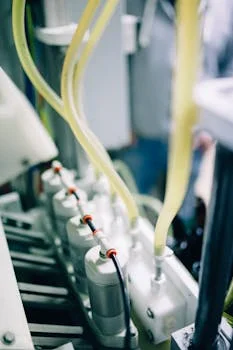
Carbon steel vessels with epoxy lining cost 20–30% less than FRP but require internal inspections every 18–24 months to ensure the integrity of the coating in high-chloride or acidic effluents. In a B2B procurement context, the "cheapest" option often carries the highest lifecycle cost. For example, a carbon steel tank used in a textile dyeing plant may suffer from pinhole leaks within three years if the epoxy lining is compromised by chemical fluctuations. FRP, being naturally inert, avoids this failure mode entirely, providing a 15–20 year service life with minimal structural maintenance.
Automation levels represent the second major fork in the decision-making process. A manual system requires an operator to monitor differential pressure gauges and manually actuate five to seven valves to initiate a backwash. A PLC-controlled backwash cycle, however, uses pressure transducers to trigger the cleaning cycle automatically. This ensures the filter is only cleaned when necessary, reducing backwash water waste by 25% and ensuring a consistent differential pressure reset. Selecting stainless steel underdrains (SS304 or SS316) over plastic laterals adds $1,500 to $4,000 to the build cost but is critical for preventing clogging and channeling in high-solids applications where plastic components might deform or crack under high backwash pressures.
| Component | Standard Option (Lower Cost) | Industrial Grade (High Performance) | Cost Impact | Longevity Impact |
|---|---|---|---|---|
| Vessel Material | Carbon Steel (Epoxy Lined) | FRP or SS304 | +20–30% | +10 Years |
| Control System | Manual Valve Nest | PLC with HMI & Auto-Backwash | +$3k – $8k | Reduced human error |
| Internal Laterals | ABS/PVC Plastic | Stainless Steel 316 Wedge Wire | +$1.5k – $4k | Prevents media loss |
| Media Layers | Single Layer Sand | Multi-Media (Anthracite/Sand/Garnet) | +10–15% | 50% longer cycles |
Integrating these high-grade materials into an industrial multi-media filter with automated backwash ensures that the system can handle the rigors of heavy industry. For plants operating 24/7, the reduction in downtime for lining repairs or manual cleaning usually offsets the higher upfront cost of FRP and PLC automation within the first 18 months of operation.
Integration with Downstream Systems: RO and MBR Protection
Industrial sand filters play a crucial role in protecting downstream systems such as RO and MBR.Multi-media filters reduce the Silt Density Index (SDI) to less than 3.0, extending RO membrane life by 2–4 years and cutting replacement costs by $15,000–$40,000 per system. In most industrial water reuse loops, the sand filter acts as the primary defense for a reverse osmosis RO water purification system. Without effective pretreatment, RO membranes can foul within weeks, leading to expensive chemical cleanings (CIP) and premature membrane replacement. By consistently removing particles down to the 10–20 micron range, sand filtration ensures the downstream membranes operate at their design flux rates.
When used as pretreatment for an MBR integrated wastewater treatment system, sand filters serve to reduce the organic and suspended solids loading. This reduction can lower the aeration energy required for the biological process by 15–20%, as the blowers do not have to work as hard to maintain dissolved oxygen levels in the presence of high solids. Additionally, the backwash water generated by the sand filter does not necessarily have to be sent to waste; in many modern plant designs, it is recycled back to the headworks, such as a Dissolved Air Flotation (DAF) unit or a primary clarifier, reducing the net water loss of the entire treatment plant to less than 5% of the total flow.
Industrial Sand Filter Cost Comparison Table
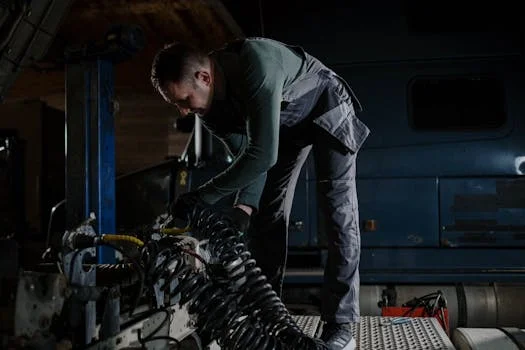
OEM-built systems with skid mounting and pre-wired controls allow for significantly faster installation, often requiring only 7–10 days on-site compared to the 3–4 weeks required for custom, site-built systems. When evaluating the sand filter water treatment cost price, engineers must account for these "hidden" costs of installation and commissioning. A skid-mounted unit arrives pre-tested, meaning the risk of leaks or control logic errors is virtually eliminated before the equipment even reaches the facility. For a comprehensive look at how these filters fit into a larger facility budget, you can review our full skid-mounted system cost comparison including sand filters.
| Model Series | Capacity (m³/h) | Material | Automation | TSS Removal | Footprint (m²) | Price Range (USD) |
|---|---|---|---|---|---|---|
| SF-10 | 10 | FRP | Semi-Auto | 92% | 1.2 | $8,500 - $11,000 |
| SF-20 | 20 | Carbon Steel | Full PLC | 90% | 2.0 | $14,000 - $18,000 |
| MMF-30 | 30 | FRP | Full PLC | 95% | 2.8 | $19,000 - $24,000 |
| MMF-50 | 50 | Carbon Steel | Full PLC | 94% | 4.5 | $28,000 - $34,000 |
| MMF-75 | 75 | FRP | Full PLC | 95% |